Bovine Leather Trimmed Scraps
CN → US| HS Code | Tariff Rate | Origin | Destination | Doc |
|---|---|---|---|---|
| 3214905000 | 38.25% | CN | US | Official Doc |
| 4115200000 | 17.5% | CN | US | Official Doc |
| 3913902090 | 40.8% | CN | US | Official Doc |
| 3913905000 | 41.5% | CN | US | Official Doc |
| 3214100020 | 38.7% | CN | US | Official Doc |
Product Images
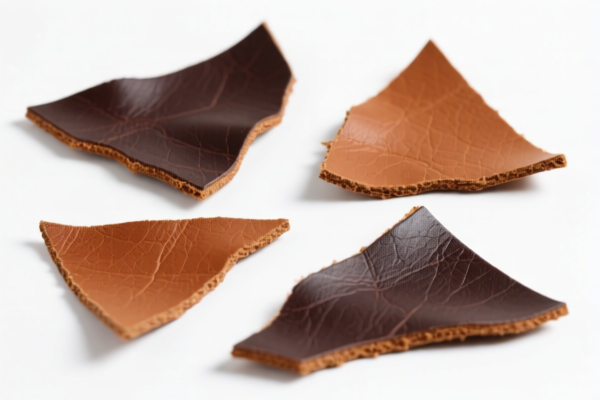
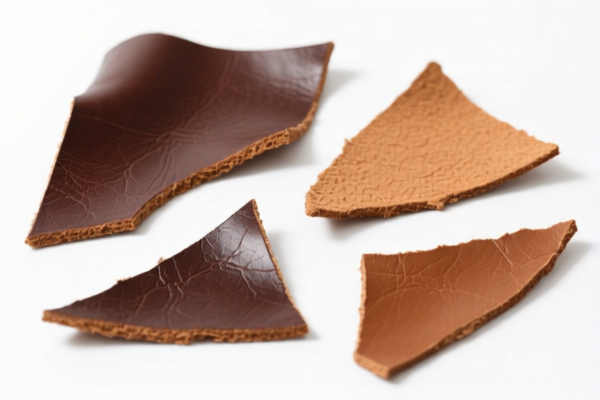
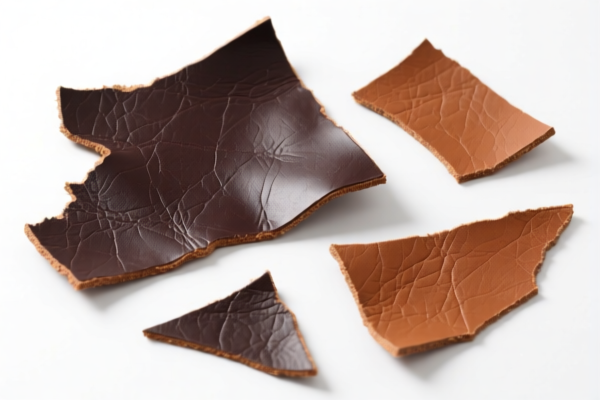

AI Analysis
🥩 Bovine Leather Trimmed Scraps (Bovine Leather Trimmed Scraps)
🌐 HS Code Reference & Customs Clearance Guide | 2026 Latest Tariff Analysis | Professional Clearance Strategy
📌 I. Product Definition and Classification: Do You Really Understand "Leather Scraps"?
Bovine Leather Trimmed Scraps refer to the offcuts, waste, or residual pieces of cattle leather remaining after the manufacturing process of leather goods (such as shoes, bags, or upholstery). In international trade, these are classified strictly as leather waste/offcuts.
Key Distinction: * Finished Leather Scraps: Pieces of tanned leather that are too small or irregular to be used as primary material but retain leather characteristics. * Not Raw Hides: These are already processed (tanned/dyed), distinguishing them from raw hides (Chapter 41 Heading 4101).
⚠️ Critical Classification Point:
- If the material is tanned cowhide waste/offcuts → It falls under Chapter 41, specifically Heading 4115.
- Do NOT confuse with synthetic leather scraps (Chapter 39) or raw hides (Chapter 4101).
📦 II. HS Code Classification Details (2026 Latest Tariff Authority Comparison)
Based on the provided data, here are the most accurate and potential risk HS Codes for "Bovine Leather Trimmed Scraps":
| HS Code | Product Description | Application Scenario | Accuracy & Risk Level |
|---|---|---|---|
4115.20.00.00 |
Leather waste and scraps; leather dust | ✅ HIGH ACCURACY. Specifically covers "waste" and "scraps" of leather, including bovine leather offcuts. | Recommended |
3214.90.50.00 |
Preparations for surface treatment; sealing materials | ❌ LOW ACCURACY. Misclassification. Unless the scraps are processed into a sealant/paste, pure leather scraps do not belong here. | High Risk of Rejection |
3913.90.20.90 |
Other natural polymers and derivatives (e.g., polysaccharides) | ❌ LOW ACCURACY. Leather is a protein (collagen), not a polysaccharide. Incorrect material attribution. | High Risk |
3913.90.50.00 |
Other natural polymers / modified natural polymers | ❌ LOW ACCURACY. While leather is a natural polymer, specific Chapter 41 provisions override general Chapter 39 provisions for leather. | High Risk |
3214.10.00.20 |
Putties, caulking compounds, other sealants | ❌ LOW ACCURACY. Only applies if the scraps are processed into a putty. Raw/trimmed scraps do not fit. | High Risk |
🔍 Key Reminder:
-4115.20.00.00is the only code in the provided dataset that correctly identifies the material as leather waste/scraps.
- Codes like3214(Preparations for surface treatment) or3913(Plastics/Natural Polymers) are misclassifications unless the product has undergone significant chemical processing to change its fundamental nature (which "trimmed scraps" typically have not).
💰 III. 2026 Latest Tariff Rate Details (Including Surcharges & Policy Additions)
✅ Applicable Country: USA (US)
✅ Origin: China (CN)
✅ Effective Date: From November 10, 2025 (including subsequent imports)
🎯 1. 4115.20.00.00 —— Leather Waste and Scraps (The Correct Code)
| Item | Content |
|---|---|
| Base Tariff Rate | 0.0% (ad valorem) |
| USITC Surcharge | +7.5% (Section 301 / 122-Clause Tariff) |
| IEEPA Surcharge | +10.0% (China-specific tariff, effective Nov 10, 2025) |
| Total Tariff Rate | 17.5% |
| Tax Calculation | CIF Value × 17.5% |
| De Minimis Exemption | ❌ Not Eligible (deny_de_minimis) |
| Legal Basis Path | IEEPA:9903.01.24 → USITC:4115.20.00.00 → FOOTNOTE:122-Clause |
📌 Explanation:
- Base Rate (0%): Leather waste typically has low base tariffs in the US to encourage recycling/reuse.
- USITC Surcharge (7.5%): Part of the ongoing trade remedy measures affecting specific Chinese industrial goods.
- IEEPA Surcharge (10%): The additional 10% tariff imposed on a wide range of Chinese imports under the International Emergency Economic Powers Act.
- Total (17.5%): This is significantly lower than the 38-41% rates associated with misclassified codes.
- Legal Path: The combination of IEEPA and USITC footnotes applies specifically to Chinese-origin goods in this category.
🛠️ IV. Customs Clearance Practical Advice (Battle-Tested Pitfall Guide)
✅ 1. Documentation Checklist (All Must Be Provided)
| Document | Required? | Notes |
|---|---|---|
| ✅ Commercial Invoice | ✔️ | Must clearly state "Bovine Leather Trimmed Scraps". Avoid vague terms like "Leather Material." |
| ✅ Packing List | ✔️ | Detail the weight and quantity of scraps. |
| ✅ Material Composition Statement | ✔️ | Confirm: 100% Tanned Bovine Leather. No synthetic backing. |
| ✅ Product Photos | ✔️ | Show the irregular shape, texture, and lack of finished form. |
| ✅ Usage Declaration | ✔️ | State intended use: e.g., "For recycling into leather filler," "For manufacturing lower-grade leather products." |
✅ 2. Declaration Tips (Key Mantras)
🔥 "Be Precise, Avoid 'Repairs', Stick to 'Scraps'!"
| Scenario | Correct Declaration | Incorrect Practice |
|---|---|---|
| Raw Offcuts | 4115.20.00.00 |
Misreporting as "Repair Material" → 38-41% Tax |
| Processed Leather Paste | 3214.10.00.20 (if truly processed) |
Reporting paste as "Scraps" → Risk of fraud |
| Synthetic Leather Scraps | 3913.90.20.90 or 3913.90.50.00 |
Reporting as "Bovine Leather" → False Origin Claim |
✅ 3. Special Case Handling
| Situation | Handling Advice |
|---|---|
| Mixed Materials | If scraps contain fabric/synthetic backing, they may be reclassified under Chapter 63 or 39. Pure leather is key. |
| Chemically Treated | If the scraps are dissolved or converted into glue/resin, they are no longer "scraps" but "preparations" (Chapter 32/35). |
| De Minimis Shippers | ⚠️ Warning: Even if the value is low, IEEPA 10% and USITC 7.5% apply. Do NOT rely on $800 de minimis exemption for commercial bulk shipments. |
🌍 V. Global Market Comparison (2026 Latest)
| Country/Region | Recommended HS Code | Tariff | Certification | Remarks |
|---|---|---|---|---|
| 🇺🇸 USA | 4115.20.00.00 |
17.5% | None | High accuracy required. |
| 🇨🇳 China | 4115.20.00.00 |
~0-5% | None | Import of leather waste may have environmental restrictions. |
| 🇪🇺 EU | 4115.20.00.00 |
~2-4% | REACH | Strict environmental compliance for leather waste. |
| 🇬🇧 UK | 4115.20.00.00 |
~2-4% | UKCA | Post-Brexit rules apply. |
📌 Conclusion:
- The USA is the primary market of concern due to the 17.5% total tariff.
- Misclassification as3214or3913results in higher taxes (38-41%) and higher compliance risks (material misrepresentation).
📌 VI. Common Mistakes & Pitfall Guide (Blood Lessons)
❌ Mistake 1: Declaring "Bovine Leather Trimmed Scraps" as "Repair Material" (HS 3214)
👉 Consequence: Tax jumps from 17.5% to 38.25%. Customs may also question why leather scraps are being used as "sealants."
👉 Result: Overpayment + Audit Risk.
❌ Mistake 2: Declaring as "Plastic Resin" (HS 3913)
👉 Consequence: Tax jumps to 40-41.5%. Customs may seize goods for false material declaration.
👉 Result: Confiscation + Heavy Fines.
❌ Mistake 3: Using vague terms like "Leather Goods"
👉 Consequence: Customs cannot determine if it's finished goods (high tax) or waste (low tax). Leads to delayed clearance.
👉 Result: Storage fees + Demurrage charges.
✅ Correct Practice:
"Bovine Leather Trimmed Scraps, Tanned, Unworked, for Recycling, HS Code 4115.20.00.00"
🎯 VII. Conclusion: Professional Declaration, Save Time, Save Money!
🎯 Remember the Mantra:
🔹 "Scraps are Waste, Waste is 4115. Repair is 3214. Don't Mix Them!"
🔹 "17.5% vs 41.5%: The Cost of a Wrong HS Code is Huge!"
📌 Pro Tip:
- If your leather scraps are recovered from finished products (post-consumer), ensure they are clean and dry to avoid biosecurity/quarantine issues.
- Pre-classification Ruling: If you are importing large volumes, consider applying for an Advance Ruling from US Customs (CBP) to lock in the 17.5% rate and avoid disputes.
📣 Immediate Action:
📞 Contact your customs broker with clear photos and material specs.
🚀 Declare accurately as4115.20.00.00to minimize tariffs and ensure smooth clearance.
✨ Professional clearance starts with accurate classification!
💼 Your every cent saved is a cent earned!
Customer Reviews
About HS Code Classification
The Harmonized System (HS) is an internationally standardized nomenclature developed by the World Customs Organization (WCO) to classify traded products. Over 200 countries use the HS system as the basis for customs tariffs, trade statistics, and import/export regulations.
Each HS code follows a hierarchical structure:
- Chapter (2 digits) — Broad category of goods (e.g., Chapter 84: Machinery and Mechanical Appliances)
- Heading (4 digits) — More specific grouping within the chapter
- Subheading (6 digits) — Internationally standardized breakdown, used by all WCO member countries
- National subdivisions (8-10 digits) — Country-specific extensions for further classification, such as US HTSUS 10-digit codes
Correct HS code classification is essential for smooth customs clearance, accurate duty payment, and compliance with trade regulations. Misclassification can lead to customs delays, overpayment of duties, or penalties.
When importing from CN to US, the applicable tariff rates may include:
- Most-Favored-Nation (MFN) rate — The standard duty rate applied to WTO members
- General rate — Applied to countries without trade agreements
- Trade remedy duties — Additional tariffs such as Section 301 (anti-dumping), Section 232 (national security), or countervailing duties
The information provided on this page is for reference purposes only. For official classification, please consult with your local customs authority or a licensed customs broker.