Bovine Leather for Luggage
CN → US| HS Code | Tariff Rate | Origin | Destination | Doc |
|---|---|---|---|---|
| 4202110090 | 43.0% | CN | US | Official Doc |
| 4202110030 | 43.0% | CN | US | Official Doc |
| 4205001000 | 35.0% | CN | US | Official Doc |
| 4205008000 | 35.0% | CN | US | Official Doc |
| 9005908001 | 0.0% | CN | US | Official Doc |
Product Images

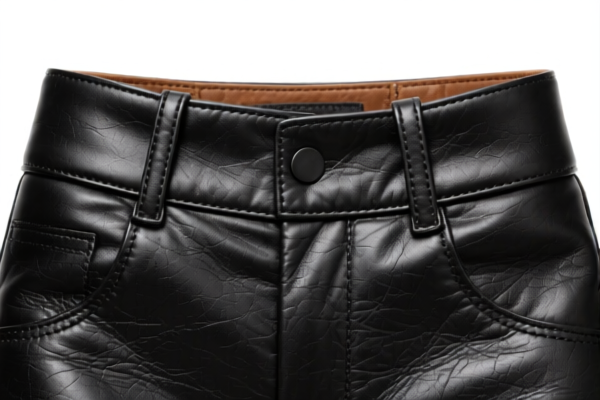

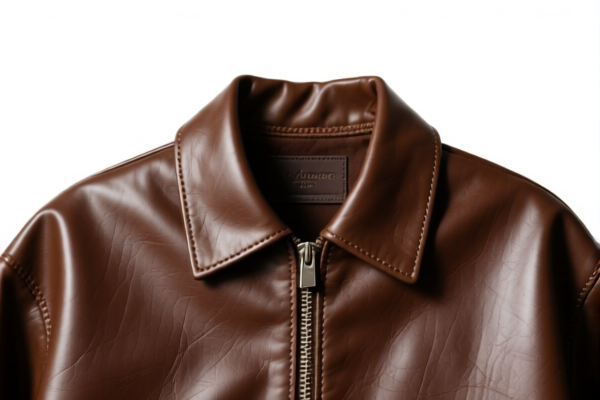
AI Analysis
👜 Bovine Leather for Luggage | The Ultimate Tariff & Compliance Guide (2026 Update)
🌐 HS Code Reference & Clearance Strategy | Latest US Tariff Analysis | Professional Customs Advisory
📌 1. Product Definition: What Exactly Is "Bovine Leather for Luggage"?
Bovine leather for luggage refers to raw or processed leather from cattle (cows, bulls, steers) specifically intended for the manufacture of luggage items such as suitcases, duffel bags, handbags, briefcases, and travel accessories. In international trade, the classification depends heavily on whether the leather is in raw/semi-processed form or finished into a specific container.
Key distinctions: - Raw/Processed Leather: If imported as sheets, panels, or semi-finished goods for manufacturing. - Finished Containers: If imported as completed suitcases, trunks, or cosmetic cases.
⚠️ Critical Classification Point:
- If the item is a finished container (e.g., a suitcase), it falls under Chapter 42.
- If the item is accessories (e.g., a leather box for optical instruments), it may fall under Chapter 90 if tied to a specific device.
- Do not confuse with general leather goods (Chapter 42, heading 4205) unless it is not a specific container.
📦 2. HS Code Classification Matrix (2026 Latest Tariff Schedule)
Based on the provided data, here are the applicable HS Codes for "Bovine Leather for Luggage" scenarios:
| HS Code | Product Description | Application Scenario | Tax Rate Detail |
|---|---|---|---|
4202.11.00.90 |
Leather goods of sheeting, of a kind normally carried in the pocket or in the handbag (e.g., wallets, purses) | Small leather accessories, not full suitcases | 43.0% |
4202.11.00.30 |
Similar containers (trunks, suitcases, etc.) of leather | Standard suitcases, trunks, briefcases | 43.0% |
4205.00.10.00 |
Other articles of leather or composition leather | General leather goods (e.g., belts, harnesses) not classified elsewhere | 35.0% |
4205.00.80.00 |
Other articles of leather, in the form of boxes (finished consumer goods) | Leather boxes for cosmetics, jewelry, etc. | 35.0% |
9005.90.80.01 |
Parts and accessories of optical instruments (e.g., leather cases for binoculars/cameras) | Specialized protective cases for optical devices | Variable + 17.5% |
🔍 Key Insight:
- Suitcases/Trunks →4202.11.00.30
- Small leather goods (wallets/purses) →4202.11.00.90
- General leather items (belts/harnesses) →4205.00.10.00
- Leather boxes (cosmetics/jewelry) →4205.00.80.00
- Optical instrument cases →9005.90.80.01
💰 3. 2026 Latest Tariff Rate Breakdown (Including Add-ons & Policies)
✅ Applicable Country: United States (US)
✅ Origin: China (CN)
✅ Effective Date: From November 10, 2025 (and subsequent imports)
🎯 1. 4202.11.00.30 & 4202.11.00.90 — Luggage & Small Leather Goods
(The most common classifications for "Bovine Leather for Luggage")
| Item | Detail |
|---|---|
| Base Duty Rate | 8.0% |
| Section 301 Duty | +25.0% |
| IEEPA Duty (Section 122) | +10.0% |
| Total Duty Rate | 43.0% |
| De Minimis Exemption? | ❌ Not Eligible |
| Legal Reference Path | IEEPA:9903.01.25 → USITC:4202.11.00.30 → FOOTNOTE:9903.88.01 |
📌 Explanation:
- The 8.0% base duty applies to all leather goods of heading 4202.
- The 25.0% Section 301 duty is imposed on Chinese-origin goods.
- The 10.0% IEEPA duty is an additional surcharge on Chinese products.
- Total: 43%. This is a high tariff, requiring careful cost planning.
🎯 2. 4205.00.10.00 & 4205.00.80.00 — Other Leather Goods (e.g., Belts, Boxes)
| Item | Detail |
|---|---|
| Base Duty Rate | 0.0% |
| Section 301 Duty | +25.0% |
| IEEPA Duty (Section 122) | +10.0% |
| Total Duty Rate | 35.0% |
| De Minimis Exemption? | ❌ Not Eligible |
| Legal Reference Path | IEEPA:9903.01.24 → USITC:4205.00.80.00 → FOOTNOTE:9903.88.01 |
📌 Note:
- Although the base duty is 0%, the add-ons push the total to 35%.
- These codes apply to non-container leather goods or leather boxes not classified as luggage.
🎯 3. 9005.90.80.01 — Optical Instrument Cases
| Item | Detail |
|---|---|
| Base Duty Rate | Same as the principal article |
| Section 301 Duty | +7.5% |
| IEEPA Duty (Section 122) | +10.0% |
| Total Duty Rate | Base Rate + 17.5% |
| De Minimis Exemption? | ❌ Not Eligible |
📌 Warning:
- The base rate depends on the optical instrument it accompanies.
- This code is only for cases/accessories of optical devices (e.g., binoculars, cameras).
- Not applicable for general luggage.
🛠️ 4. Clearance Practical Advice (Pitfall Avoidance Guide)
✅ 1. Document Checklist (Must-Have)
| Document | Required | Purpose |
|---|---|---|
| Product Specification | ✔️ | Confirm material (100% bovine leather vs. synthetic) |
| Commercial Invoice | ✔️ | Clearly state "Bovine Leather Luggage" and HS Code |
| Packing List | ✔️ | Detail contents (e.g., suitcase + dust bag + keys) |
| Certificate of Origin (CO) | ✔️ | Proves Chinese origin for tariff calculation |
| Material Declaration | ✔️ | Confirm no restricted dyes or chemicals (REACH/RoHS) |
| Photos | ✔️ | Show product, label, and packaging |
✅ 2. Classification Strategy (Key Mnemonics)
🔥 “Finished Luggage = 4202.11; Small Goods = 4202.11 or 4205; Boxes = 4205.80”
| Scenario | Correct HS Code | Incorrect HS Code | Risk |
|---|---|---|---|
| Suitcase/Trunk | 4202.11.00.30 |
4205.00.80.00 |
Under/over-classification risk |
| Wallet/Purse | 4202.11.00.90 |
4205.00.10.00 |
43% vs. 35% difference |
| Belt/Harness | 4205.00.10.00 |
4202.11.00.30 |
Wrong classification |
| Cosmetic Box | 4205.00.80.00 |
4202.11.00.30 |
Not a "luggage" container |
| Camera Case | 9005.90.80.01 |
4202.11.00.30 |
Wrong chapter (90 vs. 42) |
✅ 3. Special Cases Handling
| Situation | Handling Advice |
|---|---|
| Mixed Materials | If leather is <50%, may fall under textile codes (lower tariff) |
| OEM Branding | Provide contract and design approval to avoid "counterfeit" flags |
| Sample vs. Commercial | Samples may qualify for lower duty if declared properly |
| Re-export | Consider duty drawback if re-exporting within 3 years |
🌍 5. Global Market Comparison (2026 Update)
| Country/Region | Recommended HS Code | Duty Rate (China Origin) | Certification | Notes |
|---|---|---|---|---|
| 🇺🇸 USA | 4202.11.00.30 |
43% | None | High tariffs due to Section 301 + IEEPA |
| 🇨🇳 China | 4202.11.00.30 |
10% | CCC (if applicable) | Lower base duty |
| 🇪🇺 EU | 4202.11.00 |
4.5% | REACH, RoHS | No Section 301 |
| 🇬🇧 UK | 4202.11.00 |
4.5% | UKCA | Post-Brexit tariffs |
| 🇯🇵 Japan | 4202.11.00 |
0% | PSE (if electronic) | Free trade agreement benefits |
📌 Conclusion:
- USA has the highest tariffs due to trade policies.
- EU/UK/Japan offer lower or zero tariffs for leather goods.
- Diversify supply chain to avoid US tariffs if possible.
📌 6. Common Mistakes & Pitfalls (Lessons Learned)
❌ Mistake 1: Declaring a suitcase as a "leather box" (4205.00.80.00)
👉 Consequence: Customs may reclassify and charge 43% instead of 35%, plus penalties.
❌ Mistake 2: Ignoring material composition (e.g., claiming 100% leather when it’s 50% synthetic)
👉 Consequence: Fraud allegations, goods seizure, and fines.
❌ Mistake 3: Using generic descriptions like "Leather Goods" without specific HS Code
👉 Consequence: Delays, inspections, and potential misclassification.
❌ Mistake 4: Not declaring Section 301/IEEPA duties
👉 Consequence: Underpayment, leading to back taxes + interest.
✅ Best Practice:
Always use specific product names (e.g., "Bovine Leather Suitcase, Model XYZ") and accurate HS Codes.
Verify duties with a customs broker before shipping.
🎯 7. Conclusion: Smart Classification, Cost Savings!
🎯 Remember:
🔹 "Luggage = 4202.11 (43%) | Small Goods = 4202.11/4205 (35-43%) | Boxes = 4205.80 (35%)"
🔹 "HS Code defines your tax bill; accuracy saves thousands!"
📌 Pro Tip:
If your luggage is made in Vietnam, Mexico, or Thailand, you may qualify for IEEPA exemptions, reducing duties to 0-5%.
Consider pre-ruling with CBP to confirm classification and avoid surprises.
📣 Action Plan:
📞 Consult a licensed customs broker
📄 Prepare detailed product specs
🚀 Ship with confidence, knowing your tariffs are accurate!
✨ Professional Clearance Starts with Precise Classification!
💼 Every dollar saved is a dollar earned!
Customer Reviews
About HS Code Classification
The Harmonized System (HS) is an internationally standardized nomenclature developed by the World Customs Organization (WCO) to classify traded products. Over 200 countries use the HS system as the basis for customs tariffs, trade statistics, and import/export regulations.
Each HS code follows a hierarchical structure:
- Chapter (2 digits) — Broad category of goods (e.g., Chapter 84: Machinery and Mechanical Appliances)
- Heading (4 digits) — More specific grouping within the chapter
- Subheading (6 digits) — Internationally standardized breakdown, used by all WCO member countries
- National subdivisions (8-10 digits) — Country-specific extensions for further classification, such as US HTSUS 10-digit codes
Correct HS code classification is essential for smooth customs clearance, accurate duty payment, and compliance with trade regulations. Misclassification can lead to customs delays, overpayment of duties, or penalties.
When importing from CN to US, the applicable tariff rates may include:
- Most-Favored-Nation (MFN) rate — The standard duty rate applied to WTO members
- General rate — Applied to countries without trade agreements
- Trade remedy duties — Additional tariffs such as Section 301 (anti-dumping), Section 232 (national security), or countervailing duties
The information provided on this page is for reference purposes only. For official classification, please consult with your local customs authority or a licensed customs broker.