Bovine leather offcuts (for belts)
CN → US| HS Code | Tariff Rate | Origin | Destination | Doc |
|---|---|---|---|---|
| 6406906000 | 17.5% | CN | US | Official Doc |
| 4205000500 | 37.9% | CN | US | Official Doc |
| 4205001000 | 35.0% | CN | US | Official Doc |
| 6406909000 | 17.5% | CN | US | Official Doc |
Product Images
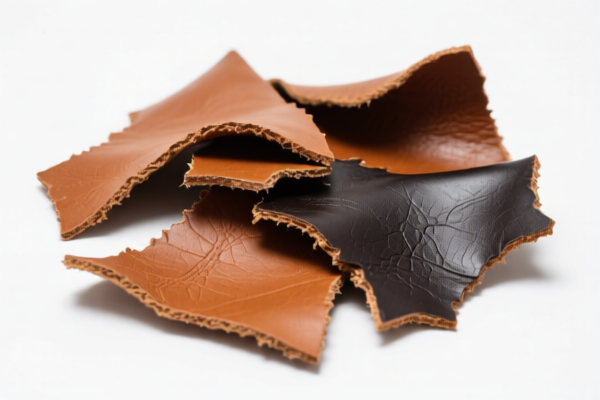
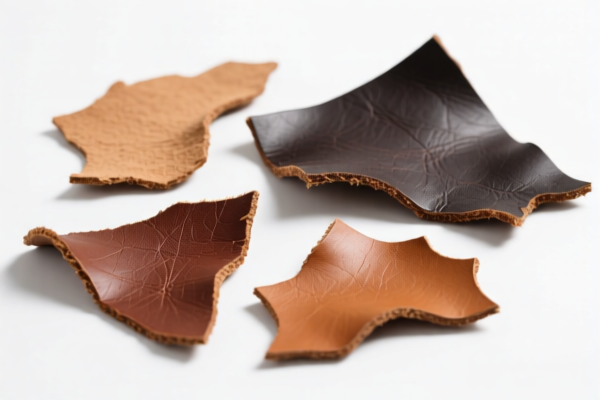
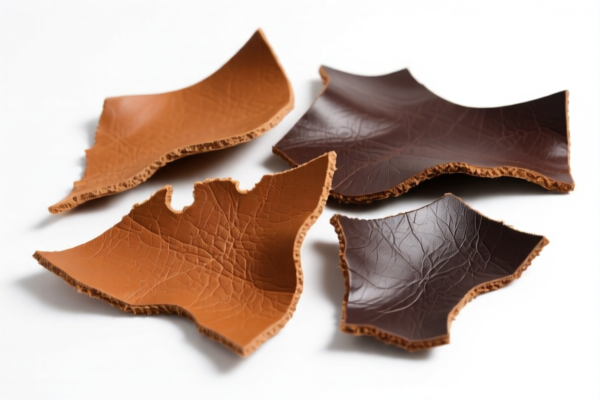
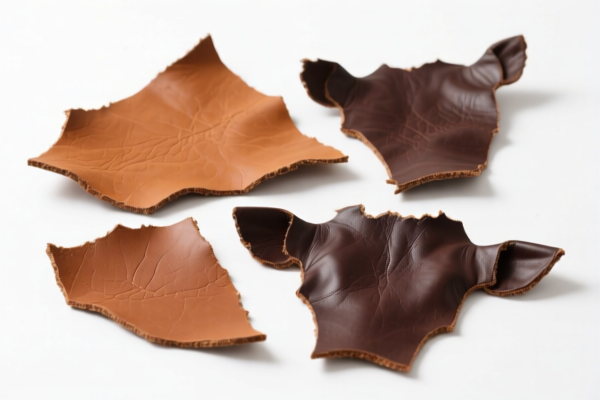
AI Analysis
🧵 Bovine Leather Offcuts (For Belts)
🌐 HS Code Reference & Customs Clearance Guide | 2026 Latest Tariff Analysis | Professional Clearance Strategy
📌 I. Product Definition & Classification: What Exactly Are "Leather Offcuts"?
Bovine leather offcuts are residual pieces of hide resulting from the cutting and manufacturing processes of leather goods. When specifically designated "for belts," these offcuts are typically shaped or destined to become belt blanks, straps, or decorative elements.
In international trade, the classification depends heavily on whether the offcuts are: 1. Finished/Partially Finished Parts: Shaped specifically for belts (e.g., stamped into belt shapes). 2. Raw Material/Scrap: Irregular shapes used for bonding, recycling, or general leather component manufacturing.
⚠️ Key Distinction:
- If the offcuts are pre-cut into specific belt shapes or are considered "parts of articles" → Likely classified under Chapter 42 (Articles of leather).
- If the offcuts are general scraps or parts of footwear/accessories not yet fully formed into final articles → May fall under Chapter 64 (Footwear parts) or General Leather Parts.
📦 II. HS Code Classification Details (2026 Latest Tariff Authority Comparison)
| HS Code | Product Description | Application Scenario | Tax Rate (CN Origin to US) | Legal Basis Summary |
|---|---|---|---|---|
6406.90.60.00 |
Leather parts of footwear/accessories (offcuts for belts, categorized as leather parts) | Leather scraps used as components for belts or footwear accessories | 17.5% | Base: 0% + Section 301: 7.5% + 122 Clause: 10% |
4205.00.05.00 |
Other articles of leather (shaped belt-like leather products) | Offcuts shaped into transmission belt forms or specific leather articles | 37.9% | Base: 2.9% + Section 301: 25% + 122 Clause: 10% |
4205.00.10.00 |
Other leather articles (general category, no specific conflict) | General leather offcuts not fitting specific sub-categories | 35.0% | Base: 0% + Section 301: 25% + 122 Clause: 10% |
6406.90.90.00 |
Other parts of footwear (extending to accessory parts) | Offcuts considered as general leather parts for shoes/accessories | 17.5% | Base: 0% + Section 301: 7.5% + 122 Clause: 10% |
🔍 Key Reminder:
-6406.90.60.00&6406.90.90.00offer the lowest total tax (17.5%). These codes classify offcuts as "parts" rather than "finished articles." -4205.00.05.00incurs the highest tax (37.9%). This applies if the offcuts are deemed "finished leather articles" or shaped like transmission belts. -4205.00.10.00is a middle-ground option (35.0%) for general leather articles without specific usage conflict.
💰 III. 2026 Latest Tariff Rate Breakdown (Including Surtaxes & Policy Surcharges)
✅ Applicable Country: United States (US)
✅ Origin: China (CN)
✅ Effective Time: Post-2025 November 10 (including subsequent imports)
🎯 1. 6406.90.60.00 & 6406.90.90.00 —— Leather Parts (Optimal for Offcuts)
| Item | Content |
|---|---|
| Base Tariff | 0% (ad valorem) |
| USITC Surtax (Section 301) | +7.5% |
| 122 Clause Surcharge | +10% |
| Total Rate | 17.5% |
| Tax Calculation | CIF Value × 17.5% |
| De Minimis Eligibility | ❌ No (deny_de_minimis) |
| Legal Basis Path | IEEPA:9903.01.25 → USITC:6406.90.60.00/90.00 → FOOTNOTE:122 |
📌 Explanation:
- These codes classify the offcuts as "parts" rather than finished goods. - The 7.5% Section 301 surcharge is significantly lower than the standard 25% for many Chapter 42 articles. - Total 17.5% is the most cost-effective classification for leather offcuts intended for belts.
🎯 2. 4205.00.10.00 —— Other Leather Articles (General Category)
| Item | Content |
|---|---|
| Base Tariff | 0% |
| USITC Surtax (Section 301) | +25% |
| 122 Clause Surcharge | +10% |
| Total Rate | 35.0% |
| Tax Calculation | CIF Value × 35.0% |
| De Minimis Eligibility | ❌ No |
| Legal Basis Path | IEEPA:9903.01.25 → USITC:4205.00.10.00 → FOOTNOTE:122 |
📌 Note:
- Higher tax burden due to the 25% Section 301 surcharge. - Use only if the offcuts cannot be classified as "parts" under Chapter 64.
🎯 3. 4205.00.05.00 —— Shaped Leather Articles (Highest Risk)
| Item | Content |
|---|---|
| Base Tariff | 2.9% |
| USITC Surtax (Section 301) | +25% |
| 122 Clause Surcharge | +10% |
| Total Rate | 37.9% |
| Tax Calculation | CIF Value × 37.9% |
| De Minimis Eligibility | ❌ No |
| Legal Basis Path | IEEPA:9903.01.25 → USITC:4205.00.05.00 → FOOTNOTE:122 |
📌 Warning:
- This code applies if the offcuts are shaped like transmission belts or are considered finished articles. - Avoid this classification for simple offcuts unless they are pre-cut into specific non-belt shapes.
🛠️ IV. Customs Clearance Practical Advice (Pitfall Avoidance Guide)
✅ 1. Required Documentation Checklist
| Document | Mandatory | Description |
|---|---|---|
| ✅ Product Specification Sheet | ✔️ | Detail material (bovine leather), dimensions, and intended use (belts) |
| ✅ Photos of Offcuts | ✔️ | Show irregular shapes vs. pre-cut belt shapes |
| ✅ Commercial Invoice | ✔️ | Clearly state "Bovine Leather Offcuts for Belts" |
| ✅ Packing List | ✔️ | List weight, quantity, and packaging details |
| ✅ Origin Certificate (CO) | ✔️ | Required for tariff calculation |
| ✅ Third-Party Lab Report | ✅ Optional | Confirm material composition (100% leather) |
✅ 2. Declaration Tips (Key Mnemonic)
🔥 "Offcuts as Parts, Not Finished Goods! Choose Chapter 64 for Lower Taxes!"
| Scenario | Correct Declaration | Wrong Approach |
|---|---|---|
| Irregular leather scraps for belts | 6406.90.60.00 (17.5%) |
Declaring as "Finished Belts" → Higher tax |
| Pre-cut belt blanks | 6406.90.60.00 or 4205.00.10.00 |
Declaring as "Transmission Belts" → 37.9% |
| General leather scraps | 6406.90.90.00 (17.5%) |
Declaring as "Fashion Accessories" → 35%+ |
| Shaped leather articles | 4205.00.05.00 (37.9%) |
Mislabeling as "Parts" → Risk of penalty |
✅ 3. Special Cases
| Scenario | Handling Advice |
|---|---|
| OEM Custom Offcuts | Provide customer orders + design specs to justify "parts" classification |
| Mixed Shipments | Separate "offcuts" from "finished belts" in different entries |
| Used/Recycled Leather | Ensure compliance with environmental regulations; declare as "recycled leather offcuts" |
| High-Value Leather | Consider pre-ruling (Advance Ruling) to lock in 17.5% rate |
🌍 V. Global Market Comparison (2026 Latest)
| Country/Region | Recommended HS Code | Tariff (CN Origin) | Certification Requirements | Remarks |
|---|---|---|---|---|
| 🇺🇸 USA | 6406.90.60.00 |
17.5% | None specific | Best for offcuts |
| 🇨🇳 China | 6406.90.60.00 |
5% | CCC (if applicable) | Low import duty |
| 🇪🇺 EU | 6406.90.60.00 |
6.5% | CE (if safety-related) | No Section 301 |
| 🇬🇧 UK | 6406.90.60.00 |
6.5% | UKCA | Post-Brexit rules apply |
| 🇦🇺 Australia | 6406.90.60.00 |
5% | RCM | No additional surcharges |
📌 Conclusion:
- USA imposes the highest complexity due to Section 301 and 122 Clause surcharges. - Choosing6406.90.60.00saves ~20% vs.4205.00.05.00. - Non-US markets have significantly lower tariffs, but documentation must still prove "parts" status.
📌 VI. Common Errors & Pitfalls (Lessons Learned)
❌ Error 1: Declaring offcuts as "Finished Belts"
👉 Consequence: Tax jumps to 37.9% → Loss of profit margin!
❌ Error 2: Using vague descriptions like "Leather Pieces"
👉 Consequence: Customs may assign 4205.00.05.00 → 37.9% tax!
❌ Error 3: Ignoring "122 Clause"
👉 Consequence: Missed 10% surcharge → Unexpected duties at port!
❌ Error 4: Mixing offcuts with finished goods in one shipment
👉 Consequence: Complex inspection → Delays and potential penalties!
✅ Correct Approach:
"Bovine Leather Offcuts, Irregular Shapes, For Belt Manufacturing, 100% Leather, HS Code 6406.90.60.00"
🎯 VII. Conclusion: Professional Declaration, Cost Savings, Efficient Clearance!
🎯 Remember the Mnemonic:
🔹 "Offcuts as Parts, Chapter 64 is Smart!"
🔹 "17.5% vs 37.9%, Choose Wisely!"
🔹 "122 Clause Adds 10%, Don’t Forget It!"
📌 Pro Tip:
If your offcuts are shaped into specific belt blanks, consider applying for an Advance Ruling to confirm
6406.90.60.00eligibility.
For large volumes, negotiate with suppliers to provide detailed material declarations to support lower tax classification.
📣 Take Action Now:
📞 Contact a Professional Customs Broker + Provide Product Photos + Apply for HS Code Pre-Ruling
🚀 Ensure Smooth Customs Clearance, Maximize Profits, and Avoid Surprises!
✨ Professional Clearance Starts with Accurate Classification!
💼 Every Cent Saved is a Cent Earned!
Customer Reviews
About HS Code Classification
The Harmonized System (HS) is an internationally standardized nomenclature developed by the World Customs Organization (WCO) to classify traded products. Over 200 countries use the HS system as the basis for customs tariffs, trade statistics, and import/export regulations.
Each HS code follows a hierarchical structure:
- Chapter (2 digits) — Broad category of goods (e.g., Chapter 84: Machinery and Mechanical Appliances)
- Heading (4 digits) — More specific grouping within the chapter
- Subheading (6 digits) — Internationally standardized breakdown, used by all WCO member countries
- National subdivisions (8-10 digits) — Country-specific extensions for further classification, such as US HTSUS 10-digit codes
Correct HS code classification is essential for smooth customs clearance, accurate duty payment, and compliance with trade regulations. Misclassification can lead to customs delays, overpayment of duties, or penalties.
When importing from CN to US, the applicable tariff rates may include:
- Most-Favored-Nation (MFN) rate — The standard duty rate applied to WTO members
- General rate — Applied to countries without trade agreements
- Trade remedy duties — Additional tariffs such as Section 301 (anti-dumping), Section 232 (national security), or countervailing duties
The information provided on this page is for reference purposes only. For official classification, please consult with your local customs authority or a licensed customs broker.