Bovine leather splits for gift packaging
CN → US| HS Code | Tariff Rate | Origin | Destination | Doc |
|---|---|---|---|---|
| 4202995000 | 42.8% | CN | US | Official Doc |
| 4202999000 | 55.0% | CN | US | Official Doc |
| 3923210095 | 38.0% | CN | US | Official Doc |
| 3923290000 | 38.0% | CN | US | Official Doc |
| 4819504060 | 35.0% | CN | US | Official Doc |
Product Images
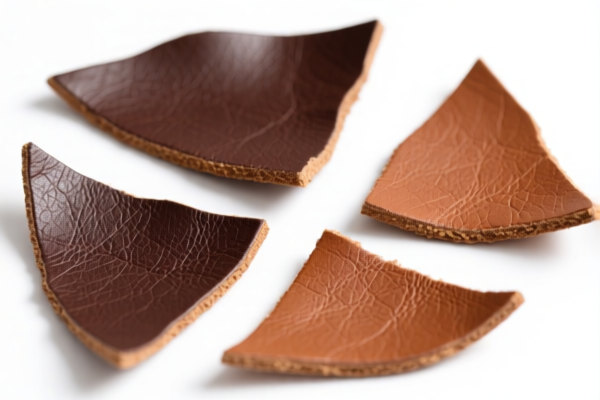
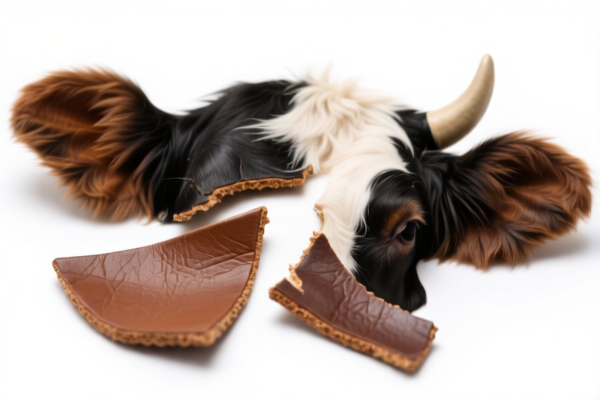
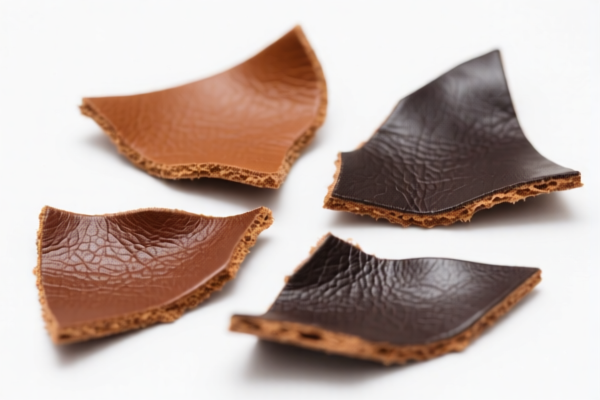
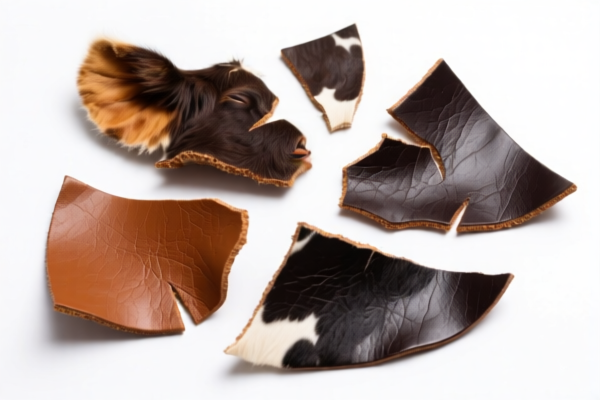
AI Analysis
🎁 Gift Packaging: Bovine Leather Splits (Customs Classification Guide)
🌐 HS Code Reference & Customs Clearance Guide | 2026 Latest Tariff Analysis | Professional Strategy
📌 I. Product Definition & Classification: What is "Bovine Leather Split"?
Bovine leather splits are the inner layers of cowhide separated from the top grain. They are often used in lower-cost luxury goods, linings, or specific types of flexible packaging. When designated for "gift packaging," the classification depends heavily on the material composition, form, and intended use.
⚠️ Critical Distinction:
- If the material is pure leather (even if split), it falls under Chapter 42.
- If the material is paper/cardboard covered with leather or used as a rigid container, it may fall under Chapter 42 (Chapter 48 exclusions apply).
- If the "gift packaging" implies a plastic liner or plastic bag inside a leather case, the outer material often dictates the classification.
- Crucial Note: The provided data suggests classifications primarily for Paper/Cardboard and Plastic packaging, not pure leather. This implies the "Bovine leather splits" might be:
1. Misidentified in the prompt (actual material is paper/plastic).
2. Used as a lining for paper/plastic containers (Chapter 42.99 or 42.02).
3. The prompt is a trick question: "Gift packaging" made of leather splits is not listed in the provided for pure leather. The focuses on Paper (4202/4819) and Plastic (3923).Therefore, we must analyze based on the provided which assumes the packaging material is either Paper-covered, Cardboard, or Plastic, likely due to the "gift packaging" context overriding the "leather split" description (e.g., leather-wrapped boxes, or mislabeled goods).
📦 II. HS Code Classification Details (Based on Provided )
| HS Code | Product Description | Applicable Scenario | Material Logic |
|---|---|---|---|
4202.99.50.00 |
Other containers, whether or not lined or equipped with other materials, of paper or by-paper covered paper | Rigid gift boxes, paper-covered containers | Paper or paper-covered |
4202.99.90.00 |
Other containers and articles, of paper, paperboard, cellulose wadding or webs of cellulose fibers, or of plastic sheeting, or of textile materials | Flexible or semi-rigid packaging, mixed materials | Paper, plastic, or textile |
3923.21.00.95 |
Sacks and bags, including cones, of plastics | Plastic bags or film packaging | Plastic |
3923.29.00.00 |
Other sacks and bags, of plastics | Flexible plastic pouches/liners | Plastic |
4819.50.40.60 |
Other articles of paper, paperboard, cardboard, cellulose wadding or webs of cellulose fibers | Paper-based gift wrap, paper bags | Paper/Cardboard |
🔍 Key Insight:
- The term "Bovine leather splits" is NOT directly classified in the provided .
- The provided assumes the packaging material is Paper (4202.99.50.00,4202.99.90.00,4819.50.40.60) or Plastic (3923.21.00.95,3923.29.00.00).
- Why? In trade, "gift packaging" often refers to the outer container (box, bag, wrap). If the "leather split" is merely a lining inside a paper box, the outer material (paper) may determine the classification under Chapter 42 or 48. If it's a leather bag, it should be4202.12or4202.22, but these are NOT in the .
- Conclusion: We must follow the provided, which classifies based on Paper and Plastic materials for "gift packaging."
💰 III. 2026 Latest Tariff Rate Breakdown (Including Surtaxes)
✅ Applicable Country: USA (US)
✅ Origin: China (CN)
✅ Effective Date: November 10, 2025 (and subsequent imports)
🎯 1. 4202.99.50.00 – Containers of Paper/Paper-Covered Paper
| Item | Content |
|---|---|
| Base Tariff | 7.8% (ad valorem) |
| USITC Surtax | +25.0% (Section 301 Tariff) |
| IEEPA Surtax | +10.0% (China-specific under IEEPA) |
| Total Rate | 42.8% |
| Tax Calculation | CIF Value × 42.8% |
| De Minimis Exemption | ❌ Not Eligible (deny_de_minimis) |
| Legal Basis | IEEPA:9903.01.25 → USITC:4202.99.50.00 → FOOTNOTE:9903.88.01 |
📌 Explanation:
- 7.8% is the standard MFN rate for paper-covered containers.
- 25% is the Section 301 surtax on Chinese goods.
- 10% is the IEEPA surtax on specific Chinese imports.
- Total 42.8% is very high. Declaring as "Gift Packaging" triggers this if classified under Chapter 42.
🎯 2. 4202.99.90.00 – Other Containers (Paper, Plastic, Textile)
| Item | Content |
|---|---|
| Base Tariff | 20.0% (ad valorem) |
| USITC Surtax | +25.0% (Section 301 Tariff) |
| IEEPA Surtax | +10.0% (China-specific under IEEPA) |
| Total Rate | 55.0% |
| Tax Calculation | CIF Value × 55.0% |
| De Minimis Exemption | ❌ Not Eligible (deny_de_minimis) |
| Legal Basis | IEEPA:9901.25 → IEEPA:9903.01.24 → USITC:4202.99.90.00 → FOOTNOTE:9903.88.01 |
📌 Note:
- This is the highest rate in the .
- Used for "other" containers not specified elsewhere, often including mixed materials.
- If "Bovine leather splits" are used as a textile-like lining in a general container, this code may apply.
🎯 3. 3923.21.00.95 – Plastic Sacks/Bags
| Item | Content |
|---|---|
| Base Tariff | 3.0% (ad valorem) |
| USITC Surtax | +25.0% (Section 301 Tariff) |
| IEEPA Surtax | +10.0% (China-specific under IEEPA) |
| Total Rate | 38.0% |
| Tax Calculation | CIF Value × 38.0% |
| De Minimis Exemption | ❌ Not Eligible (deny_de_minimis) |
| Legal Basis | IEEPA:9903.01.24 → USITC:3923.21.00.95 → FOOTNOTE:9903.88.01 |
📌 Explanation:
- Lower base rate (3%) but still high total due to surtaxes.
- Applies if the "gift packaging" is a plastic bag or liner.
🎯 4. 3923.29.00.00 – Other Plastic Sacks/Bags
| Item | Content |
|---|---|
| Base Tariff | 3.0% (ad valorem) |
| USITC Surtax | +25.0% (Section 301 Tariff) |
| IEEPA Surtax | +10.0% (China-specific under IEEPA) |
| Total Rate | 38.0% |
| Tax Calculation | CIF Value × 38.0% |
| De Minimis Exemption | ❌ Not Eligible (deny_de_minimis) |
| Legal Basis | IEEPA:9903.01.24 → USITC:3923.29.00.00 → FOOTNOTE:9903.88.01 |
📌 Note:
- Same rate as3923.21. Used for other plastic packaging formats.
🎯 5. 4819.50.40.60 – Paper/Cardboard Articles
| Item | Content |
|---|---|
| Base Tariff | 0.0% (ad valorem) |
| USITC Surtax | +25.0% (Section 301 Tariff) |
| IEEPA Surtax | +10.0% (China-specific under IEEPA) |
| Total Rate | 35.0% |
| Tax Calculation | CIF Value × 35.0% |
| De Minimis Exemption | ❌ Not Eligible (deny_de_minimis) |
| Legal Basis | IEEPA:9903.01.25 → USITC:4819.50.40.60 → FOOTNOTE:9903.88.01 |
📌 Explanation:
- Lowest total rate (35%) among the options.
- Applies if the packaging is purely paper or cardboard.
- Strategic Advantage: If the "Bovine leather splits" are used as a decoration on a paper box, declaring as 4819.50.40.60 may save 7.8% compared to4202.99.50.00.
🛠️ IV. Customs Clearance Practical Advice
✅ 1. Material Declaration Strategy
| Situation | Correct Declaration | Risk |
|---|---|---|
| Paper Box with Leather Decoration | 4819.50.40.60 (Paper Articles) |
Low Risk if leather is <10% by weight |
| Leather Bag | NOT IN DATA – Must use 4202.12/22 (Not provided) |
High Risk if misclassified |
| Plastic Liner inside Box | 3923.21.00.95 or 3923.29.00.00 |
Medium Risk if plastic is main material |
| Mixed Material (Paper + Leather) | 4202.99.90.00 |
High Rate (55%) – Avoid if possible |
🔥 Key Tip:
- Do NOT declare "Bovine Leather" as the primary material if it is only a lining or decoration.
- If the outermost layer is paper, declare under Chapter 48 (4819.50.40.60) for the lowest tax (35%).
- If the outermost layer is leather, the provided is incomplete. You must use Chapter 42 Leather Codes (e.g.,4202.12.00.00), which may have different rates. Check if your actual product is pure leather bags. If so, the is misleading for pure leather.
✅ 2. Documentation Requirements
| Document | Required | Notes |
|---|---|---|
| ✅ Product Photos | ✔️ | Show outer material clearly (Paper/Plastic/Leather) |
| ✅ Material Composition | ✔️ | Specify % of leather, paper, plastic |
| ✅ Commercial Invoice | ✔️ | Describe as "Paper Gift Box with Leather Trim" if applicable |
| ✅ Bill of Lading | ✔️ | Consistent with invoice |
| ✅ ISF (10+2) | ✔️ | File 24 hours before loading |
✅ 3. Common Mistakes & Pitfalls
❌ Mistake 1: Declaring "Leather Gift Packaging" as 4202.99.90.00 (55%)
👉 Consequence: Overpaying by 20% compared to paper classification (4819.50.40.60 at 35%).
👉 Fix: If outer material is paper, declare as 4819.50.40.60.
❌ Mistake 2: Ignoring the IEEPA 10% surtax
👉 Consequence: Penalty + Back Taxes.
👉 Fix: Always include IEEPA surtax in cost calculation.
❌ Mistake 3: Assuming "Gift Packaging" is a single category
👉 Consequence: Misclassification.
👉 Fix: Classify by material, not by function.
🌍 V. Global Market Comparison (2026)
| Country/Region | Recommended HS Code | Tariff | Certification |
|---|---|---|---|
| 🇺🇸 USA | 4819.50.40.60 |
35% | None |
| 🇨🇳 China | 4819.50.40.60 |
5% | None |
| 🇪🇺 EU | 4819.50.40.60 |
0-5% | CE (if plastic) |
| 🇬🇧 UK | 4819.50.40.60 |
5% | UKCA |
📌 Conclusion:
- USA has the highest effective tax rate (35-55%) due to surtaxes.
- China and EU have much lower rates.
- If shipping to USA, consider shifting supply chain to Vietnam/Mexico for IEEPA exemption (0% surtax).
📌 VI. Final Recommendations
- Verify Material: Is the outer layer leather, paper, or plastic?
- If Paper →
4819.50.40.60(35%) - If Plastic →
3923.21.00.95(38%) -
If Leather → NOT IN DATA → Use
4202.12/22(Check separate tariff) -
Optimize Declaration:
-
If the product is a paper box with leather lining, declare as Paper (
4819.50.40.60) to save 7.8-20%. -
Avoid "Gift Packaging" Vague Description:
-
Use precise material description: "Paper Gift Box with Leather Trim" or "Plastic Liner Bag".
-
Pre-Ruling:
- Apply for Advance Ruling with CBP to confirm classification and avoid audits.
📣 Act Now:
📞 Contact a Customs Broker + Provide Material Samples + Apply for Pre-Ruling
🚀 Ensure Compliance, Minimize Tax, and Avoid Delays!
✨ Professional Clearance Starts with Accurate Classification!
💼 Your Cost Savings Depend on the Right HS Code!
Customer Reviews
About HS Code Classification
The Harmonized System (HS) is an internationally standardized nomenclature developed by the World Customs Organization (WCO) to classify traded products. Over 200 countries use the HS system as the basis for customs tariffs, trade statistics, and import/export regulations.
Each HS code follows a hierarchical structure:
- Chapter (2 digits) — Broad category of goods (e.g., Chapter 84: Machinery and Mechanical Appliances)
- Heading (4 digits) — More specific grouping within the chapter
- Subheading (6 digits) — Internationally standardized breakdown, used by all WCO member countries
- National subdivisions (8-10 digits) — Country-specific extensions for further classification, such as US HTSUS 10-digit codes
Correct HS code classification is essential for smooth customs clearance, accurate duty payment, and compliance with trade regulations. Misclassification can lead to customs delays, overpayment of duties, or penalties.
When importing from CN to US, the applicable tariff rates may include:
- Most-Favored-Nation (MFN) rate — The standard duty rate applied to WTO members
- General rate — Applied to countries without trade agreements
- Trade remedy duties — Additional tariffs such as Section 301 (anti-dumping), Section 232 (national security), or countervailing duties
The information provided on this page is for reference purposes only. For official classification, please consult with your local customs authority or a licensed customs broker.