Bovine leather splits for name tags
CN → US| HS Code | Tariff Rate | Origin | Destination | Doc |
|---|---|---|---|---|
| 4205008000 | 35.0% | CN | US | Official Doc |
| 4205004000 | 36.8% | CN | US | Official Doc |
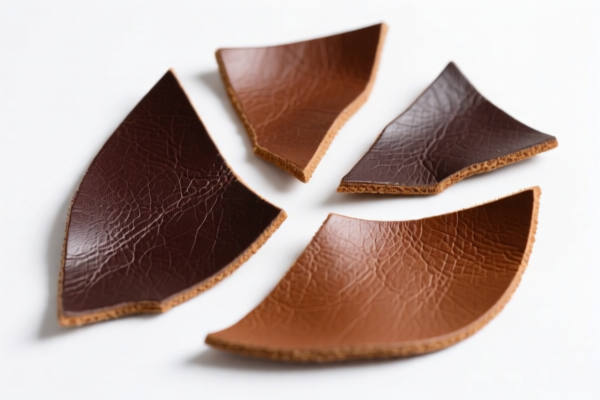
Product Images



AI Analysis
🏷️ Bovine Leather Splits for Name Tags (Leather Articles)
🌐 HS Code Reference & Customs Clearance Guide | 2026 Latest Tariff Analysis | Professional Customs Strategy
📌 I. Product Definition & Classification: Do You Understand "Leather Splits"?
Bovine leather splits refer to the layers of leather remaining after the top grain (the outermost layer) has been separated from the hide. In international trade, these splits are processed into various leather articles. For name tags, the classification depends heavily on whether the item is considered a general accessory or a specific strap-like article, and how it is finished.
The data provided categorizes these items under Chapter 42: Articles of Leather or of Composition Leather. Specifically, it distinguishes between: 1. General Leather Articles (Straps/Strops): Often used for lanyards, badge holders, or strap-based name tags. 2. Other Leather Articles: General-purpose leather items that do not fit specific sub-categories like straps.
⚠️ Key Distinction Point:
- If the name tag includes a strap, lanyard, or strop mechanism for wearing, it is more likely to fall under "Straps and strops" (HS 4205.00.40.00).
- If the name tag is a general flat leather piece, patch, or accessory without a specific strap structure, it falls under "Other" (HS 4205.00.80.00).
📦 II. HS Code Classification Details (2026 Latest Tariff Authority Comparison)
| HS Code | Product Description | Application Scenario | Includes Strap/Strop? |
|---|---|---|---|
4205.00.40.00 |
Other articles of leather or of composition leather: Straps and strops | Leather lanyards, badge straps, belt-like name tags, strop leather for tools | ✅ Yes (Primary feature is strap/strop) |
4205.00.80.00 |
Other articles of leather or of composition leather: Other: Other | General leather patches, flat name tag bodies, leather badges, non-strap accessories | ❌ No (General accessory, no specific strap function) |
🔍 Important Reminder:
- Leather splits themselves (raw material) would typically fall under Chapter 41. However, once processed into "articles" (finished or semi-finished goods like name tags), they move to Chapter 42.
- If the name tag is fabric-backed with a leather overlay, it may still be classified under Chapter 42 if leather constitutes the essential character.
- Customs Enforcement: US Customs often scrutinizes "straps" vs. "other articles" to determine if the 25% Section 301 duty applies differently (see below).
💰 III. 2026 Latest Tariff Rate Details (Including Surtaxes & Policy Add-ons)
✅ Applicable Country: United States (US)
✅ Origin: China (CN) (Implied by the 25% surtax structure in data)
✅ Effective Date: Current rates as per provided data
🎯 1. 4205.00.80.00 —— Other Articles of Leather (General)
| Item | Content |
|---|---|
| Base Tariff | 0.0% (ad valorem) |
| Additional Surtax | +25.0% (Section 301 / Trade Remedy) |
| Total Tax Rate | 25.0% |
| Tax Calculation | CIF Value × 25.0% |
| De Minimis Eligibility | ❌ Not Eligible (Deny de minimis for Section 301 goods from China) |
| Legal Basis Path | HTSUS:4205.00.80.00 → USITC:Footnote for Sec 301 → Total Duty 25% |
📌 Explanation:
- The 0% base rate reflects the standard Most Favored Nation (MFN) duty for general leather articles.
- The 25% surtax is imposed under Section 301 of the Trade Act of 1974, targeting specific Chinese goods.
- Total Cost: For every $100 CIF value, $25 is paid in duties.
🎯 2. 4205.00.40.00 —— Straps and Strops
| Item | Content |
|---|---|
| Base Tariff | 1.8% (ad valorem) |
| Additional Surtax | +25.0% (Section 301 / Trade Remedy) |
| Total Tax Rate | 26.8% |
| Tax Calculation | CIF Value × 26.8% |
| De Minimis Eligibility | ❌ Not Eligible (Deny de minimis for Section 301 goods from China) |
| Legal Basis Path | HTSUS:4205.00.40.00 → USITC:Footnote for Sec 301 → Total Duty 26.8% |
📌 Note:
- The base tariff is slightly higher (1.8%) because straps are considered more specialized than general leather articles.
- The 25% surtax remains the same, as it applies broadly to Chapter 42 goods from China under current trade policies.
- Total Cost: For every $100 CIF value, $26.80 is paid in duties.
🛠️ IV. Customs Clearance Practical Advice (Real-World Pitfall Avoidance Guide)
✅ 1. Required Documentation Checklist (All Required)
| Document | Mandatory? | Description |
|---|---|---|
| ✅ Product Specification Sheet | ✔️ | Details material (bovine split), thickness, finish, and intended use. |
| ✅ Photos of Product | ✔️ | Clear images showing if it includes a strap, lanyard, or pin backing. |
| ✅ Commercial Invoice | ✔️ | Must clearly describe item as "Leather Name Tag" or "Leather Strap for ID". |
| ✅ Packing List | ✔️ | Separate lines for straps vs. general tags if mixed. |
| ✅ Country of Origin Certificate | ✔️ | Essential for confirming Chinese origin and applying surtaxes. |
✅ 2. Declaration Tips (Key Mantra)
🔥 "Strap Gets Tagged, General Gets Flat, Name Matters, Rate Varies!"
| Scenario | Correct Declaration | Wrong Practice |
|---|---|---|
| Name tag with leather lanyard/strap | 4205.00.40.00 (Straps) |
Declare as "Badge" → 25% vs 26.8% (Minor diff, but classification accuracy matters) |
| Flat leather badge/patch | 4205.00.80.00 (Other) |
Declare as "Strap" → Incorrect, may trigger audit |
| Fabric name tag with leather overlay | Check Chapter 58/63 | Misdeclare as 100% Leather → Potential fraud/penalty |
| Raw leather split (unworked) | Chapter 41 | Misdeclare as Chapter 42 "Article" → Delay in clearance |
✅ 3. Special Situation Handling
| Situation | Handling Advice |
|---|---|
| Mixed Containers (Straps + General Tags) | Separate Line Items: Declare straps under 4205.00.40.00 and general tags under 4205.00.80.00. Do not lump them into one "Other" code to underpay. |
| Leather vs. Composition Leather | If "bovine split" is genuine leather, use Chapter 42. If it's synthetic/reconstituted, ensure it qualifies as "composition leather" under the same codes. |
| Sample vs. Commercial | Samples still incur duties. Ensure "Commercial Value" is declared, not just $1, to avoid customs delays. |
| Pin vs. Strap Backing | If the name tag has a metal pin on the back but no strap, it is NOT a strap. Use 4205.00.80.00. |
🌍 V. Global Market Comparison (2026 Latest)
| Country/Region | Recommended HS Code | Tariff Rate | Certification | Note |
|---|---|---|---|---|
| 🇺🇸 USA | 4205.00.40.00 / 80.00 |
25% - 26.8% | No special cert | High surtax due to Section 301 |
| 🇨🇳 China | 4205.00.40.00 / 80.00 |
~5-8% | None | Lower base duty, no US surtax |
| 🇪🇺 EU | 4205.00.40 / 80 |
~4% | None | Standard MFN rate, no surtax |
| 🇬🇧 UK | 4205.00.40 / 80 |
~4% | None | Post-Brexit tariff structure |
📌 Conclusion:
- USA is the most expensive market for leather name tags from China due to the 25% surtax.
- Europe and UK offer significantly lower duty burdens (~4%).
- Consider supply chain diversification (e.g., sourcing from Vietnam or India) if shipping to the US, as these countries may not face the same Section 301 tariffs.
📌 VI. Common Errors & Pitfalls (Lessons Learned)
❌ Error 1: Declaring a leather strap name tag as "General Leather Article" (4205.00.80.00)
👉 Consequence: While the rate is lower (25% vs 26.8%), it is misclassification. If caught, it may lead to audits for other goods or false declaration penalties. Accuracy is key.
❌ Error 2: Declaring a general leather badge as "Strap" (4205.00.40.00)
👉 Consequence: Overpayment of 1.8% base tariff. More importantly, it sets a precedent for incorrect valuation.
❌ Error 3: Ignoring the Section 301 Surtax
👉 Consequence: If the 25% is not added to the entry, customs will assess back duties + interest + penalties upon audit.
❌ Error 4: Confusing Leather Splits (Ch 41) with Leather Articles (Ch 42)
👉 Consequence: If you import raw splits without processing them into "articles," they fall under Ch 41. If you import finished name tags, they are Ch 42. Ensure your product description matches the stage of processing.
✅ Correct Approach:
"Leather Name Tag, Bovine Split, with Lanyard Strap, Model XYZ, Origin: China" → HS 4205.00.40.00
"Leather Name Badge, Bovine Split, Flat, Pin Back, Model ABC, Origin: China" → HS 4205.00.80.00
🎯 VII. Conclusion: Professional Declaration, Save Costs!
🎯 Remember the Mantra:
🔹 "Strap gets 26.8%, General gets 25.0%. Don't misclassify, or you'll pay more in penalties!"
🔹 "Chapter 42, Article 05, Split leather, High duty, Check the strap!"
📌 Pro Tip:
If your leather name tags are shipped from Vietnam, Malaysia, or India (with substantial transformation), you may avoid the 25% Section 301 surtax.
Recommendation:
📞 Consult a licensed customs broker for Pre-Ruling (Advance Ruling) if your product structure is ambiguous.
🚀 Accurate classification ensures smooth customs clearance and predictable cost structures.
📣 Act Now:
📞 Contact a professional customs broker + Provide product photos + Verify HS Code
🚀 Ensure your leather name tags clear customs smoothly, avoid delays, and protect your margins!
✨ Professional Clearance Starts with Precise Classification!
💼 Every dollar of duty saved is pure profit!
Customer Reviews
About HS Code Classification
The Harmonized System (HS) is an internationally standardized nomenclature developed by the World Customs Organization (WCO) to classify traded products. Over 200 countries use the HS system as the basis for customs tariffs, trade statistics, and import/export regulations.
Each HS code follows a hierarchical structure:
- Chapter (2 digits) — Broad category of goods (e.g., Chapter 84: Machinery and Mechanical Appliances)
- Heading (4 digits) — More specific grouping within the chapter
- Subheading (6 digits) — Internationally standardized breakdown, used by all WCO member countries
- National subdivisions (8-10 digits) — Country-specific extensions for further classification, such as US HTSUS 10-digit codes
Correct HS code classification is essential for smooth customs clearance, accurate duty payment, and compliance with trade regulations. Misclassification can lead to customs delays, overpayment of duties, or penalties.
When importing from CN to US, the applicable tariff rates may include:
- Most-Favored-Nation (MFN) rate — The standard duty rate applied to WTO members
- General rate — Applied to countries without trade agreements
- Trade remedy duties — Additional tariffs such as Section 301 (anti-dumping), Section 232 (national security), or countervailing duties
The information provided on this page is for reference purposes only. For official classification, please consult with your local customs authority or a licensed customs broker.