Bovine leather splits for packaging materials
CN → US| HS Code | Tariff Rate | Origin | Destination | Doc |
|---|---|---|---|---|
| 4107997050 | 15.0% | CN | US | Official Doc |
| 4202999000 | 55.0% | CN | US | Official Doc |
| 4107127090 | 15.0% | CN | US | Official Doc |
| 4202316000 | 43.0% | CN | US | Official Doc |
Product Images
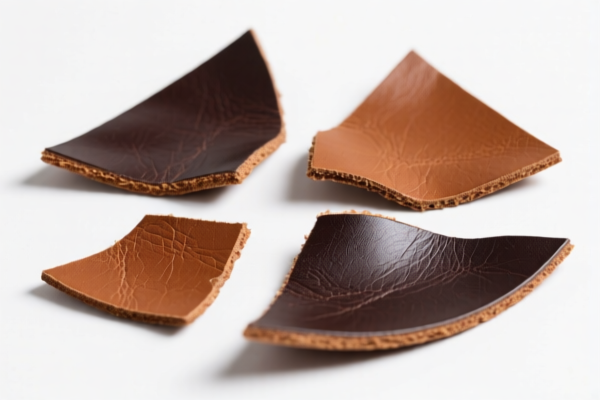

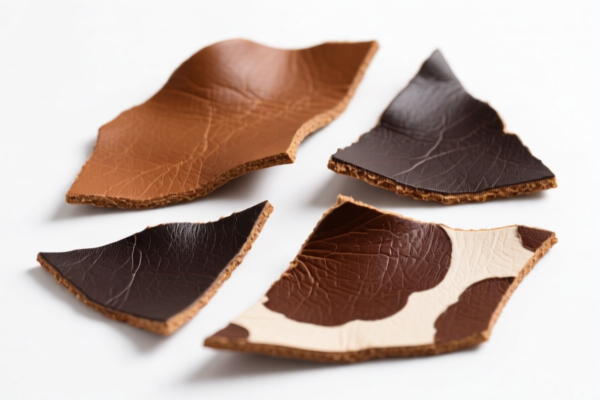
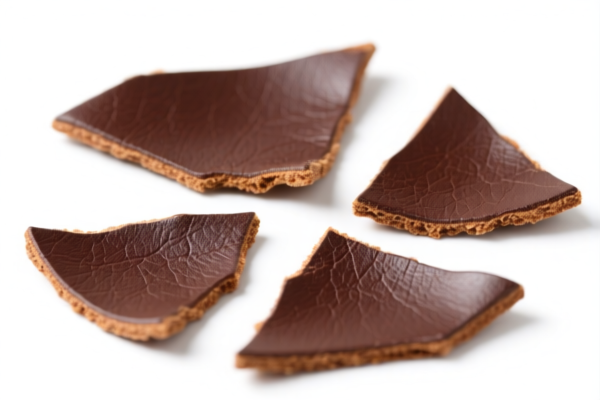
AI Analysis
🐂 Bovine Leather Splits for Card Holders (Packaging Materials)
🌐 HS Code Reference & Clearance Guide | 2026 Latest Tariff Analysis | Professional Clearance Strategy
📌 I. Product Definition & Classification: What exactly are "Bovine Leather Splits"?
Bovine leather splits are the lower layers of cowhide obtained after the top-grain layer has been separated. In the context of card holders (small leather goods for packaging/storage), these materials are critical components.
In international trade, they are classified into two main categories based on their processing state and final product form:
- Raw/Made-up Leather Goods (Chapters 41/42): If the splits are used to make a card holder, they may be classified as the finished good or the raw material depending on the degree of processing.
- Specific Sub-category Nuances: The classification hinges on whether the leather is "split" (劈层), "cut pieces" (分切料), and the specific base tariff rate applied by the destination country (typically the US in this data set).
⚠️ Key Distinction Point: - If classified under Chapter 41 (Raw/Tanned Leather) → Lower base tariffs (5%) but subject to specific "122 Clause" surcharges. - If classified under Chapter 42 (Articles of Leather) → Higher base tariffs (8%-20%) due to higher value-added processing, attracting heavier Section 301 and IEEPA surcharges.
📦 II. HS Code Classification Details (2026 Latest Tariff Authority Comparison)
| HS Code | Product Description | Application Context | Total Tax Rate | Tax Breakdown |
|---|---|---|---|---|
4107.99.70.50 |
Bovine leather splits for card holders, material: Cowhide, form: Cut pieces | Used for card holders. Treated as leather material. | 15.0% | Base: 5%, Sec 301: 0%, 122 Clause: 10% |
4202.99.90.00 |
Bovine leather splits for card holders, material: Bovine leather, form: Cut pieces, Use: Making card holders | Finished or semi-finished leather goods for card holders. | 55.0% | Base: 20%, Sec 301: 25%, 122 Clause: 10% |
4107.12.70.90 |
Bovine leather splits for card holders, material: Bovine leather, form: Split (劈层), Use: Card holders | Tanned leather, split layer, specifically for card holder production. | 15.0% | Base: 5%, Sec 301: 0%, 122 Clause: 10% |
4202.31.60.00 |
Bovine leather splits for card holders, material: Bovine leather, form: Cut pieces, Use: Card holders | Specific sub-category of leather articles (wallets/card holders). | 43.0% | Base: 8%, Sec 301: 25%, 122 Clause: 10% |
🔍 Key Reminder: - Chapter 41 (4107.*): Generally cheaper tariffs (15%). Focuses on the material nature (tanned leather splits). - Chapter 42 (4202.*): Generally expensive tariffs (43%-55%). Focuses on the article nature (finished or semi-finished goods like card holders). - Misclassification Risk: Declaring a finished card holder as "raw leather" (
4107) to save tax can lead to severe penalties. Conversely, declaring raw splits as "finished goods" (4202) increases costs unnecessarily.
💰 III. 2026 Latest Tariff Rate Breakdown (Including Surcharges & Policy Add-ons)
✅ Applicable Country: United States (US)
✅ Origin: China (CN)
✅ Effective Date: Post-November 2025 (Including subsequent imports)
🎯 1. 4107.99.70.50 & 4107.12.70.90 —— Bovine Leather Splits (Chapter 41)
| Item | Content |
|---|---|
| Base Tariff | 5.0% |
| Section 301 Surcharge | 0.0% (Exempted or not applicable under this specific sub-heading for certain splits) |
| 122 Clause Surcharge | 10.0% (Specific policy surcharge for this category) |
| Total Tax Rate | 15.0% |
| Calculation | CIF Value × 15% |
| De Minimis Eligibility | ❌ No (High tax rate prohibits small package exemption) |
| Legal Basis Path | HTSUS:4107 → 122 Clause Policy → USITC:4107.99.70.50 / 4107.12.70.90 |
📌 Explanation: - These codes fall under Chapter 41 (Prepared Leather). - The 0% Section 301 rate is a critical advantage, making these splits significantly cheaper to import than Chapter 42 goods. - However, the 10% 122 Clause surcharge still applies, bringing the total to 15%. - Crucial: You must prove the goods are "splits" (lower layers) and not "full grain" or "finished articles" to qualify for this lower rate.
🎯 2. 4202.99.90.00 —— Other Leather Articles (Chapter 42, General)
| Item | Content |
|---|---|
| Base Tariff | 20.0% |
| Section 301 Surcharge | +25% |
| 122 Clause Surcharge | +10% |
| Total Tax Rate | 55.0% |
| Calculation | CIF Value × 55% |
| De Minimis Eligibility | ❌ No |
| Legal Basis Path | HTSUS:4202 → Section 301 (Footnote 9903.88.01) → 122 Clause |
📌 Warning: - This is the highest tax bracket in this dataset. - Applies to generic "other articles of leather" not specifically listed elsewhere. - If your product is a standard card holder without a specific sub-heading, it defaults here. Avoid if possible.
🎯 3. 4202.31.60.00 —— Articles of Leather, Wallets/Card Holders (Chapter 42, Specific)
| Item | Content |
|---|---|
| Base Tariff | 8.0% |
| Section 301 Surcharge | +25% |
| 122 Clause Surcharge | +10% |
| Total Tax Rate | 43.0% |
| Calculation | CIF Value × 43% |
| De Minimis Eligibility | ❌ No |
| Legal Basis Path | HTSUS:4202.31 → Section 301 → 122 Clause |
📌 Analysis: - This is the correct HS code for finished card holders. - Although the base tariff (8%) is lower than
4202.99(20%), the 25% Section 301 surcharge is mandatory for all Chapter 42 leather goods from China. - Total 43% is still significantly higher than the 15% for Chapter 41 splits.
🛠️ IV. Clearance Operational Advice (Practical Pitfall Avoidance)
✅ 1. Documentation Checklist (Mandatory)
| Document | Must Provide | Description |
|---|---|---|
| ✅ Product Specification Sheet | ✔️ | Detail the "split" process. Confirm it is the lower layer of the hide, not full grain. |
| ✅ Photos of Cross-Section | ✔️ | Show the fibrous structure to prove it is a "split" (劈层). |
| ✅ Commercial Invoice | ✔️ | Clearly state: "Bovine Leather Splits (Lower Layer) for Card Holder Production". Avoid vague terms like "Leather Material". |
| ✅ Certificate of Origin | ✔️ | Required for US origin verification. |
| ✅ Packing List | ✔️ | Ensure quantity matches invoice. |
✅ 2. Declaration Strategies (Key Mnemonics)
🔥 "Split vs. Article: Know Your Stage, Save 30%!"
| Scenario | Correct Declaration | Wrong Declaration | Consequence |
|---|---|---|---|
| Raw Splits (Untanned/Partially Processed) | 4107.99.70.50 |
4202.31.60.00 |
Overpaying 28% (15% vs 43%) |
| Finished Card Holders | 4202.31.60.00 |
4107.99.70.50 |
Smuggling Risk. Customs will reclassify and fine. |
| Generic Leather Pieces | 4202.99.90.00 |
4107... |
If too processed, it's Chapter 42. If too raw, it's Chapter 41. |
| Splits for Export to China | N/A (Not in dataset) | N/A | N/A |
✅ 3. Special Situations Handling
| Situation | Handling Advice |
|---|---|
| Is it a Split or a Full Cut? | Provide microscopic photos or lab reports proving it is a split (fibrous, no grain surface). If it has the original grain, it is NOT a split. |
| Splits Already Cut into Card Shapes? | If cut to final shape with embossing/branding, it may be considered a finished good (4202.31.60.00). If just cut into rectangular pieces for further processing, it may still qualify as 4107. |
| Mixed Shipments | Declare splits and finished goods on separate lines with distinct HS codes. Do not mix. |
| Origin Marking | Ensure "Made in China" is clearly marked if applicable for Section 301 enforcement. |
🌍 V. Global Major Market Clearance Comparison (2026 Latest)
| Country/Region | Recommended HS Code | Tariff (China Origin) | Certification Requirements | Notes |
|---|---|---|---|---|
| 🇺🇸 USA | 4107.99.70.50 (Splits) / 4202.31.60.00 (Finished) |
15% (Splits) / 43% (Finished) | None specific for leather | Section 301 and 122 Clause apply. High cost for finished goods. |
| 🇨🇳 China | 4107.99.70.50 / 4202.31.60.00 |
~5-10% (Import Duty) | N/A | No Section 301. Much cheaper to import into China. |
| 🇪🇺 EU | 4107.22 / 4202.31 |
~4-6% | REACH (Chemicals) | No heavy surcharges, but strict environmental compliance. |
| 🇯🇵 Japan | 4107.22 / 4202.31 |
~0-5% | N/A | Low tariffs, high quality standards. |
📌 Conclusion: - USA is the most expensive market for leather goods due to Section 301 and 122 Clause. - Strategic Advantage: If possible, import raw splits (
4107) into the US for local finishing to save on the 25-30% tariff difference. However, if selling finished card holders, you must accept the 43-55% cost. - Chapter 41 (15%) is vastly preferable to Chapter 42 (43-55%). Ensure your product definition aligns with "splits" not "finished articles" if it is still in material form.
📌 VI. Common Mistakes & Pitfall Guide (Lessons Learned)
❌ Mistake 1: Declaring finished card holders as "Leather Splits" (4107) to avoid 25% Section 301.
👉 Consequence: Customs audit finds branding, stitching, or final shape. Penalty + Back Tax + Seizure.
❌ Mistake 2: Declaring raw splits as "Other Leather Articles" (4202.99) unnecessarily.
👉 Consequence: Paying 55% instead of 15%. Unnecessary Cost Increase.
❌ Mistake 3: Ignoring the "122 Clause".
👉 Consequence: Under-declaring tax. The 10% surcharge is often overlooked but is mandatory for many leather items from China to the US.
❌ Mistake 4: Confusing "Split" with "Suede" or "Full Grain".
👉 Consequence: Misclassification. Full grain has different codes and potentially different tariff treatments.
✅ Correct Approach:
"Bovine Leather Splits (Lower Layer), Tanned, Cut into Rectangular Pieces, Unfinished, for Use in Manufacturing Card Holders." ➡️ Use
4107.99.70.50or4107.12.70.90.
🎯 VII. Conclusion: Professional Declaration, Cost Optimization!
🎯 Remember the Mnemonic:
🔹 "Splits are 15%, Finished are 43-55%. Chapter 41 vs 42, the difference is massive!"
🔹 "Prove it's a split, prove it's raw. Don't pay for what you don't have."
🔹 "Section 301 hits 25%, 122 Clause hits 10%. Know the surcharges!"
📌 Pro Tip:
If your supply chain allows, consider importing raw splits (4107) and performing final cutting/embossing locally in the US (if feasible) to benefit from the 15% tariff instead of the 43-55% on finished goods. This is a common strategy for US-based leather goods manufacturers sourcing from China.
📣 Immediate Action:
📞 Consult a customs broker to verify if your "card holder blanks" qualify as Chapter 41 splits or Chapter 42 articles.
🚀 Optimize your HS code classification to save 28-40% in tariffs.
✨ Professional clearance starts with precise classification!
💼 Every dollar saved in tariffs is pure profit!
Customer Reviews
About HS Code Classification
The Harmonized System (HS) is an internationally standardized nomenclature developed by the World Customs Organization (WCO) to classify traded products. Over 200 countries use the HS system as the basis for customs tariffs, trade statistics, and import/export regulations.
Each HS code follows a hierarchical structure:
- Chapter (2 digits) — Broad category of goods (e.g., Chapter 84: Machinery and Mechanical Appliances)
- Heading (4 digits) — More specific grouping within the chapter
- Subheading (6 digits) — Internationally standardized breakdown, used by all WCO member countries
- National subdivisions (8-10 digits) — Country-specific extensions for further classification, such as US HTSUS 10-digit codes
Correct HS code classification is essential for smooth customs clearance, accurate duty payment, and compliance with trade regulations. Misclassification can lead to customs delays, overpayment of duties, or penalties.
When importing from CN to US, the applicable tariff rates may include:
- Most-Favored-Nation (MFN) rate — The standard duty rate applied to WTO members
- General rate — Applied to countries without trade agreements
- Trade remedy duties — Additional tariffs such as Section 301 (anti-dumping), Section 232 (national security), or countervailing duties
The information provided on this page is for reference purposes only. For official classification, please consult with your local customs authority or a licensed customs broker.