Bovine semi finished leather
CN → US| HS Code | Tariff Rate | Origin | Destination | Doc |
|---|---|---|---|---|
| 4104495000 | 13.3% | CN | US | Official Doc |
| 4107117040 | 15.0% | CN | US | Official Doc |
| 4107127040 | 15.0% | CN | US | Official Doc |
| 4114207000 | 36.6% | CN | US | Official Doc |
| 4104115070 | 13.3% | CN | US | Official Doc |
Product Images
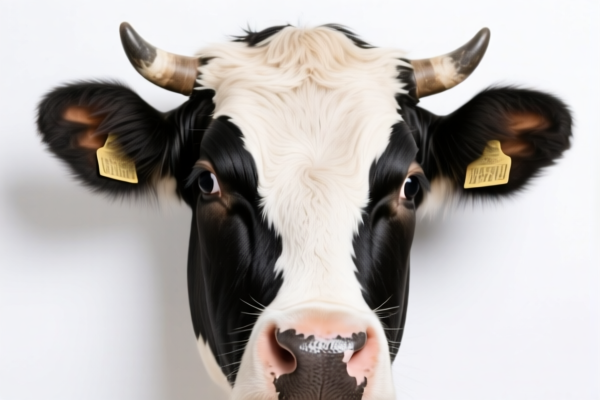
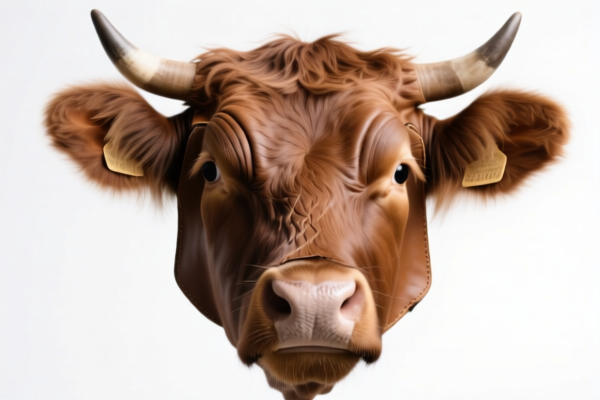
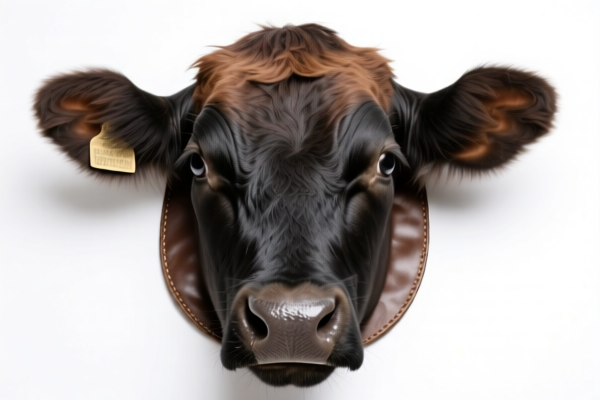
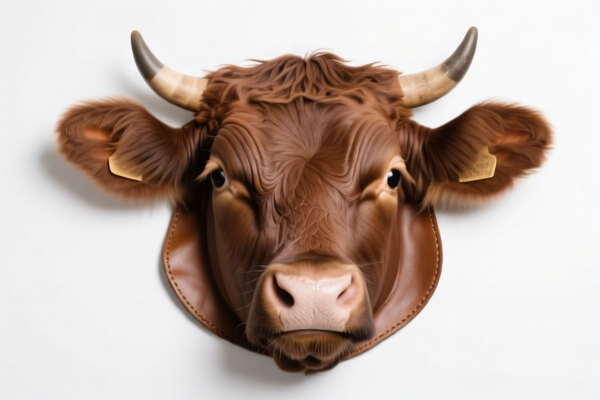
AI Analysis
🐂 Bovine Semi-Finished Leather: HS Code Classification & 2026 Tax Strategy
🌐 HS Code Reference & Clearance Guide | 2026 Latest Tariff Analysis | Professional US Customs Strategy
📌 I. Product Definition & Classification: What is "Bovine Semi-Finished Leather"?
Bovine semi-finished leather refers to cattle hides that have undergone tanning or further processing but have not yet been cut into final articles (like shoes or bags). In international trade, these materials are categorized by their processing state, surface treatment, and intended use.
⚠️ Key Distinction Points:
- Chromes Tanned vs. Vegetable Tanned: Determines the base heading (4104 vs. 4105).
- Surface Finish: "Full Grain" (粒面) vs. "Split" (分割) vs. "Patent/Lacquered" (漆皮).
- End Use: Specifically designated for garments (服装) vs. general use.
- US Import Impact: All items listed below are subject to Section 301 (122 Clause) and/or Section 122 additional tariffs due to US-China trade policies.
📦 II. HS Code Classification Details (2026 Latest Tariff Authority)
| HS Code | Product Description | Applicable Scenario | Surface/Processing Feature |
|---|---|---|---|
4104.49.50.00 |
Bovine Semi-Finished Leather (Other/General) | General semi-finished bovine leather; partially tanned, not further worked | Fits "Partially Tanned & Not Further Processed" |
4107.11.70.40 |
Bovine Leather for Garments (Full Grain) | Specifically intended for clothing; full-grain bovine hide | Matches "Gloves & Apparel" classification |
4107.12.70.40 |
Bovine Leather for Garments (Split/Side) | Specifically intended for clothing; split or side bovine hide | Matches "Garment Use" classification |
4114.20.70.00 |
Patent/Lacquered Leather | Leather with a continuous plastic coating or lacquer layer | Falls under "Patent & Lacquered Leather" |
4104.11.50.70 |
Bovine Semi-Finished (Full Grain Split) | Bovine hides, split but retaining full-grain characteristics | "Split & Full-Grain Category" |
🔍 Critical Note:
- All these codes apply to US Imports from China.
- The "122 Clause" (Section 301 Tariff) adds 10% on top of base rates.
- Section 122 Tariff (if applicable per specific product type) may add 25% (see4114.20.70.00).
- No de minimis exemption applies to these textile/leather goods from China in most cases due to high scrutiny.
💰 III. 2026 Latest Tariff Rate Breakdown (Including Add-ons)
✅ Applicable Country: United States (US)
✅ Origin: China (CN)
✅ Effective Time: 2025–2026 (Current Trade Policy)
🎯 1. 4104.49.50.00 —— General Bovine Semi-Finished Leather
| Item | Content |
|---|---|
| Base Duty Rate | 3.3% (ad valorem) |
| Section 301 (122 Clause) Tariff | +10.0% |
| Section 122 Tariff | 0.0% |
| Total Effective Tax Rate | 13.3% |
| Tax Calculation | CIF Value × 13.3% |
| De Minimis Exemption | ❌ Not Available |
| Legal Basis | HTSUS 4104.49.50.00 + Section 301 Footnote |
📌 Explanation:
- This is the standard classification for unprocessed or partially tanned bovine leather not specifically designated for garments.
- The 13.3% rate includes the base duty (3.3%) plus the 10% Section 301 tariff.
- No additional Section 122 tariff applies here.
🎯 2. 4107.11.70.40 & 4107.12.70.40 —— Bovine Leather for Garments
| Item | Content |
|---|---|
| Base Duty Rate | 5.0% (ad valorem) |
| Section 301 (122 Clause) Tariff | +10.0% |
| Section 122 Tariff | 0.0% |
| Total Effective Tax Rate | 15.0% |
| Tax Calculation | CIF Value × 15.0% |
| De Minimis Exemption | ❌ Not Available |
| Legal Basis | HTSUS 4107.11/12.70.40 + Section 301 Footnote |
📌 Explanation:
- These codes are for bovine leather specifically for garments (jackets, coats, etc.).
- Higher base duty (5.0%) compared to general leather (3.3%) reflects the specialized nature.
- Total 15.0% due to the addition of the 10% Section 301 tariff.
- Distinguish between4107.11(Full Grain) and4107.12(Split/Side) based on physical structure.
🎯 3. 4114.20.70.00 —— Patent/Lacquered Leather
| Item | Content |
|---|---|
| Base Duty Rate | 1.6% (ad valorem) |
| Section 301 (122 Clause) Tariff | +10.0% |
| Section 122 Tariff | +25.0% |
| Total Effective Tax Rate | 36.6% |
| Tax Calculation | CIF Value × 36.6% |
| De Minimis Exemption | ❌ Not Available |
| Legal Basis | HTSUS 4114.20.70.00 + Section 301 + Section 122 |
📌 Explanation:
- Highest Risk Category!
- "Patent or Lacquered Leather" involves plastic/polymer coatings, triggering Section 122 Tariff (+25%).
- Combined with base duty (1.6%) and Section 301 (10%), the total hits 36.6%.
- Clearance Tip: Ensure the product is truly "patent/lacquered" and not just dyed. Misclassification here can lead to severe penalties.
🎯 4. 4104.11.50.70 —— Bovine Split (Full Grain Category)
| Item | Content |
|---|---|
| Base Duty Rate | 3.3% (ad valorem) |
| Section 301 (122 Clause) Tariff | +10.0% |
| Section 122 Tariff | 0.0% |
| Total Effective Tax Rate | 13.3% |
| Tax Calculation | CIF Value × 13.3% |
| De Minimis Exemption | ❌ Not Available |
| Legal Basis | HTSUS 4104.11.50.70 + Section 301 Footnote |
📌 Explanation:
- Specific to bovine hides that are split but still classified under full-grain characteristics.
- Same tax rate as general semi-finished leather (4104.49.50.00): 13.3%.
- Documentation must clearly state "Split Leather – Full Grain Category" to avoid confusion with standard splits.
🛠️ IV. Clearance Practical Advice (Real-World Pitfall Guide)
✅ 1. Required Documentation Checklist
| Document | Required? | Purpose |
|---|---|---|
| ✅ Product Specification Sheet | ✔️ | Details tanning method (chrome/veg), surface finish, thickness |
| ✅ Photos (Front/Back/Cross-Section) | ✔️ | Proves "Patent/Lacquered" status or "Split" structure |
| ✅ Commercial Invoice | ✔️ | Must specify "Bovine Semi-Finished Leather" + HS Code |
| ✅ Bill of Lading | ✔️ | Verify weight, dimensions, and packaging details |
| ✅ Origin Certificate | ❌ | China origin triggers tariffs; no preferential treatment available |
| ✅ Test Report (Optional) | ✔️ | For "Patent" classification, proof of plastic coating may be requested |
✅ 2. Declaration Strategy (Key Mnemonics)
🔥 "Finish Defines Tax, Use Defines Code, Patents Cost Big!"
| Scenario | Correct HS Code | Tax Rate | Why? |
|---|---|---|---|
| General Semi-Finished Bovine | 4104.49.50.00 |
13.3% | Standard chromes-tanned, no specific garment use |
| Bovine Leather for Jackets | 4107.11.70.40 |
15.0% | Specific "Garment" designation |
| Lacquered/Shiny Leather | 4114.20.70.00 |
36.6% | "Patent/Lacquered" triggers Section 122 Tariff |
| Split Leather (Full Grain) | 4104.11.50.70 |
13.3% | Split but retains full-grain classification |
✅ 3. Special Handling Tips
| Situation | Recommendation |
|---|---|
| "Half-Tanned" vs. "Tanned" | Ensure description matches "Semi-Finished" (not raw hide, not final article) |
| Patent Leather Misclassification | Do not declare lacquered leather as "general leather" – Customs will reclassify and penalize |
| Garment vs. Footwear Use | If intended for shoes, different codes apply. For garments, use 4107.xx.xx.xx |
| Split Leather Identity | Clearly label as "Split" in commercial invoice to avoid being taxed as full-grain (if rates differ) |
🌍 V. Global Market Comparison (2026)
| Country/Region | Recommended HS Code | Tariff (China Origin) | Key Requirement |
|---|---|---|---|
| 🇺🇸 USA | Varies by finish | 13.3% – 36.6% | Section 301 + Section 122 tariffs apply |
| 🇨🇳 China | Same HS Codes | ~3.3% – 10% | No additional US-style tariffs |
| 🇪🇺 EU | Same HS Codes | ~2.4% | No Section 301; lower base duties |
| 🇬🇧 UK | Same HS Codes | ~2.4% | Post-Brexit tariffs mirror EU closely |
| 🇯🇵 Japan | Same HS Codes | ~3.3% | No major add-ons for China |
📌 Conclusion:
- US is the most expensive market for Chinese bovine semi-finished leather due to Section 301 & 122 tariffs.
- Patent/Lacquered leather faces the highest penalty in the US (36.6%).
- Consider supply chain diversification (e.g., sourcing from Vietnam or Brazil) if targeting the US market to avoid high tariffs.
📌 VI. Common Mistakes & Pitfalls (Lessons Learned)
❌ Mistake 1: Declaring Patent Leather as "General Leather"
👉 Consequence: Customs reclassifies to 4114.20.70.00 → Back taxes + 25% penalty!
❌ Mistake 2: Using "Leather" without specifying Semi-Finished status
👉 Consequence: Customs may classify as "Finished Leather" or "Raw Hide" → Incorrect duty + delays
❌ Mistake 3: Not distinguishing Garment vs. General Use
👉 Consequence: Misuse of 4107 codes → Potential audits for incorrect valuation/duty
❌ Mistake 4: Ignoring Section 122 Tariff for Lacquered Goods
👉 Consequence: Underpayment by 25% → Severe financial loss
✅ Correct Declaration Example:
"Bovine Semi-Finished Patent Leather, Lacquered Surface, for Garment Use, Model XYZ, 1.2mm Thickness, CIF Value $10,000"
🎯 VII. Conclusion: Precision Classification Saves Money!
🎯 Remember the Mantra:
🔹 "Finish Matters: Patent = 36.6%, Garment = 15%, General = 13.3%"
🔹 "HS Code Dictates Tax; One Wrong Digit Costs Thousands!"
📌 Pro Tip:
If your product is not from China (e.g., sourced from Italy or Brazil), you may avoid Section 301 tariffs, reducing costs significantly.
Always request a Pre-Ruling from US CBP for high-value shipments to ensure correct classification.
📣 Immediate Action:
📞 Engage a licensed customs broker + Provide product photos + Verify HS Code pre-import
🚀 Ensure smooth clearance, cost efficiency, and compliance for your bovine leather imports!
✨ Professional Clearance Starts with Accurate Classification!
💼 Every Percent of Duty Saved is Pure Profit!
Customer Reviews
About HS Code Classification
The Harmonized System (HS) is an internationally standardized nomenclature developed by the World Customs Organization (WCO) to classify traded products. Over 200 countries use the HS system as the basis for customs tariffs, trade statistics, and import/export regulations.
Each HS code follows a hierarchical structure:
- Chapter (2 digits) — Broad category of goods (e.g., Chapter 84: Machinery and Mechanical Appliances)
- Heading (4 digits) — More specific grouping within the chapter
- Subheading (6 digits) — Internationally standardized breakdown, used by all WCO member countries
- National subdivisions (8-10 digits) — Country-specific extensions for further classification, such as US HTSUS 10-digit codes
Correct HS code classification is essential for smooth customs clearance, accurate duty payment, and compliance with trade regulations. Misclassification can lead to customs delays, overpayment of duties, or penalties.
When importing from CN to US, the applicable tariff rates may include:
- Most-Favored-Nation (MFN) rate — The standard duty rate applied to WTO members
- General rate — Applied to countries without trade agreements
- Trade remedy duties — Additional tariffs such as Section 301 (anti-dumping), Section 232 (national security), or countervailing duties
The information provided on this page is for reference purposes only. For official classification, please consult with your local customs authority or a licensed customs broker.