Bow String
CN → US| HS Code | Tariff Rate | Origin | Destination | Doc |
|---|---|---|---|---|
| 9305208060 | 17.5% | CN | US | Official Doc |
| 8205595560 | 40.3% | CN | US | Official Doc |
| 9303908000 | 17.5% | CN | US | Official Doc |
| 4421999880 | 38.3% | CN | US | Official Doc |
| 9506990510 | 17.5% | CN | US | Official Doc |
Product Images
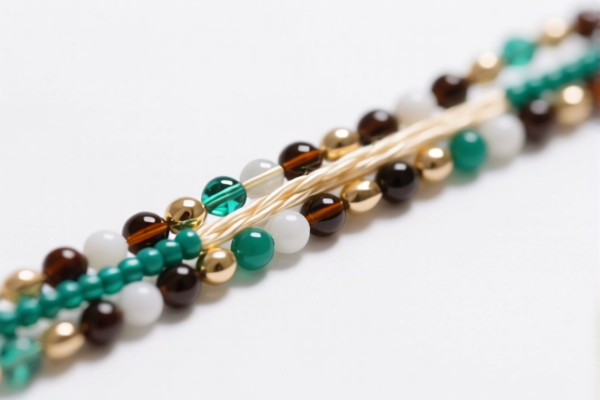
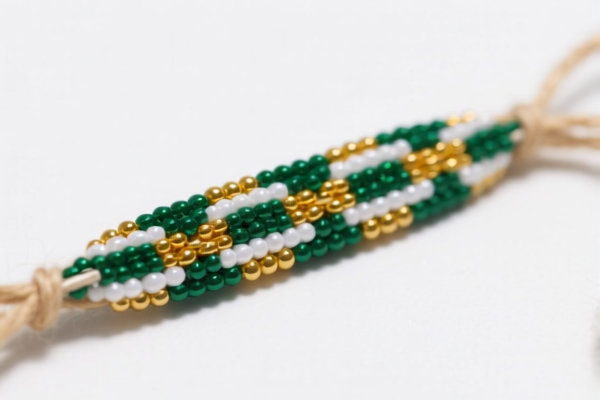
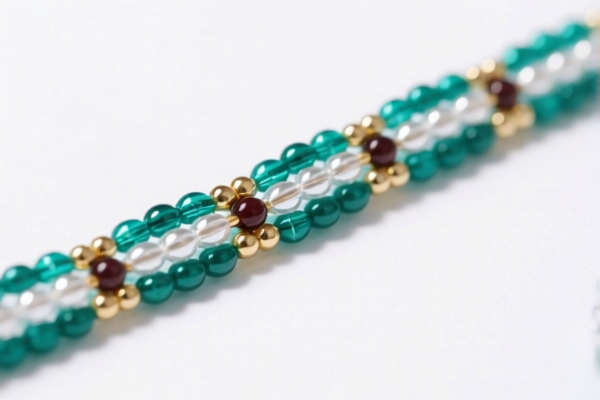
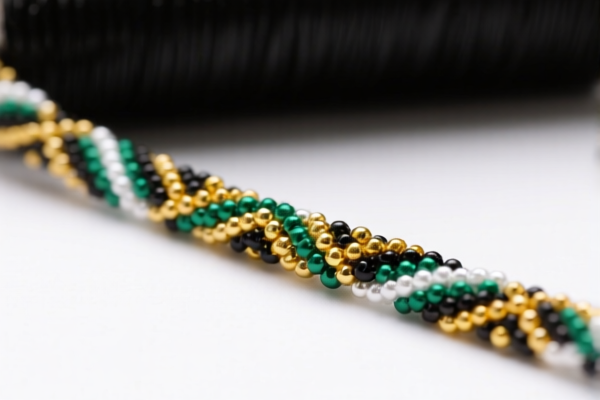
AI Analysis
🏹 Bow String (Composite Bows & Archery Equipment)
🌐 HS Code Reference & Customs Clearance Guide | 2026 Latest Tariff Analysis | Professional Clearance Strategy
📌 I. Product Definition & Classification: Do You Really Understand "Bow Strings"?
A Bow String is the critical elastic component of a bow that stores potential energy when drawn and releases it to propel the arrow. In international trade, these products are often misclassified due to ambiguity between "sports equipment," "machinery parts," or "general metal goods."
There are two primary ways customs authorities may view this item, leading to vastly different tariff outcomes:
1. As an Accessory/Part of Archery Equipment:
Classified under Chapter 93 (Arms, Ammunition, and Parts), specifically as parts of bows. This is the most accurate technical classification for dedicated archery components.
2. As a General Metal Hand Tool Part:
If made primarily of metal wires/cables, some classifiers may erroneously group them under "Other hand tools" (Chapter 82), leading to significantly higher tariffs.
⚠️ Key Distinction Point:
- If the item is a specialized bow string made of synthetic fibers, Dacron, or metal cables specifically for archery →归入 9305.20.80.60
- If declared as a generic "metal cable/tool part" without proper context → Risks misclassification to 8205.59.55.60 (Much Higher Tax)
📦 II. HS Code Classification Details (2026 Latest Tariff Authority Comparison)
| HS Code | Product Description | Applicable Scenario | Material/Type |
|---|---|---|---|
9305.20.80.60 |
Parts and accessories of bows, arrows, and quivers | Primary Classification: Dedicated bow strings, risers, limbs, sights | Composite, Synthetic, or Metal |
8205.59.55.60 |
Other hand tools and parts thereof | Risk Classification: If misidentified as generic metal tool parts | Metal wires, cables |
9303.90.80.00 |
Other firearms and similar devices (via misclassification logic) | Incorrect: Bows are not explosive firearms. Included in data as a logical comparison for "emission devices." | N/A |
4421.99.98.80 |
Other wooden articles | Incorrect: Applies to the Bow Limb (wood/composite), not the string itself. | Wood/Composite |
9506.99.05.10 |
Articles and equipment for general physical exercise | Alternative: Sometimes used for recreational archery sets if classified as sport goods rather than arms/parts. | General Sport Goods |
🔍 Key Reminder:
- The summary for9305.20.80.60states: "Bow string regulators belong to the adjusting parts of bow equipment, fitting the definition of 'other parts' for rifles or related equipment." (Note: While the summary mentions rifles, Chapter 93 covers arms and parts; bows are frequently grouped here or in 9506).
- Do not classify a bow string as9506.99.05.10if it is a high-performance tactical component, as this may trigger scrutiny under "arms parts."
- Avoid8205.59.55.60unless the item is a generic metal cable not specifically designed for archery.
💰 III. 2026 Latest Tariff Rate Breakdown (Including Surcharges & Policy Add-ons)
✅ Applicable Country: United States (US)
✅ Origin: China (CN)
✅ Effective Time: Post-November 2025 (Includes subsequent imports)
🎯 1. 9305.20.80.60 —— Bow Parts/Accessories (Recommended)
| Item | Content |
|---|---|
| Base Tariff | 0.0% (ad valorem) |
| Section 301 Surcharge | +7.5% (List 4A/B or specific HTS footnote) |
| Section 122 Tariff | +10% (Specific clause for certain goods) |
| Total Tax Rate | 17.5% |
| Tax Calculation | CIF Value × 17.5% |
| De Minimis Exemption | ❌ No (Denied) |
| Legal Basis Path | Base: 9305 → Surcharge: 7.5% → Section 122: 10% |
📌 Explanation:
- This is the most cost-effective classification for bow strings if declared as parts of archery equipment.
- The 17.5% total includes a low base rate plus targeted surcharges.
- Crucial: The data notes that steel, aluminum, or copper products may face an additional 50% tariff under specific provisions. If your bow string is made of metal cable (not synthetic), check if the "50% steel/aluminum" rule applies, which could drastically increase costs.
🎯 2. 8205.59.55.60 —— Other Hand Tool Parts (High Risk)
| Item | Content |
|---|---|
| Base Tariff | 5.3% |
| Section 301 Surcharge | +25.0% |
| Section 122 Tariff | +10% |
| Total Tax Rate | 40.3% |
| Tax Calculation | CIF Value × 40.3% |
| De Minimis Exemption | ❌ No (Denied) |
| Legal Basis Path | Base: 8205 → Surcharge: 25% → Section 122: 10% |
📌 Warning:
- Misclassifying a bow string as a "tool part" incurs a 40.3% tax, which is more than double the correct classification.
- This classification assumes the item is a generic metal part, ignoring its specific function in archery.
🎯 3. 9506.99.05.10 —— General Sports Equipment (Recreational)
| Item | Content |
|---|---|
| Base Tariff | 0.0% |
| Section 301 Surcharge | +7.5% |
| Section 122 Tariff | +10% |
| Total Tax Rate | 17.5% |
| Tax Calculation | CIF Value × 17.5% |
| Note | Steel, Aluminum, Copper products add 50% |
| Legal Basis Path | Base: 9506 → Surcharge: 7.5% → Section 122: 10% |
📌 Note:
- The data explicitly states: "Commodity name 'Bow' fully matches the core use in classification explanation... Steel, Aluminum, Copper products surcharge: 50%."
- If you classify under this sportsgoods code, and the bow/string contains significant metal components, you must add 50% on top of the 17.5%, totaling 67.5%.
- For synthetic bow strings, this classification is safer and cheaper than8205.
🛠️ IV. Customs Clearance Practical Advice (Battle-Tested Pitfall Guide)
✅ 1. Documentation Checklist (Must-Haves)
| Document | Required | Description |
|---|---|---|
| ✅ Product Specification Sheet | ✔️ | Detail material (Dacron, Fast Flight, Steel Cable), length, and draw weight compatibility. |
| ✅ Product Photos | ✔️ | Clear images showing the string, nocks, and any metal connectors. |
| ✅ Commercial Invoice | ✔️ | Describe as "Bow String Accessories for Archery Bow" or "Archery Bow Parts." Avoid generic terms like "Cable." |
| ✅ Material Declaration | ✔️ | Critical: Specify if made of Synthetic Fiber (lower risk) or Steel/Metal (higher risk due to 50% surcharge). |
| ✅ Origin Certificate | ✔️ | If not from China, may qualify for lower tariffs. |
✅ 2. Declaration Tips (Key Mantra)
🔥 “Declare as Bow Part, Not Tool Part; Synthesize is Safer than Metal!”
| Situation | Correct Declaration | Wrong Approach |
|---|---|---|
| Synthetic Bow String | 9305.20.80.60 (Bow Parts) or 9506.99.05.10 (Sports) |
Classify as 8205 (Tool) → 40.3% |
| Metal Cable Bow String | Verify Steel/Aluminum Surcharges! | Assume 17.5% without checking 50% metal rule → 67.5% |
| Recreational Bow Set | 9506.99.05.10 |
Classify as Arms Part → 17.5% (Same, but different scrutiny) |
| Replacement String | 9305.20.80.60 |
Declare as "Accessory" without HS code → Delay |
✅ 3. Special Circumstances Handling
| Situation | Handling Advice |
|---|---|
| Material Matters | If the string is Steel/Arc Steel, anticipate the 50% additional tariff under Section 122 or specific steel clauses. Synthetic is preferred for lower taxes. |
| Recreational vs. Tactical | For target archery, 9506 is acceptable. For hunting/tactical bows, 9305 is more accurate but may face stricter scrutiny. |
| Mixed Materials | If the string has metal nocks or connectors, ensure the value of metal parts is declared accurately to avoid misclassification. |
🌍 V. Global Market Comparison (2026 Latest)
| Country/Region | Recommended HS Code | Tariff Rate | Certification | Note |
|---|---|---|---|---|
| 🇺🇸 USA | 9305.20.80.60 |
17.5% (Synthetic) | N/A | 40.3% if misclassified as tool. 67.5% if metal. |
| 🇨🇳 China | 9305.20.80.60 |
0-5% | N/A | Lower base rates for export. |
| 🇪🇺 EU | 9506.99 |
0-6% | CE (if electronic) | Generally favorable for sports goods. |
| 🇬🇧 UK | 9305 |
Varies | UKCA | Post-Brexit tariffs may apply. |
📌 Conclusion:
- The USA is the most complex market due to Section 301 and Section 122 surcharges.
- Material composition is key: Synthetic strings enjoy lower rates (17.5%), while metal strings face significant penalties (up to 67.5%).
- Misclassification is costly: Declaring as "tool parts" (8205) is a common error that doubles the tax.
📌 VI. Common Mistakes & Pitfalls (Lessons Learned)
❌ Mistake 1: Declaring a steel bow string as synthetic to avoid the 50% metal surcharge
👉 Consequence: Customs inspection finds metal content → Penalty + Back Taxes
❌ Mistake 2: Using HS Code 8205 (Hand Tools) for bow strings
👉 Consequence: Tax jumps from 17.5% to 40.3% unnecessarily
❌ Mistake 3: Failing to specify material in the description
👉 Consequence: Customs assumes worst-case scenario (Metal) → 67.5% tariff
❌ Mistake 4: Confusing Bow Limbs (Wood/Composite) with Bow Strings
👉 Consequence: Limbs go to 4421 (Wood, 38.3%); Strings go to 9305 (Parts, 17.5%). Keep them separate!
✅ Correct Practice:
“Archery Bow String, Synthetic Material, Dacron, Model XYZ, for Recreational Use. HS Code: 9305.20.80.60”
🎯 VII. Conclusion: Precision Classification Saves Money!
🎯 Remember the Mantra:
🔹 “Synthetic is King, 17.5% is Sweet, Metal is a Treat? No, 67.5% is the Heat!”
🔹 “Don’t call it a Tool, Call it a Bow Part, or the Tax Will Hurt!”
📌 Pro Tip:
If your bow strings are made in Vietnam, Mexico, or Thailand, you may qualify for IEEPA Exemptions or lower tariffs.
Recommendation: Apply for an Advance Ruling (Binding Tariff Information) before shipping high-volume metal strings to the US.
📣 Take Action Now:
📞 Consult a Customs Broker + Provide Material Specs + Verify Metal Content
🚀 Let your bow strings clear customs smoothly, maximize margins, and hit the target!
✨ Professional Clearance Starts with Accurate Classification!
💼 Every cent of tax saved is pure profit!
Customer Reviews
About HS Code Classification
The Harmonized System (HS) is an internationally standardized nomenclature developed by the World Customs Organization (WCO) to classify traded products. Over 200 countries use the HS system as the basis for customs tariffs, trade statistics, and import/export regulations.
Each HS code follows a hierarchical structure:
- Chapter (2 digits) — Broad category of goods (e.g., Chapter 84: Machinery and Mechanical Appliances)
- Heading (4 digits) — More specific grouping within the chapter
- Subheading (6 digits) — Internationally standardized breakdown, used by all WCO member countries
- National subdivisions (8-10 digits) — Country-specific extensions for further classification, such as US HTSUS 10-digit codes
Correct HS code classification is essential for smooth customs clearance, accurate duty payment, and compliance with trade regulations. Misclassification can lead to customs delays, overpayment of duties, or penalties.
When importing from CN to US, the applicable tariff rates may include:
- Most-Favored-Nation (MFN) rate — The standard duty rate applied to WTO members
- General rate — Applied to countries without trade agreements
- Trade remedy duties — Additional tariffs such as Section 301 (anti-dumping), Section 232 (national security), or countervailing duties
The information provided on this page is for reference purposes only. For official classification, please consult with your local customs authority or a licensed customs broker.