Box Board Paper
CN → US| HS Code | Tariff Rate | Origin | Destination | Doc |
|---|---|---|---|---|
| 4810991060 | 35.0% | CN | US | Official Doc |
| 4810396500 | 35.0% | CN | US | Official Doc |
| 4805911010 | 35.0% | CN | US | Official Doc |
| 4805934010 | 35.0% | CN | US | Official Doc |
| 4819100020 | 35.0% | CN | US | Official Doc |
Product Images
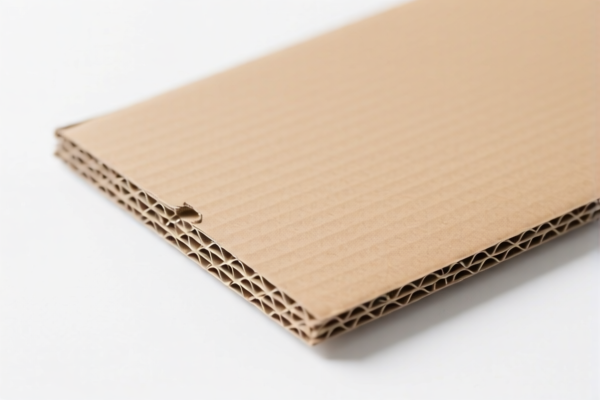
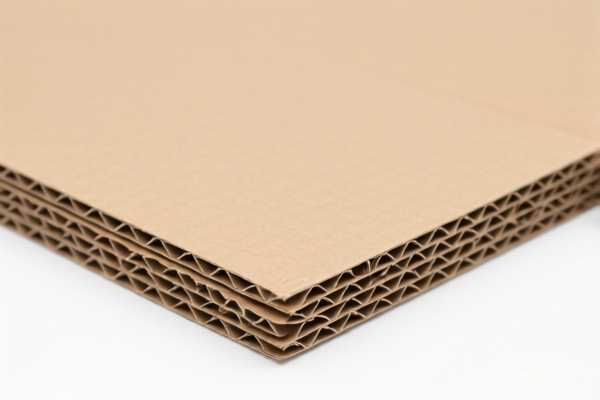
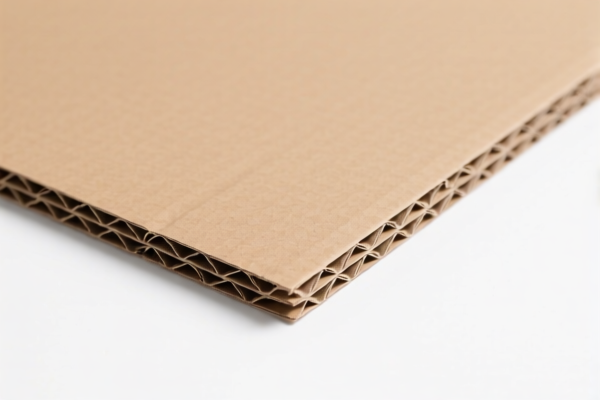
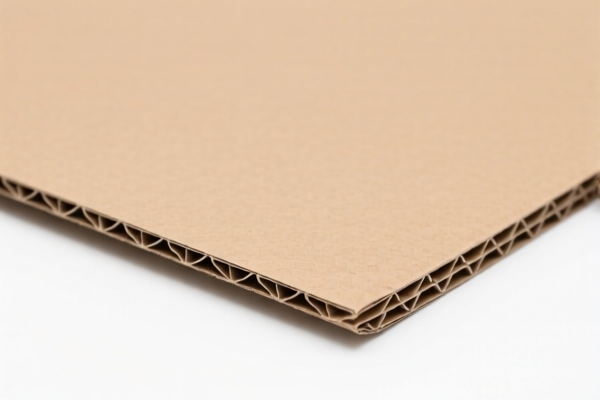
AI Analysis
📦 Box Board Paper (Packaging Cardboard)
🌐 HS Code Reference & Customs Clearance Guide | 2026 Latest Tariff Analysis | Professional Clearance Strategy
📌 I. Product Definition & Classification: What is "Box Board Paper"?
Box Board Paper, often referred to as "Cardboard" or "Paperboard" in trade contexts, is a thick, stiff paper primarily used for folding cartons, food packaging, and consumer goods packaging. In international trade classification, it is distinguished by its material composition (paper/cardboard) and physical form (sheet/roll).
Key Classification Criteria: 1. Material: Must be paper or cardboard (cellulose-based). 2. Form: Flat sheets or rolls (not finished boxes unless specified as containers). 3. Treatment: The provided data suggests varying levels of coating description (or lack thereof), which influences the specific subheading but generally falls under "Other Papers."
⚠️ Critical Distinction:
- If the product is uncoated or coated on one side only → Often falls under 4805 (Newsprint, Writing/Packing paper).
- If the product is coated on both sides or has specific surface treatments → Often falls under 4810 (Coated paper).
- If it is finished containers → Falls under 4819 (Cartons/Boxes).
📦 II. HS Code Classification Details (2026 Latest Tariff Authority Comparison)
Based on the provided data, all suggested HS codes share the same tariff structure due to their shared origin (China) and target market (US), but they represent different technical nuances.
| HS Code | Product Description | Application Scenario | Classification Logic |
|---|---|---|---|
4810.99.10.60 |
Other paper, paperboard, cardboard, articles thereof; Other; Other; Other | General-purpose card/board where coating details are missing or generic. | Matches material (Cardboard) and form (Paper characteristics). Uses "Other" catch-all principle. No material conflict. |
4810.39.65.00 |
Coated paper & paperboard; Paperboard coated with mineral substances; Other | Paperboard with unspecified coating composition. | Matches material (Cardboard). Based on "Description Missing" & "Catch-all" rules. No material conflict. |
4805.91.10.10 |
Uncoated paper & paperboard, weighing >150g/m²; Other; Other; Paper/Cardboard | "Cardboard Cardboard" explicitly includes material (Paper) and form (Board). | Explicitly matches material and form requirements in classification notes. |
4805.93.40.10 |
Uncoated paper & paperboard; Other; Other; Uncoated Paperboard | "Cardboard" matches "Paper or Cardboard" material; Uncoated form. | Matches material "Paper or Cardboard" exactly. Fits uncoated paperboard category. |
4819.10.00.20 |
Cartons, boxes, and cases, of corrugated paper or paperboard; Of corrugated paper/board | Material is cardboard; Purpose unspecified but material matches corrugated/board types. | Matches cardboard material. No conflict despite unspecified use. |
🔍 Key Insight:
- All codes listed share the same total tax rate (35.0%).
- The choice among them depends on technical documentation (coating status, weight per square meter, whether it's corrugated).
-4805series typically refers to uncoated or simply processed paper/board.
-4810series typically refers to coated paper/board.
-4819refers to manufactured containers/boxes rather than raw sheets.
💰 III. 2026 Latest Tariff Rate Breakdown (Including Surcharges & Policy Add-ons)
✅ Applicable Country: United States (US)
✅ Country of Origin: China (CN)
✅ Effective Date: November 10, 2025 onwards (for subsequent imports)
🎯 1. General Tariff Structure for All Listed HS Codes
All five HS codes (4810.99.10.60, 4810.39.65.00, 4805.91.10.10, 4805.93.40.10, 4819.10.00.20) fall under the same tariff bucket for Chinese-origin goods entering the US.
| Item | Content |
|---|---|
| Base Tariff Rate | 0.0% (ad valorem) – MFN Rate |
| Section 301 Tariff (USITC) | +25% – Added duty under US Trade Act Section 301 |
| Section 122 Tariff (IEEPA) | +10% – Additional tariff under International Emergency Economic Powers Act |
| Total Effective Tax Rate | 35.0% |
| Tax Calculation Basis | CIF Value × 35% |
| De Minimis Eligibility | ❌ Not Eligible – Cannot use $800 de minimis exemption for these HS codes from China |
| Legal Authority Path | USITC:Footnote 9903.88.01 (for 301 duties) → IEEPA:9903.01.25 (for 122 duties) → HS Code |
📌 Explanation:
- The 0% base rate is misleading; it is entirely offset by the two surcharges.
- Section 301 (+25%): Imposed to address unfair trade practices. Applies to most Chinese paper products.
- Section 122 (+10%): Additional emergency tariff targeting specific Chinese imports.
- Combined 35%: This is a high-duty category. Importers must factor this into landed cost calculations immediately.
🛠️ IV. Customs Clearance Practical Advice (Battle-Tested Pitfall Avoidance)
✅ 1. Required Documentation Checklist (Mandatory)
| Document | Must Provide | Notes |
|---|---|---|
| ✅ Product Specification Sheet | ✔️ | Must detail: Weight (gsm), Coating Type (None/Mineral/Organic), Ply (Single/Double), Core Size. |
| ✅ Commercial Invoice | ✔️ | Must clearly state: "Box Board Paper" or "Cardboard," Origin: China, HS Code. |
| ✅ Packing List | ✔️ | Detail rolls/sheets, gross/net weight, dimensions. |
| ✅ Bill of Lading/Air Waybill | ✔️ | Consistent with invoice and packing list. |
| ✅ Certificate of Origin (CO) | ✔️ | Essential for proving Chinese origin (triggers the 35% tariff). |
| ✅ Photo of Product/Label | ✔️ | Show product, brand, model, and any safety/environmental marks. |
✅ 2. Declaration Strategy (Key Mnemonics)
🔥 "Material First, Form Second, Coating Third, Code Fits!"
| Scenario | Correct HS Code | Error to Avoid |
|---|---|---|
| Uncoated Cardboard Sheets | 4805.93.40.10 or 4805.91.10.10 |
Misdeclaring as coated → Potential audit risk. |
| Coated Cardboard (Mineral/Organic) | 4810.39.65.00 or 4810.99.10.60 |
Under-declaring coating → Customs may reclassify. |
| Finished Corrugated Boxes | 4819.10.00.20 |
Declaring as raw paper → Wrong duty liability. |
| Generic "Cardboard" | 4810.99.10.60 (Catch-all) |
Vague description → Customs will request clarification, causing delay. |
✅ 3. Special Situation Handling
| Situation | Handling Advice |
|---|---|
| OEM Custom Cardboard | Provide customer order + design specs. Ensure material is clearly defined as "Paper/Cardboard." |
| Mixed Shipments (Paper + Boxes) | Declare separately! Paper (4805/4810) and Boxes (4819) have different technical classifications. Do not mix. |
| Re-export from Third Country | If transshipped through Vietnam/Malaysia, ensure substantial transformation occurred. Otherwise, "China Origin" still applies, and 35% tariff hits. |
| Recycled Cardboard | If >70% recycled, still falls under these codes but ensure eco-certificates are ready if requested. |
🌍 V. Global Main Market Clearance Comparison (2026 Latest)
| Country/Region | Recommended HS Code | Tariff (China Origin) | Certification Requirements | Notes |
|---|---|---|---|---|
| 🇺🇸 USA | 4810.99.10.60 / 4805.91.10.10 etc. |
35% (0% Base + 25% Sec 301 + 10% Sec 122) | FDA (if food contact), CPC | Highest duty burden. Pre-calculate costs. |
| 🇨🇳 China | 4810.99.10.60 / 4805.91.10.10 etc. |
~10-13% (Import Duty) | None typically | Domestic trade standard. |
| 🇪🇺 EU | 4805.91 / 4810.39 |
0% (Most FTAs) or 6.5% | REACH, FSC/PEFC (Sustainability) | EU focuses on sustainability certifications. |
| 🇬🇧 UK | 4805.91 / 4810.39 |
0-6.5% | UKCA Mark (if applicable) | Post-Brexit rules align closely with EU. |
| 🇦🇺 Australia | 4805.91 / 4810.39 |
5% | NMI (if specific use) | Lower duty than US, but strict biosecurity checks. |
📌 Conclusion:
- The US is the most expensive market for Chinese Box Board Paper due to the 35% combined tariff.
- EU/UK focus more on environmental compliance (REACH, FSC) than high tariffs.
- Australia/Asia have moderate tariffs but strict phytosanitary checks for paper products.
📌 VI. Common Mistakes & Pitfall Guide (Lessons Learned)
❌ Mistake 1: Declaring "Cardboard" as "Carton" (4819) when it's raw board (4805/4810).
👉 Consequence: Customs may reject or reclassify, leading to delays and potential penalties.
❌ Mistake 2: Ignoring the Coating Status.
👉 Consequence: Uncoated (4805) vs. Coated (4810) are technically different. Misdeclaration can trigger audits.
❌ Mistake 3: Assuming De Minimis ($800) applies.
👉 Consequence: Denied. These HS codes from China are excluded from de minimis. Must file formal entry.
❌ Mistake 4: Vague Description "Paper Board."
👉 Consequence: CBP (Customs and Border Protection) will issue a Request for Information (RFI), holding the cargo at port.
✅ Correct Approach:
"Folding Carton Board, Uncoated, 250gsm, Roll, Made in China, HS Code 4805.93.40.10"
🎯 VII. Conclusion: Professional Declaration, Time-Saving, Cost-Effective!
🎯 Remember the Mnemonic:
🔹 "Origin China, Tariff 35%, No De Minimis, Declare Precisely!"
🔹 "HS Code Defines Duty, 35% is High, Declare Correct, Stay Safe!"
📌 Pro Tip:
If your Box Board Paper is sourced from Vietnam, Malaysia, or Indonesia, check if it qualifies for Tariff Preference under the USMCA (if applicable to components) or other FTAs. However, for China-origin goods, the 35% tariff is non-negotiable unless you have a specific exclusion (which is rare for paper products).
📣 Immediate Action:
📞 Contact a licensed customs broker + Provide Product Specs + Apply for Pre-Ruling if uncertain about Coating/Status.
🚀 Ensure your Box Board Paper clears customs smoothly, avoids delays, and protects your margin!
✨ Professional clearance starts with precise classification!
💼 Every dollar of tariff cost should be accurately calculated!
Customer Reviews
About HS Code Classification
The Harmonized System (HS) is an internationally standardized nomenclature developed by the World Customs Organization (WCO) to classify traded products. Over 200 countries use the HS system as the basis for customs tariffs, trade statistics, and import/export regulations.
Each HS code follows a hierarchical structure:
- Chapter (2 digits) — Broad category of goods (e.g., Chapter 84: Machinery and Mechanical Appliances)
- Heading (4 digits) — More specific grouping within the chapter
- Subheading (6 digits) — Internationally standardized breakdown, used by all WCO member countries
- National subdivisions (8-10 digits) — Country-specific extensions for further classification, such as US HTSUS 10-digit codes
Correct HS code classification is essential for smooth customs clearance, accurate duty payment, and compliance with trade regulations. Misclassification can lead to customs delays, overpayment of duties, or penalties.
When importing from CN to US, the applicable tariff rates may include:
- Most-Favored-Nation (MFN) rate — The standard duty rate applied to WTO members
- General rate — Applied to countries without trade agreements
- Trade remedy duties — Additional tariffs such as Section 301 (anti-dumping), Section 232 (national security), or countervailing duties
The information provided on this page is for reference purposes only. For official classification, please consult with your local customs authority or a licensed customs broker.