Box Board Paper (Sheet, 1 sqm or more)
CN → US| HS Code | Tariff Rate | Origin | Destination | Doc |
|---|---|---|---|---|
| 4811512040 | 35.0% | CN | US | Official Doc |
| 4811512020 | 35.0% | CN | US | Official Doc |
Product Images
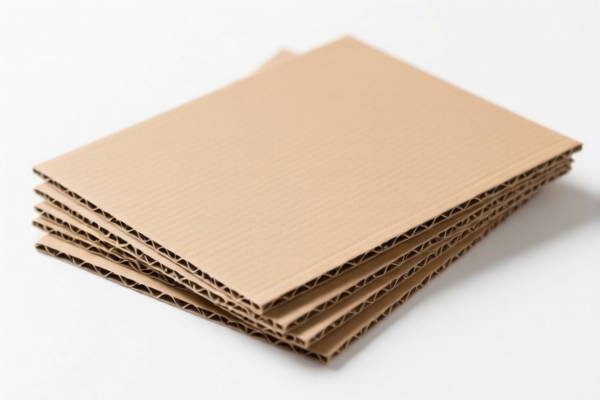
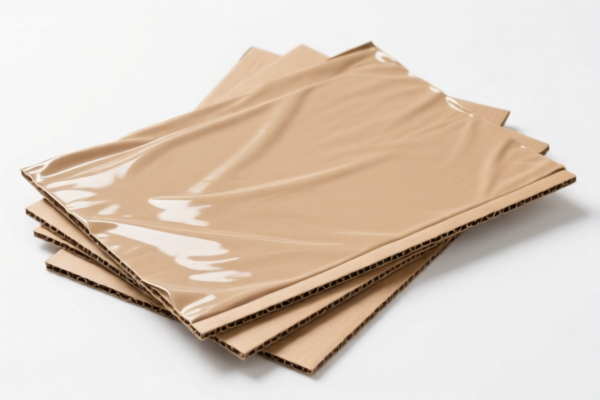
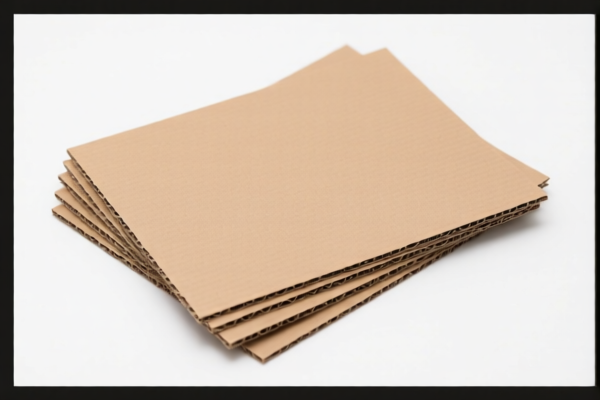
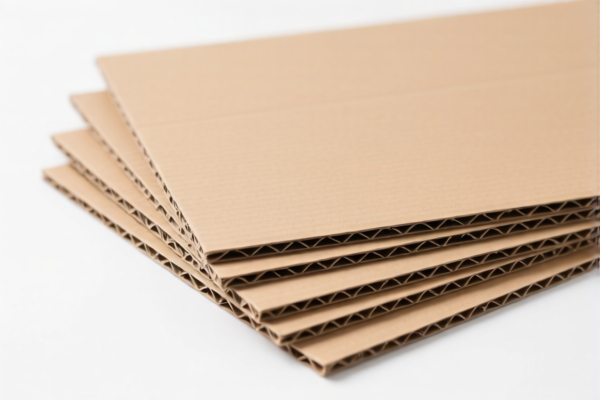
AI Analysis
📄 Box Board Paper (Sheet, 1 sqm or more)
🌐 HS Code Reference & Customs Clearance Guide | 2026 Latest Tariff Analysis | Professional Clearance Strategy
📌 I. Product Definition & Classification: Do You Really Understand "Box Board Paper"?
Box Board Paper (often referred to as Folding Carton Stock or Packaging Base Stock) is a high-quality paperboard primarily used for manufacturing folding cartons, consumer packaging, and cosmetic boxes. In international trade, distinguishing between "Base Stock" and "Folding Carton Stock" is critical because they fall under different specific sub-headings within HS Code 4811.51.20, despite sharing the same total tariff rate.
⚠️ Key Distinction Point:
- Folding Carton Stock: Typically refers to paperboard specifically engineered for folding cartons, often with specific surface properties for printing and folding endurance.
- Base Stock for Packaging: A broader category for paperboard used in various packaging applications, which may not meet the strict technical definitions of "folding carton stock" in some customs jurisdictions, or is declared generally for packaging use.
- Common Parameters for Both:
- Heading: 4811 (Paper, paperboard... coated, impregnated, covered...)
- Coating: With Plastics (excluding adhesives)
- Weight: > 150 g/m² (Bleached)
- Dimensions: Strips/rolls > 15 cm width OR Rectangular sheets with one side > 36 cm and the other > 15 cm.
- Thickness: 0.3 mm or more.
📦 II. HS Code Classification Details (2026 Latest Tariff Authority Comparison)
Based on the provided data, both products fall under Heading 4811.51.20 but diverge into two specific sub-codes based on their end-use description in the declaration.
| HS Code | Product Description | Application Scenario | Key Characteristic |
|---|---|---|---|
| 4811.51.20.20 | Folding Carton Stock | Specifically for folding cartons (e.g., cosmetic boxes, food cartons, pharmaceutical packaging). | Engineered for high folding endurance and printability. |
| 4811.51.20.40 | Base Stock for Packaging | General packaging paperboard (e.g., box boards, general shipping containers, protective packaging). | Broader definition for packaging materials not strictly classified as "folding carton stock." |
🔍 Important Reminder:
- Both codes apply to bleached paperboard coated/covered with plastics.
- Both require a weight > 150 g/m².
- Both require a thickness ≥ 0.3 mm.
- Both apply to sheets ≥ 1 sqm (implied by sheet dimensions > 36cm x 15cm).
- Do not confuse with Heading 4803, 4809, or 4810 (e.g., kraft paper, self-copy paper, or lined paper).
💰 III. 2026 Latest Tariff Rate Details (Including Surcharges)
✅ Applicable Country: United States (US)
✅ Origin: China (CN) (Assumed based on "Additional Duty" context in data)
✅ Effective Date: Current 2026 Tariff Structure
🎯 1. HS Code 4811.51.20.20 —— Folding Carton Stock
| Item | Content |
|---|---|
| Base Tariff Rate | 0.0% (Ad Valorem) |
| Additional Duty (Section 301) | +25.0% |
| Total Tariff Rate | 25.0% |
| Tax Calculation | CIF Value × 25% |
| De Minimis Exemption | ❌ Not Eligible (Goods subject to Section 301 tariffs are generally excluded from de minimis relief for China-origin goods) |
| Legal Basis Path | HTSUS:4811.51.20.20 → USITC:Section 301 Footnote → Additional Duty: 25% |
📌 Explanation:
- The 0% base rate reflects standard MFN (Most Favored Nation) treatment for certain paper products.
- The 25% additional duty is imposed under Section 301 of the Trade Act of 1974, targeting specific Chinese-manufactured goods, including coated paperboard.
- Total Cost Impact: For every $10,000 CIF value, you pay $2,500 in duties.
🎯 2. HS Code 4811.51.20.40 —— Base Stock for Packaging
| Item | Content |
|---|---|
| Base Tariff Rate | 0.0% (Ad Valorem) |
| Additional Duty (Section 301) | +25.0% |
| Total Tariff Rate | 25.0% |
| Tax Calculation | CIF Value × 25% |
| De Minimis Exemption | ❌ Not Eligible |
| Legal Basis Path | HTSUS:4811.51.20.40 → USITC:Section 301 Footnote → Additional Duty: 25% |
📌 Note:
- Identical tax treatment to4811.51.20.20.
- The choice between these two codes depends on the manufacturer's intent and the technical specifications of the paperboard (e.g., folding properties vs. general strength).
- Misclassification can lead to customs audits. If the product is clearly used for folding cartons,20is more accurate. If it's general packaging board,40is appropriate.
🛠️ IV. Customs Clearance Practical Advice (Real-World Pitfall Avoidance Guide)
✅ 1. Documentation Checklist (Essential)
| Document | Required | Description |
|---|---|---|
| ✅ Product Specification Sheet | ✔️ | Must include: Grammage (g/m²), Thickness (mm), Coating type (Plastic), Bleached status, Sheet dimensions. |
| ✅ Commercial Invoice | ✔️ | Clearly state: "Folding Carton Stock" or "Base Stock for Packaging," Material: Paperboard, Coated with Plastics. |
| ✅ Packing List | ✔️ | Show number of sheets, total weight, and ensure dimensions meet the >36cm x >15cm rule for sheet classification. |
| ✅ Certificate of Origin | ✔️ | To prove Country of Origin (China), triggering/confirming the 25% additional duty. |
| ✅ Manufacturer’s Declaration | ✔️ | Confirming the product is bleached and plastic-coated (not adhesive-coated, which would fall under 4811.59). |
✅ 2. Classification Strategy (Key Tips)
🔥 “Width Matters, Thickness Counts, Use Defines Code!”
| Scenario | Correct Declaration | Incorrect Action |
|---|---|---|
| Sheet size < 36cm x 15cm | ❌ Not Eligible for this heading (may fall under 4810 or 4823) | Attempting to declare as 4811.51.20 |
| Thickness < 0.3 mm | ❌ Not Eligible | Declaring as 4811.51.20 |
| Unbleached (Natural Color) | ❌ Not Eligible | Declaring as 4811.51.20 (must be bleached) |
| Coated with Adhesive | ❌ Not Eligible (Falls under 4811.59) | Declaring as 4811.51.20 |
| Folding Carton Use | 4811.51.20.20 |
Using "Base Stock" for carton-specific paper |
| General Packaging Use | 4811.51.20.40 |
Using "Folding Carton Stock" for general board |
✅ 3. Special Case Handling
| Situation | Handling Advice |
|---|---|
| Mixed Shipment (Rolls & Sheets) | If rolls exceed 15 cm width, they fall under this heading. If sheets are small, they may not. Ensure all items meet the size/thickness criteria. |
| Plastic Coating Type | Specify "Plastic Coating" (e.g., PE, PP, PVC) not "Glue/Adhesive." Adhesive-coated paper is 4811.59. |
| Value Adjustment | The 25% duty applies to the CIF value. Ensure insurance and freight are accurately declared to avoid under-declaration penalties. |
| Origin Marking | Products must be marked "Made in China" to trigger the correct duty rate. |
🌍 V. Global Market Comparison (2026 Latest)
| Country/Region | Recommended HS Code | Tariff Rate | Certification | Notes |
|---|---|---|---|---|
| 🇺🇸 USA | 4811.51.20.20 / .40 |
25% (Total) | None specific | High duty due to Section 301. |
| 🇨🇳 China | 4811.51.20 |
8-10% (Import) | N/A | Domestic consumption tariff. |
| 🇪🇺 EU | 4811.51.00 |
6.5% | CE (if applicable) | No Section 301 equivalent. |
| 🇯🇵 Japan | 4811.51.000 |
6% | FSC (optional) | Standard tariff. |
| 🇬🇧 UK | 4811.51.00 |
6% | UKCA | Post-Brexit alignment. |
📌 Conclusion:
- The USA is the most expensive market for this product due to the 25% additional duty.
- European Union and Asia offer significantly lower tariff burdens (~6-10%).
- Consider supply chain diversification if targeting the US market heavily.
📌 VI. Common Errors & Pitfalls (Lessons Learned)
❌ Error 1: Declaring unbleached paperboard as 4811.51.20
👉 Consequence: Goods classified under 4811.59 or 4810 → Incorrect Duty Rate → Penalties + Back Taxes.
❌ Error 2: Ignoring Thickness Requirement (< 0.3 mm)
👉 Consequence: Products may be classified as 4823.90 (Other paper) → Different Duty Rate → Audit Risk.
❌ Error 3: Confusing Plastic Coating with Adhesive Coating
👉 Consequence: 4811.59 (Adhesive) vs. 4811.51 (Plastic) → Wrong Subheading → Potential Misdeclaration.
❌ Error 4: Using "Carton" instead of "Paper/Paperboard"
👉 Consequence: Customs may misclassify as 4810 (Lined Paper) or 4823 (Cut Paper) → Delays & Clarifications.
✅ Correct Practice:
"Paperboard, Bleached, Plastic-Coated, Folding Carton Stock, 250g/m², 0.4mm Thick, Sheet Size 100cm x 100cm, Origin: China"
🎯 VII. Conclusion: Precision in Classification Saves Money!
🎯 Remember These Key Points:
🔹 "Bleached + Plastic Coated + >150g/m² + >0.3mm + >1sqm = 4811.51.20"
🔹 "25% Duty is Mandatory for China Origin to USA"
🔹 "Folding Carton Stock (.20) vs Base Stock (.40) – Choose Based on End Use"
📌 Pro Tip:
- If you are re-exporting from China to the US, the 25% duty is unavoidable unless you have a Free Trade Agreement (FTA) exemption (which is rare for paperboard).
- Pre-clearance Ruling: Consider applying for an Import Declaration or Pre-Ruling from US Customs (CBP) to confirm the classification, especially if your paperboard has unique properties.
📣 Immediate Action:
📞 Contact a Licensed Customs Broker
📄 Provide Technical Data Sheets (TDS)
🚀 Ensure Your Invoice Clearly States "Plastic Coated" and "Bleached"
✨ Accurate Classification Starts with Clear Documentation!
💼 Every Percentage Point in Duty Affects Your Bottom Line!
Customer Reviews
About HS Code Classification
The Harmonized System (HS) is an internationally standardized nomenclature developed by the World Customs Organization (WCO) to classify traded products. Over 200 countries use the HS system as the basis for customs tariffs, trade statistics, and import/export regulations.
Each HS code follows a hierarchical structure:
- Chapter (2 digits) — Broad category of goods (e.g., Chapter 84: Machinery and Mechanical Appliances)
- Heading (4 digits) — More specific grouping within the chapter
- Subheading (6 digits) — Internationally standardized breakdown, used by all WCO member countries
- National subdivisions (8-10 digits) — Country-specific extensions for further classification, such as US HTSUS 10-digit codes
Correct HS code classification is essential for smooth customs clearance, accurate duty payment, and compliance with trade regulations. Misclassification can lead to customs delays, overpayment of duties, or penalties.
When importing from CN to US, the applicable tariff rates may include:
- Most-Favored-Nation (MFN) rate — The standard duty rate applied to WTO members
- General rate — Applied to countries without trade agreements
- Trade remedy duties — Additional tariffs such as Section 301 (anti-dumping), Section 232 (national security), or countervailing duties
The information provided on this page is for reference purposes only. For official classification, please consult with your local customs authority or a licensed customs broker.