Box Board Paper Sheet
CN → US| HS Code | Tariff Rate | Origin | Destination | Doc |
|---|---|---|---|---|
| 4810991060 | 35.0% | CN | US | Official Doc |
| 4810396500 | 35.0% | CN | US | Official Doc |
| 4805911010 | 35.0% | CN | US | Official Doc |
| 4805934010 | 35.0% | CN | US | Official Doc |
| 4819100020 | 35.0% | CN | US | Official Doc |
Product Images
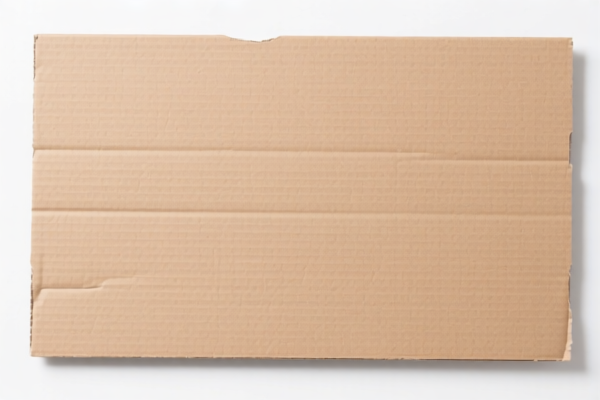
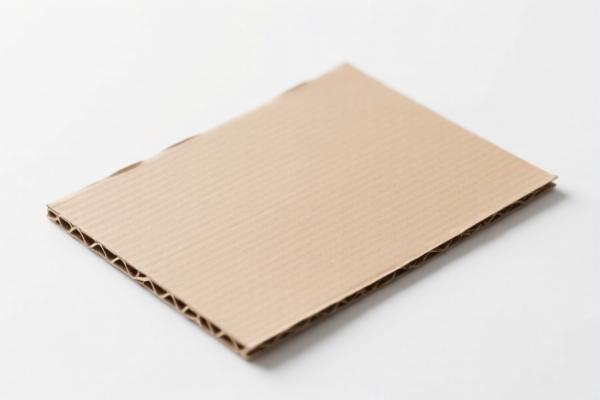
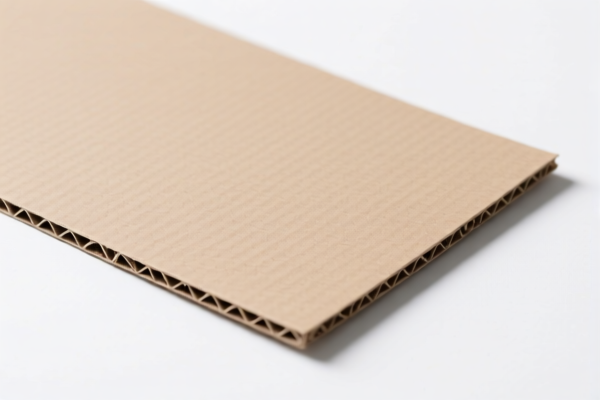
AI Analysis
📦 Box Board Paper Sheet (Paperboard)
🌐 HS Code Reference & Customs Clearance Guide | 2026 Latest Tariff Analysis | Professional Clearance Strategy
📌 I. Product Definition & Classification: Do You Really Understand "Box Board"?
Box Board Paper Sheet is a versatile, multi-purpose paper product primarily used for folding cartons, cosmetic packaging, and luxury goods boxes. In international trade, it is distinguished by its material composition (Paper/Paperboard) and physical form (Sheet/Flat).
The classification hinges on three key factors: 1. Material: Is it pure paper or paperboard? (Paperboard is generally thicker/heavier). 2. Surface Treatment: Is it coated, uncoated, or bleached? 3. End-Use: Is it for packaging (Chapter 48) or raw material for further manufacturing?
⚠️ Key Distinction:
- If the product is uncoated and primarily used for packaging bases → Consider 4805 (Unbleached/Bleached Paperboard).
- If the product is coated (e.g., clay-coated for printing) → Consider 4810 (Paper/Paperboard coated on one or both sides).
- If the product is a final packaging container (even if flat/blank) → Consider 4819 (Cartons, Boxes, and Cases).
📦 II. HS Code Classification Details (2026 Latest Tariff Authoritative Comparison)
Based on the provided data, here are the 5 potential HS Codes for "Box Board Paper Sheet," each representing a different classification logic based on specific product attributes (coating, weight, use).
| HS Code | Product Description | Applicability Scenario | Coating/State |
|---|---|---|---|
4805.91.10.10 |
Paper and paperboard, unbleached, in rolls or sheets, other | General uncoated paperboard for structural packaging | ✅ Uncoated |
4805.93.40.10 |
Paperboard, other, in rolls or sheets | Generic uncoated paperboard; "Box Board" often falls here if uncoated | ✅ Uncoated |
4810.99.10.60 |
Paper, paperboard, cellulose wadding... other, coated | Coated paperboard (e.g., SBS/CHS) where specific coating type is "other" | ✅ Coated |
4810.39.65.00 |
Paper/paperboard coated with calcium carbonate... other | Coated paperboard with specific mineral coating (often used for premium printing) | ✅ Coated |
4819.10.00.20 |
Cartons, boxes, and cases, of corrugated paper or paperboard | If the "sheet" is already formed into a box structure or defined as packaging material | ✅ Final Form |
🔍 Key Reminder:
- "Paperboard" vs. "Paper": In tariff terms, paperboard is generally heavier (usually >150 g/m²). If your "Box Board" is thin, it might be classified as 4805 (Paper). If it is thick/rigid, it is 4805/4810 (Paperboard).
- "Box Board" Ambiguity: The term "Box Board" is a commercial term, not a legal one. Customs requires precise description (e.g., "Coated Bleached Kraft Paperboard").
- 4819 Risk: Only use4819.10.00.20if the item is already a box/ carton. If it is a flat sheet meant to be cut and folded later, it usually belongs to 4805 or 4810, not 4819.
💰 III. 2026 Latest Tariff Rate Details (Including Surtaxes & Policy Add-ons)
✅ Applicable Country: United States (US)
✅ Origin: China (CN)
✅ Effective Date: November 10, 2025 onwards (including subsequent imports)
All listed HS Codes in the provided data share the same tax structure under the current scenario (likely due to similar duty sections or specific trade actions).
🎯 Tax Structure for All Listed HS Codes (4805.91, 4805.93, 4810.99, 4810.39, 4819.10)
| Item | Content |
|---|---|
| Base Tariff Rate | 0.0% (Ad Valorem) |
| USITC Surcharge | +25% (Under USITC Footnote/Section 301 Actions) |
| IEEPA Surcharge (Section 122) | +10% (Targeting Chinese Products, Effective Nov 2025) |
| Total Tax Rate | 35.0% |
| Tax Calculation | CIF Value × 35% |
| De Minimis Exemption Available? | ❌ No (deny_de_minimis) |
| Legal Basis Path | IEEPA:9903.01.25 → USITC:48xx.xx.xx.xx → FOOTNOTE:301/122 |
📌 Explanation:
- "Base Tariff 0%": Standard Most Favored Nation (MFN) rate for paper products is often 0% or very low.
- "25% USITC": This is the Section 301 tariff on Chinese goods. Paper products are often included in the list of targeted imports.
- "10% IEEPA/Section 122": A new or specific surcharge applied to Chinese origin goods starting late 2025.
- Total 35%: This is a high-cost barrier. Importers must factor this into their landed cost calculations.
🛠️ IV. Customs Clearance Practical Advice (Combat Pitfall Guide)
✅ 1. Documentation Checklist (Missing Any Will Cause Delays)
| Document | Mandatory? | Description |
|---|---|---|
| ✅ Product Specification Sheet | ✔️ | Must detail: GSM (grams per square meter), Thickness, Coating Type, Bleached/Unbleached, Ply. |
| ✅ Commercial Invoice | ✔️ | Must clearly state: "Paperboard for Packaging," Origin: China, HS Code. |
| ✅ Packing List | ✔️ | Detail weight (net/gross) and dimensions of rolls/sheets. |
| ✅ Certificate of Origin (CO) | ✔️ | Essential for proving CN origin (triggers 35% tax). |
| ✅ Material Safety Data Sheet (MSDS) | If applicable | If coated with chemicals, provide MSDS for safety compliance. |
| ✅ Third-Party Test Report | Recommended | SGS/Intertek report confirming GSM and coating composition to support HS Code claim. |
✅ 2. Declaration Strategy (Key Mantra)
🔥 "Be Precise, Not Generic! 'Paperboard' is not enough. Specify Coating & Use!"
| Scenario | Correct Declaration | Incorrect Declaration | Consequence |
|---|---|---|---|
| Uncoated Paperboard | 4805.93.40.10 - "Unbleached Paperboard, Sheets" |
"Cardboard" or "Box Paper" | Misclassification → Audit + Penalties |
| Coated Paperboard (SBS) | 4810.99.10.60 - "Clay-Coated Paperboard" |
"Paper" | Wrong HS Code → 35% Tax Applies Anyway, but delays clearance |
| Final Boxes (Flat Folded) | 4819.10.00.20 - "Cartons, Corrugated" |
"Paper Sheets" | Risk of being re-classified as paper → 35% tax, but goods held |
| Rolls vs. Sheets | Specify "In Rolls" or "Cut to Sheets" | Omit form | Classification may shift between 4805/4810 subheadings |
💡 Critical Tip:
- Do not just write "Box Board Paper Sheet."
- Write: "Coated Bleached Kraft Paperboard, Sheets, for Folding Carton Packaging, GSM: 350, Origin: China."
- This precision helps customs officers match it to 4810 (Coated) rather than guessing.
✅ 3. Special Circumstances
| Situation | Handling Advice |
|---|---|
| OEM Custom Box Board | Provide customer design specs. If custom coating, declare specific chemical composition to justify 4810.39 vs 4810.99. |
| Mixed Container | If mixing paperboard (35% tax) with electronics (25% tax), ensure separate HS Codes on invoice. Do not bundle under one code. |
| Origin Evasion | Trying to label as "Made in Vietnam" for Chinese goods? High Risk. Customs checks supply chain. If caught, severe penalties + seizure. |
| Paper vs. Paperboard | If GSM < 150, it’s likely Paper (4802/4803). If GSM > 150, it’s Paperboard (4805/4810). Know your specs! |
🌍 V. Global Market Comparison (2026 Latest)
| Country/Region | Recommended HS Code (Example) | Tariff (CN Origin) | Certification | Note |
|---|---|---|---|---|
| 🇺🇸 USA | 4810.99.10.60 |
35% (0% + 25% + 10%) | None specific | High tariff barrier; plan margins accordingly |
| 🇨🇳 China | 4810.99.10.60 |
0% - 5% | CCC (if packaging food contact) | No Section 301 tax for domestic trade |
| 🇪🇺 EU | 4810.99.00.00 |
0% (if FTA) | FSC/PEFC (Sustainability) | Low base duty; focus on environmental compliance |
| 🇦🇺 Australia | 4810.99.00.00 |
5% | None | Standard MFN rate |
📌 Conclusion:
- USA is the most expensive market for Chinese Paperboard due to the 35% cumulative tariff.
- EU/Australia are more competitive (0-5%).
- Consider supply chain diversification (e.g., sourcing from non-CN origins) if targeting the US market to avoid the 35% hit.
📌 VI. Common Errors & Pitfall Guide (Blood & Tears Lessons)
❌ Error 1: Calling it "Cardboard" instead of "Paperboard"
👉 Consequence: "Cardboard" is not a valid HS description. Customs may reject the declaration or assign a default high-duty code.
❌ Error 2: Declaring Coated Board as Uncoated (4805)
👉 Consequence: Risk of penalty for misdeclaration. Even if tax is 35% for both, the legal compliance is violated.
❌ Error 3: Ignoring the 10% IEEPA/Section 122 Surcharge
👉 Consequence: Underestimating landed cost by 10%. Profit margin eaten up immediately.
❌ Error 4: Using 4819 (Cartons) for Flat Sheets
👉 Consequence: Customs may reject because the item is not a "finished container." Must be 4805 or 4810.
✅ Correct Practice:
"Bleached Coated Paperboard, Sheets, 350gsm, for Cosmetic Packaging, HS 4810.99.10.60, CN Origin, 35% Duty Applied"
🎯 VII. Conclusion: Professional Declaration, Save Time, Save Money!
🎯 Remember the Mantra:
🔹 "Specs Define Code, Origin Dictates Tax!"
🔹 "35% is the Reality for US Imports from CN!"
🔹 "Don't Guess 'Paperboard'—Specify 'Coated' or 'Uncoated'!"
📌 Pro Tip:
If your paperboard is FSC Certified or meets Recycled Content standards, declare it prominently. While it doesn't reduce US tariffs, it helps with brand compliance in Western markets and avoids greenwashing claims.
📣 Immediate Action:
📞 Contact your freight forwarder + Provide GSM & Coating Details + Calculate 35% Landed Cost
🚀 Ensure smooth customs clearance, avoid delays, and protect your profit margins!
✨ Professional Customs Clearance Starts with Accurate Classification!
💼 Every cent of your cost deserves precise calculation!
Customer Reviews
About HS Code Classification
The Harmonized System (HS) is an internationally standardized nomenclature developed by the World Customs Organization (WCO) to classify traded products. Over 200 countries use the HS system as the basis for customs tariffs, trade statistics, and import/export regulations.
Each HS code follows a hierarchical structure:
- Chapter (2 digits) — Broad category of goods (e.g., Chapter 84: Machinery and Mechanical Appliances)
- Heading (4 digits) — More specific grouping within the chapter
- Subheading (6 digits) — Internationally standardized breakdown, used by all WCO member countries
- National subdivisions (8-10 digits) — Country-specific extensions for further classification, such as US HTSUS 10-digit codes
Correct HS code classification is essential for smooth customs clearance, accurate duty payment, and compliance with trade regulations. Misclassification can lead to customs delays, overpayment of duties, or penalties.
When importing from CN to US, the applicable tariff rates may include:
- Most-Favored-Nation (MFN) rate — The standard duty rate applied to WTO members
- General rate — Applied to countries without trade agreements
- Trade remedy duties — Additional tariffs such as Section 301 (anti-dumping), Section 232 (national security), or countervailing duties
The information provided on this page is for reference purposes only. For official classification, please consult with your local customs authority or a licensed customs broker.