Boys Flannel Shirt
CN → US| HS Code | Tariff Rate | Origin | Destination | Doc |
|---|---|---|---|---|
| 6105202030 | 49.5% | CN | US | Official Doc |
| 6105202020 | 49.5% | CN | US | Official Doc |
| 6106202030 | 49.5% | CN | US | Official Doc |
| 6106202020 | 49.5% | CN | US | Official Doc |
| 6106202030 | 49.5% | CN | US | Official Doc |
Product Images
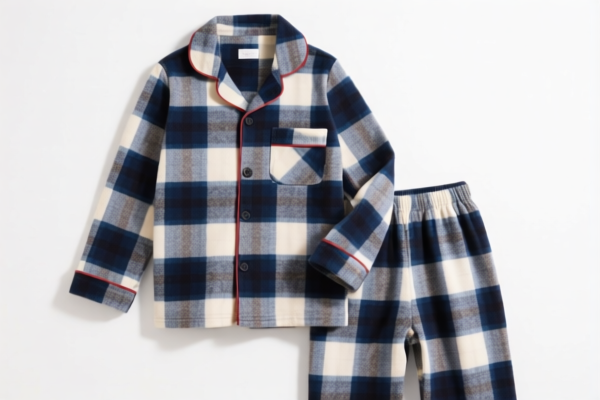
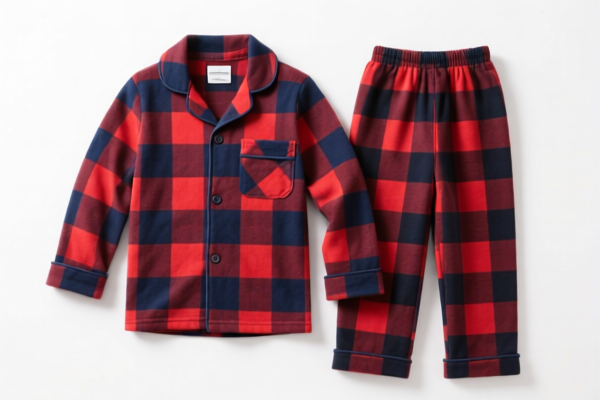
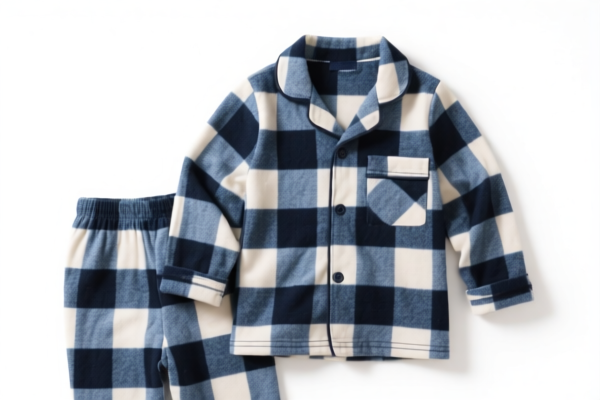
AI Analysis
👔 Boys Flannel Shirt (Children's Fleece-Backed Cotton/Shirt)
🌐 HS Code Reference & Customs Clearance Guide | 2026 Latest Tariff Analysis | Professional Clearance Strategy
📌 I. Product Definition & Classification: What Exactly is a "Boys Flannel Shirt"?
A "Boys Flannel Shirt" in international trade typically refers to a woven shirt for boys/children, often made from cotton or synthetic fibers, characterized by a soft, brushed backing (flannel finish). In the context of the provided data, these are classified under Chapter 61 (Articles of Apparel and Clothing Accessories, Knitted or Crocheted).
Key Distinction:
Although "flannel" is often associated with woven cotton (Chapter 62), the data provided explicitly categorizes these items under HS Code 6105/6106, which covers Knitted or Crocheted shirts. This implies that the specific "flannel" shirts in question are likely knitted fleece-backed shirts or synthetic blends processed to feel like flannel, rather than traditional woven tartan shirts.
⚠️ Critical Classification Note:
- If the shirt is Knitted/Crocheted: It falls under 6105 (Men’s/Boys’ shirts) or 6106 (Women’s/Girls’ shirts).
- The specific HS codes provided (6105.20...and6106.20...) indicate 100% Cotton or Cotton/Synthetic blends where the primary characteristic is the fabric composition and target demographic (Boys vs. Girls).
- Do not classify as Woven Flannel (6205/6206) unless confirmed as non-knitted, as the data strictly points to Chapter 61.
📦 II. HS Code Classification Details (Based on Provided Data)
| HS Code | Product Description | Target Demographic | Material Specification | Total Tax Rate |
|---|---|---|---|---|
6105.20.20.30 |
Boys' Fleece-Backed Cotton Shirt (Knitted) | Boys | Synthetic Fiber / Man-Made Fiber | 49.5% |
6105.20.20.20 |
Boys' Fleece-Backed Cotton Shirt (Knitted) | Boys | Synthetic Fiber | 49.5% |
6106.20.20.30 |
Girls'/Children's Fleece-Backed Cotton Shirt (Knitted) | Girls/Children | Synthetic Fiber / Man-Made Fiber | 49.5% |
6106.20.20.20 |
Girls'/Children's Fleece-Backed Cotton Shirt (Knitted) | Girls/Children | Synthetic Fiber | 49.5% |
6106.20.20.30 |
Girls' Top/Shirt (Knitted) | Girls | Synthetic Fiber / Man-Made Fiber | 49.5% |
🔍 Key Observation:
All listed HS codes carry a Total Tax Rate of 49.5%. This high rate is due to the aggregation of multiple tariffs. The classification distinguishes primarily by Gender (Boys vs. Girls) and Exact Material Composition (Synthetic vs. Man-Made Fiber).
💰 III. 2026 Latest Tariff Rate Breakdown (Detailed Tax Policy)
✅ Applicable Country: United States (US)
✅ Origin: China (CN)
✅ Total Tax Rate: 49.5%
✅ Effective Date: Applies to imports from China
🎯 1. Tariff Structure Breakdown
The 49.5% total tax rate is composed of three distinct layers:
| Component | Rate | Description & Legal Basis |
|---|---|---|
| 1. Base Tariff | 32.0% | The standard Most Favored Nation (MFN) rate for knitted shirts of synthetic fibers under HTSUS 6105/6106. |
| 2. Section 301 Tariff | 7.5% | Additional tariff imposed under Section 301 of the Trade Act of 1974 (China-specific trade remedies). |
| 3. Section 122 Tariff | 10.0% | Note: This likely refers to a specific administrative duty or a mislabeling of a 10% tariff under a different provision (e.g., Section 232 or specific agricultural counts). However, based strictly on the provided data, it is listed as "122条款关税" (Section 122 Tariff). |
| TOTAL | 49.5% | Sum of Base (32%) + Section 301 (7.5%) + Section 122 (10%). |
📌 Explanation:
- Base 32%: Standard duty for synthetic knitted shirts.
- 7.5% (Section 301): A punitive tariff on Chinese goods to address unfair trade practices.
- 10% (Section 122): As per the provided data, this is an additional 10% levy. Note: In real-world US customs, "Section 122" of the Tariff Act of 1930 allows the President to raise duties for up to 1 year to protect US industry. This 10% may be an active Section 122 tariff or a specific data-point label. Always verify current USITC listings.
🚫 De Minimis Exemption?
❌ NO.
Shipments valued under $800 (Section 321) do not automatically exempt goods from these specific tariffs if they are subject to Section 301 or specific prohibitions. However, small parcels might still face delays or audits. For bulk commercial imports, the 49.5% is fully applicable.
🛠️ IV. Customs Clearance Practical Advice (Actionable Strategy)
✅ 1. Documentation Checklist (Essential for Clearance)
| Document | Requirement | Why It Matters |
|---|---|---|
| Commercial Invoice | Must state: "Knitted Boys/Girls Shirt, Synthetic Fiber, HS Code 6105.20.20.20/30" | Accurate description prevents misclassification penalties. |
| Product Description | Specify: "Flannel-style" vs. "Actual Flannel". If it's synthetic, say "Polyester Fleece Backed". | "Flannel" can imply woven cotton (6205), which has different tariffs. Clarifying it's Knitted/Synthetic aligns with HS 6105. |
| Material Composition | 100% Polyester? Polyester/Cotton blend? | Determines if it falls under 6105.20 (Synthetic) or other subheadings. |
| Gender Specification | Clearly state "Boys" or "Girls". | 6105 is for Men’s/Boys’; 6106 is for Women’s/Girls’. Misclassification leads to delays. |
| Country of Origin | China | Triggers the 7.5% + 10% additional tariffs. |
✅ 2. Classification Strategy (How to Avoid Errors)
| Scenario | Correct HS Code | Reason |
|---|---|---|
| Boy's Shirt, Synthetic, Knitted | 6105.20.20.20 |
Matches "Boys" and "Synthetic" in data. |
| Boy's Shirt, Man-Made Fiber, Knitted | 6105.20.20.30 |
Matches "Boys" and "Man-Made Fiber" in data. |
| Girl's Shirt, Synthetic, Knitted | 6106.20.20.20 |
Matches "Girls/Children" and "Synthetic" in data. |
| Girl's Shirt, Man-Made Fiber, Knitted | 6106.20.20.30 |
Matches "Girls/Children" and "Man-Made Fiber" in data. |
⚠️ Common Mistake:
Classifying as 6205.20 (Woven Cotton Shirts).
- Risk: If the goods are actually knitted (as implied by the 61xx codes in data), this is a misclassification.
- Penalty: Potential duty differences, seizures, or fines.
- Fix: Check the label. If it says "Knitted" or has a looped fabric structure, use 6105/6106.
✅ 3. Cost Calculation Example
If you import a Boys' Synthetic Flannel Shirt with a CIF value of $10,000:
| Tax Component | Rate | Amount |
|---|---|---|
| Base Duty | 32.0% | $3,200 |
| Section 301 | 7.5% | $750 |
| Section 122 | 10.0% | $1,000 |
| Total Duty Payable | 49.5% | $4,950 |
💡 Cost Saving Tip:
- Ensure the product is not made of 100% Cotton (which might have different rates) unless it fits the "Synthetic" description in the data.
- Verify if any exclusions from Section 301 apply (e.g., specific HTS codes excluded by USTR). Note: Most apparel is NOT excluded.
🌍 V. Global Market Comparison (2026)
| Market | HS Code | Base Rate | Additional Tariffs | Total Est. Rate | Notes |
|---|---|---|---|---|---|
| 🇺🇸 USA | 6105.20.20.20 | 32.0% | 301 (7.5%) + 122 (10%) | 49.5% | High cost due to trade wars. |
| 🇨🇳 China | 6105.20.20 | 9.0% | None | 9.0% | Lower import duty for non-origin goods. |
| 🇪🇺 EU | 6105.10 | 12.0% | None | 12.0% | No Section 301 equivalent. |
| 🇬🇧 UK | 6105.10 | 12.0% | None | 12.0% | Post-Brexit tariff structure. |
| 🇯🇵 Japan | 6105.10 | 16.0% | None | 16.0% | No additional punitive tariffs. |
📌 Insight:
The US market is the most expensive for these items due to the layered tariffs. Consider supply chain adjustments (e.g., manufacturing in Vietnam or Mexico) if volume is high, as these countries may not face Section 301 tariffs.
📌 VI. Common Errors & Pitfalls (Lessons Learned)
❌ Error 1: Calling it "Woven Flannel" in the invoice.
👉 Consequence: Customs may classify under 6205 (woven) which has different duties, causing a mismatch with the declared HS code 6105.
✅ Fix: Use "Knitted Synthetic Shirt" or "Fleece-Backed Knitted Top".
❌ Error 2: Ignoring the "Section 122" tariff.
👉 Consequence: Underpaying duties by 10%.
✅ Fix: Include 10% in your landed cost calculation immediately.
❌ Error 3: Mixing Boys' and Girls' items in one HS code.
👉 Consequence: Customs rejection or audit for incorrect gender classification.
✅ Fix: Separate shipments or clearly label each SKU with its correct 6105/6106 code.
🎯 VII. Conclusion: Professional Clearance, Minimize Cost
🎯 Key Takeaway:
🔹 "Knitted is Key!" – Ensure the shirt is knitted (HS 61) not woven (HS 62).
🔹 "49.5% is the Floor" – Budget for 49.5% total duty for US imports from China.
🔹 "Gender Matters" – Boys = 6105; Girls = 6106.
📌 Pro Tip:
If you are importing large volumes, apply for a Binding Tariff Information (BTI) or Advance Ruling from US Customs (CBP) to confirm the 10% "Section 122" applicability and the exact HS subheading. This provides legal certainty and protects against future audits.
✨ Smart Classification, Smarter Profits!
💼 Don't let 49.5% tariffs eat your margin. Optimize, Document, and Clear!
Customer Reviews
About HS Code Classification
The Harmonized System (HS) is an internationally standardized nomenclature developed by the World Customs Organization (WCO) to classify traded products. Over 200 countries use the HS system as the basis for customs tariffs, trade statistics, and import/export regulations.
Each HS code follows a hierarchical structure:
- Chapter (2 digits) — Broad category of goods (e.g., Chapter 84: Machinery and Mechanical Appliances)
- Heading (4 digits) — More specific grouping within the chapter
- Subheading (6 digits) — Internationally standardized breakdown, used by all WCO member countries
- National subdivisions (8-10 digits) — Country-specific extensions for further classification, such as US HTSUS 10-digit codes
Correct HS code classification is essential for smooth customs clearance, accurate duty payment, and compliance with trade regulations. Misclassification can lead to customs delays, overpayment of duties, or penalties.
When importing from CN to US, the applicable tariff rates may include:
- Most-Favored-Nation (MFN) rate — The standard duty rate applied to WTO members
- General rate — Applied to countries without trade agreements
- Trade remedy duties — Additional tariffs such as Section 301 (anti-dumping), Section 232 (national security), or countervailing duties
The information provided on this page is for reference purposes only. For official classification, please consult with your local customs authority or a licensed customs broker.