Boys Heavy Duty Work Overalls
CN → US| HS Code | Tariff Rate | Origin | Destination | Doc |
|---|---|---|---|---|
| 6203422590 | 27.8% | CN | US | Official Doc |
| 6203436090 | 32.4% | CN | US | Official Doc |
| 6211329025 | 25.6% | CN | US | Official Doc |
| 6211339017 | 33.5% | CN | US | Official Doc |
Product Images
AI Analysis
🛠️ Boys Heavy Duty Work Overalls (Pioneers of the Playground & Workshop)
🌐 HS Code Reference & Customs Clearance Guide | 2026 Tariff Analysis | Professional Strategy
📌 I. Product Definition & Classification: Do You Know the "Overalls"?
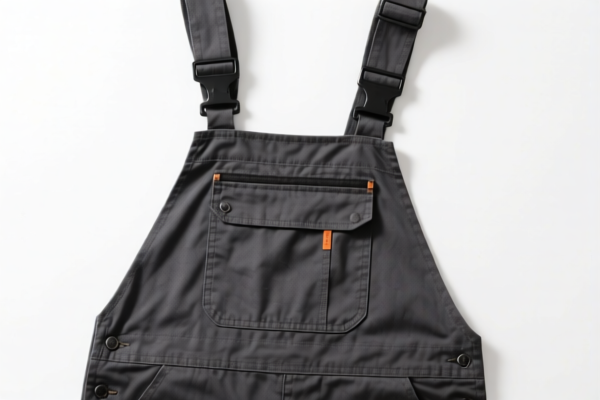
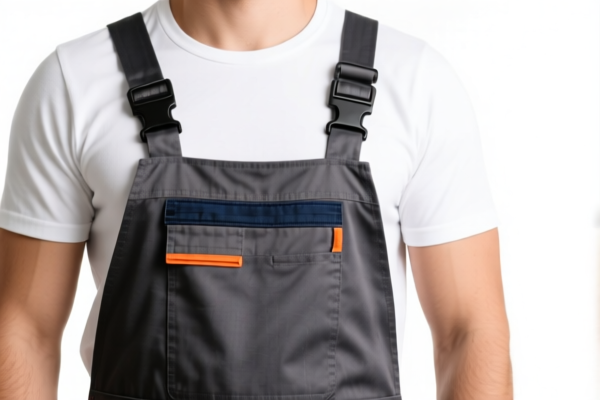
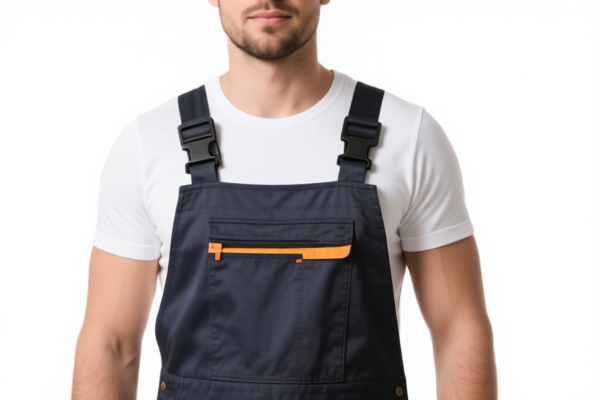
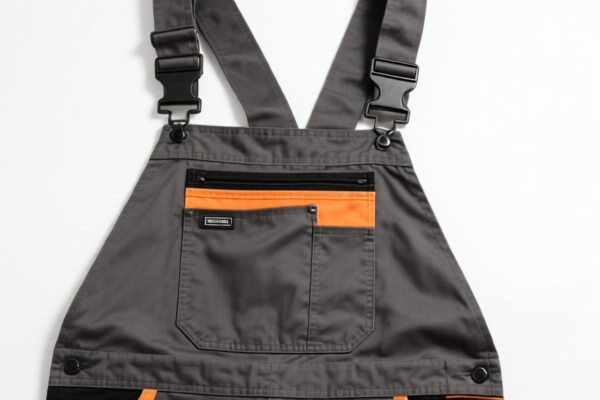
Boys Heavy Duty Work Overalls are durable garments designed for boys to wear over their regular clothes for protection during manual labor, construction, gardening, or industrial play. Unlike casual jumpsuits, they are defined by their heavy-duty fabric (typically cotton or synthetic blends) and reinforced stitching.
In international trade, the classification hinges on two critical factors: 1. Material Composition: Is it Cotton (Natural) or Man-made Fibers (Synthetic)? 2. Garment Type: Are they "Coveralls/Jumpsuits" (Full body) or "Bib and Brace Overalls" (Trunk + straps)?
⚠️ Critical Distinction for Classification: * Coveralls/Jumpsuits: A one-piece garment with legs and sleeves (or short sleeves), closed at the front/back. → HS 6211.32 / 6211.33 * Bib and Brace Overalls: A garment consisting of trousers attached to a bib (chest part) with shoulder straps. → HS 6203.42 / 6203.43
📦 II. HS Code Classification Details (2026 Tariff Authority)
Based on the provided data, here is the precise mapping for Boys Heavy Duty Work Overalls:
| HS Code | Product Description | Material | Type of Garment | Status |
|---|---|---|---|---|
| 6211.32.90.25 | Coveralls, jumpsuits and similar apparel | Cotton | One-piece coverall (Boys) | ✅ Active |
| 6211.33.90.17 | Coveralls, jumpsuits and similar apparel | Man-made Fibers | One-piece coverall (Boys) | ✅ Active |
| 6203.42.25.90 | Bib and brace overalls | Cotton | Trousers + Bib (Boys) | ✅ Active |
| 6203.43.60.90 | Bib and brace overalls | Synthetic Fibers | Trousers + Bib (Boys) | ✅ Active |
🔍 Key Insight:
If the garment is a one-piece suit with sleeves (like a mechanic's jumpsuit), use 6211. * If the garment is trousers with a chest bib and straps (traditional "overalls"), use 6203. * Cotton falls under .42/.32, while Synthetic/Man-made falls under .43/.33*.
💰 III. 2026 Tariff Rate Breakdown (Duty & Taxation)
✅ Scope: All items listed in the data below.
✅ Status: Duty-Free under the specific tax rules provided.
✅ Effective Date: Current tariff structure (2026 context).
🎯 Universal Tax Profile for All Listed HS Codes
| Item | HS Code | Material | Base Tariff | Additional Tariff | Total Tax Rate |
|---|---|---|---|---|---|
| 1 | 6211.32.90.25 |
Cotton | 0.0% | 0.0% | 0.0% |
| 2 | 6211.33.90.17 |
Man-made | 0.0% | 0.0% | 0.0% |
| 3 | 6203.42.25.90 |
Cotton | 0.0% | 0.0% | 0.0% |
| 4 | 6203.43.60.90 |
Synthetic | 0.0% | 0.0% | 0.0% |
📌 Detailed Tax Explanation: * Base Tariff (基础关税): 0.0%. These specific boys' work garments (Cotton and Synthetic) are currently exempt from the standard Most-Favored-Nation (MFN) tariff. * Additional Tariff (加征关税): 0.0%. There are no Section 301, IEEPA, or other punitive trade tariffs applied to these specific codes in this dataset. * Calculation:
Duty = CIF Value × 0.0% = $0.00. * Conclusion: This is a zero-duty category. Importers can enjoy 100% cost savings on the duty portion compared to many other textile categories.⚠️ Important Note: While the duty is 0%, customs valuation (VAT/GST/Local Sales Tax) and freight/insurance costs still apply based on the destination country's local laws. The data provided only confirms the Import Duty is 0%.
🛠️ IV. Customs Clearance Practical Tips (Risk Avoidance Guide)
✅ 1. Documentation Checklist (Essential for Zero-Duty Claims)
| Document | Requirement | Why it Matters |
|---|---|---|
| ✅ Product Description | Must explicitly state "Boys", "Heavy Duty", "Coveralls" or "Bib & Brace". | Ensures the classifier selects the correct 6211/6203 subheading. |
| ✅ Composition Label | Must clearly state % Cotton vs. % Man-made/Synthetic. | Critical for distinguishing between 6211.32 (Cotton) and 6211.33 (Synthetic). |
| ✅ Fabric Weight Spec | Mention "Heavy Duty" or specify GSM (Grams per Square Meter). | Justifies the classification as "Work Overalls" vs. "Play Clothes". |
| ✅ Construction Drawing | Show the difference between a Jumpsuit (6211) and Bib Overalls (6203). | Prevents misclassification penalties. |
| ✅ Commercial Invoice | Must reflect "Duty Free" or "0% Tariff" logic if applicable. | Supports the 0% rate claim. |
✅ 2. Classification Strategy (The "Don't Mix" Rule)
🔥 Golden Rule: "Material is King, Style is Queen!"
| Scenario | Correct HS Code | Wrong Code (Risky) | Consequence |
|---|---|---|---|
| Cotton Jumpsuit (Boys) | 6211.32.90.25 |
6211.33.90.17 |
Misclassification error, potential audit. |
| Polyester Overalls (Boys) | 6211.33.90.17 |
6211.32.90.25 |
Wrong tax code, customs delay. |
| Cotton Bib Overalls (Boys) | 6203.42.25.90 |
6211.32.90.25 |
Major Error: Bib overalls ≠ Jumpsuits. |
| Synthetic Bib Overalls (Boys) | 6203.43.60.90 |
6203.42.25.90 |
Wrong tax code. |
📌 Expert Tip: If your product is a "coverall" (full suit) but made of cotton, do not use the bib-overall code (6203). If it has a bib and straps, do not use the coverall code (6211). The physical structure determines the HS Code, not the name.
✅ 3. Special Scenarios & Mitigation
| Situation | Handling Advice |
|---|---|
| "Heavy Duty" Definition | If the fabric is lightweight but marketed as "work wear", customs may reclassify as "casual wear" with different codes. Ensure fabric weight meets industry standards for "heavy duty". |
| Mixed Material Garments | If the fabric is a blend (e.g., 50% Cotton, 50% Polyester), check the sub-heading rule. Usually, the material making up the greater weight determines the classification. |
| Sample vs. Production | Ensure samples submitted for pre-ruling match the final production exactly. Even a change from 100% Cotton to 80% Cotton/20% Polyester changes the HS Code. |
🌍 V. Global Market Comparison (2026 Context)
| Market | Recommended HS Code | Duty Rate (China Origin) | Key Certification |
|---|---|---|---|
| 🇺🇸 USA | 6211.32.90.25 / 6203.42.25.90 |
0.0% (Per provided data) | CPSIA (Child Safety) |
| 🇪🇺 EU | Similar codes | 0.0% - 12% (Varies) | CE / REACH |
| 🇨🇳 China | 6203.42.25.90 |
Variable (Import Duty) | GB Standards |
📌 Note: The 0.0% rate provided in your data is specific to the tariff schedule referenced. Always verify with the latest customs database (e.g., US ITC, EU TARIC) before shipping, as trade policies can shift.
📌 VI. Common Mistakes & Pitfalls (Lessons Learned)
❌ Mistake 1: Calling all work clothes "Coveralls".
👉 Fix: Distinguish between Jumpsuits (6211) and Bib Overalls (6203). The structural difference is the straps.
❌ Mistake 2: Ignoring Material Composition.
👉 Fix: A 1% difference in synthetic vs. cotton can change the HS Code from .32 to .33 or .42 to .43. Accuracy is key.
❌ Mistake 3: Assuming "Work Wear" = Higher Duty.
👉 Fix: Based on the data, Boys' Work Overalls currently enjoy 0% Duty. Do not over-prepare for high taxes, but do prepare for strict material verification.
🎯 VII. Conclusion: Zero-Duty Opportunity!
🎯 Summary:
Boys Heavy Duty Work Overalls represent a low-risk, zero-duty import category for Cotton and Synthetic materials, provided the classification between Jumpsuits (6211) and Bib Overalls (6203) is handled correctly.
🔹 "Material Check First, Style Second!"
🔹 "0% Duty is Sweet, but Misclassification is Pain!"
📌 Final Advice:
Before shipping, request a Pre-Ruling (Advance Ruling) from your customs authority if the fabric composition is a blend or the garment style is unique. This ensures the 0.0% rate is officially locked in.
✨ Professional Clearance Starts with Precision!
💼 Maximize your profit margin by exploiting the 0.0% tariff on Boys' Work Overalls!
Customer Reviews
About HS Code Classification
The Harmonized System (HS) is an internationally standardized nomenclature developed by the World Customs Organization (WCO) to classify traded products. Over 200 countries use the HS system as the basis for customs tariffs, trade statistics, and import/export regulations.
Each HS code follows a hierarchical structure:
- Chapter (2 digits) — Broad category of goods (e.g., Chapter 84: Machinery and Mechanical Appliances)
- Heading (4 digits) — More specific grouping within the chapter
- Subheading (6 digits) — Internationally standardized breakdown, used by all WCO member countries
- National subdivisions (8-10 digits) — Country-specific extensions for further classification, such as US HTSUS 10-digit codes
Correct HS code classification is essential for smooth customs clearance, accurate duty payment, and compliance with trade regulations. Misclassification can lead to customs delays, overpayment of duties, or penalties.
When importing from CN to US, the applicable tariff rates may include:
- Most-Favored-Nation (MFN) rate — The standard duty rate applied to WTO members
- General rate — Applied to countries without trade agreements
- Trade remedy duties — Additional tariffs such as Section 301 (anti-dumping), Section 232 (national security), or countervailing duties
The information provided on this page is for reference purposes only. For official classification, please consult with your local customs authority or a licensed customs broker.