Braided Handbag (Eco friendly Materials)
CN → USProduct Images

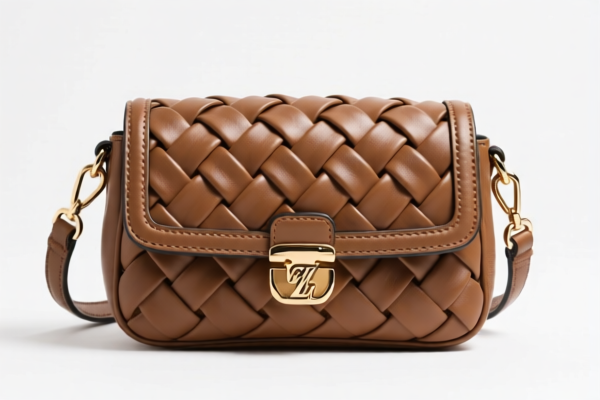


AI Analysis
👜 Braided Handbag (Eco-friendly Materials)
🌐 HS Code Reference & Clearance Guide | 2026 Updated Tariff Breakdown | Strategic Global Entry
📌 I. Product Definition & Classification: What is a "Braided Handbag"?
A Braided Handbag is a portable container made from interlaced or woven strands of material—often synthetic fibers, recycled plastics, jute, hemp, or cotton—to create a textured, durable, and sustainable fashion accessory. In international trade, its classification depends heavily on:
- Material composition (e.g., plastic vs. natural fiber vs. leather alternatives)
- Construction method (braided vs. sewn)
- Intended use (fashion accessory vs. industrial packaging)
- Eco-friendly claims (recycled content certifications)
⚠️ Critical Classification Point:
- If made primarily of plastic materials (e.g., recycled PET straws), it may fall under Chapter 39.
- If made of textiles (e.g., woven jute, hemp, or organic cotton), it likely belongs to Chapter 63.
- If it contains leather or synthetic leather trim, it could shift to Chapter 42.
📦 II. HS Code Classification Details (2026 Updated Tariff Schedule)
| HS Code | Product Description | Applicable Scenario | Primary Material | Braided Feature |
|---|---|---|---|---|
4202.32.00 |
Handbags with outer surface of plastics or textile materials | Fashion bags made of woven synthetic fibers, recycled plastics | Plastic/Textile blend | ✅ Yes |
4202.92.00 |
Other bags with outer surface of plastics or textile materials | Small pouches, cosmetic bags, eco-branded totes | Plastic/Textile | ✅ Yes |
6307.90.10 |
Other made-up textile articles, not elsewhere specified | Natural fiber braided bags (jute, hemp, sisal) | Natural Fiber | ✅ Yes |
6307.90.99 |
Other made-up textile articles | Mixed-material braided bags (e.g., cotton + recycled plastic) | Mixed Textiles | ✅ Yes |
3926.90.99 |
Other articles of plastics | Fully plastic braided bags (e.g., 100% recycled PET) | 100% Plastic | ✅ Yes |
4205.00.00 |
Other articles of leather or synthetic leather | Braided bags with significant leather components | Leather/Synthetic | ❌ No (unless leather dominant) |
🔍 Key Reminder:
- Bags made from 100% recycled plastic straws typically fall under 3926.90.99, not 6307 or 4202.
- If the bag contains more than 50% natural fiber (e.g., jute/hemp), it should be classified under 6307.90.10 or 6307.90.99.
- Eco-friendly labeling does NOT change the HS Code, but may help in qualifying for green trade incentives in some markets.
💰 III. 2026 Updated Tariff Rates (Including Additional Taxes & Policy Surcharges)
✅ Applicable Country: United States (US)
✅ Origin: China (CN)
✅ Effective Date: November 10, 2025 (and ongoing imports)
🎯 1. 4202.32.00 —— Handbags (Plastic/Textile Outer Surface)
| Item | Details |
|---|---|
| Base Tariff | 0% (ad valorem) |
| USITC Add-on Tariff | +25% (USITC Footnote 9903.88.01) |
| IEEPA Surcharge | +10% (China/HK products, effective 2025-11-10) |
| Total Duty Rate | 35% |
| Tax Calculation | CIF Value × 35% |
| De Minimis Exemption | ❌ Not eligible |
| Legal Pathway | IEEPA:9903.01.25 → USITC:4202.32.00 → FOOTNOTE:9903.88.01 |
📌 Explanation:
- Despite being “eco-friendly,” plastic-based handbags from China are subject to 35% total duty.
- The 25% USITC surcharge applies under Section 301 of the Trade Act; the 10% IEEPA surcharge targets Chinese origin goods.
🎯 2. 6307.90.10 —— Made-up Textile Articles (Natural Fiber)
| Item | Details |
|---|---|
| Base Tariff | 0% |
| USITC Add-on Tariff | +25% |
| IEEPA Surcharge | +10% |
| Total Duty Rate | 35% |
| Tax Calculation | CIF × 35% |
| De Minimis Exemption | ❌ Not eligible |
| Legal Pathway | IEEPA:9903.01.25 → USITC:6307.90.10 → FOOTNOTE:9903.88.01 |
📌 Note:
- Even if made of jute, hemp, or organic cotton, textile-based braided bags from China are taxed at 35% due to broader US trade restrictions.
- Eco-certification does not reduce the duty rate unless a specific exemption program is triggered.
🎯 3. 3926.90.99 —— Other Plastic Articles
| Item | Details |
|---|---|
| Base Tariff | 0% |
| USITC Add-on Tariff | +25% |
| IEEPA Surcharge | +10% |
| Total Duty Rate | 35% |
| Tax Calculation | CIF × 35% |
| De Minimis Exemption | ❌ Not eligible |
| Legal Pathway | IEEPA:9903.01.25 → USITC:3926.90.99 → FOOTNOTE:9903.88.01 |
📌 Warning:
- 100% recycled plastic bags still face 35% duty, regardless of sustainability claims.
- This is one of the most commonly misclassified categories due to misleading “green” labeling.
🛠️ IV. Customs Clearance Practical Advice (Avoid Common Pitfalls)
✅ 1. Required Documentation Checklist
| Document | Required? | Description |
|---|---|---|
| ✅ Product Specification Sheet | ✔️ | Material composition, dimensions, weight, braiding technique |
| ✅ Material Certificates | ✔️ | Recycled content %, fiber origin, eco-labels (GRS, OCS, etc.) |
| ✅ Product Photos | ✔️ | Front, back, inside, close-up of braiding texture |
| ✅ Third-Party Test Reports | ✔️ | FDA (if food-contact), Prop 65, REACH, CPC (for children’s items) |
| ✅ Commercial Invoice | ✔️ | Must specify "Braided Handbag" + material type + HS Code |
| ✅ Packing List | ✔️ | Clearly indicate contents to avoid split declarations |
| ✅ Certificate of Origin (CO) | ✔️ | For non-China origin (e.g., Vietnam, India, Bangladesh) to claim lower rates |
✅ 2. Declaration Strategy (Golden Rules)
🔥 “Don’t just say ‘Eco Bag’—Specify Material & Structure!”
| Scenario | Correct Declaration | Wrong Approach |
|---|---|---|
| Recycled PET braided bag | 3926.90.99 – "Braided Handbag, 100% Recycled PET" |
“Eco Bag” → Risk of reclassification |
| Jute/hemp braided bag | 6307.90.10 – "Braided Textile Handbag, Natural Fiber" |
“Handbag” → May trigger 4202 misclassification |
| Mixed-material bag | 6307.90.99 – "Braided Handbag, Mixed Textile & Plastic" |
“Synthetic Bag” → Could lead to 3926 classification |
| Leather-trimmed bag | 4202.32.00 – "Braided Bag with Synthetic Leather Trim" |
“Leather Bag” → If leather <50%, not valid |
✅ 3. Special Cases Handling
| Situation | Recommended Action |
|---|---|
| OEM Braided Bags | Provide client design specs + material sourcing proof |
| Bags with Eco-Claims | Attach GRS, OCS, or FSC certificates to support green marketing |
| Bulk vs. Retail | Bulk packaging must be declared separately to avoid overcharging |
| Eco-Friendly Rebates | Some countries (e.g., EU, Canada) offer reduced duties for certified sustainable goods—check local programs |
🌍 V. Global Market Clearance Comparison (2026 Updated)
| Country/Region | Recommended HS Code | Tariff | Certification Required | Notes |
|---|---|---|---|---|
| 🇺🇸 USA | 3926.90.99, 6307.90.10, 4202.32.00 |
35% (China) | FCC (if electronic), Prop 65 | High tariffs apply even for eco-products |
| 🇪🇺 EU | 6307.90.99 |
0–12% (varies) | CE, REACH | Green incentives possible under EUDR |
| 🇨🇦 Canada | 6307.90.99 |
5% (China) | SCC | No IEEPA surcharge |
| 🇦🇺 Australia | 6307.90.99 |
10% | RCM | No major surcharges |
| 🇯🇵 Japan | 6307.90.99 |
0% | PSE | No surcharge |
📌 Conclusion:
- The US is the most expensive market for braided handbags due to surcharges;
- EU, Canada, Australia, Japan offer better clearance conditions, especially for certified eco-products.
📌 VI. Common Mistakes & Pitfalls (Real-World Lessons)
❌ Mistake 1: Calling it “Eco Bag” without material detail
👉 Result: Customs may reclassify → 35% duty + penalty
❌ Mistake 2: Claiming 100% plastic when it’s mixed textile
👉 Result: Audit risk + back-duties + shipment delay
❌ Mistake 3: Not declaring braiding technique
👉 Result: May be classified as “woven” instead of “braided” → Different duty rate
❌ Mistake 4: Ignoring certification requirements for eco-labels
👉 Result: Rejected green marketing claims → Brand damage
✅ Best Practice:
“Braided Handbag, 100% Recycled PET, GRS Certified, 12x10x4 inches, No Electronics, Model XYZ”
🎯 VII. Final Words: Smart Classification, Faster Clearance, Higher Margins!
🎯 Remember the Rule:
🔹 “Material = Code, Structure = Clue, Eco-Claim ≠ Duty Reduction”
🔹 “One decimal wrong, and you lose 35% profit!”
📌 Pro Tip:
If your bag is made in Vietnam, India, or Bangladesh, you may qualify for lower tariffs or green trade incentives under regional agreements.
Consider applying for HS Code Pre-Ruling to secure clarity before shipping.
📣 Take Action Now:
📞 Contact a licensed customs broker + Provide material specs + File for Pre-Ruling
🚀 Ship smarter, pay less, grow faster!
✨ Smart Classification = Competitive Edge!
💼 Your sustainability story starts with accurate classification!
Customer Reviews
About HS Code Classification
The Harmonized System (HS) is an internationally standardized nomenclature developed by the World Customs Organization (WCO) to classify traded products. Over 200 countries use the HS system as the basis for customs tariffs, trade statistics, and import/export regulations.
Each HS code follows a hierarchical structure:
- Chapter (2 digits) — Broad category of goods (e.g., Chapter 84: Machinery and Mechanical Appliances)
- Heading (4 digits) — More specific grouping within the chapter
- Subheading (6 digits) — Internationally standardized breakdown, used by all WCO member countries
- National subdivisions (8-10 digits) — Country-specific extensions for further classification, such as US HTSUS 10-digit codes
Correct HS code classification is essential for smooth customs clearance, accurate duty payment, and compliance with trade regulations. Misclassification can lead to customs delays, overpayment of duties, or penalties.
When importing from CN to US, the applicable tariff rates may include:
- Most-Favored-Nation (MFN) rate — The standard duty rate applied to WTO members
- General rate — Applied to countries without trade agreements
- Trade remedy duties — Additional tariffs such as Section 301 (anti-dumping), Section 232 (national security), or countervailing duties
The information provided on this page is for reference purposes only. For official classification, please consult with your local customs authority or a licensed customs broker.