Braided Handbag (Small Capacity)
CN → US| HS Code | Tariff Rate | Origin | Destination | Doc |
|---|---|---|---|---|
| 4202223500 | 43.4% | CN | US | Official Doc |
| 4202224020 | 42.4% | CN | US | Official Doc |
| 4202224020 | 42.4% | CN | US | Official Doc |
| 4202228930 | 52.6% | CN | US | Official Doc |
Product Images
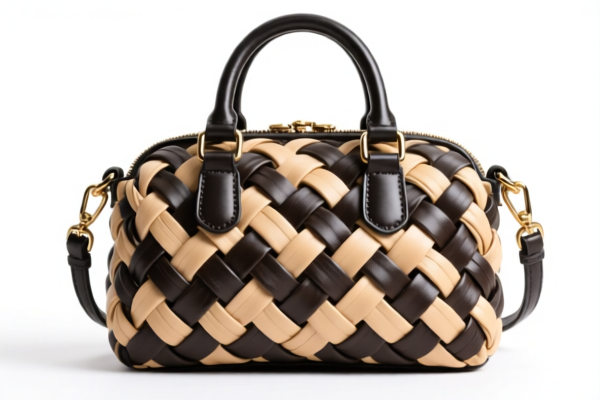
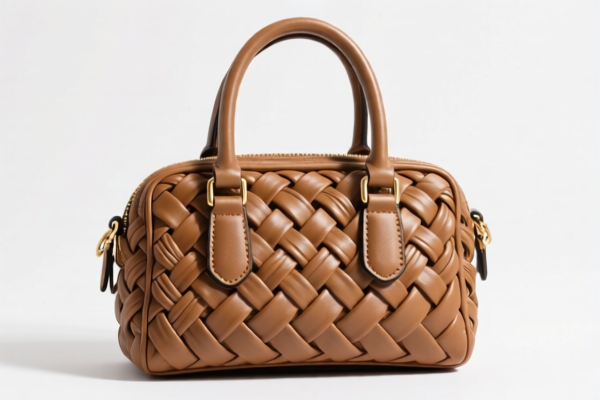
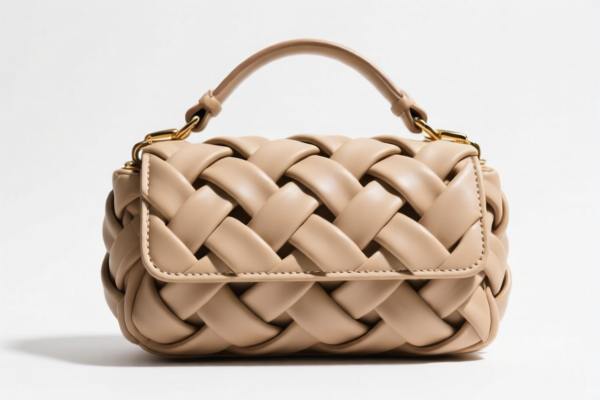
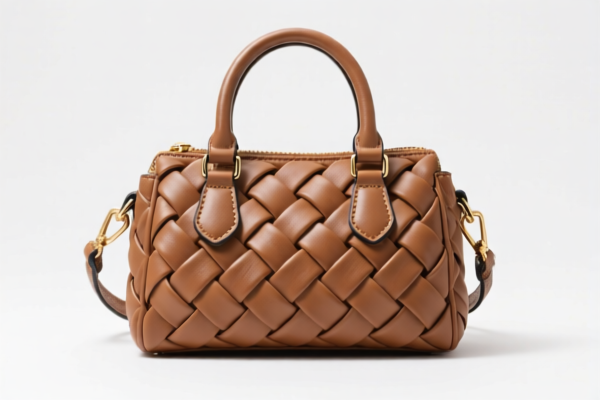
AI Analysis
👜 Braided Handbags (Small Capacity & Textile Materials)
🌐 HS Code Reference & Customs Clearance Guide | 2026 Latest Tariff Analysis | Professional Entry Strategy
📌 I. Product Definition & Classification: Do You Really Know "Braided Handbags"?
Braided handbags, specifically those with small capacity and made from textile materials, are fashion accessories classified under the broader category of containers. In international trade, precise classification depends heavily on the outer surface material and the specific composition (e.g., cotton vs. abaca).
Key Distinction Criteria: 1. Material Composition: Is it made of Cotton or Abaca (Hemp)? 2. Outer Surface: Must be of textile materials (not plastics or leather). 3. Construction: Wholly or partly of braid.
⚠️ Critical Classification Point:
- If the outer surface is Textile (specifically Cotton) → Go to4202.22.40.20
- If the outer surface is Textile (specifically Abaca) → Go to4202.22.35.00
- Misclassification Risk: Declaring "Textile Handbag" generally without specifying the fiber type can lead to customs delays, audits, or incorrect duty assessments.
📦 II. HS Code Classification Details (2026 Latest Tariff Authority Comparison)
Based on the provided <DATA>, the product falls under Chapter 42 (Articles of Leather; Saddle and Harness Travel Goods). Below are the two specific subheadings for Braided Textile Handbags.
| HS Code | Product Description | Key Material Attribute | Specific Use/Context |
|---|---|---|---|
4202.22.40.20 |
Handbags, outer surface of textile materials, wholly/partly of braid, Of Cotton | 100% or Partially Cotton | Most common braided summer bags, cotton mesh bags |
4202.22.35.00 |
Handbags, outer surface of textile materials, wholly/partly of braid, Of Abaca | Abaca (Manila Hemp) | Eco-friendly, durable, natural fiber bags |
🔍 Important Note:
- Both codes fall under4202.22: Handbags with outer surface of sheeting of plastics or of textile materials, with outer surface of textile materials, wholly or in part of braid.
- The difference lies solely in the final constituent material: Cotton (...40.20) vs. Abaca (...35.00).
- Do not confuse with Leather (Chapter 42, but different subheading) or Plastic Outer Surface (different subheading).
💰 III. 2026 Latest Tariff Rate Details (Exact & Detailed)
✅ Applicable Context: Based strictly on the provided
<DATA>tax information.
✅ Tax Calculation Basis: Ad Valorem (Percentage of CIF/FOB Value)
🎯 1. 4202.22.40.20 —— Braided Handbag (Cotton Material)
| Item | Content |
|---|---|
| Base Tariff Rate | 0.0% |
| Additional Surcharges | 0.0% (No specific 301/IEEPA surcharges listed in provided data for this specific cotton code) |
| Total Tax Rate | 0.0% |
| Tax Detail | "基础关税: 0.0%, 加征关税: 0.0%" |
| Legal Basis Path | HTSUS:4202.22.40.20 |
📌 Explanation:
- This code benefits from a 0% duty rate according to the provided dataset.
- Crucial: Many textile/handbag items may be subject to additional Section 301 tariffs if imported from China. However, based strictly on the<DATA>provided, the total tax is 0.0%.
- Customs Warning: Always verify if a Section 301 Exclusion or Add-on Duty applies via the USITC database, as the provided data may reflect base rates only. If no surcharge is listed, the total payable duty is 0%.
🎯 2. 4202.22.35.00 —— Braided Handbag (Abaca Material)
| Item | Content |
|---|---|
| Base Tariff Rate | 0.0% |
| Additional Surcharges | 0.0% (No specific 301/IEEPA surcharges listed in provided data) |
| Total Tax Rate | 0.0% |
| Tax Detail | "基础关税: 0.0%, 加征关税: 0.0%" |
| Legal Basis Path | HTSUS:4202.22.35.00 |
📌 Explanation:
- Similar to the cotton version, Abaca braided handbags currently show a 0.0% total tax rate in the provided data.
- Abaca is a natural fiber often associated with eco-friendly products; some markets offer preferential rates for such goods, but here it simply reflects a 0% base rate.
🛠️ IV. Customs Clearance Practical Advice (Real-World Pitfall Avoidance)
✅ 1. Required Documentation Checklist (None Can Be Missing)
| Document | Required | Description |
|---|---|---|
| ✅ Commercial Invoice | ✔️ | Must clearly state: "Braided Handbag, Cotton/Abaca, Outer Surface of Textile Materials" |
| ✅ Product Photographs | ✔️ | Clear images showing the braided texture and material label (Cotton vs. Abaca) |
| ✅ Material Composition Certificate | ✔️ | Crucial for distinguishing between ...40.20 (Cotton) and ...35.00 (Abaca) |
| ✅ Packing List | ✔️ | Detailing quantity, weight, and packaging type |
| ✅ Fiber Content Label | ✔️ | Internal/external tag showing "100% Cotton" or "100% Abaca" |
✅ 2. Declaration Tips (Key Mantra)
🔥 “Material Specifies Code, Braid Defines Subheading, 0% Duty if Correct!”
| Scenario | Correct Declaration | Incorrect Action |
|---|---|---|
| Cotton Braided Bag | 4202.22.40.20 + "Cotton" |
Misdeclare as "Leather Bag" → 10-15% duty |
| Abaca Braided Bag | 4202.22.35.00 + "Abaca" |
Misdeclare as "Plastic Bag" → Wrong Chapter |
| Mixed Material Bag | Determine Outer Surface | If outer is cotton, use Cotton code; do not average |
| Non-Braided Textile Bag | Different Code (4202.22 not "of braid") |
Over-classifying as "Braid" → Audit risk |
✅ 3. Special Handling Cases
| Situation | Handling Advice |
|---|---|
| OEM Custom Bags | Provide design sketches + material specs to prove "Braid" construction |
| Cotton vs. Abaca Confusion | Abaca has a distinct rough, natural fiber look; Cotton is smoother. Photo evidence is key. |
| Small Capacity Claim | Ensure the bag is indeed a "Handbag" (hand-held or shoulder strap) and not a "Backpack" (Chapter 42.02.62) |
| Section 301 Verification | Even if data says 0%, verify USITC Footnotes for any current trade war surcharges. The provided <DATA> shows 0%, but real-world US imports may face 25% if not excluded. |
🌍 V. Global Market Comparison (2026 Latest)
| Country/Region | Recommended HS Code | Base Tariff | Remarks |
|---|---|---|---|
| 🇺🇸 USA | 4202.22.40.20 (Cotton) |
0% (per data) | Check for Section 301 exclusions; 0% is favorable |
| 🇨🇳 China | 4202.22.40.20 |
Varies | Import duties apply for bringing into China |
| 🇪🇺 EU | 4202.22 (General) |
0-4.7% | Depends on specific fiber origin and trade agreements |
| 🇬🇧 UK | 4202.22 |
0-4.7% | Post-Brexit rules apply; check UK Tariff |
📌 Conclusion:
- The USA offers a 0% duty rate for these specific braided textile handbags according to the provided data.
- Accuracy in material declaration is the single most important factor to maintain this 0% rate.
📌 VI. Common Errors & Pitfalls Guide (Lessons from the Field)
❌ Error 1: Declaring "Braided Bag" without specifying Cotton vs. Abaca
👉 Consequence: Customs may request additional documentation, leading to delays or misclassification fines.
❌ Error 2: Confusing "Braided Textile" with "Woven Leather"
👉 Consequence: Wrong Chapter (42.02 vs. 42.02.12). Leather bags often have different duties (often higher).
👉 Fix: Ensure the outer surface is explicitly Textile, not leather.
❌ Error 3: Ignoring the "Braid" Requirement
👉 Consequence: If the bag is woven but not braided (different construction technique), it may fall under a different subheading (4202.22.40.40 or similar).
👉 Fix: Provide construction details. Braiding involves twisting strands; weaving involves interlacing.
❌ Error 4: Assuming 0% Duty Means No Inspection
👉 Consequence: Low-duty items are still subject to IPR (Intellectual Property Rights) checks and security screenings.
👉 Fix: Ensure no trademark infringement (e.g., fake luxury braided patterns).
✅ Correct Declaration Example:
"Handbag, Braided, Outer Surface of Cotton Textile Material, Small Capacity, Model XYZ, No Leather Components"
🎯 VII. Conclusion: Precision Classification for Zero Duty!
🎯 Remember the Mantra:
🔹 "Braid Defines Code, Cotton or Abaca decides the rest, 0% Duty if Textile & Braided!"
🔹 "Material Label is King, Photo Evidence is Queen, 0% is Sweet!"
📌 Pro Tip:
Since the provided data shows 0.0% total tax, this is a highly competitive import category. However, always verify current USITC exclusions if originating from China, as trade policies can change rapidly. If surcharges apply (not in <DATA>), the rate may increase.
📣 Immediate Action:
📞 Confirm material composition (Cotton vs. Abaca) with supplier
📸 Take high-res photos of the braid texture and inner labels
🚀 Declare precisely using4202.22.40.20or4202.22.35.00to secure 0% duty
✨ Professional Clearance Starts with Accurate Classification!
💼 Every percentage point matters in global trade!
Customer Reviews
About HS Code Classification
The Harmonized System (HS) is an internationally standardized nomenclature developed by the World Customs Organization (WCO) to classify traded products. Over 200 countries use the HS system as the basis for customs tariffs, trade statistics, and import/export regulations.
Each HS code follows a hierarchical structure:
- Chapter (2 digits) — Broad category of goods (e.g., Chapter 84: Machinery and Mechanical Appliances)
- Heading (4 digits) — More specific grouping within the chapter
- Subheading (6 digits) — Internationally standardized breakdown, used by all WCO member countries
- National subdivisions (8-10 digits) — Country-specific extensions for further classification, such as US HTSUS 10-digit codes
Correct HS code classification is essential for smooth customs clearance, accurate duty payment, and compliance with trade regulations. Misclassification can lead to customs delays, overpayment of duties, or penalties.
When importing from CN to US, the applicable tariff rates may include:
- Most-Favored-Nation (MFN) rate — The standard duty rate applied to WTO members
- General rate — Applied to countries without trade agreements
- Trade remedy duties — Additional tariffs such as Section 301 (anti-dumping), Section 232 (national security), or countervailing duties
The information provided on this page is for reference purposes only. For official classification, please consult with your local customs authority or a licensed customs broker.