Braided Handbag (With Zipper)
CN → US| HS Code | Tariff Rate | Origin | Destination | Doc |
|---|---|---|---|---|
| 4202224020 | 42.4% | CN | US | Official Doc |
| 4602192940 | 40.3% | CN | US | Official Doc |
| 4602192920 | 40.3% | CN | US | Official Doc |
| 4202223500 | 43.4% | CN | US | Official Doc |
| 3926903300 | 16.5% | CN | US | Official Doc |
Product Images
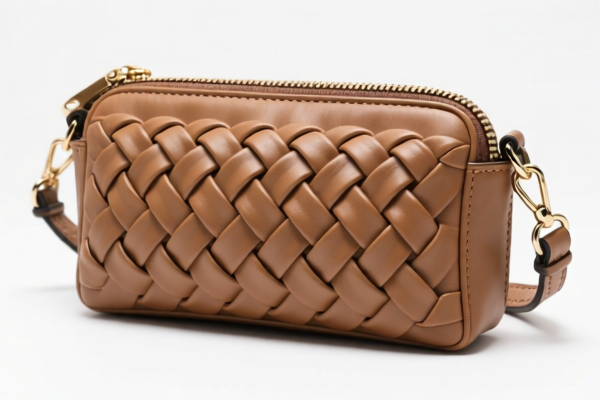
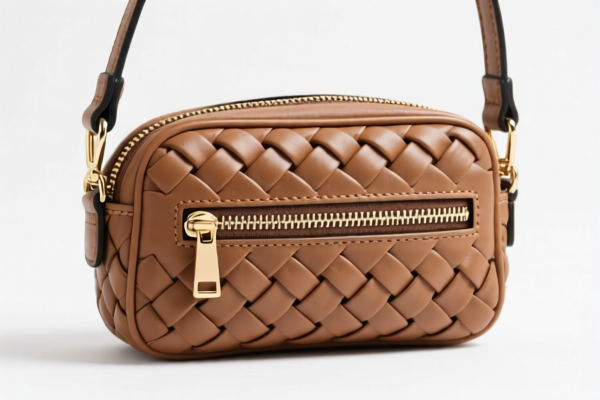
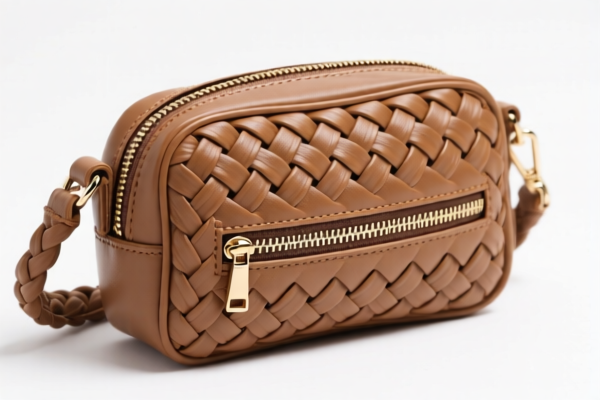
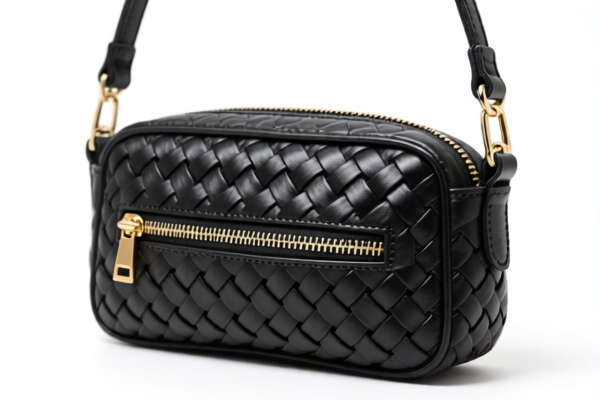
AI Analysis
👜 Braided Handbag (With Zipper): HS Code Classification & US Customs Clearance Guide
🌐 HS Code Reference & Clearance Guide | 2026 Latest Tariff Analysis | Professional Clearance Strategy
📌 I. Product Definition & Classification: What Exactly is a "Braided Handbag"?
A Braided Handbag is a portable container used for carrying personal items, characterized by its woven/braided texture. The term "Braided" implies a specific manufacturing process where materials (such as plastics, natural fibers, or textiles) are interlaced.
In international trade, the critical distinction lies in the Material Composition: * Textile/Material Woven Goods: If the base material is natural fiber (straw, rattan, etc.) or synthetic fiber processed like textile. * Plastic Article: If the "braid" is made of plastic strips or PVC strands. * Leather/Leather Goods: If the braid is made of genuine leather (less common for "braided" description unless specified, but possible).
⚠️ Key Distinction Point: * If the outer surface is Plastic (even if woven/braided) → Likely HS 3926.90.33.00. * If the outer surface is Textile/Fabric (woven) → Likely HS 4202.22.40.20. * If the outer surface is Plant Material (straw, rattan, reed) → Likely HS 4602.19.29.20 or 4602.19.29.40.
📦 II. HS Code Classification Details (2026 Latest Tariff Authority Comparison)
Based on the provided data, here are the four potential HS Codes depending on the exact material inferred from the "Braided" feature:
| HS Code | Product Description | Material Inference | Total Tax Rate | Key Reasoning |
|---|---|---|---|---|
| 4202.22.40.20 | Handbags with outer surface of textile materials | Textile/Fabric (Braided) | 42.4% | Matches shape (handbag) and material (Braided → Textile). Applies standard textile handbag duties. |
| 4602.19.29.20 | Wrought goods of vegetable materials (Handbags) | Plant Fiber (Straw/Rattan) | 40.3% | Matches "Handbag" form and "Woven" usage. Specifically for bags made from plant-based woven materials. |
| 4602.19.29.40 | Other wrought goods of vegetable materials | Plant Fiber/Other Woven | 40.3% | Matches "Woven class" and "Handbag/Flat goods" use. Inferred as plant fiber or similar woven material. |
| 4202.22.35.00 | Handbags with outer surface of textile materials | Textile (General Woven) | 43.4% | Matches shape (woven handbag) and use. Inferred as standard textile woven material. |
| 3926.90.33.00 | Other articles of plastic (Handbags) | Plastic (Woven/Braided) | 16.5% | Matches "Handbag" form. "Braided" inferred as Plastic Fiber/Plastic Material. Lowest base duty due to plastic classification. |
🔍 Critical Reminder: * Plastic vs. Textile vs. Plant: The term "Braided" alone is not enough for customs. You must declare the specific material. * Misclassification Risk: Declaring a plastic braided bag as "textile" (4202) or "plant" (4602) will result in higher duties and potential penalties. * Zipper Impact: The presence of a zipper does not change the HS code classification of the bag itself; it is considered an accessory/attachment.
💰 III. 2026 Latest Tariff Rate Breakdown (Including Additional Duties & Policy Surcharges)
✅ Applicable Country: United States (US) ✅ Country of Origin: China (CN) ✅ Effective Date: From November 10, 2025 (including subsequent imports)
🎯 1. 4202.22.40.20 – Handbags, Outer Surface: Textile Materials
| Item | Detail |
|---|---|
| Base Duty Rate | 7.4% (ad valorem) |
| Section 301 Additional Duty | +25.0% |
| IEEPA Additional Duty (Section 122) | +10.0% |
| Total Effective Duty | 42.4% |
| Tax Calculation | CIF Value × 42.4% |
| De Minimis Exemption Eligible? | ❌ No (deny_de_minimis) |
| Legal Path | IEEPA:9903.01.25 → USITC:4202.22.40.20 → SECTION_301:7.4% + IEEPA_122:10% |
📌 Explanation: * The 25% comes from the US Trade Act Section 301 tariffs on Chinese goods. * The 10% is the IEEPA (International Emergency Economic Powers Act) surcharge targeting specific categories of Chinese imports. * Total 42.4% is a high cost burden. Accurate material declaration is vital to avoid being misclassified into a higher bracket.
🎯 2. 4602.19.29.20 & 4602.19.29.40 – Wrought Goods of Vegetable Materials (Handbags)
| Item | Detail |
|---|---|
| Base Duty Rate | 5.3% (ad valorem) |
| Section 301 Additional Duty | +25.0% |
| IEEPA Additional Duty (Section 122) | +10.0% |
| Total Effective Duty | 40.3% |
| Tax Calculation | CIF Value × 40.3% |
| De Minimis Exemption Eligible? | ❌ No (deny_de_minimis) |
| Legal Path | IEEPA:9903.01.24 → USITC:4602.19.29.20 / 4602.19.29.40 → SECTION_301:5.3% + IEEPA_122:10% |
📌 Note: * These codes apply to natural woven bags (e.g., straw beach bags, rattan totes). * If your "Braided Handbag" is made of synthetic straw-like plastic, it MUST NOT use these codes. It should be classified as plastic (3926). * Base duty is lower (5.3%), but still subject to the full 35% additional taxes.
🎯 3. 4202.22.35.00 – Handbags, Outer Surface: Textile Materials (Other)
| Item | Detail |
|---|---|
| Base Duty Rate | 8.4% (ad valorem) |
| Section 301 Additional Duty | +25.0% |
| IEEPA Additional Duty (Section 122) | +10.0% |
| Total Effective Duty | 43.4% |
| Tax Calculation | CIF Value × 43.4% |
| De Minimis Exemption Eligible? | ❌ No (deny_de_minimis) |
| Legal Path | IEEPA:9903.01.25 → USITC:4202.22.35.00 → SECTION_301:8.4% + IEEPA_122:10% |
📌 Caution: * This code has a higher base rate (8.4%) than 4202.22.40.20 (7.4%). * Use this only if the specific textile type does not fit under the .40.20 sub-category. * Highest total tax (43.4%) among the textile options.
🎯 4. 3926.90.33.00 – Other Articles of Plastic (Handbags)
| Item | Detail |
|---|---|
| Base Duty Rate | 6.5% (ad valorem) |
| Section 301 Additional Duty | 0.0% |
| IEEPA Additional Duty (Section 122) | +10.0% |
| Total Effective Duty | 16.5% |
| Tax Calculation | CIF Value × 16.5% |
| De Minimis Exemption Eligible? | ❌ No (deny_de_minimis) |
| Legal Path | IEEPA:9903.01.24 → USITC:3926.90.33.00 → SECTION_122:10% |
📌 Crucial Insight: * Lowest Tax Rate (16.5%): This is significantly cheaper than textile/plant options. * Why?: Plastic articles are exempt from Section 301 (25%) but still subject to the IEEPA 10%. * Material Check: If the bag is made of PVC, PP, or PE braided strips, it MUST be declared as Plastic (3926.90.33.00). * Warning: Do not try to force a plastic bag into the textile category (4202) to avoid scrutiny, as materials are often tested. If it is plastic, use 3926.
🛠️ IV. Customs Clearance Practical Advice (Real-World Pitfall Guide)
✅ 1. Required Documentation Checklist (Non-Negotiable)
| Document | Required | Notes |
|---|---|---|
| ✅ Product Spec Sheet | ✔️ | Must clearly state Material Composition (e.g., "100% Polypropylene Braided Strap", "Natural Raffia", "Cotton Woven"). |
| ✅ Product Photos (Clear) | ✔️ | Show texture close-up (to prove braid type), zipper detail, brand logo, and overall shape. |
| ✅ Commercial Invoice | ✔️ | Description must be precise: "Braided Handbag, Material: [X], with Zipper Closure". Avoid vague terms like "Fashion Bag". |
| ✅ Packing List | ✔️ | List quantities, weights, and dimensions. |
| ✅ Certificate of Origin | ✔️ | Essential for verifying China origin and applying correct surcharges. |
✅ 2. Declaration Strategy (Key Mantra)
🔥 "Material is King, Zipper is Just Accessory, Plastic Saves Money!"
| Scenario | Correct Declaration | Wrong Declaration | Consequence |
|---|---|---|---|
| Plastic Braided Bag | 3926.90.33.00 |
"Textile Handbag" | Underpayment: Customs tests material, finds it's plastic, assesses back taxes + penalties. (Wait, Plastic is cheaper! So misdeclaring plastic as textile leads to overpayment or audit risk if they correct it). Correction: If you declare Plastic as Textile, you pay 42-43% instead of 16.5%. You lose profit. If you declare Textile as Plastic, you risk fraud charges. |
| Natural Straw Bag | 4602.19.29.20 |
"Plastic Handbag" | Overpayment: Paying 40.3% instead of potential lower rates, but mostly audit risk. |
| Generic "Braided Bag" | Specify Material | "Braided Bag" | Customs Delay: CBP will request material breakdown, leading to storage fees and delays. |
📌 Critical Warning: * Many importers mistakenly think "Braided" = "Textile". * If your bag is made of synthetic braided plastic strips (common in affordable fashion bags), it is PLASTIC. * Using
3926.90.33.00saves you ~26% in tariffs compared to textile classifications! * However, you must be able to prove it is plastic if questioned. Provide material test reports or supplier declarations.
✅ 3. Special Handling Notes
| Situation | Handling Advice |
|---|---|
| Mixed Materials | If the bag body is plastic braid but lining is cotton, the outer surface material determines HS Code. It is still Plastic (3926). |
| Zipper Content | The zipper (metal/plastic) is ignored for classification. Only the main body matters. |
| OEM Custom Bags | Provide design specs showing material type. If the design uses "eco-friendly biodegradable plastic", it may still be classified as plastic unless it meets specific plant-based definitions for 4602. |
| De Minimis (Section 321) | ❌ Not Applicable. All these HS Codes are subject to deny_de_minimis for Chinese origin. Do not use $800 de minimis exemption. |
🌍 V. Global Market Comparison (2026 Latest)
| Country/Region | Recommended HS Code | Tariff (China Origin) | Key Certifications | Notes |
|---|---|---|---|---|
| 🇺🇸 USA | 3926.90.33.00 (Plastic) or 4202/4602 (Others) |
16.5% (Plastic) / 40-43% (Others) | None specific for bags, but FCC not needed. | Highest risk due to IEEPA 10% + Section 301 (for non-plastic). |
| 🇨🇳 China | 4202.22 / 3926.90 |
5-10% (Import Duty) | N/A | No additional surcharges like US. |
| 🇪🇺 EU | 4202.22 / 3926.90 |
4-6% | CE (if functional), REACH (for chemicals) | No Section 301 or IEEPA surcharges. |
| 🇬🇧 UK | 4202.22 / 3926.90 |
4-6% | UKCA (if applicable) | Post-Brexit rules apply, but lower duties than US. |
📌 Conclusion: * US Market is the Most Expensive due to layered tariffs. * Plastic Classification (
3926.90.33.00) is the Smartest Choice for synthetic braided bags, saving ~26% in duties. * Straw/Natural Fiber Bags face high taxes (40.3%) but are less likely to be confused with plastic.
📌 VI. Common Mistakes & Pitfall Guide (Lessons Learned)
❌ Mistake 1: Declaring a Plastic Braided Bag as "Textile Handbag" (4202)
👉 Result: You pay 42.4% instead of 16.5%. Profit Margin Erosion!
👉 Fix: Correctly identify material. If it’s synthetic plastic braid, use 3926.90.33.00.
❌ Mistake 2: Vague Description "Braided Bag" without Material 👉 Result: Customs holds shipment for material verification. Storage fees + Delays. 👉 Fix: Always specify "Braided Plastic Handbag" or "Braided Rattan Handbag".
❌ Mistake 3: Assuming Zipper Changes Classification 👉 Result: Incorrect code search. 👉 Fix: Zipper is an accessory. Ignore it for HS Code determination.
✅ Correct Declaration Example:
"Handbag, Braided Style, Outer Material: 100% Polypropylene (Plastic), with Metal Zipper Closure, Model XYZ"
🎯 VII. Conclusion: Professional Declaration, Cost Savings, Compliance!
🎯 Key Takeaway Mantra:
🔹 "Plastic Braid = 16.5% Tax (Best)" 🔹 "Textile/Natural Braid = 40-43% Tax (Expensive)" 🔹 "Declare Material Precisely, Avoid 800 De Minimis for CN Origin"
📌 Pro Tip:
If you are importing large volumes, pre-classify the product with a licensed customs broker. Provide a sample or detailed material report. If the bag is indeed plastic, insist on 3926.90.33.00 to save significant costs.
📣 Immediate Action:
📞 Contact your customs broker + Provide Material Composition + Apply for Pre-Ruling if possible. 🚀 Ensure your Braided Handbags clear US Customs smoothly, minimize tax burden, and maximize profit!
✨ Professional Clearance Starts with Accurate Classification! 💼 Every percent of tax saved is pure profit earned!
Customer Reviews
About HS Code Classification
The Harmonized System (HS) is an internationally standardized nomenclature developed by the World Customs Organization (WCO) to classify traded products. Over 200 countries use the HS system as the basis for customs tariffs, trade statistics, and import/export regulations.
Each HS code follows a hierarchical structure:
- Chapter (2 digits) — Broad category of goods (e.g., Chapter 84: Machinery and Mechanical Appliances)
- Heading (4 digits) — More specific grouping within the chapter
- Subheading (6 digits) — Internationally standardized breakdown, used by all WCO member countries
- National subdivisions (8-10 digits) — Country-specific extensions for further classification, such as US HTSUS 10-digit codes
Correct HS code classification is essential for smooth customs clearance, accurate duty payment, and compliance with trade regulations. Misclassification can lead to customs delays, overpayment of duties, or penalties.
When importing from CN to US, the applicable tariff rates may include:
- Most-Favored-Nation (MFN) rate — The standard duty rate applied to WTO members
- General rate — Applied to countries without trade agreements
- Trade remedy duties — Additional tariffs such as Section 301 (anti-dumping), Section 232 (national security), or countervailing duties
The information provided on this page is for reference purposes only. For official classification, please consult with your local customs authority or a licensed customs broker.