Braided Handbag with Shoulder Strap, Fashionable and Portable
CN → US| HS Code | Tariff Rate | Origin | Destination | Doc |
|---|---|---|---|---|
| 4602112100 | 41.2% | CN | US | Official Doc |
| 4602192920 | 40.3% | CN | US | Official Doc |
| 4202224020 | 42.4% | CN | US | Official Doc |
| 4202228980 | 52.6% | CN | US | Official Doc |
Product Images
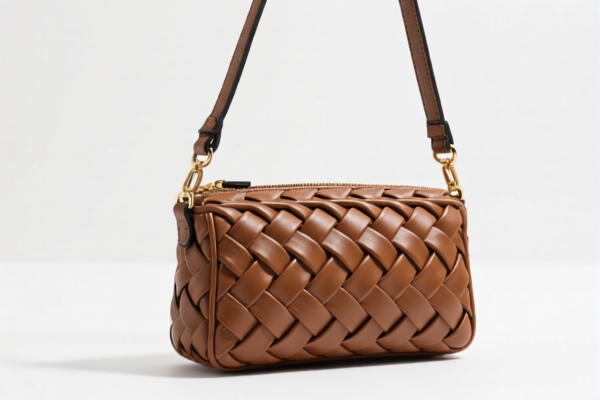
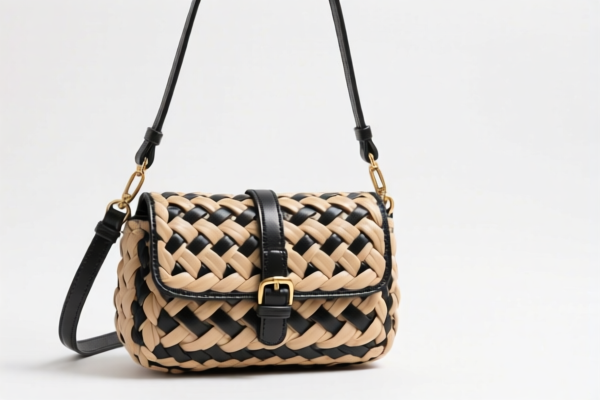
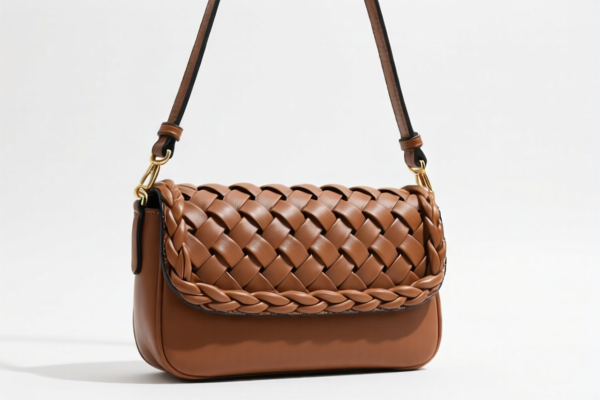
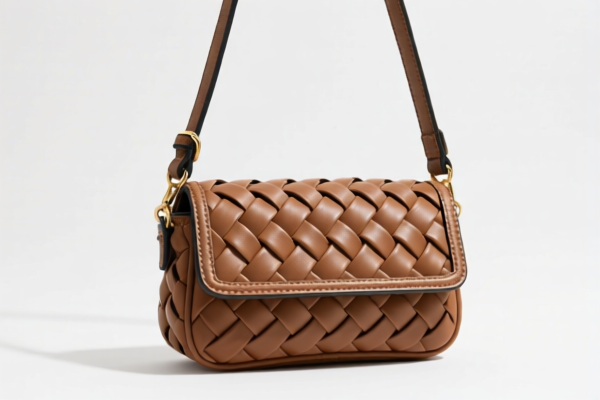
AI Analysis
👜 Braided Handbag with Shoulder Strap (Fashionable & Portable)
🌐 HS Code Reference & Customs Clearance Guide | 2026 Latest Tariff Analysis | Strategic通关 Strategy
📌 1. Product Definition & Classification: Do You Truly Understand “Braided Handbags”?
A braided handbag is a type of accessory made from woven plant materials (such as bamboo, rattan, or reed) or synthetic textile fibers. In international trade, the classification depends heavily on the primary material and manufacturing method. The presence of a shoulder strap does not change the core classification unless the bag is primarily leather or plastic.
⚠️ Key Distinction Points:
- If made from bamboo, rattan, or similar plant stems → Falls under Chapter 46 (Articles of Plaiting Materials);
- If made from woven textile fabrics (even if fashionably braided) → Falls under Chapter 42 (Articles of Leather, Travel Goods, Handbags);
- The shoulder strap is considered an integral part of the handbag and does not trigger a separate classification unless it is detachable and sold separately (which is rare for ready-to-use handbags).
📦 2. HS Code Classification Details (2026 Latest Tariff Authority Comparison)
| HS Code | Product Description | Applicable Scenario | Primary Material |
|---|---|---|---|
4602.11.21.00 |
Handbags, woven of bamboo, rattan, or similar plant materials | Natural plant-based woven bags, eco-friendly fashion items | ✅ Bamboo/Rattan |
4602.19.29.20 |
Other handbags, woven of plaiting materials (not bamboo/rattan) | Bags made from reed, paper straw, or other non-bamboo plant fibers | ✅ Plant Fiber |
4202.22.40.20 |
Handbags, woven of textile materials | Synthetic or cotton-based woven handbags, fashion braided designs | ✅ Textile Fabric |
4202.22.89.80 |
Other handbags, of other textile materials | Complex blends, non-woven textiles, or mixed-material woven bags | ✅ Other Textiles |
🔍 Critical Reminder:
- Chapter 46 applies only to products made from plaiting materials (bamboo, rattan, reed, etc.);
- Chapter 42 applies to handbags made from textiles, leather, or plastic, even if they have a "braided" look;
- Misclassification between Chapter 46 and Chapter 42 can lead to significant tax discrepancies and customs delays.
💰 3. 2026 Latest Tariff Rate Breakdown (Including Surcharges & Policy Add-ons)
✅ Applicable Country: United States (US)
✅ Origin: China (CN)
✅ Effective Date: Ongoing (as per current trade policies)
🎯 1. 4602.11.21.00 —— Handbags Woven of Bamboo/Rattan
| Item | Content |
|---|---|
| Base Duty Rate | 6.2% |
| Section 301 Surcharge | +25.0% |
| Section 122 Surcharge | +10.0% |
| Total Effective Rate | 41.2% |
| Tax Calculation | CIF Value × 41.2% |
| De Minimis Eligibility | ❌ Not Eligible (denied) |
| Legal Authority Path | USITC:4602.11.21.00 → 301:Footnote 9903.88.01 → 122:IEEPA |
📌 Explanation:
- The 6.2% base rate is standard for bamboo/rattan articles;
- The 25% Section 301 tariff applies to most Chinese-made consumer goods;
- The 10% Section 122 tariff is a domestic protection measure;
- Total: 41.2% — This is a high tariff bracket, requiring careful cost planning.
🎯 2. 4602.19.29.20 —— Other Plant Material Woven Handbags
| Item | Content |
|---|---|
| Base Duty Rate | 5.3% |
| Section 301 Surcharge | +25.0% |
| Section 122 Surcharge | +10.0% |
| Total Effective Rate | 40.3% |
| Tax Calculation | CIF Value × 40.3% |
| De Minimis Eligibility | ❌ Not Eligible |
| Legal Authority Path | USITC:4602.19.29.20 → 301:Footnote 9903.88.01 → 122:IEEPA |
📌 Note:
- Slightly lower base rate than bamboo/rattan due to different material composition;
- Applies to reed, paper straw, or other non-standard plant materials;
- Still subject to full Section 301 and 122 surcharges.
🎯 3. 4202.22.40.20 —— Textile Woven Handbags
| Item | Content |
|---|---|
| Base Duty Rate | 7.4% |
| Section 301 Surcharge | +25.0% |
| Section 122 Surcharge | +10.0% |
| Total Effective Rate | 42.4% |
| Tax Calculation | CIF Value × 42.4% |
| De Minimis Eligibility | ❌ Not Eligible |
| Legal Authority Path | USITC:4202.22.40.20 → 301:Footnote 9903.88.01 → 122:IEEPA |
📌 Explanation:
- Textile-based woven bags are classified under Chapter 42;
- Higher base rate reflects the value-added nature of textile manufacturing;
- Same surcharges apply as above.
🎯 4. 4202.22.89.80 —— Other Textile Material Handbags
| Item | Content |
|---|---|
| Base Duty Rate | 17.6% |
| Section 301 Surcharge | +25.0% |
| > Section 122 Surcharge | +10.0% |
| Total Effective Rate | 52.6% |
| Tax Calculation | CIF Value × 52.6% |
| De Minimis Eligibility | ❌ Not Eligible |
| Legal Authority Path | USITC:4202.22.89.80 → 301:Footnote 9903.88.01 → 122:IEEPA |
📌 Warning:
- This is the highest tariff bracket for braided handbags;
- Applies to complex blends, non-woven textiles, or mixed-material bags that don’t fit standard categories;
- 52.6% total tax can significantly impact profit margins.
🛠️ 4. Customs Clearance Practical Advice (实战避坑指南)
✅ 1. Required Documentation Checklist (缺一不可)
| Document | Required | Explanation |
|---|---|---|
| ✅ Product Specification Sheet | ✔️ | Details material type (bamboo, reed, textile), dimensions, weight |
| ✅ Material Certificate | ✔️ | Proves origin of plaiting material (e.g., bamboo vs. plastic) |
| ✅ Product Photos (Front/Back/Inside) | ✔️ | Shows weaving pattern, strap attachment, hardware |
| ✅ Commercial Invoice | ✔️ | Clearly states “Braided Handbag” and HS Code |
| ✅ Packing List | ✔️ | Items per carton, gross/net weight |
| ✅ Bill of Lading/Air Waybill | ✔️ | Standard shipping document |
| ✅ Optional: Third-Party Test Report | ✔️ | If claiming eco-friendly or organic claims |
✅ 2. Declaration Tips (关键口诀)
🔥 “Material First, Chapter Right, Strap Included, Tax Light!”
| Scenario | Correct Declaration | Wrong Approach |
|---|---|---|
| Bamboo/Rattan Bag | 4602.11.21.00 |
Misdeclare as textile → 42.4% |
| Reed/Paper Straw Bag | 4602.19.29.20 |
Misdeclare as bamboo → 41.2% |
| Synthetic Woven Bag | 4202.22.40.20 |
Misdeclare as plant fiber → 40.3% |
| Mixed/Complex Bag | 4202.22.89.80 |
Over-simplify → 52.6% |
✅ 3. Special Case Handling
| Situation | Handling Advice |
|---|---|
| OEM Custom Design | Provide design specs + material breakdown to avoid misclassification |
| Detachable Strap | Still declared as part of the handbag; do not split declaration |
| Eco-Friendly Claims | Provide material certificates to support “natural fiber” classification |
| Mixed Material Bag | If >50% by weight is textile, classify under Chapter 42 |
🌍 5. Global Market Comparison (2026 Latest)
| Country/Region | Recommended HS Code | Tariff | Certification | Notes |
|---|---|---|---|---|
| 🇺🇸 USA | 4602.11.21.00 |
41.2% | None | High tariffs due to 301/122 |
| 🇨🇳 China | 4602.11.21.00 |
6.2% | None | No surcharges |
| 🇪🇺 EU | 4602.11.21.00 |
0-2% | CE (if applicable) | Low tariffs for natural materials |
| 🇬🇧 UK | 4602.11.21.00 |
0-2% | UKCA | Post-Brexit alignment |
| 🇦🇺 Australia | 4602.11.21.00 |
5% | None | Moderate tariffs |
📌 Conclusion:
- USA imposes the highest effective tariff (41.2%-52.6%) due to Section 301 and 122;
- EU and UK offer significantly lower tariffs for natural plant-based bags;
- Consider supply chain diversification to ASEAN or Mexico if targeting the US market.
📌 6. Common Mistakes & Pitfalls (血泪教训)
❌ Mistake 1: Classifying all braided bags as “textile”
👉 Consequence: Misclassification under Chapter 42 → Higher tax (42.4%-52.6%) vs. Chapter 46 (40.3%-41.2%)
❌ Mistake 2: Ignoring Section 122 surcharge
👉 Consequence: Underpayment of 10% → Penalties + Interest
❌ Mistake 3: Declaring “fashion bag” without material specification
👉 Consequence: Customs delay for material verification → Storage fees + Delays
❌ Mistake 4: Assuming de minimis applies
👉 Consequence: Packages seized or returned → Loss of shipment + Reputation damage
✅ Correct Approach:
“Braided Handbag, Made of Natural Bamboo, With Leather Trim, Model XYZ, HS Code: 4602.11.21.00”
🎯 7. Conclusion: Precision Classification Saves Money!
🎯 Remember the Mantra:
🔹 “Plant Fiber = Chapter 46, Textile = Chapter 42”
🔹 “301 + 122 = High Tax, Declare Accurately”
🔹 “Misclassification = 10%-12% Loss, Always Verify Material”
📌 Pro Tip:
If your handbags are made in Vietnam, Thailand, or Malaysia, you may qualify for preferential tariffs under USMCA or FTAs, reducing effective rates to 0%-5%.
Consider Advance Ruling (Proforma Ruling) from CBP to lock in HS Code classification.
📣 Immediate Action:
📞 Contact licensed customs broker + Provide material specs + Apply for HS Code Advance Ruling
🚀 Ensure smooth clearance, minimize costs, and maximize profit margins!
✨ Professional Clearance Starts with Accurate Classification!
💼 Every dollar saved in duty is pure profit!
Customer Reviews
About HS Code Classification
The Harmonized System (HS) is an internationally standardized nomenclature developed by the World Customs Organization (WCO) to classify traded products. Over 200 countries use the HS system as the basis for customs tariffs, trade statistics, and import/export regulations.
Each HS code follows a hierarchical structure:
- Chapter (2 digits) — Broad category of goods (e.g., Chapter 84: Machinery and Mechanical Appliances)
- Heading (4 digits) — More specific grouping within the chapter
- Subheading (6 digits) — Internationally standardized breakdown, used by all WCO member countries
- National subdivisions (8-10 digits) — Country-specific extensions for further classification, such as US HTSUS 10-digit codes
Correct HS code classification is essential for smooth customs clearance, accurate duty payment, and compliance with trade regulations. Misclassification can lead to customs delays, overpayment of duties, or penalties.
When importing from CN to US, the applicable tariff rates may include:
- Most-Favored-Nation (MFN) rate — The standard duty rate applied to WTO members
- General rate — Applied to countries without trade agreements
- Trade remedy duties — Additional tariffs such as Section 301 (anti-dumping), Section 232 (national security), or countervailing duties
The information provided on this page is for reference purposes only. For official classification, please consult with your local customs authority or a licensed customs broker.