Braided Handbag with Synthetic Fiber Material
CN → US| HS Code | Tariff Rate | Origin | Destination | Doc |
|---|---|---|---|---|
| 4602192920 | 40.3% | CN | US | Official Doc |
| 4602112100 | 41.2% | CN | US | Official Doc |
| 4202224020 | 42.4% | CN | US | Official Doc |
| 4202228980 | 52.6% | CN | US | Official Doc |
Product Images
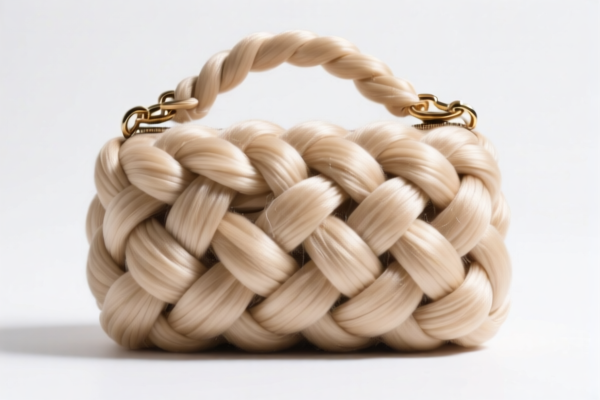
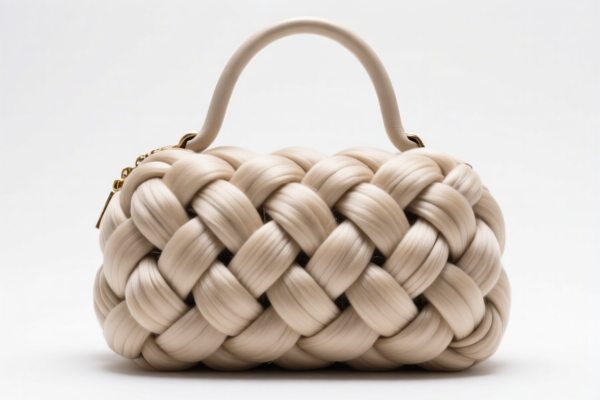
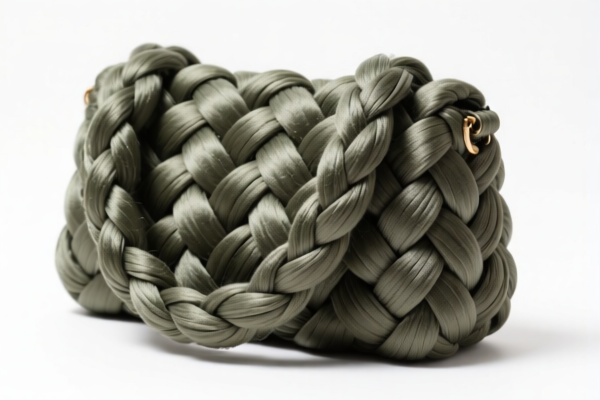
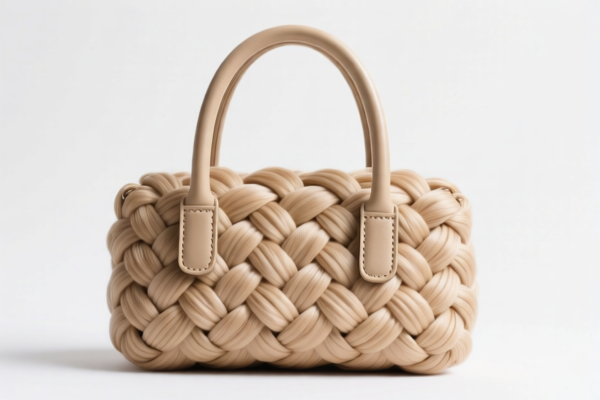
AI Analysis
👜 Braided Handbag with Synthetic Fiber Material
🌐 HS Code Reference & Clearance Guide | 2026 Latest Tariff Analysis | Professional Customs Strategy
📌 I. Product Definition & Classification: Do You Really Understand "Braided Handbags"?
Braided handbags, particularly those made from synthetic fibers, occupy a complex position in international trade. They are not merely "containers" but are classified based on the material composition of the braiding and the functionality of the final product. In the context of US imports from China, misclassification can lead to significantly higher duties due to Section 301 and IEEPA tariffs.
Synthetic Fiber Braided Bags:
- Made from man-made filaments (e.g., polyester, nylon, polypropylene) braided into strips or sheets.
- Distinct from natural plant materials (bamboo, rattan) or leather.
- Often categorized under Chapter 42 (Articles of Leather; Saddle Harness) or Chapter 46 (Plaiting Materials; Basketwork) depending on whether they are "prepared" as finished handbags or considered "plaited materials."
⚠️ Critical Distinction:
- If the bag is fully assembled with lining, handles, and closures, it typically falls under Chapter 42 (Handbags).
- If the product is considered a woven article not specified elsewhere, it may fall under Chapter 46 (Basketwork).
- Material matters: "Synthetic" usually implies man-made polymers, which are taxed differently than natural fibers or plastics.
📦 II. HS Code Classification Details (2026 Latest Tariff Authority Comparison)
Based on the provided data for Braided Handbags with Synthetic/Plant Material, here are the specific HS Codes and their applicability:
| HS Code | Product Description | Applicable Scenario | Material Composition |
|---|---|---|---|
4602.19.29.20 |
Braided handbag, material: plant material braided products | General braided handbags using plant-based fibers (e.g., seagrass, paper yarn, synthetic blends treated as plant-like) | Plant-based/Braided |
4602.11.21.00 |
Braided handbag, material: bamboo, rattan, or similar plant materials | Handbags made from rigid or semi-rigid plant stems (bamboo, rattan, reed) | Natural Plant (Bamboo/Rattan) |
4202.22.40.20 |
Braided handbag, material: made of braided materials | Handbags made from various braided materials (synthetic or natural) not elsewhere specified | Braided (General) |
4202.22.89.80 |
Braided handbag, material: textile materials (non-cotton, non-paper yarn) | Handbags made from synthetic textiles (polyester, nylon, etc.) that are not strictly "plant-based" | Synthetic Textile |
🔍 Key Reminder:
- "Synthetic Fiber" usually points to4202.22.89.80if it is a textile-based braided bag.
- If the "synthetic" material is mimicking plant fibers (e.g., polypropylene strips braided like seagrass), it may fall under4602.19.29.20or4202.22.40.20depending on the specific manufacturing process and customs interpretation.
-4602.11.21.00is strictly for natural plant materials like bamboo and rattan. Do not use this for synthetic fibers unless explicitly allowed by specific trade agreements (rare for synthetics).
💰 III. 2026 Latest Tariff Rate Breakdown (Including Additional Taxes, Policy Add-ons)
✅ Applicable Country: United States (US)
✅ Origin: China (CN)
✅ Effective Date: From November 10, 2025 (including subsequent imports)
🎯 1. 4602.19.29.20 – Braided Handbag (Plant Material Braided)
| Item | Content |
|---|---|
| Base Tariff | 5.3% (ad valorem) |
| USITC Additional Tariff | +25.0% (Section 301) |
| IEEPA Additional Tariff | +10.0% (China-specific, effective Nov 10, 2025) |
| Total Rate | 40.3% |
| Tax Calculation | CIF Value × 40.3% |
| De Minimis Exemption Eligible? | ❌ No (Denied for Chinese origin under current rules) |
| Legal Basis Path | IEEPA:9903.01.25 → USITC:4602.19.29.20 → FOOTNOTE:301 |
📌 Explanation:
- Even though it is "plant-based," the origin is China, so it is subject to the full 35% additional duty (25% + 10%).
- This rate is high but slightly lower than some textile categories.
🎯 2. 4602.11.21.00 – Braided Handbag (Bamboo/Rattan)
| Item | Content |
|---|---|
| Base Tariff | 6.2% |
| USITC Additional Tariff | +25.0% |
| IEEPA Additional Tariff | +10.0% |
| Total Rate | 41.2% |
| Tax Calculation | CIF Value × 41.2% |
| De Minimis Exemption Eligible? | ❌ No |
| Legal Basis Path | IEEPA:9903.01.25 → USITC:4602.11.21.00 → FOOTNOTE:301 |
📌 Note:
- Only applies to natural bamboo, rattan, etc.
- If your "synthetic" bag is made of plastic strands that look like bamboo, do not use this code unless specifically certified. Misclassification can lead to penalties.
🎯 3. 4202.22.40.20 – Braided Handbag (Braided Materials)
| Item | Content |
|---|---|
| Base Tariff | 7.4% |
| USITC Additional Tariff | +25.0% |
| IEEPA Additional Tariff | +10.0% |
| Total Rate | 42.4% |
| Tax Calculation | CIF Value × 42.4% |
| De Minimis Exemption Eligible? | ❌ No |
| Legal Basis Path | IEEPA:9903.01.25 → USITC:4202.22.40.20 → FOOTNOTE:301 |
📌 Explanation:
- This is a "catch-all" for braided handbags not specified elsewhere.
- Often used for synthetic braided strips (e.g., polyester raffia).
- Higher base rate than plant-based codes, but same additional duties.
🎯 4. 4202.22.89.80 – Braided Handbag (Textile Materials, Non-Cotton)
| Item | Content |
|---|---|
| Base Tariff | 17.6% |
| USITC Additional Tariff | +25.0% |
| IEEPA Additional Tariff | +10.0% |
| Total Rate | 52.6% |
| Tax Calculation | CIF Value × 52.6% |
| De Minimis Exemption Eligible? | ❌ No |
| Legal Basis Path | IEEPA:9903.01.25 → USITC:4202.22.89.80 → FOOTNOTE:301 |
📌 Warning:
- This is the highest tariff category in the provided data.
- Applies to synthetic textiles (e.g., nylon, polyester webbing) that are not classified as "plaiting materials" under Chapter 46.
- If your bag is made of fabric strips rather than plaited strips, this code applies.
- Total duty over 50% significantly impacts profit margins.
🛠️ IV. Practical Clearance Recommendations (Battle-Tested Pitfall Avoidance Guide)
✅ 1. Document Checklist (Non-negotiable)
| Document | Must Provide | Description |
|---|---|---|
| ✅ Product Specification Sheet | ✔️ | Must detail: Material composition (e.g., 100% Polyester), braiding technique, dimensions, weight. |
| ✅ Material Breakdown | ✔️ | Explicitly state if "synthetic" means plastic strands (Chapter 46/42) or textile fabric (Chapter 63/42). |
| ✅ Product Photos (Clear) | ✔️ | Show texture, braiding pattern, lining, handles, and closure. |
| ✅ Commercial Invoice | ✔️ | Must clearly state: "Braided Handbag, Synthetic Material, Origin: China." |
| ✅ Packing List | ✔️ | Detail units per carton, gross/net weight. |
| ✅ Certificate of Origin (CO) | ✔️ | If claiming any preferential treatment (rare for synthetics from China to US). |
✅ 2. Declaration Tips (Key Mantras)
🔥 "Material Determines Code, Origin Determines Tax!"
| Scenario | Correct Declaration | Wrong Practice |
|---|---|---|
| Synthetic plastic strips (raffia-like) | 4202.22.40.20 or 4602.19.29.20 |
Misdeclare as "fabric handbag" → 52.6% |
| Natural bamboo/rattan | 4602.11.21.00 |
Misdeclare as synthetic → Penalty for misclassification |
| Synthetic fabric strips (woven, not plaited) | 4202.22.89.80 |
Misdeclare as "plaited" → 52.6% |
| Mixed material (e.g., leather straps + synthetic body) | 4202.22.40.20 (if synthetic >50%) |
Split declaration → High risk of audit |
✅ 3. Special Case Handling
| Scenario | Handling Advice |
|---|---|
| OEM Custom Braided Bags | Provide design drawings and material samples. Clarify if "synthetic" is PP (polypropylene) or Polyester. |
| Bag with Non-Braided Parts | If lining is silk or handles are leather, the main material determines classification. Usually, the outer braided material dictates the code. |
| "Plant-Look" Synthetic | If it looks like bamboo but is plastic, it cannot use 4602.11.21.00. Use 4202.22.40.20 or 4602.19.29.20 with clear description: "Synthetic imitation plant material." |
| Pre-Importation Consultation | Strongly Recommended: File an Advance Ruling Request with US CBP if the material is ambiguous. |
🌍 V. Global Market Clearance Comparison (2026 Latest)
| Country/Region | Recommended HS Code | Tariff (China Origin) | Certification Requirements | Notes |
|---|---|---|---|---|
| 🇺🇸 USA | 4202.22.40.20 or 4602.19.29.20 |
40.3% – 42.4% (Synthetic) | None specific | 52.6% if classified as textile. High additional duties. |
| 🇨🇳 China | 4202.22.40.20 |
5% – 10% | N/A | Low import tax for re-export. |
| 🇪🇺 EU | 4202.22.40 |
0% – 12% | CE (if functional) | No Section 301 equivalents. Lower tariffs. |
| 🇬🇧 UK | 4202.22.40 |
0% – 12% | N/A | Post-Brexit rules apply. |
| 🇦🇺 Australia | 4202.22.40 |
5% | N/A | Favorable for non-steel goods. |
📌 Conclusion:
- The US is the most costly market for braided synthetic handbags from China due to 35% additional duties.
- EU and UK offer significantly lower tariffs, making them more attractive if supply chain allows.
- China domestic tax is minimal, supporting re-export hubs.
📌 VI. Common Mistakes & Pitfall Guide (Lessons from Blood and Tears)
❌ Mistake 1: Declaring "Synthetic Rattan" as "Natural Rattan" (4602.11.21.00)
👉 Consequence: Customs audit reveals plastic content → Back taxes + fines + delayed clearance.
❌ Mistake 2: Misclassifying textile-braided bags as "plaited materials" (4602 vs 4202)
👉 Consequence: Base tariff difference (7.4% vs 17.6%) → Underpayment + penalties.
❌ Mistake 3: Ignoring the "Synthetic" vs "Plant" distinction
👉 Consequence: Using 4602 codes for purely synthetic items → High risk of rejection.
❌ Mistake 4: Not disclosing origin clearly
👉 Consequence: If origin is not marked "China," you lose the chance to prove eligibility for any potential exemptions (though rare for these codes).
✅ Correct Approach:
"100% Polypropylene Braided Handbag, Synthetic Material, Made in China, Model XYZ, With Lining"
🎯 VII. Conclusion: Professional Declaration, Time-Saving, Cost-Efficient!
🎯 Remember the Mantra:
🔹 "Synthetic + China = 35% Extra!"
🔹 "Plant-like Synthetic ≠ Natural Plant!"
🔹 "Base Tariff Matters, But Additional Dutits Kill Profit!"
🔹 "Pre-Ruling Saves Thousands!"
📌 Tips:
- If your synthetic material is very close to natural (e.g., natural jute blended with synthetic), consult a customs broker to argue for
4602classification to save ~1-2% base duty.- For pure synthetic bags, expect 40-52% total duty. Factor this into your pricing strategy.
- Consider supply chain diversification: If volume is high, look into Vietnam or India origins for potential tariff benefits (subject to current FTAs).
📣 Immediate Action:
📞 Contact a Licensed Customs Broker
📄 Provide Material Composition Report
🚀 Apply for Pre-Ruling if High Value
✨ Professional Clearance Starts with Accurate Classification!
💼 Every Cent of Duty is a Cost That Can Be Optimized!
Customer Reviews
About HS Code Classification
The Harmonized System (HS) is an internationally standardized nomenclature developed by the World Customs Organization (WCO) to classify traded products. Over 200 countries use the HS system as the basis for customs tariffs, trade statistics, and import/export regulations.
Each HS code follows a hierarchical structure:
- Chapter (2 digits) — Broad category of goods (e.g., Chapter 84: Machinery and Mechanical Appliances)
- Heading (4 digits) — More specific grouping within the chapter
- Subheading (6 digits) — Internationally standardized breakdown, used by all WCO member countries
- National subdivisions (8-10 digits) — Country-specific extensions for further classification, such as US HTSUS 10-digit codes
Correct HS code classification is essential for smooth customs clearance, accurate duty payment, and compliance with trade regulations. Misclassification can lead to customs delays, overpayment of duties, or penalties.
When importing from CN to US, the applicable tariff rates may include:
- Most-Favored-Nation (MFN) rate — The standard duty rate applied to WTO members
- General rate — Applied to countries without trade agreements
- Trade remedy duties — Additional tariffs such as Section 301 (anti-dumping), Section 232 (national security), or countervailing duties
The information provided on this page is for reference purposes only. For official classification, please consult with your local customs authority or a licensed customs broker.