Braided Leather Shoelaces
CN → US| HS Code | Tariff Rate | Origin | Destination | Doc |
|---|---|---|---|---|
| 5609004000 | 38.9% | CN | US | Official Doc |
| 5609002000 | 35.0% | CN | US | Official Doc |
| 6406106500 | 17.5% | CN | US | Official Doc |
| 6406906000 | 17.5% | CN | US | Official Doc |
| 4205002000 | 35.0% | CN | US | Official Doc |
| 4205004000 | 36.8% | CN | US | Official Doc |
Product Images


AI Analysis
🧵 Braided Leather Shoelaces
🌐 HS Code Reference & Clearance Guide | 2026 Updated Tariff Analysis | Expert Clearance Strategy
📌 I. Product Definition & Classification: What Exactly Are "Braided Leather Shoelaces"?
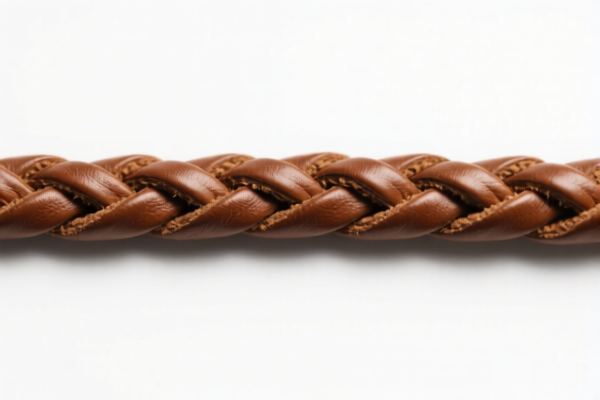
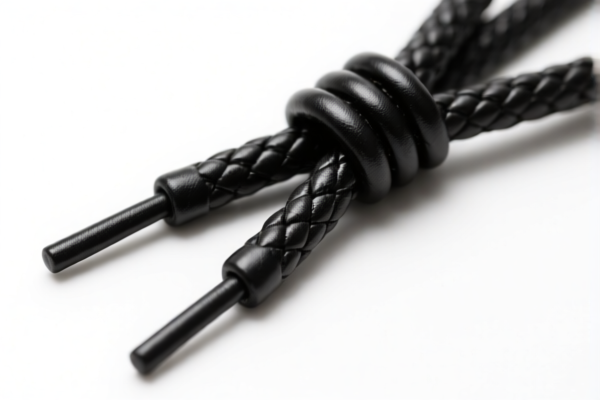
Braided Leather Shoelaces are textile-style laces made from leather strands that are twisted or woven together to form a durable, flexible cord for securing footwear. Unlike traditional flat leather laces, these are constructed using a braiding technique, often for aesthetic appeal (fashion boots, dress shoes, or luxury sneakers) or enhanced durability.
⚠️ Critical Distinction in Classification:
- Material Composition: Must be 100% leather or composition leather (not mixed with synthetic threads as the primary structural element).
- Construction: Braided or twisted leather strands forming a cord-like structure.
- Function: Solely for use on footwear (not as decorative straps for other leather goods).
- Correct Classification: Falls under Leather Articles (Chapter 42), specifically Heading 4205 ("Other articles of leather...: Shoelaces").
- Incorrect Classification: Do NOT classify under Textile Cordage (Chapter 56) unless the leather is merely a surface covering with a dominant textile core (which is rare for "leather laces").
📦 II. HS Code Classification Details (2026 Tariff Authority Reference)
Based on the provided data, here is the precise classification for Braided Leather Shoelaces:
| HS Code | Product Description | Material/Construction | Applicable Tax Rate (China to US) |
|---|---|---|---|
| 4205.00.20.00 | Other articles of leather or of composition leather: Other: Shoelaces | 100% Leather or Composition Leather, Braided/Twisted | 25.0% |
4205.00.40.00 |
Straps and strops (for reference only) | Not applicable to laces (used for belts, tool straps) | 26.8% |
5609.00.40.00 |
Articles of yarn/strip (Textile) | Incorrect for pure leather laces (Textile/Twine) | 0.0% |
5609.00.20.00 |
Articles of vegetable fibers | Incorrect (Non-leather material) | 25.0% |
6406.10.65.00 |
Parts of footwear: Uppers | Incorrect (This is for shoe uppers, not accessories) | 7.5% |
6406.90.60.00 |
Parts of footwear: Other materials | Incorrect (This is for sole parts/inserts) | 7.5% |
🔍 Key Insight:
Braided leather shoelaces are not considered "textile cordage" (5609) even if braided. The Leather Material dictates the classification under Chapter 42.
The correct HS Code is4205.00.20.00.
💰 III. 2026 Tariff Rate Breakdown (Detailed Tax Clauses)
✅ Origin: China (CN)
✅ Destination: United States (US)
✅ Effective Date: Current 2026 Tariff Regime (Post-Section 301 & IEEPA Adjustments)
🎯 HS Code: 4205.00.20.00 (Braided Leather Shoelaces)
| Tax Component | Rate | Legal Basis & Explanation |
|---|---|---|
| Base Tariff | 0.0% | Standard Most-Favored-Nation (MFN) rate for leather accessories. |
| Section 301 Additional Duty | +25.0% | Critical Clause: Under US Trade Act Section 301, specific Chinese goods (including leather articles) are subject to an additional 25% tariff. |
| Total Applied Rate | 25.0% | 0.0% (Base) + 25.0% (Additional) = 25.0% Total Duty. |
| Tax Calculation | CIF Value × 25% |
Duties are calculated on the Cost, Insurance, and Freight (CIF) value of the shipment. |
| De Minimis Exemption | ❌ No | Leather goods over $800 are not exempt from Section 301 duties under the current "De Minimis" rules for China. |
| Legal Path | 301: 4205.00.20.00 → Additional Duty 25% |
📌 Detailed Explanation of Tax Clauses:
- "Base Tariff: 0.0%": The standard US import duty for "other articles of leather" is technically zero. This is a trap for importers who see "0%" and assume low cost.
- "Add-on Tariff: 25.0%": This is the Section 301 Additional Duty imposed on Chinese-origin goods. It is not a standard tariff; it is a punitive trade measure.
- Total Impact: You must pay 25% of the declared value in duties immediately upon entry. There are no hidden "free" rates.🚨 Warning: Do not attempt to classify these under 5609 (Textile Cordage) to claim 0% tax. Customs (CBP) routinely audits leather-laced footwear accessories. If the material is >50% leather, they will reclassify to 4205 and assess back-taxes + penalties.
🛠️ IV. Practical Clearance Recommendations (Avoiding Pitfalls)
✅ 1. Documentation Checklist (Mandatory)
| Document | Requirement | Why It's Critical |
|---|---|---|
| ✅ Product Specification Sheet | ✔️ | Must explicitly state "100% Leather" or "Composition Leather" and "Braided Construction." |
| ✅ Material Origin Certificate | ✔️ | Proves the leather is not synthetic (to avoid misclassification under 5609). |
| ✅ Commercial Invoice | ✔️ | Description must read: "Braided Leather Shoelaces, HS 4205.00.20.00" (Do not write "Textile Laces"). |
| ✅ Photos (Close-up) | ✔️ | Show the braiding texture and leather grain to prove material authenticity. |
| ✅ Packer's Declaration | ✔️ | Confirm no mixing with synthetic fibers that would trigger 5609 classification (if intended). |
✅ 2. Classification Strategy (The "Golden Rule")
🔥 Rule: "Leather is Leather, Not Thread!"
Even if braided like rope, if the primary fiber is leather, it belongs in Chapter 42.
| Scenario | Correct HS Code | Risk of Misclassification |
|---|---|---|
| Pure Leather Braided Laces | 4205.00.20.00 (25% Tax) |
None if declared correctly. |
| Leather + Synthetic Core | 4205.00.20.00 (if leather is dominant) |
High risk of audit if declared as "Textile." |
| Synthetic "Leather" (PU) | 4205.00.20.00 (if "Composition Leather") |
Still 25% tax. Do not claim "Plastic" to avoid tax. |
| Cotton/Textile Laces | 5609.00.40.00 (0% Tax) |
Different Product! Do not force this on leather laces. |
✅ 3. Special Scenarios & Handling
| Situation | Handling Advice |
|---|---|
| Bulk Import (Shoes) | If shoelaces are sold attached to shoes, they are part of the shoe (HS 6406/6404). If sold loose, they are 4205.00.20.00. |
| Sample Shipments | Even samples over $800 value require duty payment; samples under $800 (De Minimis) may be exempt IF they are not subject to Section 301 (check current CBP list). |
| "Composition Leather" | Includes bonded leather (leather scraps + binder). Still qualifies for 4205.00.20.00 and the 25% tax. |
| Re-export to US | If the laces are imported from China to a third country, then re-exported to the US, the origin remains China (unless substantial transformation occurs). |
🌍 V. Global Market Comparison (2026)
| Destination | Recommended HS Code | Tariff Rate | Notes |
|---|---|---|---|
| 🇺🇸 USA | 4205.00.20.00 |
25.0% (0% Base + 25% Add-on) | High Risk: Strict enforcement on "Leather" definition. |
| 🇪🇺 EU | 4205.00.20.00 |
6% - 10% | No Section 301, but VAT applies. |
| 🇬🇧 UK | 4205.00.20.00 |
6% | Post-Brexit rules apply. |
| 🇯🇵 Japan | 4205.00.20.00 |
8% - 10% | No extra trade duties. |
📌 Conclusion: The USA is the most expensive market for braided leather shoelaces due to the 25% Section 301 surcharge. Consider pricing strategies accordingly.
📌 VI. Common Mistakes & How to Avoid Them
❌ Mistake 1: Declaring "Braided Laces" as "Textile Cordage" (5609) to save 25% tax.
👉 Consequence: CBP reclassification + 100% penalty on unpaid duties.
✅ Fix: Always declare as Leather Articles (4205) if material is leather.
❌ Mistake 2: Not separating "Shoelaces" from "Footwear Parts" in documentation.
👉 Consequence: Delays because the product doesn't fit the "Upper/Insole" category.
✅ Fix: Clearly state "Accessories: Shoelaces" on the invoice.
❌ Mistake 3: Assuming "Composition Leather" is exempt.
👉 Consequence: 25% tax still applies.
✅ Fix: Ensure "Composition Leather" is defined per US Customs definitions.
🎯 VII. Final Verdict: Clear the Way to Profit
🎯 Action Plan:
- Verify Material: Confirm it is Leather (or Composition Leather), not Synthetic.
- Correct HS Code: Use
4205.00.20.00.- Budget for Tax: Include 25% duty in your landed cost calculation.
- Documentation: Prepare clear photos and material specs to prove classification.
- Avoid Risk: Do not try to "game" the system with textile codes.
🔹 Pro Tip: If importing from China, the 25% tax is non-negotiable. If the margin is thin, consider sourcing from Vietnam or Mexico (if rules of origin allow) to avoid Section 301.
📌 Summary Table for Quick Reference:
| Item | Braided Leather Shoelaces |
|---|---|
| Correct HS Code | 4205.00.20.00 |
| Product Category | Other articles of leather (Shoelaces) |
| Base Tariff | 0.0% |
| Section 301 Tax | 25.0% |
| Total Tax (China) | 25.0% |
| Key Risk | Misclassification as Textile (5609) |
| Clearance Status | Standard (No special license needed, but high duty) |
✨ Professional Customs Clearance Starts with Precise Classification!
💼 Your profit depends on knowing the true cost before you ship!
Customer Reviews
About HS Code Classification
The Harmonized System (HS) is an internationally standardized nomenclature developed by the World Customs Organization (WCO) to classify traded products. Over 200 countries use the HS system as the basis for customs tariffs, trade statistics, and import/export regulations.
Each HS code follows a hierarchical structure:
- Chapter (2 digits) — Broad category of goods (e.g., Chapter 84: Machinery and Mechanical Appliances)
- Heading (4 digits) — More specific grouping within the chapter
- Subheading (6 digits) — Internationally standardized breakdown, used by all WCO member countries
- National subdivisions (8-10 digits) — Country-specific extensions for further classification, such as US HTSUS 10-digit codes
Correct HS code classification is essential for smooth customs clearance, accurate duty payment, and compliance with trade regulations. Misclassification can lead to customs delays, overpayment of duties, or penalties.
When importing from CN to US, the applicable tariff rates may include:
- Most-Favored-Nation (MFN) rate — The standard duty rate applied to WTO members
- General rate — Applied to countries without trade agreements
- Trade remedy duties — Additional tariffs such as Section 301 (anti-dumping), Section 232 (national security), or countervailing duties
The information provided on this page is for reference purposes only. For official classification, please consult with your local customs authority or a licensed customs broker.