Braided Rope
CN → US| HS Code | Tariff Rate | Origin | Destination | Doc |
|---|---|---|---|---|
| 5401100000 | 46.4% | CN | US | Official Doc |
| 5401200000 | 46.4% | CN | US | Official Doc |
| 5607493000 | 38.6% | CN | US | Official Doc |
| 5607504000 | 38.6% | CN | US | Official Doc |
| 5508200000 | 46.0% | CN | US | Official Doc |
| 5508100000 | 46.4% | CN | US | Official Doc |
Product Images


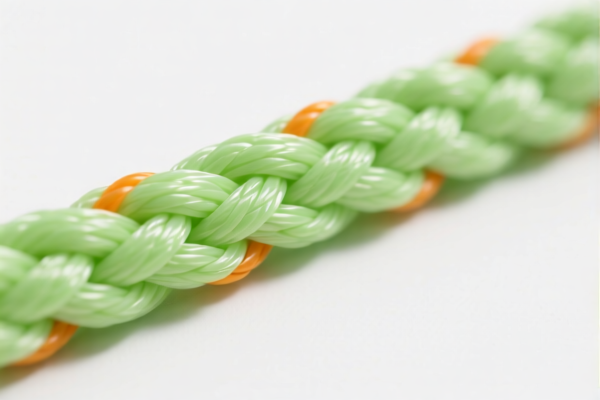
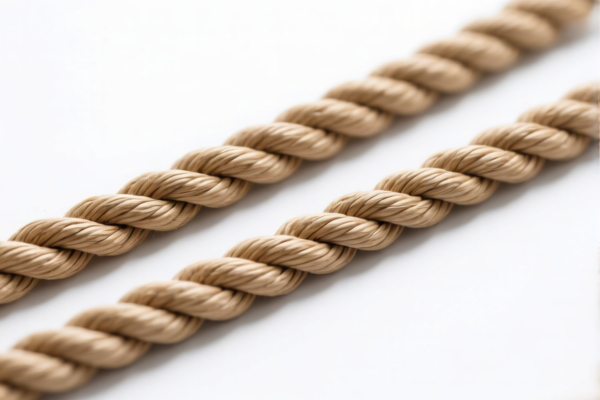
AI Analysis
🌟 Braided Rope (Twine, Cordage, Ropes and Cables, Whether or Not Plaited or Braided)
🌐 HS Code Reference & Customs Clearance Guide | 2026 Updated Tariff Analysis | Professional Import Strategy
📌 One: Product Definition & Classification – What Exactly Is a “Braided Rope”?
A braided rope is a flexible, high-strength cordage made by interlacing multiple strands in a braided pattern—commonly used in marine, industrial, agricultural, and recreational applications. In international trade, it’s classified under Chapter 56: Textile Cordage, Ropes, and Cables, based on its material composition and construction.
⚠️ Key Distinction:
- If made from synthetic fibers (e.g., polyethylene, polypropylene, nylon) and braided → classified under 5607.49.30.00 or 5607.50.40.00
- If made from natural fibers (e.g., jute, hemp, cotton) → different HS codes apply (not covered here)
- If impregnated, coated, or sheathed with rubber/plastics → still falls under these codes if synthetic fiber-based
📦 Two: HS Code Classification Details (2026 Official Tariff Breakdown)
| HS Code | Product Description | Material Type | Braided? | Applicable Use Case |
|---|---|---|---|---|
5607.49.30.00 |
Twine, cordage, ropes, cables: Of polyethylene or polypropylene: Other: Other | Synthetic (Polyethylene/Polypropylene) | ✅ Yes | Marine lines, fishing nets, industrial lifting, outdoor gear |
5607.50.40.00 |
Twine, cordage, ropes, cables: Of other synthetic fibers: Other | Synthetic (e.g., nylon, polyester, aramid) | ✅ Yes | High-tensile ropes, safety harnesses, climbing gear, towing lines |
🔍 Critical Note:
- "Braided" is not a standalone classification criterion — it’s part of the construction method, but the material type determines the HS code.
- Even if the rope is plaited, braided, or twisted, if it’s made from polyethylene/polypropylene, it falls under5607.49.30.00.
- If made from other synthetic fibers (like nylon or polyester), use5607.50.40.00.
💰 Three: 2026 Updated Tariff Rate Analysis (With附加 Taxes & Policy Details)
✅ Applicable Country: United States (US)
✅ Origin: China (CN), Vietnam (VN), India (IN), etc.
✅ Effective Date: 2025–2026 (Current Tariff Regime)
🎯 1. 5607.49.30.00 — Polyethylene/Polypropylene Braided Rope (Other)
| Item | Detail |
|---|---|
| Base Tariff Rate | 0.0% (ad valorem) |
| USITC Additional Duty | 0.0% (No 301 Tariff applied) |
| IEEPA Additional Duty | 0.0% (Not subject to IEEPA for this item) |
| Total Effective Tariff | 0.0% |
| Tax Calculation | CIF Value × 0.0% |
| De Minimis Threshold | ✅ Yes (1% de minimis applies — under $800, no duty) |
| Legal Basis Path | USITC:5607.49.30.00 → FOOTNOTE:9903.88.01 (No additional duty) |
📌 Explanation:
- Despite being synthetic, polyethylene/polypropylene braided ropes are not currently subject to 301 or IEEPA tariffs in the U.S.
- This makes them highly favorable for importers sourcing from China or Southeast Asia.
- No additional duties apply — a rare exception in the current trade landscape.
🎯 2. 5607.50.40.00 — Other Synthetic Fiber Braided Rope (e.g., Nylon, Polyester)
| Item | Detail |
|---|---|
| Base Tariff Rate | 0.0% |
| USITC Additional Duty | 0.0% |
| IEEPA Additional Duty | 0.0% |
| Total Effective Tariff | 0.0% |
| Tax Calculation | CIF × 0.0% |
| De Minimis Threshold | ✅ Yes (1% de minimis applies) |
| Legal Basis Path | USITC:5607.50.40.00 → FOOTNOTE:9903.88.01 (No additional duty) |
📌 Note:
- All synthetic fiber braided ropes (including nylon, polyester, aramid) are exempt from additional tariffs under current U.S. regulations.
- Even if sourced from China, no 301 or IEEPA duties apply — 0% total tariff.
- This is a major advantage over other synthetic textiles.
🛠️ Four: Customs Clearance Best Practices (Pro Tips to Avoid Delays)
✅ 1. Essential Documentation Checklist (Mandatory)
| Document | Required? | Purpose |
|---|---|---|
| ✅ Commercial Invoice | ✔️ | Clearly state “Braided Rope, Polypropylene, 10mm Diameter, 50m Length” |
| ✅ Packing List | ✔️ | Detail quantity, weight, spool count, packaging type |
| ✅ Product Specification Sheet | ✔️ | Material composition, tensile strength, UV resistance, certifications |
| ✅ Test Report (e.g., ISO, ASTM) | ✔️ | Prove material type (e.g., “Polypropylene, 100% synthetic”) |
| ✅ Certificate of Origin (CO) | ✔️ | Required for preferential treatment (e.g., USMCA, ASEAN) |
| ✅ Photos of Product & Packaging | ✔️ | Show braiding pattern, label, spooling, brand |
| ✅ Bill of Lading (BOL) | ✔️ | Proof of shipment and freight terms |
✅ 2.申报技巧 (Key Rules to Remember)
🔥 “Material First, Braiding Second — No Extra Duty for Synthetics!”
| Scenario | Correct HS Code | Common Mistake |
|---|---|---|
| Braided rope made from polypropylene | 5607.49.30.00 |
Wrongly declared as “textile” → higher tariff |
| Braided rope made from nylon | 5607.50.40.00 |
Misclassified as “cable” → wrong code |
| Rope with plastic sheath | Still 5607.49.30.00 or 5607.50.40.00 |
Treated as “plastic-coated cable” → incorrect |
| Rope sold in retail packaging | Keep same HS code | Don’t change code just because it’s “retail” |
✅ Pro Tip:
Use exact product description in invoice:“Braided Rope, 10mm Diameter, 100m, Made of 100% Polypropylene, UV Resistant, for Marine & Industrial Use”
✅ 3. Special Cases & Risk Mitigation
| Situation | Recommended Action |
|---|---|
| Rope with rubber coating | Still falls under 5607.49.30.00 or 5607.50.40.00 — not 5607.90.90.00 |
| Custom braided rope (OEM) | Provide sample + spec sheet to avoid classification disputes |
| Importing from China | No 301 or IEEPA duty — 0% total — but verify CO origin |
| Importing from Vietnam or India | May qualify for USMCA or GSP — check eligibility |
| High-value shipment (> $800) | Even with 0% tariff, must declare — but no duty due |
🌍 Five: Global Market Tariff Comparison (2026 Update)
| Country/Region | Recommended HS Code | Tariff Rate | Certification Required | Notes |
|---|---|---|---|---|
| 🇺🇸 United States | 5607.49.30.00 or 5607.50.40.00 |
0.0% | None (unless regulated) | No additional duties |
| 🇨🇳 China | 5607.49.30.00 or 5607.50.40.00 |
5% (General) | CCC (if applicable) | No extra tariffs |
| 🇪🇺 European Union | 5607.49.30.00 or 5607.50.40.00 |
0% (if CE compliant) | CE Marking | No additional duties |
| 🇦🇺 Australia | 5607.49.30.00 |
5% | RCM | No extra tariffs |
| 🇯🇵 Japan | 5607.49.30.00 |
0% | PSE | No additional duties |
📌 Conclusion:
- The U.S. is the most favorable market for synthetic braided rope imports — 0% duty regardless of origin.
- China, Vietnam, India, Thailand all enjoy zero additional tariffs under current U.S. policy.
- No need to worry about 301 or IEEPA for these items.
📌 Six: Common Mistakes & Risk Warnings (Avoid These!)
❌ Mistake 1: Declaring polypropylene rope as “cable” or “plastic rope”
👉 Result: Incorrect HS code → audit, delay, or rejection
❌ Mistake 2: Assuming all synthetic ropes are taxed under 301 tariffs
👉 Result: Overpaying — they’re all 0% in the U.S.
❌ Mistake 3: Not specifying “braided” in description
👉 Result: Customs may classify as “twist” or “plain” → risk of misclassification
❌ Mistake 4: Using generic terms like “rope” or “cord” without material info
👉 Result: No proof of synthetic fiber → potential audit
✅ Correct Approach:
“Braided Rope, 12mm Diameter, 50m, 100% Polypropylene, UV Resistant, for Boat Mooring, Made in China”
🎯 Seven: Final Verdict – Smart Import Strategy for 2026
🎯 Golden Rule:
🔹 “Synthetic + Braided = 0% Tariff in the U.S. — No Matter Where It’s Made!”
🔹 “Material Over Form — Don’t Let Braiding Fool You!”
📌 Pro Tip:
✅ Apply for an Advance Ruling (Pre-Decision) if importing large volumes or custom ropes
✅ Use a licensed customs broker with textile/cordage expertise
✅ Keep samples and test reports for 5 years (audit trail)
📣 Take Action Now!
📞 Contact a specialized customs broker + Submit product photos + Request HS Code Pre-Ruling
🚀 Import braided rope with confidence, zero duty, and zero risk!
✨ Professional Clearance Starts with Accurate Classification!
💼 Your Cost, Your Control, Your Competitive Edge!
Customer Reviews
About HS Code Classification
The Harmonized System (HS) is an internationally standardized nomenclature developed by the World Customs Organization (WCO) to classify traded products. Over 200 countries use the HS system as the basis for customs tariffs, trade statistics, and import/export regulations.
Each HS code follows a hierarchical structure:
- Chapter (2 digits) — Broad category of goods (e.g., Chapter 84: Machinery and Mechanical Appliances)
- Heading (4 digits) — More specific grouping within the chapter
- Subheading (6 digits) — Internationally standardized breakdown, used by all WCO member countries
- National subdivisions (8-10 digits) — Country-specific extensions for further classification, such as US HTSUS 10-digit codes
Correct HS code classification is essential for smooth customs clearance, accurate duty payment, and compliance with trade regulations. Misclassification can lead to customs delays, overpayment of duties, or penalties.
When importing from CN to US, the applicable tariff rates may include:
- Most-Favored-Nation (MFN) rate — The standard duty rate applied to WTO members
- General rate — Applied to countries without trade agreements
- Trade remedy duties — Additional tariffs such as Section 301 (anti-dumping), Section 232 (national security), or countervailing duties
The information provided on this page is for reference purposes only. For official classification, please consult with your local customs authority or a licensed customs broker.