Braided hats
CN → US| HS Code | Tariff Rate | Origin | Destination | Doc |
|---|---|---|---|---|
| 6504009015 | 41.8% | CN | US | Official Doc |
| 6504003000 | 41.0% | CN | US | Official Doc |
| 6704190000 | 17.5% | CN | US | Official Doc |
| 6704110000 | 17.5% | CN | US | Official Doc |
| 7319402010 | 72.0% | CN | US | Official Doc |
Product Images
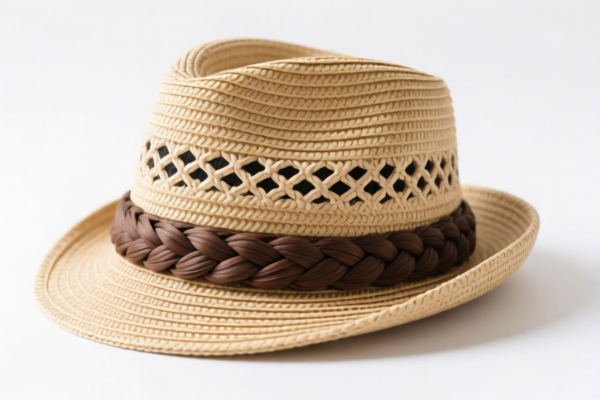
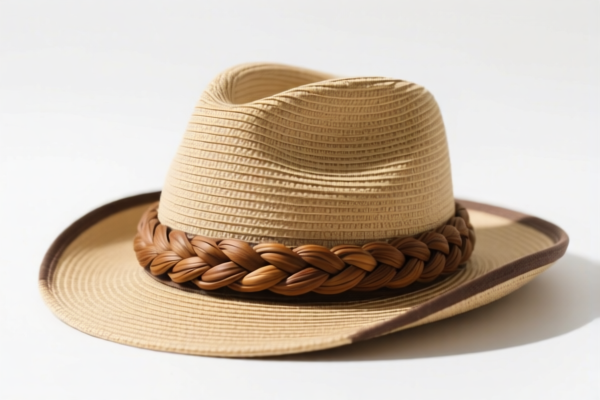
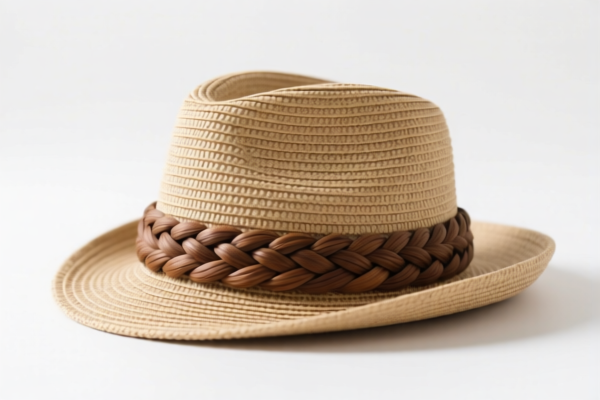
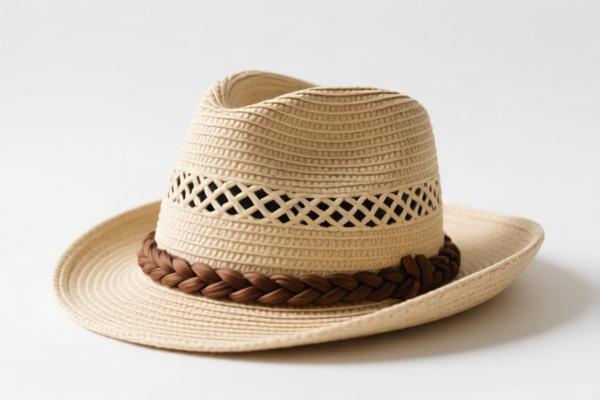
AI Analysis
🎩 Braided Hats (Headwear)
🌐 HS Code Reference & Customs Clearance Guide | 2026 Latest Tariff Analysis | Professional Clearance Strategy
📌 I. Product Definition & Classification: What Exactly Are "Braided Hats"?
"Braided hats" refer to headwear constructed primarily through braiding techniques. In international trade, classification depends heavily on the material composition and the specific functional nature of the item. The key distinction lies between general headwear (Chapter 65) and artificial hair products (Chapter 67), as well as the possibility of misclassification as tools.
⚠️ Key Classification Criteria:
- Material: Is it synthetic fibers, plant fibers, or human/animal hair?
- Form: Is it a finished hat structure or a wig/hairpiece?
- Function: Is it for fashion/protection or is it part of a hair styling system?
📦 II. HS Code Classification Details (Latest 2026 Tariff Authority Comparison)
| HS Code | Product Description | Application Scenario | Material Inference |
|---|---|---|---|
6504.00.90.15 |
Braided headwear | General fashion hats, sun hats | Artificial Fibers (Synthetic) |
6504.00.30.00 |
Braided headwear | Straw hats, paper yarn hats | Plant Fibers or Paper Yarn |
6704.19.00.00 |
Braided headwear (Wigs) | Hairpieces, wigs, similar articles | Textile Materials (Artificial) |
6704.11.00.00 |
Braided headwear (Wigs) | Wigs, hairpieces, similar articles | Textile Materials (Natural/Synthetic) |
7319.40.20.10 |
Knitting Needles | WARNING: Potential Misclassification | Iron/Steel |
🔍 Critical Alert:
- Items 1–4 are actual headwear/hairpieces.
- Item 5 is a tool (knitting needle). If your product is a hat but declared as a needle, or vice versa, it will result in severe customs penalties or seizure. Do not confuse the method (braiding/knitting) with the product.
💰 III. 2026 Latest Tariff Rate Breakdown (Including Surcharges)
✅ Applicable Country: United States (US)
✅ Country of Origin: China (CN)
✅ Effective Date: 2025–2026 (Current Trade Policy)
🎯 1. 6504.00.90.15 – Braided Headwear (Artificial Fibers)
| Item | Detail |
|---|---|
| Base Duty Rate | 6.8% (ad valorem) |
| Section 301 Surcharge | +25.0% |
| Section 122 Surcharge | +10.0% |
| Total Tax Rate | 41.8% |
| Tax Calculation | CIF Value × 41.8% |
| De Minimis Eligibility | ❌ Not Applicable (High duty threshold) |
| Legal Basis | Base Tariff + USITC Footnote 301 + IEEPA Section 122 |
📌 Explanation:
- This code assumes the hat is made of synthetic materials (e.g., acrylic, polyester).
- The 41.8% total rate is extremely high due to the叠加 (stacking) of base tariffs and trade remedies.
- Cost Impact: For a $100 hat, duty pays ~$41.80. Profit margins are severely compressed.
🎯 2. 6504.00.30.00 – Braided Headwear (Plant/Paper Fibers)
| Item | Detail |
|---|---|
| Base Duty Rate | 6.0% (ad valorem) |
| Section 301 Surcharge | +25.0% |
| Section 122 Surcharge | +10.0% |
| Total Tax Rate | 41.0% |
| Tax Calculation | CIF Value × 41.0% |
| De Minimis Eligibility | ❌ Not Applicable |
| Legal Basis | Base Tariff + USITC Footnote 301 + IEEPA Section 122 |
📌 Explanation:
- Typically applies to straw hats, papercraft hats, or raffia items.
- Slightly lower base rate (6.0% vs 6.8%) saves 0.8% in tax compared to synthetic hats.
🎯 3. 6704.19.00.00 & 6704.11.00.00 – Braided Headwear (Wigs/Hairpieces)
| Item | Detail |
|---|---|
| Base Duty Rate | 0.0% (ad valorem) |
| Section 301 Surcharge | +7.5% |
| Section 122 Surcharge | +10.0% |
| Total Tax Rate | 17.5% |
| Tax Calculation | CIF Value × 17.5% |
| De Minimis Eligibility | ❌ Not Applicable (Generally) |
| Legal Basis | Base Tariff (0%) + USITC Footnote 301 + IEEPA Section 122 |
📌 Explanation:
- Crucial Distinction: If the "braided hat" is actually a wig, hairpiece, or false hair worn for styling rather than traditional head protection/fashion, it may fall under Chapter 67.
- Tax Advantage: Only 17.5% total tax, which is ~24% lower than Chapter 65 hats.
- Risk: Customs may reclassify a standard hat as a wig if it lacks structural stiffness or looks like a hairpiece. Ensure product photos clearly show it is a hat (with brim, crown structure) and not just hair.
🎯 4. 7319.40.20.10 – KNITTING NEEDLES (Iron/Steel)
| Item | Detail |
|---|---|
| Base Duty Rate | 4.5% |
| Section 301 Surcharge | +7.5% |
| Section 122 Surcharge | +10.0% |
| Steel/Aluminum/Copper Surcharge | +50.0% |
| Total Tax Rate | 72.0% |
| Tax Calculation | CIF Value × 72.0% |
| De Minimis Eligibility | ❌ Not Applicable |
| Legal Basis | Steel/Aluminum/Copper Tariff + IEEPA + Section 301 |
🚨 WARNING:
- DO NOT USE THIS CODE FOR HATS.
- This code is for metal knitting needles.
- If you mistakenly declare a braided hat as knitting needles, or vice versa, it is fraudulent misclassification.
- If you are exporting steel knitting needles, the tax is 72%, which is prohibitive. Consider alternative materials (e.g., bamboo, plastic) to change HS Code.
🛠️ IV. Customs Clearance Practical Advice
✅ 1. Documentation Checklist
| Document | Required | Purpose |
|---|---|---|
| ✅ Product Photos | ✔️ | Must clearly show material and structure (hat vs. wig vs. needle) |
| ✅ Bill of Materials (BOM) | ✔️ | Specify exact fiber type (e.g., "Acrylic," "Straw," "Human Hair") |
| ✅ Commercial Invoice | ✔️ | Describe as "Braided Hat, Synthetic" or "Straw Hat," NOT "Textile Product" |
| ✅ Packing List | ✔️ | Match quantity and weight exactly |
| ✅ Certificate of Origin | ✔️ | For potential future FTA benefits (if applicable) |
✅ 2. Declaration Tips (Key Mnemonics)
🔥 "Material Defines Code, Structure Defines Category!"
| Scenario | Correct Declaration | Incorrect Declaration | Risk |
|---|---|---|---|
| Synthetic Straw Hat | 6504.00.90.15 (41.8%) |
6704.11.00.00 (17.5%) |
Customs Rejection (Misclassification) |
| Plant Fiber Hat | 6504.00.30.00 (41.0%) |
6504.00.90.15 (41.8%) |
Minor overpayment |
| Wig/Hairpiece | 6704.19.00.00 (17.5%) |
6504.00.90.15 (41.8%) |
Underpayment → Penalties |
| Metal Knitting Needles | 7319.40.20.10 (72.0%) |
6504.00.90.15 (41.8%) |
Fraud Alert → Seizure |
✅ 3. Special Considerations
| Issue | Advice |
|---|---|
| Wig vs. Hat | If the item can be worn as a hairpiece, consider declaring under Chapter 67 for lower tax, BUT ensure it meets the legal definition of a "wig" (not structured like a hat). |
| Steel Needles | If exporting knitting needles, consider plastic or wood alternatives to avoid the +50% steel surcharge. |
| Material Composition | Blends (e.g., 50% straw, 50% synthetic) must be declared accurately. Customs may use the "substantial transformation" rule. |
🌍 V. Global Market Comparison (2026)
| Country/Region | Recommended HS Code | Duty Rate (China Origin) | Notes |
|---|---|---|---|
| 🇺🇸 USA | 6504.00.90.15 or 6704.19.00.00 |
17.5% – 41.8% | High tariffs due to Section 301 & 122 |
| 🇪🇺 EU | 6504.00.39 or 6704.19 |
6% – 12% | No Section 301 surcharge |
| 🇨🇳 China | 6504.00 or 6704.19 |
6% – 10% | Low import duty, no anti-dumping |
| 🇬🇧 UK | 6504.00 or 6704.19 |
6% – 12% | Post-Brexit tariffs similar to EU |
📌 Conclusion:
- The US market is the most expensive due to stacked tariffs.
- If possible, export to EU/UK where tariffs are significantly lower.
- Optimize Product Design: If the item is truly a wig, use Chapter 67 for 17.5% tax in the US.
📌 VI. Common Errors & Pitfalls (Lessons Learned)
❌ Error 1: Declaring a synthetic hat as a wig to save tax
👉 Consequence: Customs inspection reveals hat structure → Penalty + Back Taxes.
❌ Error 2: Declaring knitting needles as hats
👉 Consequence: Severe fraud charges, shipment seizure, blacklisting.
❌ Error 3: Ignoring Section 122
👉 Consequence: Forgetting the +10% surcharge leads to underpayment and interest.
❌ Error 4: Vague description "Textile Hat"
👉 Consequence: Customs may assign a higher default rate or request excessive documentation.
✅ Correct Approach:
"Braided Sun Hat, 100% Acrylic Fiber, with Brim, Fashion Accessory, Model XYZ"
For Wigs: "Wig, Synthetic Hair, Braided Style, No Hat Structure"
🎯 VII. Conclusion: Professional Declaration for Cost Efficiency
🎯 Key Takeaway:
🔹 Material Matters: Synthetic = 41.8%, Plant = 41.0%, Wig = 17.5%.
🔹 Structure Matters: Hat ≠ Wig ≠ Needle.
🔹 Steel Penalties: Knitting needles (Steel) = 72.0%. Avoid if possible.
📌 Pro Tip:
If your business involves braided headwear, consult a customs broker to determine if your product can be legitimately classified as a wig (Chapter 67) for the 17.5% rate, saving ~24% in duties. Always provide clear photos and material specs.
📣 Immediate Action:
📞 Contact your customs broker with product photos and material specs.
🚀 Apply for an Advance Ruling if possible to lock in the HS Code.
💼 Precision in declaration = Profit in your pocket!
✨ Professional Customs Clearance Starts with Accurate Classification!
💼 Every penny counts in international trade!
Customer Reviews
About HS Code Classification
The Harmonized System (HS) is an internationally standardized nomenclature developed by the World Customs Organization (WCO) to classify traded products. Over 200 countries use the HS system as the basis for customs tariffs, trade statistics, and import/export regulations.
Each HS code follows a hierarchical structure:
- Chapter (2 digits) — Broad category of goods (e.g., Chapter 84: Machinery and Mechanical Appliances)
- Heading (4 digits) — More specific grouping within the chapter
- Subheading (6 digits) — Internationally standardized breakdown, used by all WCO member countries
- National subdivisions (8-10 digits) — Country-specific extensions for further classification, such as US HTSUS 10-digit codes
Correct HS code classification is essential for smooth customs clearance, accurate duty payment, and compliance with trade regulations. Misclassification can lead to customs delays, overpayment of duties, or penalties.
When importing from CN to US, the applicable tariff rates may include:
- Most-Favored-Nation (MFN) rate — The standard duty rate applied to WTO members
- General rate — Applied to countries without trade agreements
- Trade remedy duties — Additional tariffs such as Section 301 (anti-dumping), Section 232 (national security), or countervailing duties
The information provided on this page is for reference purposes only. For official classification, please consult with your local customs authority or a licensed customs broker.