Brake Accessories
CN → US| HS Code | Tariff Rate | Origin | Destination | Doc |
|---|---|---|---|---|
| 6813200015 | 35.0% | CN | US | Official Doc |
| 8431499084 | 85.0% | CN | US | Official Doc |
| 8708301090 | 35.0% | CN | US | Official Doc |
| 6813810050 | 35.0% | CN | US | Official Doc |
Product Images
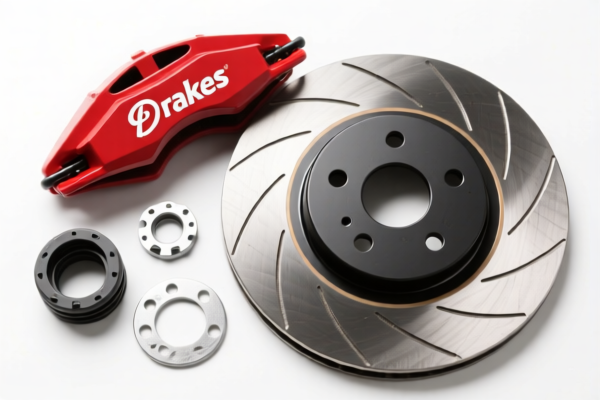


AI Analysis
🛑 Brake Accessories: The Ultimate 2026 HS Code & Taxation Guide
🌐 Global Trade Intelligence | US Customs Strategy | Tax Optimization Report
Decoding the Complex Tariff Landscape for Automotive Brake Components
🧩 I. Product Definition & Classification Logic
What are "Brake Accessories"?
Brake accessories are critical components designed to function within a vehicle's braking system. In international trade, their classification is highly sensitive to material composition, structural integrity, and intended application. They generally fall into three categories:
1. Friction Materials: Pads, shoes, or linings that generate stopping force.
2. Mechanical Hardware: Non-friction mechanical parts (brackets, sensors, calipers).
3. General Automotive Parts: Unspecified parts falling under "Other" catch-all categories.
⚠️ Critical Classification Warning:
The difference between a friction material (HS 6813) and a mechanical part (HS 8431/8708) can alter your tax burden from 35% to 85%.
Material composition is king!
📦 II. HS Code Classification Matrix (2026 Official Data)
Based on the latest US Customs & Border Protection (CBP) rulings and Trade Data.
| HS Code | Product Description & Logic | Material/Structure | Application Scope |
|---|---|---|---|
6813.20.00.15 |
Friction Brake Parts Specifically for brakes, identified as accessories. |
Inferred Friction Material (Non-metallic composites, asbestos-free, ceramic, or organic). |
Directly functions as a braking surface. |
8431.49.90.84 |
Brake Accessories (Mechanical) Matches mechanical parts/components fallback category. |
Steel, Aluminum, Copper (Metallic structural components). |
Mechanical matching parts; structural support. |
8708.30.10.90 |
Brake Accessories (General) Accessories corresponding to the part, generic "Other" fallback. |
General/Unknown Non-specific material mix. |
No conflict of use; general automotive use. |
6813.81.00.50 |
Brake Accessories (Other Friction) Used for braking, falls under "Other" friction categories. |
Inferred Friction Material Similar to pads/linings but distinct form. |
General braking application, non-standard form. |
🔍 Deep Dive Analysis:
-6813.xx.xxis the Friction Material chapter. If your product is a brake pad/shoe, this is your best legal fit (35% tax).
-8431.xx.xxis the Machinery Parts chapter. If your product is a metal bracket or caliper housing, this applies but triggers the Steel/Aluminum/Copper surtax (85% tax).
-8708.xx.xxis the Motor Vehicle Parts chapter. This is the "catch-all" if it doesn't fit specific friction or machinery definitions (35% tax).
💰 III. 2026 Tax Rate Breakdown (The 35% vs. 85% Battle)
Applicable to US Imports from China (CN).
Effective Date: Includes subsequent import cycles.
🎯 Scenario A: The "Safe" Zone (35% Total Tax)
Applicable to HS Codes: 6813.20.00.15 & 6813.81.00.50 & 8708.30.10.90
| Tax Component | Rate | Source / Legal Basis | Details |
|---|---|---|---|
| Base Tariff | 0.0% | Most Favored Nation (MFN) | Standard WTO rate for automotive parts. |
| Section 232/301 Add-on | +25.0% | USITC / Trade Act 301 | "Section 25%" surcharge on China imports. |
| Section 122 Clause | +10.0% | Specific Policy Add-on | "Clause 122" tariff for specific categories. |
| TOTAL EFFECTIVE RATE | 35.0% | Calculated | 0% + 25% + 10% = 35% |
📌 Explanation:
For friction materials and general automotive parts, you face a 35% levy. This is high but standard for the "China + 1" strategy landscape.
🚨 Scenario B: The "Metal Trap" (85% Total Tax)
Applicable to HS Code: 8431.49.90.84 (Metallic Mechanical Parts)
| Tax Component | Rate | Source / Legal Basis | Details |
|---|---|---|---|
| Base Tariff | 0.0% | MFN | Standard rate. |
| Section 232/301 Add-on | +25.0% | USITC / Trade Act 301 | Standard 301 surcharge. |
| Section 122 Clause | +10.0% | Specific Policy Add-on | Clause 122 surcharge. |
| Steel/Al/Cu Surcharge | +50.0% | CRITICAL | Specific surcharge for Steel, Aluminum, and Copper products. |
| TOTAL EFFECTIVE RATE | 85.0% | Calculated | 0% + 25% + 10% + 50% = 85% |
⚠️ CRITICAL WARNING:
If your "Brake Accessory" contains Steel, Aluminum, or Copper and is classified under8431.49.90.84, the tax jumps to 85%.
This is due to the specific "Steel, Aluminum, Copper Products Surcharge" combined with the standard 301 and 122 clauses.
This is nearly double the cost of friction parts!
🛠️ IV. Customs Clearance Strategy & Practical Advice
How to Avoid the 85% Tax Trap and Ensure Smooth Clearance
✅ 1. Material Verification is Non-Negotiable
Before declaring, you MUST know the exact material composition:
- Is it Friction Material? (Resin, Ceramic, Asbestos, Semi-metal organic) → Aim for 6813.xx.
- Is it Metal? (Steel bracket, Aluminum caliper, Copper rotor) → Avoid 8431 if possible; check for alternative 8708 classification if it qualifies as a general part.
🧠 Pro Tip: If a part is a hybrid (e.g., a brake caliper with metal housing and friction lining), the dominant function or major component usually dictates the code. However, for simple "accessories," separating the friction element from the metal frame in documentation can be a strategic move (if legally permissible).
✅ 2. Declaration Strategy: "Specific vs. General"
- For
6813(Friction): Be precise. Use terms like "Brake Lining, Friction Material Composite" in the description. - For
8708(General): Use terms like "Automotive Brake Component, Unspecified Material". - Avoid
8431unless necessary: Only use8431.49.90.84if the part is definitively a mechanical machine part and not a general vehicle part under8708. If it's a vehicle part,8708(35%) is far safer than8431(85%).
✅ 3. Documentation Checklist for US Customs
| Document | Requirement | Why? |
|---|---|---|
| Material Safety Data Sheet (MSDS) | ✅ Mandatory | Proves if the material is "Friction" or "Metal." Crucial for avoiding the 50% metal surcharge. |
| Bill of Materials (BOM) | ✅ Mandatory | Breaks down steel/aluminum vs. composite. |
| Technical Drawing | ✅ Mandatory | Shows if the part is a "fitting" (8708) or a "machine part" (8431). |
| Commercial Invoice | ✅ Accurate | Must match the HS Code exactly. Discrepancies = Audits. |
| Country of Origin Certificate | ✅ Verified | Must state "China" to apply the 10% + 25% + 50% logic correctly. |
✅ 4. Special Scenarios & Pitfalls
| Scenario | Risk | Recommendation |
|---|---|---|
| "It's just a metal clip" | ❌ 85% Tax if 8431 |
Try to classify under 8708.30.10.90 (General Auto Part) to get 35%. |
| "It's a brake pad" | ❌ 85% Tax if misclassified as metal | Must declare as 6813 (Friction Material). |
| "Mixed Material Part" | ⚠️ High Risk | Split the shipment? Declare the friction part separately if possible. |
| "Unspecified Accessory" | ⚠️ 35% Tax | Stick to 8708 (General) to avoid the 50% metal penalty. |
🌍 V. Quick Comparison: What Happens If You Get It Wrong?
| HS Code | Material Type | Tax Rate | Cost Impact on $10k Goods |
|---|---|---|---|
6813.20.00.15 |
Friction Material | 35% | $3,500 |
8708.30.10.90 |
General Auto Part | 35% | $3,500 |
6813.81.00.50 |
Friction (Other) | 35% | $3,500 |
8431.49.90.84 |
Steel/Al/Cu | 85% | $8,500 |
💡 The Stakes: Misclassifying a steel bracket as a friction part (or vice versa) could cost you $5,000 per $10,000 shipment.
🚀 VI. Final Verdict & Action Plan
- Audit Your Inventory: Separate Friction Materials (Pads/linings) from Metal Hardware (Brackets/Clips).
- Target the 35% Lane:
- If Friction → Use
6813.20.00.15or6813.81.00.50. - If General Auto Part → Use
8708.30.10.90.
- If Friction → Use
- Avoid the 85% Lane:
- Do NOT use
8431.49.90.84unless the product is strictly a non-vehicle machine part and contains steel/aluminum/copper. Even then, check if8708is a better fit.
- Do NOT use
- Prepare Evidence: Have MSDS and BOM ready for every shipment to prove material composition to CBP.
📣 Final Advice:
"When in doubt, classify as 'General Automotive Part' (8708) rather than 'Machinery Part' (8431)."
The 50% surcharge on steel/aluminum/copper in the8431category is the most dangerous tariff clause for brake accessories.
✨ Pro Tip: If your supply chain allows, sourcing brake accessories from Vietnam, Mexico, or Thailand might bypass the 10% Section 122 and 25% Section 301 tariffs entirely (subject to current trade policies).
Secure your supply chain today! 🛑🚛
Customer Reviews
About HS Code Classification
The Harmonized System (HS) is an internationally standardized nomenclature developed by the World Customs Organization (WCO) to classify traded products. Over 200 countries use the HS system as the basis for customs tariffs, trade statistics, and import/export regulations.
Each HS code follows a hierarchical structure:
- Chapter (2 digits) — Broad category of goods (e.g., Chapter 84: Machinery and Mechanical Appliances)
- Heading (4 digits) — More specific grouping within the chapter
- Subheading (6 digits) — Internationally standardized breakdown, used by all WCO member countries
- National subdivisions (8-10 digits) — Country-specific extensions for further classification, such as US HTSUS 10-digit codes
Correct HS code classification is essential for smooth customs clearance, accurate duty payment, and compliance with trade regulations. Misclassification can lead to customs delays, overpayment of duties, or penalties.
When importing from CN to US, the applicable tariff rates may include:
- Most-Favored-Nation (MFN) rate — The standard duty rate applied to WTO members
- General rate — Applied to countries without trade agreements
- Trade remedy duties — Additional tariffs such as Section 301 (anti-dumping), Section 232 (national security), or countervailing duties
The information provided on this page is for reference purposes only. For official classification, please consult with your local customs authority or a licensed customs broker.