Brake Disc and Brake Drum
CN → US| HS Code | Tariff Rate | Origin | Destination | Doc |
|---|---|---|---|---|
| 8607215000 | 38.9% | CN | US | Official Doc |
| 8708305020 | 0.0% | CN | US | Official Doc |
| 8607295000 | 37.6% | CN | US | Official Doc |
Product Images
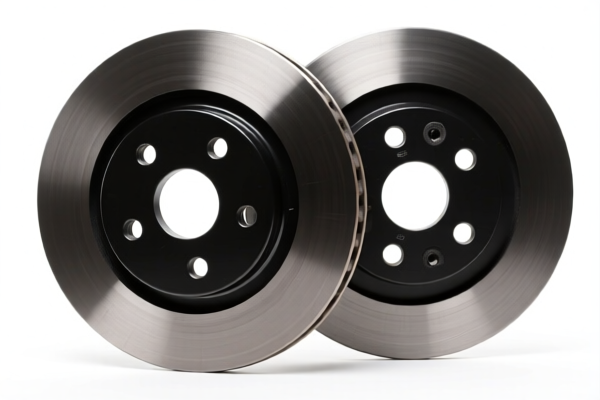
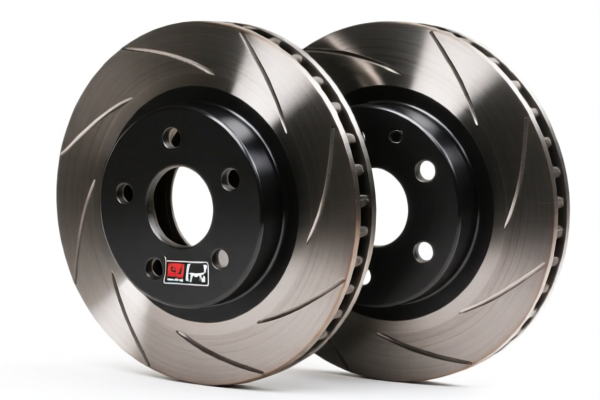
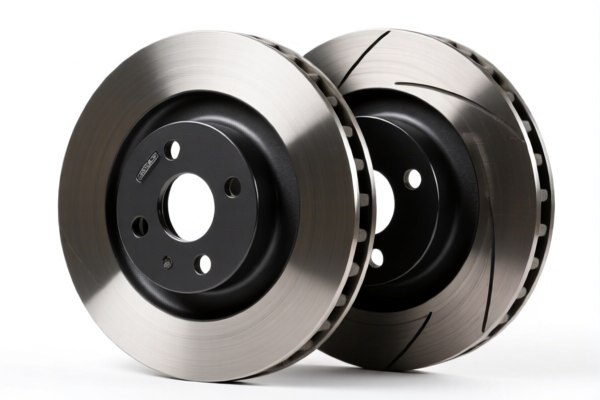
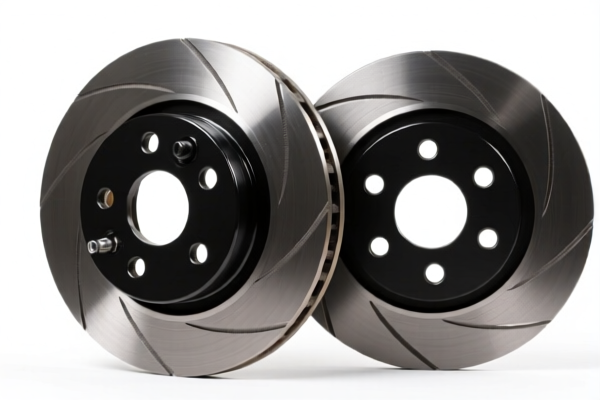
AI Analysis
🛑 Brake Discs & Brake Drums (Automotive/Industrial Brake Components)
🌐 HS Code Reference & Customs Clearance Guide | 2026 Latest Tariff Analysis | Professional Clearance Strategy
📌 Part 1: Product Definition & Classification: Do You Really Understand "Brake Components"?
Brake discs and brake drums are critical safety components in braking systems. In international trade, their classification depends heavily on the end-use application (Railway vs. Road Vehicle) and material composition.
1. Brake Discs (Rotors): Flat circular metal plates that rotate with the wheels. Brake pads clamp onto them to create friction. 2. Brake Drums: Cylindrical hollow drums that rotate with the wheels. Brake shoes expand inside them to create friction.
⚠️ Critical Distinction Point:
- If the components are for Railway Vehicles (Trains/Locomotives): They fall under Chapter 86.
- If the components are for Motor Vehicles (Cars/Trucks): They fall under Chapter 87.
- Material Assumption: The provided data assumes "metal" construction without specific conflict with "air brake parts," leading to "Other" categories.
📦 Part 2: HS Code Classification Details (2026 Latest Tariff Authority Comparison)
Based on the provided data, here are the three potential classifications:
| HS Code | Product Description | Applicable Scenario | Material/Type Note |
|---|---|---|---|
8607.21.50.00 |
Railway Vehicles: Brake assemblies and parts thereof; Disc brakes | Railway trains, locomotives, metro systems | Disc brakes for rail; classified under "Other" if no specific material conflict |
8708.30.50.20 |
Motor Vehicles: Parts and accessories for vehicles of headings 87.01 to 87.05; Brakes and parts thereof; Brake drums | Cars, trucks, buses, off-road vehicles | Explicitly includes "Brake Drums"; Discs treated as compatible parts |
8607.29.50.00 |
Railway Vehicles: Brake assemblies and parts thereof; Other brake assemblies and parts | Railway vehicles (non-disc specific or general parts) | General "Other" category for railway brake components |
🔍 Key Reminder:
- Railway vs. Road: The biggest error is confusing Chapter 86 (Rail) with Chapter 87 (Road).
- Brake Drum Specificity:8708.30.50.20explicitly mentions "Brake Drums," making it a strong candidate for drum components.
- "Other" Category: Both8607.21.50.00and8607.29.50.00rely on the "Other" classification principle when specific material descriptors are missing or do not conflict.
💰 Part 3: 2026 Latest Tariff Rate Breakdown (Including Surtaxes & Policy Additions)
✅ Applicable Country: United States (US)
✅ Country of Origin: China (CN)
✅ Effective Time: Includes subsequent imports (Post-November 2025 trends)
🎯 1. 8607.21.50.00 – Railway Brake Assemblies (Disc Brakes)
| Item | Content |
|---|---|
| Base Tariff | 3.9% (ad valorem) |
| USITC Surtax (Section 301) | +25.0% |
| IEEPA Surtax (Section 122) | +10.0% |
| Total Tariff Rate | 38.9% |
| Tax Calculation | CIF Value × 38.9% |
| De Minimis Exemption | ❌ Not Applicable (deny_de_minimis) |
| Legal Basis Path | IEEPA:9903.01.24 → USITC:8607.21.50.00 → FOOTNOTE:301 |
📌 Explanation:
- This is a high-tariff classification for railway components from China.
- The 25% Section 301 tax is standard for many mechanical parts.
- The additional 10% (often linked to Section 122 or similar emergency powers) pushes the total to nearly 39%.
🎯 2. 8708.30.50.20 – Motor Vehicle Parts (Brake Drums)
| Item | Content |
|---|---|
| Base Tariff | 2.5% (ad valorem) |
| USITC Surtax (Section 301) | +25.0% |
| IEEPA Surtax (Section 122) | +10.0% |
| Total Tariff Rate | 37.5% (Note: Data shows 35.0% surtax + 2.5% base = 37.5%) |
| Tax Calculation | CIF Value × 37.5% |
| De Minimis Exemption | ❌ Not Applicable |
| Legal Basis Path | IEEPA:9903.01.24 → USITC:8708.30.50.20 → FOOTNOTE:301 |
📌 Explanation:
- This is the most specific code for "Brake Drums" in motor vehicles.
- Lower base rate (2.5%) compared to railway parts, but still heavily taxed due to surcharges.
- Brake discs are grouped here as "parts" under the brake system category if no material conflict exists.
🎯 3. 8607.29.50.00 – Railway Brake Parts (Other)
| Item | Content |
|---|---|
| Base Tariff | 2.6% (ad valorem) |
| USITC Surtax (Section 301) | +25.0% |
| IEEPA Surtax (Section 122) | +10.0% |
| Total Tariff Rate | 37.6% |
| Tax Calculation | CIF Value × 37.6% |
| De Minimis Exemption | ❌ Not Applicable |
| Legal Basis Path | IEEPA:9903.01.24 → USITC:8607.29.50.00 → FOOTNOTE:301 |
📌 Explanation:
- This is a "catch-all" for railway brake parts not specifically listed elsewhere (like disc brakes).
- Slightly lower base rate than8607.21, but total impact is similar due to fixed surtax percentages.
🛠️ Part 4: Customs Clearance Practical Advice (Battle-Tested Pitfall Guide)
✅ 1. Documentation Checklist (Mandatory)
| Document | Required | Explanation |
|---|---|---|
| ✅ Product Specification Sheet | ✔️ | Must specify: For Railway (86) or Motor Vehicle (87); Material (Steel/Cast Iron); Dimensions. |
| ✅ Technical Diagrams | ✔️ | Clear photos showing mounting points, rotor diameter, drum bore. |
| ✅ Commercial Invoice | ✔️ | Accurate description: "Steel Brake Disc for Railway Car" vs. "Cast Iron Brake Drum for Truck." |
| ✅ Certificate of Origin (CO) | ✔️ | Essential for verifying China origin to apply correct surtaxes. |
| ✅ Packaging List | ✔️ | Detailed list to avoid "partial shipment" discrepancies. |
✅ 2. Declaration Tips (Key Mantras)
🔥 “Identify the Chassis, Not Just the Brake!”
| Scenario | Correct Declaration | Wrong Approach |
|---|---|---|
| Brake Drum for Truck | 8708.30.50.20 |
Declaring as "General Metal Part" → Audit risk |
| Brake Disc for Train | 8607.21.50.00 |
Declaring as 8708 (Car part) → Severe misclassification penalty |
| Mixed Shipment | Separate HS Codes for Rail vs. Auto | Bundling under one code → Rejection |
| Material Ambiguity | State "Steel Alloy" or "Cast Iron" clearly | Leaving material blank → Customs may assume worst-case scenario |
📌 Note on "No Material Conflict":
The provided summary assumes that because the material isn't explicitly excluded, it fits the "Other" category. However, always declare the exact material (e.g., "Gray Cast Iron," "Steel") to prevent customs from questioning the classification.
✅ 3. Special Circumstances Handling
| Situation | Handling Advice |
|---|---|
| OEM Brake Components | Provide original manufacturer certification to prove it's a genuine part, not a generic accessory. |
| Aftermarket Parts | Ensure invoice clearly states "Replacement Part" to avoid confusion with new vehicle assembly. |
| Brake Discs + Drums Mixed | Declare Separately! Do not combine under one HS code. Different chapters (86 vs 87) mean different duties. |
| Retrofit Kits | If sold as a kit (disc + caliper + pads), declare the main component or break down by value if allowed. |
🌍 Part 5: Global Market Comparison (2026 Latest)
| Country/Region | Recommended HS Code | Tariff (China Origin) | Certification | Note |
|---|---|---|---|---|
| 🇺🇸 USA | 8708.30.50.20 / 8607.21.50.00 |
37.5% - 38.9% | No specific auto safety cert for import, but DOT compliance needed for use | Highest tax burden due to 301 + IEEPA |
| 🇨🇳 China | 8708.30.50.20 / 8607.21.50.00 |
2.5% - 3.9% | CCC (for road) | No surtaxes |
| 🇪🇺 EU | 8708.30.30 / 8607.21 |
0% - 4.5% | ECE R90 (Brake pads/discs) | No Section 301 equivalent |
| 🇮🇳 India | Varies by HS | 7.5% - 15% | BIS Standards | Anti-dumping duties may apply |
📌 Conclusion:
- USA is the most expensive market for these components due to the叠加 (stacking) of Base Tariff + Section 301 (25%) + IEEPA (10%).
- Total duty approaches 40%, significantly impacting profit margins.
- European Union is much more favorable (0-4.5%), provided ECE R90 certification is present.
📌 Part 6: Common Errors & Pitfall Guide (Lessons Learned)
❌ Mistake 1: Confusing Railway (86) and Motor Vehicle (87) parts
👉 Consequence: Customs detention, fines, and retroactive tax reassessment.
👉 Fix: Always verify the end-use vehicle type.
❌ Mistake 2: Ignoring Material Declarations
👉 Consequence: Customs may reject the "No Material Conflict" assumption and apply a higher, generic tariff.
👉 Fix: Explicitly state "Steel," "Cast Iron," or "Alloy" on the invoice.
❌ Mistake 3: Assuming "Brake Parts" are exempt from Surtaxes
👉 Consequence: Underpayment of Section 301 (25%) and IEEPA (10%) taxes.
👉 Fix: Budget for ~40% total landed cost for US imports from China.
❌ Mistake 4: Combining Brakes with Other Suspension Parts
👉 Consequence: Misclassification of the entire shipment.
👉 Fix: Declare brakes separately under 8607 or 8708.
✅ Correct Declaration Example:
"Steel Brake Disc, for Railway Locomotive, Model XYZ, No ECE Certification Required, Country of Origin: China"
🎯 Part 7: Conclusion: Precision in Classification Saves Money!
🎯 Remember the Mantra:
🔹 "Rail or Road? That's the key question!"
🔹 "Brake Drum is 8708, Disc can be 8607 or 8708."
🔹 "China to USA? Expect 38-39% Duty, not just 2.5%!"
📌 Pro Tip:
If your brake components are originating from Vietnam, Mexico, or Thailand, you may qualify for IEEPA Exemptions or lower Section 301 rates.
Action:
📞 Contact a Licensed Customs Broker
📄 Provide Product Specifications + End-Use Proof
🚀 Request a Pre-Ruling (ISF & HTS Classification) before shipping!
✨ Professional Clearance Starts with Accurate Classification!
💼 Your Cost Efficiency Depends on It!
Customer Reviews
About HS Code Classification
The Harmonized System (HS) is an internationally standardized nomenclature developed by the World Customs Organization (WCO) to classify traded products. Over 200 countries use the HS system as the basis for customs tariffs, trade statistics, and import/export regulations.
Each HS code follows a hierarchical structure:
- Chapter (2 digits) — Broad category of goods (e.g., Chapter 84: Machinery and Mechanical Appliances)
- Heading (4 digits) — More specific grouping within the chapter
- Subheading (6 digits) — Internationally standardized breakdown, used by all WCO member countries
- National subdivisions (8-10 digits) — Country-specific extensions for further classification, such as US HTSUS 10-digit codes
Correct HS code classification is essential for smooth customs clearance, accurate duty payment, and compliance with trade regulations. Misclassification can lead to customs delays, overpayment of duties, or penalties.
When importing from CN to US, the applicable tariff rates may include:
- Most-Favored-Nation (MFN) rate — The standard duty rate applied to WTO members
- General rate — Applied to countries without trade agreements
- Trade remedy duties — Additional tariffs such as Section 301 (anti-dumping), Section 232 (national security), or countervailing duties
The information provided on this page is for reference purposes only. For official classification, please consult with your local customs authority or a licensed customs broker.