Brake Fluid Cleaner
CN → US| HS Code | Tariff Rate | Origin | Destination | Doc |
|---|---|---|---|---|
| 3811190000 | 41.5% | CN | US | Official Doc |
| 3403191000 | 35.2% | CN | US | Official Doc |
| 3403195000 | 40.8% | CN | US | Official Doc |
| 3403195000 | 40.8% | CN | US | Official Doc |
| 3824992900 | 41.5% | CN | US | Official Doc |
Product Images
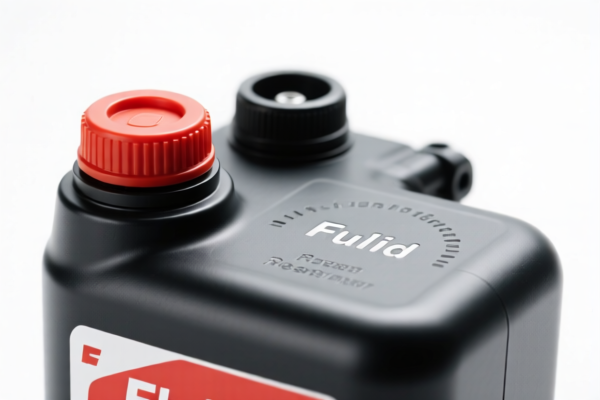
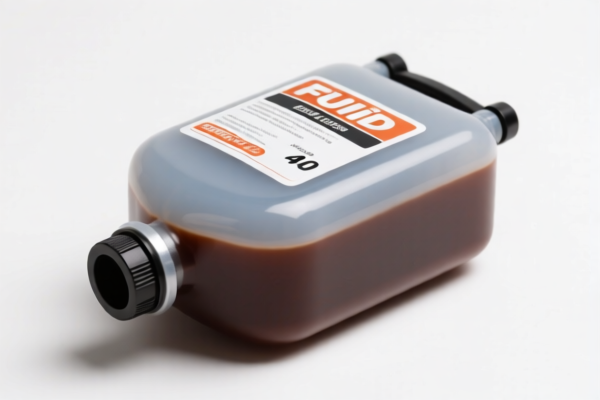
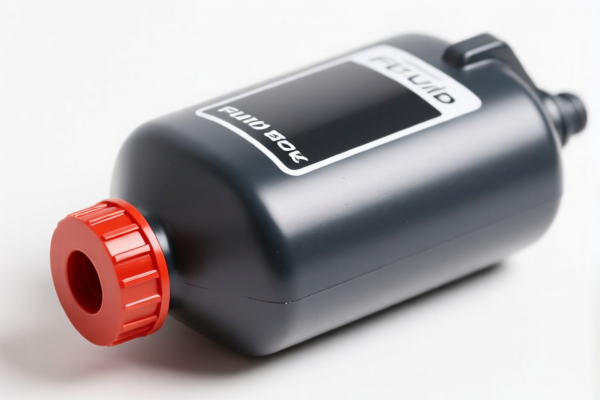

AI Analysis
🧪 Brake Fluid Cleaner | Chemical Additives & Lubrication Preparations
🌐 HS Code Reference & Customs Clearance Guide | 2026 Latest Tariff Analysis | Professional-Level Clearance Strategy
📌 I. Product Definition & Classification: Do You Truly Understand "Brake Fluid Cleaner"?
Brake Fluid Cleaner is a specialized chemical additive designed to maintain, enhance, or restore the performance of braking systems. In international trade, it is often classified based on its chemical nature, function (lubricant additive vs. general chemical制剂), and compatibility with mineral oils.
⚠️ Key Distinction Point:
- If the product is primarily a chemical mixture/preparation for cleaning or treating brake systems → Likely falls under Chapter 38 (Miscellaneous Chemical Products).
- If the product is considered a lubricant additive/preparation specifically for oils → Likely falls under Chapter 34 (Oil Preparation / Lubricants).
- Critical Factor: The presence of mineral oil (>70%) or specific petroleum derivatives can shift the classification from Chapter 38 to Chapter 34.
📦 II. HS Code Classification Details (2026 Latest Tariff Authority Comparison)
| HS Code | Product Description | Application Scenario | Chemical/Lubricant Nature | Total Tax Rate |
|---|---|---|---|---|
3811.19.00.00 |
Anti-knock preparations, combustion catalyst preparations and other preparations for internal combustion engines | Additives for brake fluid (mineral oil base) | Chemical preparation for mineral oils | 41.5% |
3403.19.10.00 |
Preparations for the lubrication of machinery, equipment, vehicles, etc. | Lubricant-type chemical additives | Lubricant preparation (non-petroleum dominant) | 35.2% |
3403.19.50.00 |
Other lubricating preparations | General lubricant additives for brake systems | Lubricant composition | 40.8% |
3824.99.29.00 |
Other prepared binders for foundry molds or cores; other chemical products and preparations | General chemical additives/compounds | General chemical mixture | 41.5% |
🔍 Key Reminder:
-3811.19.00.00&3824.99.29.00: Classify as "Chemical Preparations." Suitable if the product is primarily a cleaning agent or chemical additive not dominated by lubricating oil.
-3403.19.10.00&3403.19.50.00: Classify as "Lubrication Preparations." Suitable if the product is marketed as a lubricant additive or contains significant lubricating components.
- No Material Conflict: All codes assume no exclusion of petroleum content (>70%) for the 3403 codes, but inference suggests chemical additives usually don't meet the 70% threshold.
💰 III. 2026 Latest Tariff Rate Breakdown (Including Surtaxes & Policy Surcharges)
✅ Applicable Country: United States (US)
✅ Origin: China (CN)
✅ Effective Date: From November 10, 2025 (and subsequent imports)
🎯 1. 3811.19.00.00 —— Preparations for Internal Combustion Engines / Mineral Oil Additives
| Item | Content |
|---|---|
| Base Tariff | 6.5% (ad valorem) |
| USITC Surcharge (Section 301) | +25.0% |
| IEEPA Surcharge (Section 122) | +10.0% |
| Total Tariff | 41.5% |
| Tax Calculation | CIF Value × 41.5% |
| De Minimis Exemption Eligible? | ❌ No (deny_de_minimis) |
| Legal Basis Path | IEEPA:9903.01.25 → IEEPA:9903.01.24 → USITC:3811.19.00.00 → FOOTNOTE:9903.88.01 |
📌 Explanation:
- This code treats the cleaner as an additive for mineral oils (brake fluid is often mineral-based).
- The 25% Section 301 tariff is applied to most Chinese chemical products.
- The 10% IEEPA tariff is a specific surcharge for Chinese goods under emergency economic powers.
- Total 41.5% is a high tariff rate. Proper documentation is crucial to justify this classification.
🎯 2. 3403.19.10.00 —— Other Lubricating Preparations (Specific Sub-category)
| Item | Content |
|---|---|
| Base Tariff | 0.2% (ad valorem) |
| USITC Surcharge (Section 301) | +25.0% |
| IEEPA Surcharge (Section 122) | +10.0% |
| Total Tariff | 35.2% |
| Tax Calculation | CIF Value × 35.2% |
| De Minimis Exemption Eligible? | ❌ No (deny_de_minimis) |
| Legal Basis Path | IEEPA:9903.01.25 → IEEPA:9903.01.24 → USITC:3403.19.10.00 → FOOTNOTE:9903.88.01 |
📌 Note:
- This code classifies the product as a lubrication preparation.
- The base tariff is very low (0.2%), but the 35% surcharges still apply.
- Savings: Compared to 41.5%, this offers a 6.3% reduction in total duty, which is significant for high-value shipments.
🎯 3. 3403.19.50.00 —— Other Lubricating Preparations (General Sub-category)
| Item | Content |
|---|---|
| Base Tariff | 5.8% (ad valorem) |
| USITC Surcharge (Section 301) | +25.0% |
| IEEPA Surcharge (Section 122) | +10.0% |
| Total Tariff | 40.8% |
| Tax Calculation | CIF Value × 40.8% |
| De Minimis Exemption Eligible? | ❌ No (deny_de_minimis) |
| Legal Basis Path | IEEPA:9903.01.25 → IEEPA:9903.01.24 → USITC:3403.19.50.00 → FOOTNOTE:9903.88.01 |
📌 Note:
- Similar to3403.19.10.00, but with a higher base rate (5.8% vs 0.2%).
- Total tariff is 40.8%, only slightly lower than the 3811/3824 codes.
🎯 4. 3824.99.29.00 —— Other Chemical Products and Preparations
| Item | Content |
|---|---|
| Base Tariff | 6.5% (ad valorem) |
| USITC Surcharge (Section 301) | +25.0% |
| IEEPA Surcharge (Section 122) | +10.0% |
| Total Tariff | 41.5% |
| Tax Calculation | CIF Value × 41.5% |
| De Minimis Exemption Eligible? | ❌ No (deny_de_minimis) |
| Legal Basis Path | IEEPA:9903.01.25 → IEEPA:9903.01.24 → USITC:3824.99.29.00 → FOOTNOTE:9903.88.01 |
📌 Note:
- This is the default "catch-all" code for chemical preparations not specified elsewhere.
- Same tariff burden as3811.19.00.00.
- Use this if the product cannot be clearly defined as a lubricant or engine additive.
🛠️ IV. Customs Clearance Practical Advice (Real-World Pitfall Avoidance Guide)
✅ 1. Required Documentation Checklist (None Can Be Omitted)
| Document | Mandatory | Explanation |
|---|---|---|
| ✅ Product Specification Sheet | ✔️ | Must detail chemical composition, function (cleaner vs. lubricant), and active ingredients. |
| ✅ Safety Data Sheet (SDS) | ✔️ | Critical for chemical products; confirms hazard class and composition. |
| ✅ Product Photos (Label & Bottle) | ✔️ | Must show brand, model, and clear usage description (e.g., "Brake Fluid Cleaner" vs. "Lubricant Additive"). |
| ✅ Commercial Invoice | ✔️ | Must accurately describe the product name and HS Code; avoid vague terms like "Chemical Stuff." |
| ✅ Certificate of Origin (CO) | ✔️ | Required to apply any potential exemptions (though most are denied for China origin). |
| ✅ Packing List | ✔️ | Ensure weight and dimensions match the invoice. |
✅ 2. Declaration Tips (Key Mnemonics)
🔥 "Chemical or Lubricant? Specify Function! 'Cleaner' vs 'Additive' Changes Everything!"
| Scenario | Correct Declaration | Incorrect Practice |
|---|---|---|
| Primarily a Cleaning Solvent | 3811.19.00.00 or 3824.99.29.00 |
Misdeclaring as "Lubricant" → Potential Audit |
| Primarily a Lubricating Additive | 3403.19.10.00 (Best Rate) |
Misdeclaring as "General Chemical" → Higher Tax (41.5%) |
| Unknown/General Mixture | 3824.99.29.00 |
No declaration → Customs Detention & Penalty |
| Contains >70% Petroleum Oil | Must be re-evaluated (Possibly 3403.19.10.00 with different base) |
Ignoring composition → Misclassification |
📌 Strategy:
- If the product is marketed as a "Cleaner" (removes impurities), lean towards Chapter 38 (3811or3824).
- If the product is marketed as a "Lubricant Additive" (improves flow/lubricity), lean towards Chapter 34 (3403.19.10.00for lowest total tax).
- Always provide the SDS to justify the chemical nature.
✅ 3. Special Case Handling
| Situation | Handling Suggestion |
|---|---|
| OEM Private Label | Provide the manufacturer’s label and specification sheet; ensure the chemical composition matches the declared HS Code. |
| Mixed Packaging (Cleaner + Lubricant) | Declare each item separately if possible; or declare as a "Set" if they are sold together, but this increases complexity. |
| High-Volume Shipments | Apply for an Advance Ruling (Pre-Ruling) from CBP to confirm the HS Code before shipment. |
| Dispute on "Lubricant" vs "Cleaner" | Use technical data sheets to prove the primary function is cleaning or lubricating. |
🌍 V. Global Market Comparison (2026 Latest)
| Country/Region | Recommended HS Code | Tariff Rate | Certification Requirements | Notes |
|---|---|---|---|---|
| 🇺🇸 USA | 3403.19.10.00 (Lowest Total) |
35.2% (China Origin) | SDS, TSCA Compliance | 41.5% for Chapter 38 |
| 🇨🇳 China | 3403.19.10.00 |
~6.5-7% | CCC (if applicable), RoHS | No Section 301/IEEPA surcharges |
| 🇪🇺 EU | 3811.19.90 / 3403.19.90 |
6.5% - 0% | REACH, CLP | No US-style surcharges |
| 🇬🇧 UK | 3811.19.90 / 3403.19.90 |
6.5% | UK REACH | Post-Brexit rules apply |
| 🇦🇺 Australia | 3811.19.90 / 3403.19.90 |
5% | AICIS | No US-style surcharges |
📌 Conclusion:
- USA has the highest effective tariff burden due to Section 301 and IEEPA surcharges.
- Choosing3403.19.10.00saves 6.3% compared to3811/3824codes.
- Non-US markets (EU, UK, AU, CN) have significantly lower or no surcharges.
📌 VI. Common Mistakes & Pitfall Guide (Blood & Tears Lessons)
❌ Mistake 1: Declaring as "General Chemical" (3824.99.29.00) when it is clearly a Lubricant Additive
👉 Consequence: You pay 41.5% instead of 35.2%. Overpayment!
❌ Mistake 2: Declaring as "Lubricant" (3403.19.10.00) when it is primarily a Solvent Cleaner
👉 Consequence: Customs may reject the classification, demand re-declaration, and impose penalties.
❌ Mistake 3: Failing to provide SDS for chemical products
👉 Consequence: Customs detention, delays, and potential seizure.
❌ Mistake 4: Ignoring IEEPA 10% and Section 301 25% surcharges
👉 Consequence: Underestimating landed cost by ~35%, leading to profit margin erosion.
✅ Correct Practice:
"Brake Fluid Cleaner, Chemical Preparation, Model XYZ, SDS Available, TSCA Compliant, Net Weight 1kg"
🎯 VII. Conclusion: Professional Declaration Saves Money!
🎯 Remember the Mantra:
🔹 "Lubricant Additive? Go 3403.19.10 (35.2%)! General Chemical? Go 3811/3824 (41.5%)!"
🔹 "SDS is King, Label is Queen, HS Code is the Throne!"
📌 Pro Tip:
If your product is manufactured in Vietnam, Mexico, Thailand, or Malaysia, you may be eligible for IEEPA Exemptions, reducing the total tariff to 0%~5%.
Recommendation: Apply for an Advance Ruling (CBP Pre-Ruling) before shipping to ensure the correct HS Code (3403.19.10.00 vs 3811.19.00.00) is accepted by US Customs.
📣 Immediate Action:
📞 Contact a licensed customs broker + Provide Product SDS + Apply for HS Code Pre-Ruling
🚀 Ensure your Brake Fluid Cleaner clears US customs smoothly, efficiently, and cost-effectively!
✨ Professional Customs Clearance Starts with Accurate Classification!
💼 Every Penny Saved on Duty is Pure Profit!
Customer Reviews
About HS Code Classification
The Harmonized System (HS) is an internationally standardized nomenclature developed by the World Customs Organization (WCO) to classify traded products. Over 200 countries use the HS system as the basis for customs tariffs, trade statistics, and import/export regulations.
Each HS code follows a hierarchical structure:
- Chapter (2 digits) — Broad category of goods (e.g., Chapter 84: Machinery and Mechanical Appliances)
- Heading (4 digits) — More specific grouping within the chapter
- Subheading (6 digits) — Internationally standardized breakdown, used by all WCO member countries
- National subdivisions (8-10 digits) — Country-specific extensions for further classification, such as US HTSUS 10-digit codes
Correct HS code classification is essential for smooth customs clearance, accurate duty payment, and compliance with trade regulations. Misclassification can lead to customs delays, overpayment of duties, or penalties.
When importing from CN to US, the applicable tariff rates may include:
- Most-Favored-Nation (MFN) rate — The standard duty rate applied to WTO members
- General rate — Applied to countries without trade agreements
- Trade remedy duties — Additional tariffs such as Section 301 (anti-dumping), Section 232 (national security), or countervailing duties
The information provided on this page is for reference purposes only. For official classification, please consult with your local customs authority or a licensed customs broker.