Brake Fluid Defoamer
CN → US| HS Code | Tariff Rate | Origin | Destination | Doc |
|---|---|---|---|---|
| 3811190000 | 41.5% | CN | US | Official Doc |
| 3403191000 | 35.2% | CN | US | Official Doc |
| 3403195000 | 40.8% | CN | US | Official Doc |
| 3403195000 | 40.8% | CN | US | Official Doc |
| 3824992900 | 41.5% | CN | US | Official Doc |
Product Images
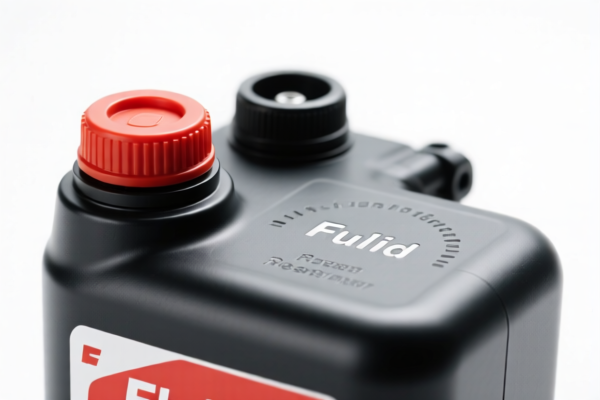
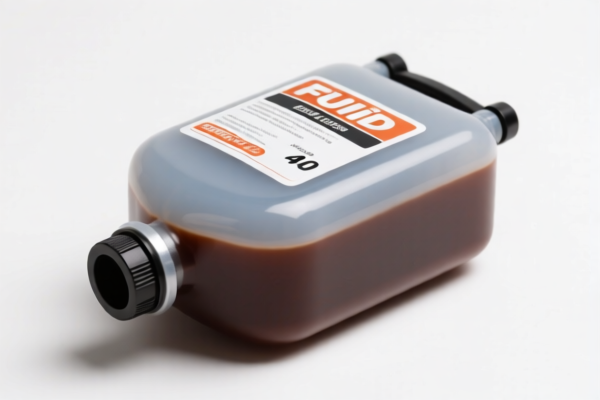
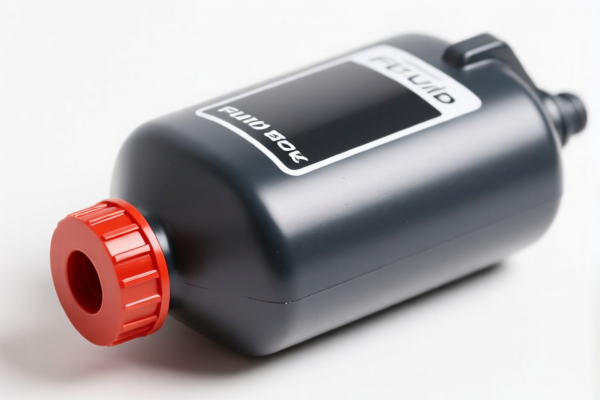

AI Analysis
🚗 Brake Fluid Defoamer (Additive)
🌐 HS Code Reference & Customs Clearance Guide | 2026 Latest Tariff Analysis | Professional Level Strategy
📌 I. Product Definition & Classification: What Exactly is a "Brake Fluid Defoamer"?
A Brake Fluid Defoamer is a specialized chemical additive designed to eliminate air bubbles (foaming) in brake hydraulic systems. It is typically mixed into brake fluid (often glycol-ether or silicone-based) to maintain consistent pressure and prevent brake fade during high-temperature operation.
In international trade, this product falls under the category of "Chemical Products and Preparations" or "Lubricating Preparations", depending on its primary function and chemical composition. Since it is an additive rather than a finished brake fluid itself, it is rarely classified under brake fluid codes (like 3820.00). Instead, it is often grouped under: 1. Miscellaneous Chemical Products (e.g., anti-foaming agents, additives for mineral oils). 2. Lubricating Preparations (if it serves a secondary lubricating function).
⚠️ Key Distinction:
- If the product is primarily an anti-foaming agent for mineral oil-based liquids, it may fall under Chapter 38.
- If the product is primarily a preparation for lubrication or maintenance, it may fall under Chapter 34.
- Note: The classification heavily depends on the primary function and composition declared in the customs invoice.
📦 II. HS Code Classification Details (2026 Latest Tariff Authority Comparison)
Based on the provided data, here are the five most likely HS Codes for "Brake Fluid Defoamer," along with their rationale and tax implications.
| HS Code | Product Description & Rationale | Total Tax Rate | Key Tax Components |
|---|---|---|---|
| 3811.19.00.00 | Anti-Knock/Preparation Additives for Mineral Oils 🔹 Rationale: The product is an additive for brake fluid, which is often considered a "liquid preparation" or related to mineral oil systems. It fits the definition of "miscellaneous additives" for mineral oils. |
41.5% | Base: 6.5% Section 301: 25.0% IEEPA: 10% |
| 3403.19.10.00 | Lubricating Preparations (Petroleum Oil <70%) 🔹 Rationale: Classified as a chemical preparation for lubrication/maintenance. Assumed not to contain >70% petroleum oil, fitting the "other" category for lubricating preparations. |
35.2% | Base: 0.2% Section 301: 25.0% IEEPA: 10% |
| 3403.19.50.00 | Lubricating Preparations (Other) 🔹 Rationale: Another entry for "lubricating preparations." Fits if the product is viewed as a general chemical additive for lubrication systems. No material conflict. |
40.8% | Base: 5.8% Section 301: 25.0% IEEPA: 10% |
| 3403.19.50.00 | Lubricating Preparations (Duplicate Entry) 🔹 Rationale: Same as above. Highlights potential ambiguity in classifying "additives" under lubricant chapters. |
40.8% | Base: 5.8% Section 301: 25.0% IEEPA: 10% |
| 3824.99.29.00 | Miscellaneous Chemical Products & Preparations 🔹 Rationale: Classified as a "chemical product" due to its additive nature. Fits under "other" chemical preparations without specific listing elsewhere. |
41.5% | Base: 6.5% Section 301: 25.0% IEEPA: 10% |
🔍 Critical Insight:
- The largest tax variation is between 3403.19.10.00 (35.2%) and 3811.19.00.00/3824.99.29.00 (41.5%).
- 3403.19.10.00 offers the lowest tax rate because its base tariff is only 0.2%, whereas others have base rates of 5.8% or 6.5%.
- However, 3403.19.10.00 requires proving that the product does not exceed 70% petroleum oil content. If it does, it may be excluded.
💰 III. 2026 Latest Tariff Rate Breakdown (Including Surtaxes & Policy Add-ons)
✅ Applicable Country: United States (US)
✅ Origin: China (CN)
✅ Effective Date: From November 10, 2025 (for subsequent imports)
🎯 1. 3403.19.10.00 — Lubricating Preparations (Lowest Tax Option)
| Item | Details |
|---|---|
| Base Tariff | 0.2% |
| USITC Surtax (Section 301) | +25.0% |
| IEEPA Surtax | +10.0% (Against Chinese products) |
| Total Effective Rate | 35.2% |
| Tax Calculation | CIF Value × 35.2% |
| De Minimis Eligibility | ❌ No (denied_de_minimis) |
| Legal Basis Path | IEEPA:9903.01.25 → IEEPA:9903.01.24 → USITC:3403.19.10.00 |
📌 Explanation:
- This code has the lowest base rate (0.2%), making it the most tax-efficient option if applicable.
- The 25% Section 301 and 10% IEEPA surcharges are mandatory for Chinese-origin goods.
- Risk: You must ensure the product’s composition does not exceed 70% petroleum oil, or it may be misclassified.
🎯 2. 3403.19.50.00 — Lubricating Preparations (Other)
| Item | Details |
|---|---|
| Base Tariff | 5.8% |
| USITC Surtax (Section 301) | +25.0% |
| IEEPA Surtax | +10.0% |
| Total Effective Rate | 40.8% |
| Tax Calculation | CIF Value × 40.8% |
| De Minimis Eligibility | ❌ No |
| Legal Basis Path | IEEPA:9903.01.25 → IEEPA:9903.01.24 → USITC:3403.19.50.00 |
📌 Explanation:
- This code is used when the lubricating preparation does not meet the specific criteria for3403.19.10.00(e.g., different composition or function).
- The 5.8% base rate significantly increases the total tax burden compared to3403.19.10.00.
🎯 3. 3811.19.00.00 — Anti-Knock/Preparation Additives for Mineral Oils
| Item | Details |
|---|---|
| Base Tariff | 6.5% |
| USITC Surtax (Section 301) | +25.0% |
| IEEPA Surtax | +10.0% |
| Total Effective Rate | 41.5% |
| Tax Calculation | CIF Value × 41.5% |
| De Minimis Eligibility | ❌ No |
| Legal Basis Path | IEEPA:9903.01.25 → IEEPA:9903.01.24 → USITC:3811.19.00.00 |
📌 Explanation:
- This code is chosen if the product is clearly defined as an additive for mineral oils.
- Brake fluid, especially glycol-based, may be considered analogous to mineral oil preparations in some customs interpretations.
🎯 4. 3824.99.29.00 — Miscellaneous Chemical Products
| Item | Details |
|---|---|
| Base Tariff | 6.5% |
| USITC Surtax (Section 301) | +25.0% |
| IEEPA Surtax | +10.0% |
| Total Effective Rate | 41.5% |
| Tax Calculation | CIF Value × 41.5% |
| De Minimis Eligibility | ❌ No |
| Legal Basis Path | IEEPA:9903.01.25 → IEEPA:9903.01.24 → USITC:3824.99.29.00 |
📌 Explanation:
- This is a fallback category for chemical products that don’t fit elsewhere.
- It carries the same tax burden as3811.19.00.00due to the identical base rate.
🛠️ IV. Customs Clearance Practical Advice (Battle-Tested Pitfall Avoidance)
✅ 1. Document Checklist (Mandatory)
| Document | Required | Explanation |
|---|---|---|
| ✅ Product Specification Sheet | ✔️ | Must detail chemical composition, especially petroleum oil content (<70% for 3403.19.10.00). |
| ✅ MSDS (Material Safety Data Sheet) | ✔️ | Required for chemical products to assess hazardous nature. |
| ✅ Product Photos (with Labels) | ✔️ | Clear view of label, ingredients, and intended use. |
| ✅ Third-Party Test Report | ✔️ | Proves anti-foaming efficacy and composition. |
| ✅ Commercial Invoice | ✔️ | Must clearly state: "Brake Fluid Defoamer, Chemical Additive, Not a Lubricant" or similar. |
| ✅ Certificate of Origin (CO) | ✔️ | Essential for determining origin-based surcharges. |
✅ 2. Declaration Tips (Key Mnemonics)
🔥 “Composition is King, Function is Queen, Name is Specific, Tax is Clever!”
| Scenario | Correct Declaration | Error to Avoid |
|---|---|---|
| Product contains <70% petroleum oil | 3403.19.10.00 |
Misdeclaring as 3824 → Higher tax (41.5% vs 35.2%) |
| Product is primarily an anti-foaming agent | 3811.19.00.00 or 3824.99.29.00 |
Misdeclaring as a lubricant → Potential audit if no lube function |
| Product is mixed with brake fluid | Declare as "Additive" | Declaring as "Brake Fluid" → Wrong code (3820.00) |
| Product is pure chemical concentrate | 3824.99.29.00 |
Declaring as "Lubricant" without proof |
✅ 3. Special Case Handling
| Scenario | Recommendation |
|---|---|
| OEM Private Label | Provide client order + design proof to avoid "generic" classification risks. |
| High Petroleum Content (>70%) | Must use 3403.99.00.00 or other petroleum oil codes, which may have different tax rates. |
| Hazardous Chemicals | If flagged as hazardous, additional DOT/EPA documentation may be required. |
| Pre-Clearance | Apply for an Advance Ruling with CBP to confirm the correct HS Code before shipment. |
🌍 V. Global Market Comparison (2026 Latest)
| Country/Region | Recommended HS Code | Tariff (CN Origin) | Certification | Notes |
|---|---|---|---|---|
| 🇺🇸 USA | 3403.19.10.00 (Optimal) |
35.2% | MSDS + CO | Highest risk of audit due to surcharges. |
| 🇨🇳 China | 3403.19.10.00 |
~5-10% | None | Low base tax, no surcharges. |
| 🇪🇺 EU | 3403.19.10.00 |
0-2% | REACH | No anti-dumping/retaliatory tariffs. |
| 🇬🇧 UK | 3403.19.10.00 |
0-2% | UKCA | Post-Brexit rules apply. |
| 🇦🇺 Australia | 3403.19.10.00 |
5% | APEC | Moderate tax, no surcharges. |
| 🇯🇵 Japan | 3403.19.10.00 |
0-5% | PSE/JIS | Low base tax. |
📌 Conclusion:
- USA has the highest landed cost due to Section 301 (25%) and IEEPA (10%) surcharges.
- 3403.19.10.00 is the most tax-efficient code for the US market, saving ~6.3% vs other codes.
- EU/Asia markets are much more favorable for Chinese-origin chemical additives.
📌 VI. Common Mistakes & Pitfall Guide (Lessons from the Field)
❌ Mistake 1: Declaring "Brake Fluid Defoamer" as "Brake Fluid" (3820.00.00.00)
👉 Consequence: Wrong classification → Penalty + Back Taxes. Brake fluid codes are for finished fluids, not additives.
❌ Mistake 2: Assuming all additives are 3824.99.29.00
👉 Consequence: Overpaying tax. If the product qualifies as a lubricating preparation with <70% oil, 3403.19.10.00 saves 6.3%.
❌ Mistake 3: Failing to disclose chemical composition
👉 Consequence: Customs may reclassify to the highest applicable code (3811.19.00.00 or 3824.99.29.00) due to uncertainty.
❌ Mistake 4: Ignoring IEEPA Surcharges
👉 Consequence: Underestimating landed cost by 10%. Always factor in IEEPA for Chinese goods.
✅ Correct Declaration Example:
"Brake Fluid Defoamer, Chemical Additive for Hydraulic Systems, Petroleum Oil Content <70%, HS Code 3403.19.10.00, Made in China"
🎯 VII. Conclusion: Precision Classification, Cost Efficiency, Smooth Clearance
🎯 Remember the Mantra:
🔹 “Check Oil Content, Pick 3403.19.10.00, Save 6.3%, Avoid Audit!”
🔹 “HS Code Determines Tax, 1% Difference = 1% Profit Lost!”
📌 Pro Tip:
If your product is originally from Vietnam, Mexico, Thailand, or Malaysia, you may qualify for IEEPA Exemptions, reducing the total tax to 0%~5%.
Strongly recommend applying for an Advance Ruling to lock in the correct HS Code and avoid post-clearance audits.
📣 Call to Action:
📞 Contact a Professional Customs Broker + Provide Product Specs + Apply for Advance Ruling
🚀 Let your Brake Fluid Defoamer clear customs Smoothly, Efficiently, and Profitably!
✨ Professional Clearance Starts with Accurate Classification!
💼 Every Cent of Cost Deserves to Be Precisely Calculated!
Customer Reviews
About HS Code Classification
The Harmonized System (HS) is an internationally standardized nomenclature developed by the World Customs Organization (WCO) to classify traded products. Over 200 countries use the HS system as the basis for customs tariffs, trade statistics, and import/export regulations.
Each HS code follows a hierarchical structure:
- Chapter (2 digits) — Broad category of goods (e.g., Chapter 84: Machinery and Mechanical Appliances)
- Heading (4 digits) — More specific grouping within the chapter
- Subheading (6 digits) — Internationally standardized breakdown, used by all WCO member countries
- National subdivisions (8-10 digits) — Country-specific extensions for further classification, such as US HTSUS 10-digit codes
Correct HS code classification is essential for smooth customs clearance, accurate duty payment, and compliance with trade regulations. Misclassification can lead to customs delays, overpayment of duties, or penalties.
When importing from CN to US, the applicable tariff rates may include:
- Most-Favored-Nation (MFN) rate — The standard duty rate applied to WTO members
- General rate — Applied to countries without trade agreements
- Trade remedy duties — Additional tariffs such as Section 301 (anti-dumping), Section 232 (national security), or countervailing duties
The information provided on this page is for reference purposes only. For official classification, please consult with your local customs authority or a licensed customs broker.