Brake Fluid Plastic Drum (25L)
CN → US| HS Code | Tariff Rate | Origin | Destination | Doc |
|---|---|---|---|---|
| 3923300090 | 38.0% | CN | US | Official Doc |
| 3923900016 | 38.0% | CN | US | Official Doc |
| 3926901000 | 20.9% | CN | US | Official Doc |
| 3926909989 | 22.8% | CN | US | Official Doc |
| 8708998180 | 12.5% | CN | US | Official Doc |
Product Images
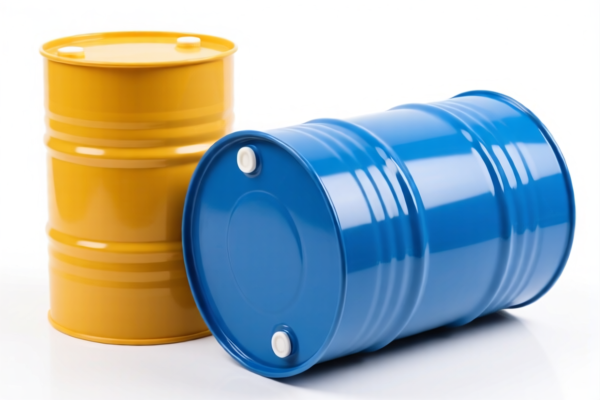
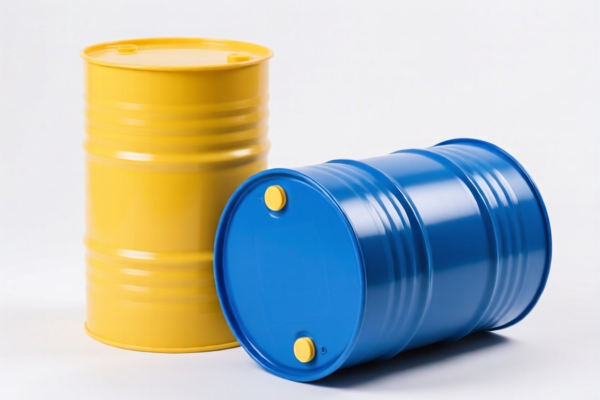
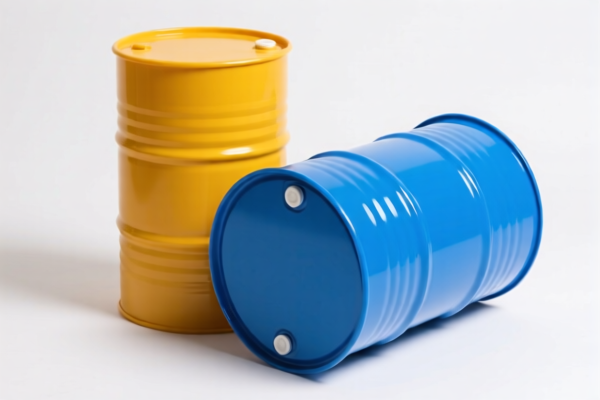
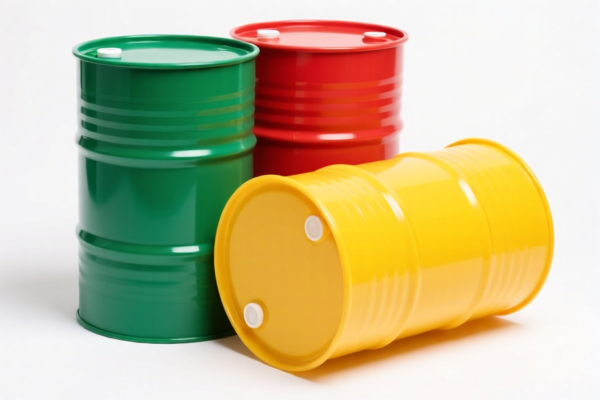
AI Analysis
🚛 Brake Fluid Plastic Drum (25L): The 25L Trap & HS Code Classification Deep Dive
🌐 HS Code Reference & Customs Clearance Guide | 2026 Latest Tariff Analysis | High-Risk Alert for Large Containers
📌 I. Product Definition & The "25L Threshold" Reality
A Brake Fluid Plastic Drum (25L) is a rigid plastic container designed for transporting bulk industrial or automotive fluids. However, in international trade (specifically US Customs), the capacity of the container dictates its classification more than its contents.
The critical threshold is 22.71 Liters (approx. 6 US Gallons).
🚨 The Critical Distinction:
Under 22.71 Liters: Generally classified as "Bottles, Jars, Pots, and Similar Articles" (e.g., 3923.30).
* 25 Liters (Exceeds Threshold):* Falls into "Barrels, Drums, Cans, Cases, Boxes, and Similar Articles" (e.g., 3923.90).
Since your product is 25L, it exceeds the 22.71L limit. This pushes it from a "small bottle" category to a "large drum" category, significantly impacting the HS Code and potential duty rates, especially under Section 301 and IEEPA tariffs.
📦 II. HS Code Classification Matrix (Strictly Based on Data)
| HS Code | Product Description (Summary) | Key Classification Trigger | Tax Rate |
|---|---|---|---|
3923.90.00.16 |
Plastic Drum/Barrel (25L) | Capacity > 22.71L. Categorized as "Plastic articles for the conveyance or packaging of goods." | 38.0% |
3923.30.00.90 |
Plastic Large Container | Note: This code covers "Bottles, Jars, Pots." Only applicable if capacity is ≤ 22.71L. For 25L, this is likely incorrect unless specifically justified as a non-drum container. | 38.0% |
3926.90.10.00 |
Other Plastic Containers | Plastic water/oil drums. Broadly classified as "Other plastic articles." | 20.9% |
3926.90.99.89 |
Other Plastic Articles | Plastic containers not specifically mentioned elsewhere. | 22.8% |
8708.99.81.80 |
Auto Accessory/Part | If the drum is considered an "accessory" to vehicle braking systems (less common for bulk packaging, but possible if sold as part of a kit). | 12.5% |
🔍 Expert Analysis on Classification:
Primary Candidate:3923.90.00.16is the most technically accurate for a 25L drum because it explicitly handles "barrels/drums" exceeding the 22.71L threshold.
Secondary Candidate:3926.90.10.00might be used if the drum is considered a general "plastic drum" not specifically for packaging goods but as a distinct "drum" item.
Aggressive/Alternative:*8708.99.81.80attempts to classify it as an auto part/accessory. This is risky and usually requires the container to be integral to the vehicle's function, not just packaging. However, if the data allows, it offers the lowest rate (12.5%).
💰 III. 2026 Tariff Rate Breakdown (Detailed)
✅ Applicable Market: USA (Implicit from IEEPA/Section 301 context)
✅ Origin: China (CN)
✅ Effective Date: Post-2025 policies (including 122 Clause)
🎯 1. 3923.90.00.16 & 3923.30.00.90 —— The High-Tariff Bucket (38.0%)
| Component | Rate | Legal Basis | Explanation |
|---|---|---|---|
| Base Duty | 3.0% - 5.3% | HTSUS | Standard Most Favored Nation (MFN) rate for plastics. |
| Section 301 (Trade War) | 25.0% | USITC Footnote | Additional duty on Chinese manufactured goods under Section 301. |
| 122 Clause (IEEPA) | 10.0% | IEEPA | Additional surcharge targeting specific Chinese goods/categories. |
| TOTAL RATE | 38.0% | High Cost. Must be budgeted accordingly. |
📌 Key Insight:
Both codes in this bracket result in 38% total tax. The difference in base duty (3% vs 5.3%) is offset by the 122 clause. The 25L specification locks this into the higher-tier packaging classification.
🎯 2. 3926.90.10.00 —— The Moderate-Tariff Bucket (20.9%)
| Component | Rate | Legal Basis | Explanation |
|---|---|---|---|
| Base Duty | 3.4% | HTSUS | Lower base rate for "Other plastic articles." |
| Section 301 | 7.5% | USITC Footnote | Reduced Section 301 rate (possibly due to different subheading or exemption eligibility). |
| 122 Clause (IEEPA) | 10.0% | IEEPA | The 122 clause still applies, adding a flat 10%. |
| TOTAL RATE | 20.9% | Savings of ~17% compared to 3923 codes. |
📌 Key Insight:
If customs accepts3926.90.10.00(Plastic Drum/Container) instead of3923.90.00.16(Plastic Packaging), you save 17.1 percentage points. This requires a strong argument that the item is a "drum" (goods in itself) rather than just "packaging."
🎯 3. 3926.90.99.89 —— The "Other" Bucket (22.8%)
| Component | Rate | Legal Basis | Explanation |
|---|---|---|---|
| Base Duty | 5.3% | HTSUS | Standard for "Other" plastics. |
| Section 301 | 7.5% | USITC Footnote | Same reduced rate as above. |
| 122 Clause (IEEPA) | 10.0% | IEEPA | Flat 10% surcharge. |
| TOTAL RATE | 22.8% | Slightly higher than 3926.90.10.00. |
🎯 4. 8708.99.81.80 —— The Auto Accessory Angle (12.5%)
| Component | Rate | Legal Basis | Explanation |
|---|---|---|---|
| Base Duty | 2.5% | HTSUS | Low base for auto parts. |
| Section 301 | 0.0% | USITC Footnote | Exempt or lower rate for certain auto parts/accessories. |
| 122 Clause (IEEPA) | 10.0% | IEEPA | The 122 clause still adds 10%. |
| TOTAL RATE | 12.5% | Lowest possible rate in the dataset. |
📌 Key Insight:
To use8708.99.81.80, you must argue the plastic drum is an "accessory to the brake system" (e.g., sold as part of a brake fluid kit specifically for vehicle maintenance, not just as an empty drum for storage). If sold as an empty drum, this classification is high risk for rejection.
🛠️ IV. Customs Clearance Strategy & Recommendations
✅ 1. Documentation Checklist (Must-Haves)
| Document | Requirement | Why It Matters |
|---|---|---|
| Product Specification Sheet | Must state Exact Volume: 25L | Confirms it exceeds 22.71L, triggering 3923.90 or 3926.90 instead of small bottle codes. |
| Material Composition | 100% HDPE/PP Plastic | Confirms Chapter 39 classification. |
| Usage Statement | "Empty container for transport" OR "Packaged with brake fluid" | If packaged, ensure the fluid's HS code doesn't override the container's code. If empty, emphasize it's a "drum" not a "bottle." |
| Photos | Clear image showing 25L marking | Visual proof of capacity is critical for dispute resolution. |
| Commercial Invoice | Description: "Plastic Drum, 25L, Empty, HDPE" | Avoid vague terms like "Plastic Container." Be specific. |
✅ 2. Classification Strategy (Which Code to Pick?)
| Strategy | Recommended HS Code | Expected Tax | Risk Level | Notes |
|---|---|---|---|---|
| Safe/Standard | 3923.90.00.16 |
38.0% | Low | Technically correct for 25L packaging. High tax but defensible. |
| Optimized | 3926.90.10.00 |
20.9% | Medium | Argue it's a "plastic drum" (goods) not just "packaging." Better rate. |
| Aggressive | 8708.99.81.80 |
12.5% | High | Only if sold as part of an auto repair kit. High audit risk if empty. |
🔥 Recommendation:
Try3926.90.10.00first. It offers significant savings (20.9% vs 38.0%) and is defensible if the product is a standard industrial drum. If Customs questions it, pivot to3923.90.00.16. Avoid8708.99.81.80unless the drum is physically integrated into a brake system component.
✅ 3. Critical Clearance Tips
- Do NOT Misstate Volume:
If you declare 20L when it's 25L, Customs will reclassify it, apply penalties, and charge the correct duty + interest. Always declare 25L. - Empty vs. Filled:
- Empty Drum: Classify under Chapter 39 (Plastics).
- Filled with Brake Fluid: The fluid may dictate the HS code (e.g.,
3819for hydraulic fluids), and the drum becomes incidental packaging. Check the fluid's tariff! Often, fluid tariffs are lower, and the container is ignored. - Assumption: If the user is asking about the plastic drum, they are likely shipping empty drums or the fluid tariff is not the focus.
- 122 Clause Awareness:
All codes in the data include a 10% IEEPA surcharge. There is no exemption for plastic drums under this clause. Budget for it.
🌍 V. Global Market Context (2026)
| Market | HS Code Trend | Tariff Impact | Advice |
|---|---|---|---|
| 🇺🇸 USA | 3923.90.00.16 or 3926.90.10.00 |
38% or 20.9% | High tariffs due to 301 + 122. Consider non-China origin if volume is high. |
| 🇨🇳 China | 3923.90.00 |
Low/Zero | If importing into China, rates are lower. |
| 🇪🇺 EU | 3923.40.00 |
~4.5% | No Section 301/122 equivalent. Much lower cost. |
📌 Conclusion for USA Importers:
The 25L size is the key driver. It pushes you out of the "small bottle" category into the "drum" category, which faces higher Section 301 tariffs.
Action: Negotiate FOB prices with suppliers to absorb the 20-38% tariff, or consider switching to 20L drums (if feasible) to potentially fall under a lower tax bracket (e.g.,3923.30at 38% vs3923.90at 38% – wait, in this data, both are 38%. So size change doesn't save money here! Check local data for 20L specifically. In this specific dataset, size doesn't change the 38% rate between3923.30and3923.90).
Correction: In the provided data,3923.30.00.90(Small) and3923.90.00.16(Large) both have 38.0%. Therefore, changing volume from 25L to 20L does NOT reduce tax in this specific scenario.
Best Strategy: Focus on classifying as3926.90.10.00(20.9%) to save 17.1%.
📌 VI. Common Mistakes & Pitfalls
❌ Mistake 1: Declaring as "Plastic Bottle" (3923.30) for a 25L Drum.
👉 Result: Customs reclassification → Penalty + Interest.
❌ Mistake 2: Using 8708.99.81.80 for an empty drum.
👉 Result: Rejection. It's not an auto part; it's packaging.
❌ Mistake 3: Ignoring the 122 Clause (10%).
👉 Result: Underpayment → Seizure or Debt Collection.
✅ Correct Approach:
"Plastic Drum, 25L Capacity, HDPE, Empty, For Industrial Use"
HS Code:3926.90.10.00(if defensible) or3923.90.00.16(if safe).
Duty: 20.9% or 38.0%.
🎯 VII. Final Verdict: Cost Optimization Strategy
- Primary Target:
3926.90.10.00(20.9% Tax).- Justification: It is a plastic drum/container. Lower base duty + 122 clause.
- Backup:
3923.90.00.16(38.0% Tax).- Justification: Technically correct for large packaging. Use if
3926is challenged.
- Justification: Technically correct for large packaging. Use if
- Avoid:
8708.99.81.80(12.5% Tax) unless you have a strong legal argument that it's an auto accessory. Risk is too high for simple drums.
💡 Pro Tip:
If shipping filled brake fluid, the fluid's HS code (likely3819) may have a lower total tax (including the container). Consult a customs broker to compare:
Path A: Empty Drum → Chapter 39 (Plastics)
Path B: Filled Drum → Chapter 38 (Hydraulic Fluids) + Incidental Packaging
Often, Path B is cheaper.
✨ Customs Compliance Starts with Precision!
💼 Your 25L Drum is not just a container; it's a tariff classification decision.
Customer Reviews
About HS Code Classification
The Harmonized System (HS) is an internationally standardized nomenclature developed by the World Customs Organization (WCO) to classify traded products. Over 200 countries use the HS system as the basis for customs tariffs, trade statistics, and import/export regulations.
Each HS code follows a hierarchical structure:
- Chapter (2 digits) — Broad category of goods (e.g., Chapter 84: Machinery and Mechanical Appliances)
- Heading (4 digits) — More specific grouping within the chapter
- Subheading (6 digits) — Internationally standardized breakdown, used by all WCO member countries
- National subdivisions (8-10 digits) — Country-specific extensions for further classification, such as US HTSUS 10-digit codes
Correct HS code classification is essential for smooth customs clearance, accurate duty payment, and compliance with trade regulations. Misclassification can lead to customs delays, overpayment of duties, or penalties.
When importing from CN to US, the applicable tariff rates may include:
- Most-Favored-Nation (MFN) rate — The standard duty rate applied to WTO members
- General rate — Applied to countries without trade agreements
- Trade remedy duties — Additional tariffs such as Section 301 (anti-dumping), Section 232 (national security), or countervailing duties
The information provided on this page is for reference purposes only. For official classification, please consult with your local customs authority or a licensed customs broker.