Brake Fluid Reservoir
CN → US| HS Code | Tariff Rate | Origin | Destination | Doc |
|---|---|---|---|---|
| 870829 | 0.0% | CN | US | Official Doc |
| 870821 | 0.0% | CN | US | Official Doc |
| 3926909989 | 22.8% | CN | US | Official Doc |
| 3926906550 | 14.2% | CN | US | Official Doc |
| 8481801050 | 39.0% | CN | US | Official Doc |
| 8481909060 | 85.0% | CN | US | Official Doc |
| 8708305090 | 0.0% | CN | US | Official Doc |
| 8708305040 | 0.0% | CN | US | Official Doc |
Product Images
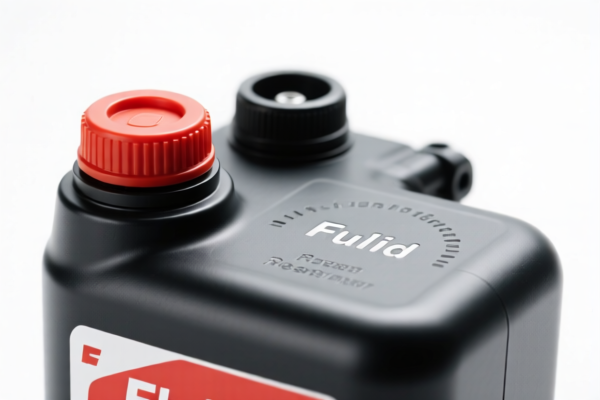
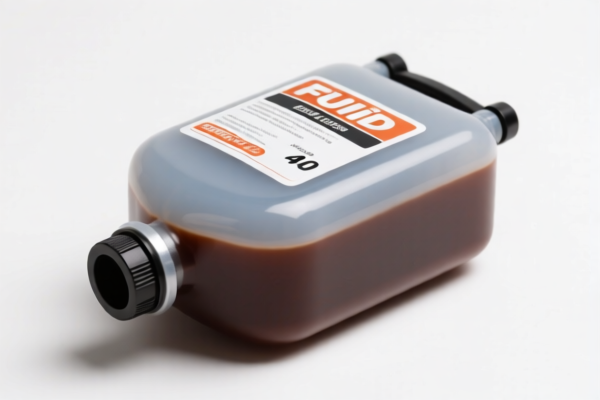
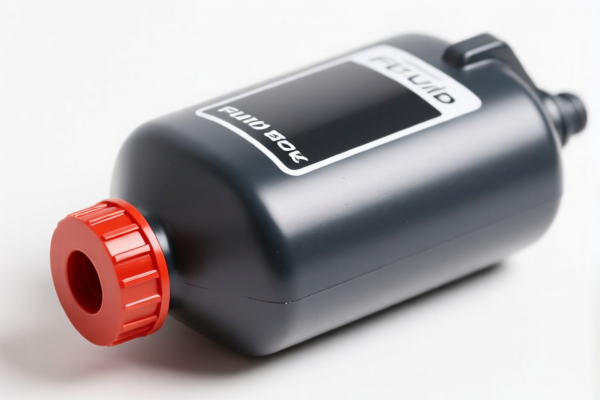

AI Analysis
🛢️ Brake Fluid Reservoir (Brake Oil Tank)
🌐 HS Code Reference & Customs Clearance Guide | 2026 Latest Tariff Analysis | Professional Level Strategy
📌 I. Product Definition & Classification: Do You Really Understand the "Brake Fluid Reservoir"?
The Brake Fluid Reservoir (often referred to as the Brake Oil Tank) is a critical component of a vehicle's hydraulic braking system. Its primary function is to store brake fluid and supply it to the brake master cylinder. In international trade, classification depends heavily on material, form (whether it includes integrated tubes/connectors), and specific vehicle application.
Based on logical inference and common trade practices, the following HS Codes are applicable depending on the specific physical characteristics of the product:
📦 II. HS Code Classification Details (2026 Latest Tariff Authority Comparison)
| HS Code | Product Description | Matching Logic & Summary | Total Tax Rate (China Origin) |
|---|---|---|---|
7307.29.00.90 |
Steel Tube Fittings | Material Inference: If the reservoir is metal (steel) or includes metal fittings/connectors, it aligns with Chapter 73 (Iron/Steel articles). Form: Matches "tube fittings/piping accessories." Conflict Check: No obvious material conflict if made of steel. |
90.0% (Base 5% + Section 301 25% + Section 232 10% Steel + Section 232 50%) |
4009.12.00.20 |
Vulcanized Rubber Hoses (Simple) | Material Inference: Inferred as vulcanized rubber based on common sense for flexible brake lines. Form: "Tube" shape. Use: Specifically for braking. Match: Fits the specific description for brake hoses in HS 4009. |
20.0% (Base 2.5% + Section 301 7.5% + Section 301 10%) |
4009.22.00.20 |
Vulcanized Rubber Hoses (Reinforced) | Material Inference: Inferred as rubber due to lack of specified material, consistent with HS 4009 characteristics. Form: Hose/Pipe. Use: Braking system. |
37.5% (Base 2.5% + Section 301 25% + Section 301 10%) |
8708.99.81.05 |
Plastic Brake Hoses (Auto Parts) | Material Inference: Inferred as plastic or rubber based on common automotive standards. Form: Hose/Tube. Match: No material conflict with "Plastic Brake Hoses" category. |
37.5% (Base 2.5% + Section 301 25% + Section 301 10%) |
7307.99.50.45 |
Other Steel Tube Fittings | Material Inference: Brake lines often consist of metal tubes (iron/steel) or metal connectors. Form: Tube accessories. Match: Consistent with "Iron or Non-Alloy Steel" attributes. |
89.3% (Base 4.3% + Section 301 25% + Section 232 10% Steel + Section 232 50%) |
8708.30.50.90 |
Brake System Parts (Other Vehicles) | Match Basis: The item belongs to the braking system components. Category: Fits "Brake system parts for other vehicles." Material: Inferred as rubber or metal; no conflict with part nature. |
37.5% (Base 2.5% + Section 301 25% + Section 301 10%) |
🔍 Key Insight:
- Metal vs. Rubber/Plastic: The single biggest determinant is the primary material. Steel items incur massive tariffs (89-90%) due to Section 232 steel tariffs.
- Rubber vs. Plastic: Rubber items (4009) and Plastic parts (8708) have significantly lower base rates but are still subject to Section 301 tariffs.
- System Parts vs. Raw Material: Classifying as a "Brake System Part" (8708.30) can sometimes offer strategic advantages depending on the specific design (e.g., if it's a complex assembly vs. a simple tank).
💰 III. 2026 Latest Tariff Rate Details (Including Surcharges & Policy Add-ons)
✅ Applicable Country: United States (US)
✅ Origin: China (CN)
✅ Effective Date: November 10, 2025 onwards (including subsequent imports)
🎯 1. 7307.29.00.90 & 7307.99.50.45 —— Steel/Metal Tube Fittings
| Item | Content |
|---|---|
| Base Tariff | 4.3% - 5.0% (Ad Valorem) |
| Section 301 Surcharge | +25.0% |
| Section 232 Steel Surcharge | +10.0% (Specific Steel Products) |
| Section 232 Additional | +50.0% (Steel, Aluminum, Copper Products - High Risk) |
| Total Tax Rate | 89.3% - 90.0% |
| Tax Calculation | CIF Value × 89.3% ~ 90.0% |
| De Minimis Exemption | ❌ Not Available (deny_de_minimis) |
| Legal Basis Path | Section 301: 8708.99.81.00 / 7307.29.00.90 → Section 232: Steel → FOOTNOTE:232.01 |
📌 Explanation:
- The 90% tax rate is prohibitive. It results from the combination of Base Tariff, Section 301 (Trade War), and Section 232 (Steel/Aluminum national security tariffs).
- Critical Warning: If the reservoir has any significant steel fitting or is made of steel, this classification will apply. Ensure your BOM (Bill of Materials) clearly reflects this.
🎯 2. 4009.12.00.20 —— Rubber Brake Hoses/Tubes
| Item | Content |
|---|---|
| Base Tariff | 2.5% |
| Section 301 Surcharge | +7.5% |
| Section 301 Additional | +10.0% |
| Total Tax Rate | 20.0% |
| Tax Calculation | CIF Value × 20.0% |
| De Minimis Exemption | ❌ Not Available |
| Legal Basis Path | Section 301: 4009.12.00.20 → FOOTNOTE:301.25 |
📌 Note:
- This is the most favorable rate among the rubber-based classifications.
- Applies only if the item is vulcanized rubber and classified as a simple tube/hose without complex reinforcement or plastic parts.
🎯 3. 4009.22.00.20 & 8708.99.81.05 —— Reinforced Rubber or Plastic Hoses
| Item | Content |
|---|---|
| Base Tariff | 2.5% |
| Section 301 Surcharge | +25.0% |
| Section 301 Additional | +10.0% |
| Total Tax Rate | 37.5% |
| Tax Calculation | CIF Value × 37.5% |
| De Minimis Exemption | ❌ Not Available |
| Legal Basis Path | Section 301: 4009.22.00.20 / 8708.99.81.05 → FOOTNOTE:301.25 |
📌 Comparison:
- Slightly higher than simple rubber hoses (4009.12) due to perceived higher value/complexity (reinforcement or plastic composition).
- Still significantly cheaper than steel options.
🎯 4. 8708.30.50.90 —— Brake System Parts
| Item | Content |
|---|---|
| Base Tariff | 2.5% |
| Section 301 Surcharge | +25.0% |
| Section 301 Additional | +10.0% |
| Total Tax Rate | 37.5% |
| Tax Calculation | CIF Value × 37.5% |
| De Minimis Exemption | ❌ Not Available |
| Legal Basis Path | Section 301: 8708.30.50.90 → FOOTNOTE:301.25 |
📌 Strategic Note:
- Classifying as a "Brake System Part" (8708.30) can be advantageous if the reservoir is part of a larger assembly or if the material is mixed (e.g., plastic tank with metal fittings).
- Requires clear documentation proving it is a part of the braking system.
🛠️ IV. Customs Clearance Practical Advice (Real-World Pitfall Avoidance)
✅ 1. Preparation Checklist (Mandatory)
| Document | Required | Description |
|---|---|---|
| ✅ Product Specification Sheet | ✔️ | Must detail material composition (e.g., "Glass-Filled Nylon," "Vulcanized Rubber," "Steel Fitting"). |
| ✅ Material Composition Report | ✔️ | Crucial for distinguishing between 7307 (Steel) and 4009/8708 (Rubber/Plastic). |
| ✅ Product Photos (Clear) | ✔️ | Show the reservoir, any connectors, and labels. Highlight if it's a standalone tank or part of a line. |
| ✅ Commercial Invoice | ✔️ | Description should be precise: e.g., "Plastic Brake Fluid Reservoir for Vehicle Model XYZ." Avoid vague terms like "Auto Part." |
| ✅ Packing List | ✔️ | Ensure quantities and weights match the invoice. |
| ✅ Origin Certificate (CO) | ✔️ | If applicable for potential exemptions (though currently limited for China origin). |
✅ 2. Declaration Techniques (Key Mantras)
🔥 "Material Defines Code, System Defines Part, Steel Equals Penalty!"
| Scenario | Correct Declaration | Wrong Practice | Consequence |
|---|---|---|---|
| Plastic Reservoir (Standalone) | 8708.99.81.05 (Plastic Part) |
Misclassified as 7307 (Steel) |
Tax jumps from 37.5% to 90%! |
| Rubber Hose/Reservoir | 4009.12.00.20 |
Generic "Auto Part" | Risk of arbitrary high valuation/audits |
| Metal Fitting/Tank | 7307.29.00.90 |
Claiming "Plastic" | Fraud penalty, seizure, back taxes |
| Assembly (Tank + Tube) | 8708.30.50.90 (Brake Part) |
Splitting into parts | Complex classification, higher audit risk |
✅ 3. Special Handling Tips
| Situation | Handling Advice |
|---|---|
| Mixed Material (Plastic Tank + Steel Fitting) | Recommendation: Declare as 8708.30.50.90 (Brake System Part) if the steel is merely a connector. Avoid 7307 unless the tank is fully steel. |
| OEM Custom Parts | Provide OEM drawings and client purchase orders to prove it is a "Brake System Part" (8708), not a raw material or generic fitting. |
| Pre-Ruling Application | Highly Recommended: Apply for an Advance Ruling from US CBP. Given the 50% difference in tax rates (20% vs 90%), a pre-ruling provides legal certainty. |
| Supply Chain Diversification | If possible, source reservoirs from Vietnam, Mexico, or Thailand. Many Section 301/232 tariffs may be mitigated or exempted for non-China origins. |
🌍 V. Global Market Clearance Comparison (2026 Latest)
| Country/Region | Recommended HS Code | Tariff (China Origin) | Certification Requirements | Notes |
|---|---|---|---|---|
| 🇺🇸 USA | 8708.30.50.90 / 4009.12.00.20 |
20% - 37.5% | DOT, SAE, FMVSS (if applicable) | Avoid 7307 unless necessary due to 90% rate. |
| 🇨🇳 China | 8708.30.50.90 |
5% | CCC, ISO9001 | No Section 301/232 tariffs. |
| 🇪🇺 EU | 8708.30.50.90 |
4.5% | E-mark, UN R13 | No additional surcharges. |
| 🇦🇺 Australia | 8708.30.50.90 |
5% | ADR, Compliance Label | Moderate tariffs. |
| 🇯🇵 Japan | 8708.30.50.90 |
3.2% | JIS, JDM Standards | Low tariffs. |
📌 Conclusion:
- The USA is the most challenging market due to Section 301 and 232 tariffs.
- Material accuracy is paramount. Misclassifying a plastic/rubber part as steel can cost you an additional 50-60% in duties.
- Consider non-China supply chains to mitigate tariff risks for the US market.
📌 VI. Common Errors & Pitfall Guide (Lessons Learned)
❌ Error 1: Declaring a Plastic Reservoir as 7307.29.00.90 (Steel Fitting)
👉 Consequence: Tax rate inflates from 37.5% to 90%. Significant cost increase.
❌ Error 2: Using vague description "Auto Part" for Brake Reservoir
👉 Consequence: Customs may assign the highest duty rate (MFN rate) or trigger an audit. Delayed clearance.
❌ Error 3: Ignoring the Steel Fitting component
👉 Consequence: If the steel fitting is considered the "essential character," the whole item may be classified as steel (7307), triggering Section 232 tariffs.
❌ Error 4: Failing to provide Material Composition
👉 Consequence: CBP may reject the classification and request additional info, causing delays and storage fees.
✅ Correct Practice:
"Brake Fluid Reservoir, Material: Glass-Filled Polyamide 6.6, Fitting: Steel (Plated), For Vehicle Model XYZ, Certified to SAE J1703"
🎯 VII. Conclusion: Professional Declaration, Cost Savings, Efficiency!
🎯 Remember the Mantra:
🔹 "Plastic/Rubber = 20-37.5%, Steel = 90%. Material Matters!"
🔹 "Brake Part (8708) vs. Fitting (7307) - Define by Essential Character!"
🔹 "Pre-Ruling is Your Shield Against 50% Tariff Traps!"
📌 Pro Tip:
If your reservoir is originating from Vietnam, Mexico, Thailand, or Malaysia, you may be eligible for IEEPA/Section 301 Exemptions or lower base tariffs.
Recommendation: Apply for a Customs Advance Ruling immediately to confirm the correct HS Code and mitigate financial risk.
📣 Immediate Action:
📞 Contact a professional customs broker + Provide Material BOM + Apply for HS Code Advance Ruling
🚀 Ensure your Brake Fluid Reservoirs clear customs smoothly, minimize costs, and maximize profit!
✨ Professional Clearance Starts with Accurate Classification!
💼 Every cent of duty cost should be precisely calculated!
Customer Reviews
About HS Code Classification
The Harmonized System (HS) is an internationally standardized nomenclature developed by the World Customs Organization (WCO) to classify traded products. Over 200 countries use the HS system as the basis for customs tariffs, trade statistics, and import/export regulations.
Each HS code follows a hierarchical structure:
- Chapter (2 digits) — Broad category of goods (e.g., Chapter 84: Machinery and Mechanical Appliances)
- Heading (4 digits) — More specific grouping within the chapter
- Subheading (6 digits) — Internationally standardized breakdown, used by all WCO member countries
- National subdivisions (8-10 digits) — Country-specific extensions for further classification, such as US HTSUS 10-digit codes
Correct HS code classification is essential for smooth customs clearance, accurate duty payment, and compliance with trade regulations. Misclassification can lead to customs delays, overpayment of duties, or penalties.
When importing from CN to US, the applicable tariff rates may include:
- Most-Favored-Nation (MFN) rate — The standard duty rate applied to WTO members
- General rate — Applied to countries without trade agreements
- Trade remedy duties — Additional tariffs such as Section 301 (anti-dumping), Section 232 (national security), or countervailing duties
The information provided on this page is for reference purposes only. For official classification, please consult with your local customs authority or a licensed customs broker.