Brake Fluid Stabilizer
CN → US| HS Code | Tariff Rate | Origin | Destination | Doc |
|---|---|---|---|---|
| 3811900000 | 41.5% | CN | US | Official Doc |
| 3403191000 | 35.2% | CN | US | Official Doc |
| 3824999397 | 40.0% | CN | US | Official Doc |
| 3811190000 | 41.5% | CN | US | Official Doc |
| 3403191000 | 35.2% | CN | US | Official Doc |
Product Images
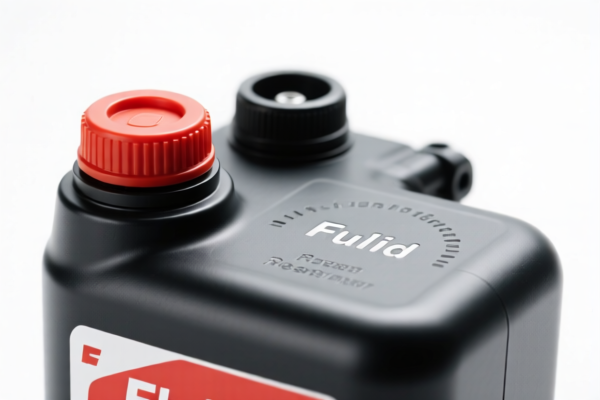
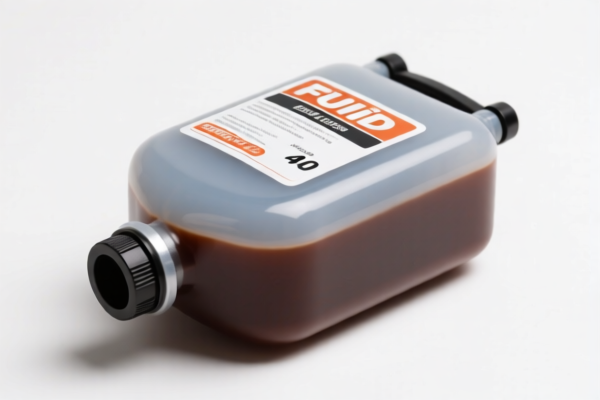
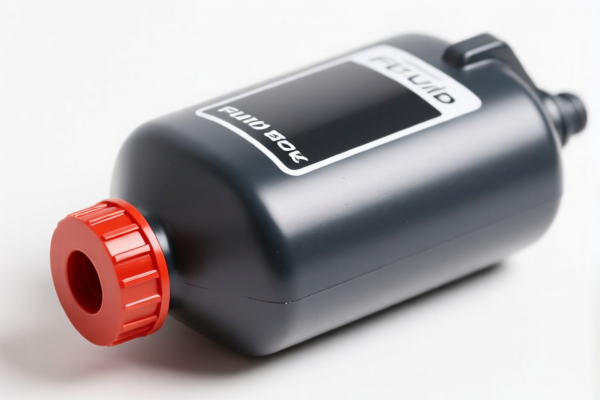

AI Analysis
🛢️ Brake Fluid Stabilizer (Brake Oil Additive)
🌐 HS Code Reference & Customs Clearance Guide | 2026 Latest Tariff Breakdown | Professional通关 Strategy
📌 一、Product Definition & Classification: Do You Really Understand "Brake Fluid Stabilizer"?
A Brake Fluid Stabilizer is an chemical additive designed to improve the performance, stability, or longevity of brake fluids. In international trade, it is classified based on its function (additive for liquid mixtures) and composition (chemical preparation).
Key Distinction:
- As a Liquid Mixture Additive: If it functions primarily to modify the properties of mineral oil-based brake fluids → Chapter 38 (Miscellaneous Chemical Products).
- As a Lubricating Preparation: If it contains >70% petroleum oil and is used for lubrication/care → Chapter 34 (Essential Oils & Preparations).
⚠️ Critical Classification Point:
- If the product is a chemical additive intended to stabilize brake fluid (often mineral oil-based), it typically falls under Chapter 38 as "Miscellaneous chemical products."
- If it is explicitly a lubricant preparation with high petroleum content, it may fall under Chapter 34.
- Most brake fluid stabilizers are classified under Chapter 38 due to their specific chemical formulation purpose rather than general lubrication.
📦 二、HS Code Classification Details (2026 Latest Tariff Authority Comparison)
| HS Code | Product Description | Application Scenario | Material Attribute |
|---|---|---|---|
3811.90.00.00 |
Anti-knock preparations, oxidation inhibitors, misc. additives for min. oils or other liquid products | Brake fluid additives, engine oil stabilizers | ✅ Chemical additive for liquid mixtures |
3403.19.10.00 |
Lubricating preparations containing >70% petroleum oils/bituminous substances | Lubricant additives, high-oil-content preparations | ✅ Petroleum-based lubricant |
3824.99.93.97 |
Other chemical products & preparations (not elsewhere specified) | General chemical additives, non-specific formulations | ✅ General chemical preparation |
3811.19.00.00 |
Anti-knock preparations, oxidation inhibitors, misc. additives for min. oils or other liquid products | Similar to 3811.90, often used interchangeably for liquid additives | ✅ Chemical additive for liquid mixtures |
🔍 Key Insight:
-3811.90.00.00and3811.19.00.00are highly similar and often used for brake fluid additives. They specifically target additives for mineral oils or liquid products.
-3403.19.10.00applies if the product is primarily a lubricant with high petroleum content (>70%).
-3824.99.93.97is a "catch-all" for chemical preparations that don’t fit other specific categories.
💰 三、2026 Latest Tariff Rate Breakdown (Including Surtaxes & Policy Add-ons)
✅ Applicable Country: United States (US)
✅ Origin: China (CN)
✅ Effective Date: From November 10, 2025 (for subsequent imports)
🎯 1. 3811.90.00.00 & 3811.19.00.00 — Additives for Mineral Oils or Other Liquid Products
| Item | Content |
|---|---|
| Base Tariff | 6.5% (ad valorem) |
| USITC Surtax | +25% (under USITC Footnote 9903.88.01) |
| IEEPA Surtax | +10% (targeting China/HK products, effective Nov 10, 2025) |
| Total Tariff | 41.5% |
| Tax Calculation | CIF Value × 41.5% |
| De Minimis Eligibility | ❌ Not Eligible (deny_de_minimis) |
| Legal Basis Path | IEEPA:9903.01.25 → IEEPA:9903.01.24 → USITC:3811.19.00.00/3811.90.00.00 → FOOTNOTE:9903.88.01 |
📌 Explanation:
- The 25% USITC surtax is under the "Section 301" additional tariffs.
- The 10% IEEPA surtax is under the "International Emergency Economic Powers Act" for China-origin goods.
- Total 41.5% is a high tariff, requiring careful cost planning.
🎯 2. 3403.19.10.00 — Lubricating Preparations (Petroleum-Based)
| Item | Content |
|---|---|
| Base Tariff | 0.2% (ad valorem) |
| USITC Surtax | +25% |
| IEEPA Surtax | +10% |
| Total Tariff | 35.2% |
| Tax Calculation | CIF Value × 35.2% |
| De Minimis Eligibility | ❌ Not Eligible (deny_de_minimis) |
| Legal Basis Path | IEEPA:9901.25 → IEEPA:9903.01.24 → USITC:3403.19.10.00 → FOOTNOTE:9903.88.01 |
📌 Note:
- This is 6.3 percentage points lower than the 3811 codes.
- Applicable only if the product is primarily a lubricant with >70% petroleum content.
- Many brake fluid stabilizers may not qualify if they are chemical additives rather than lubricants.
🎯 3. 3824.99.93.97 — Other Chemical Preparations
| Item | Content |
|---|---|
| Base Tariff | 5.0% (ad valorem) |
| USITC Surtax | +25% |
| IEEPA Surtax | +10% |
| Total Tariff | 40.0% |
| Tax Calculation | CIF Value × 40.0% |
| De Minimis Eligibility | ❌ Not Eligible (deny_de_minimis) |
| Legal Basis Path | IEEPA:9903.01.25 → IEEPA:9903.01.24 → USITC:3824.99.93.97 → FOOTNOTE:9903.88.01 |
📌 Note:
- A middle-ground option if the product is a chemical preparation but doesn’t fit 3811 or 3403.
- Slightly lower than 3811 codes (41.5%) but higher than 3403 (35.2%).
🛠️ 四、Customs Clearance Practical Advice (Real-World Pitfall Avoidance)
✅ 1. Required Documentation Checklist
| Document | Mandatory | Description |
|---|---|---|
| ✅ Product Specification Sheet | ✔️ | Must include composition, function, and intended use (brake fluid additive). |
| ✅ MSDS (Material Safety Data Sheet) | ✔️ | Critical for chemical products; proves non-hazardous classification if applicable. |
| ✅ Commercial Invoice | ✔️ | Clearly state "Brake Fluid Stabilizer" or "Additive for Brake Fluid." |
| ✅ Packing List | ✔️ | Detail net/gross weight, volume, and package count. |
| ✅ Origin Certificate (CO) | ✔️ | If non-China origin, may qualify for preferential rates. |
| ✅ Third-Party Test Report | ✔️ | FCC, RoHS, or chemical composition analysis (if requested). |
✅ 2. Declaration Tips (Key Mnemonic)
🔥 “Function First, Oil Second, Name Precise, Tax Lowered!”
| Scenario | Correct Declaration | Wrong Practice |
|---|---|---|
| Chemical Additive for Brake Fluid | 3811.90.00.00 or 3811.19.00.00 |
Misdeclare as "Lubricant" → 35.2% (if incorrect) or audit risk |
| High-Oil Content Lubricant Additive | 3403.19.10.00 |
Misdeclare as "Chemical" → 41.5% (higher tax) |
| General Chemical Preparation | 3824.99.93.97 |
Generic name "Chemical" → 40.0% (no benefit) |
| Mixed Shipment (Additive + Tools) | Separate Declaration | Combine items → Complex classification, higher risk |
✅ 3. Special Cases Handling
| Case | Handling Advice |
|---|---|
| OEM Custom Additive | Provide client order + formulation details to justify 3811 classification. |
| Additive with High Petroleum Content | Prove >70% oil content to claim 3403.19.10.00 (35.2%). |
| Unspecified Chemical | Use 3824.99.93.97 if composition is unclear, but prepare for 40% tax. |
| Small Samples (De Minimis) | ❌ Not Eligible for de minimis due to IEEPA surtax. |
🌍 五、Global Market Comparison (2026 Latest)
| Country/Region | Recommended HS Code | Tariff | Certification Required | Notes |
|---|---|---|---|---|
| 🇺🇸 USA | 3811.90.00.00 |
41.5% (CN Origin) | MSDS, Chemical Composition | High tax due to Section 301 + IEEPA |
| 🇨🇳 China | 3811.90.00.00 |
6.5% | N/A | No additional surtaxes |
| 🇪🇺 EU | 3811.90.00.00 |
6.5% | REACH, SDS | No US-style surtaxes |
| 🇦🇺 Australia | 3811.90.00.00 |
5% | AICIS | Low tariff, no surtax |
| 🇯🇵 Japan | 3811.90.00.00 |
6.0% | JIS | Moderate tariff |
📌 Conclusion:
- USA is the most expensive market due to combined 25% (Section 301) + 10% (IEEPA) surtaxes.
- China, EU, Australia, and Japan have significantly lower tariffs.
- Cost optimization strategy: Consider shipping to non-US markets first, or explore third-country assembly to avoid China-origin surtaxes.
📌 六、Common Mistakes & Pitfall Guide (Lessons Learned)
❌ Mistake 1: Declaring as "Lubricant" (3403) without proving >70% oil content
👉 Consequence: Customs audit → Re-classification to 3811 (41.5%) + penalties!
❌ Mistake 2: Using vague terms like "Chemical Mix"
👉 Consequence: Default to 3824.99.93.97 (40%) or higher scrutiny → Delayed clearance.
❌ Mistake 3: Ignoring IEEPA 10% Surcharge
👉 Consequence: Underpaid tax → Back taxes + interest upon audit.
❌ Mistake 4: Assuming De Minimis Applies
👉 Consequence: Small shipments still taxed at 35-41.5% → No cost savings.
✅ Correct Practice:
"Brake Fluid Stabilizer, Chemical Additive for Mineral Oil-Based Brake Fluids, MSDS Provided, HS Code 3811.90.00.00"
🎯 七、Conclusion: Precise Classification Saves Costs!
🎯 Remember the Mnemonic:
🔹 “Additive for Liquid = 3811 (41.5%), Oil Lubricant = 3403 (35.2%), Catch-all = 3824 (40%).”
🔹 “HS Code Determines Tax, 6% Difference, Wrong Class, Cost Explodes!”
📌 Pro Tip:
If your brake fluid stabilizer is originating from Vietnam, Mexico, Thailand, or Malaysia, you may exempt from IEEPA 10% surcharge.
Recommend Advance Ruling application to US Customs (CBP) to confirm classification and avoid post-clearance adjustments.
📣 Immediate Action:
📞 Contact a professional customs broker + Provide Product Specs + Apply for HS Code Advance Ruling
🚀 Let your brake fluid stabilizer clear customs smoothly, maximize profits!
✨ Professional Clearance Starts with Accurate Classification!
💼 Every Cent of Cost Deserves Precise Calculation!
Customer Reviews
About HS Code Classification
The Harmonized System (HS) is an internationally standardized nomenclature developed by the World Customs Organization (WCO) to classify traded products. Over 200 countries use the HS system as the basis for customs tariffs, trade statistics, and import/export regulations.
Each HS code follows a hierarchical structure:
- Chapter (2 digits) — Broad category of goods (e.g., Chapter 84: Machinery and Mechanical Appliances)
- Heading (4 digits) — More specific grouping within the chapter
- Subheading (6 digits) — Internationally standardized breakdown, used by all WCO member countries
- National subdivisions (8-10 digits) — Country-specific extensions for further classification, such as US HTSUS 10-digit codes
Correct HS code classification is essential for smooth customs clearance, accurate duty payment, and compliance with trade regulations. Misclassification can lead to customs delays, overpayment of duties, or penalties.
When importing from CN to US, the applicable tariff rates may include:
- Most-Favored-Nation (MFN) rate — The standard duty rate applied to WTO members
- General rate — Applied to countries without trade agreements
- Trade remedy duties — Additional tariffs such as Section 301 (anti-dumping), Section 232 (national security), or countervailing duties
The information provided on this page is for reference purposes only. For official classification, please consult with your local customs authority or a licensed customs broker.