Brake Fluid Test Liquid
CN → US| HS Code | Tariff Rate | Origin | Destination | Doc |
|---|---|---|---|---|
| 3811190000 | 41.5% | CN | US | Official Doc |
| 3403191000 | 35.2% | CN | US | Official Doc |
| 3403195000 | 40.8% | CN | US | Official Doc |
| 3824992900 | 41.5% | CN | US | Official Doc |
Product Images
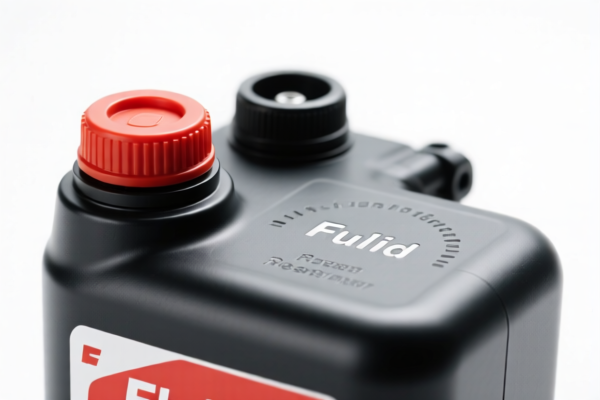
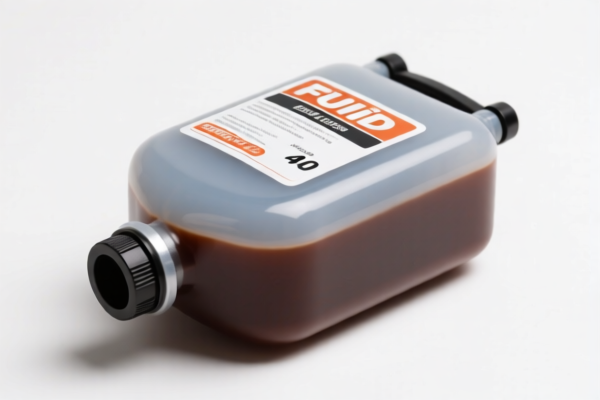
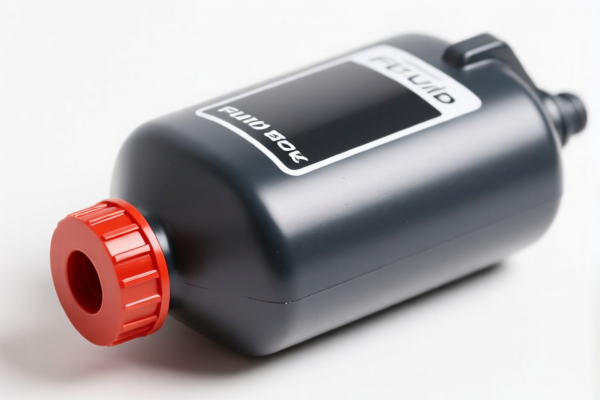

AI Analysis
🚗 Brake Fluid Test Liquid (Additives)
🌐 HS Code Reference & Clearance Guide | 2026 Latest Tariff Analysis | Professional Customs Strategy
📌 I. Product Definition & Classification: What is "Brake Fluid Test Liquid"?
Brake Fluid Test Liquid, often referred to as additive modifiers or test solutions, are specialized chemical substances used in the automotive and industrial maintenance sectors. These products serve two primary purposes: 1. Diagnostic/Testing: To verify the integrity, boiling point, or moisture content of existing brake fluid systems. 2. Modification/Addition: To act as additives that modify the properties of mineral oil-based brake fluids (e.g., enhancing anti-corrosion properties or adjusting viscosity).
In international trade, the classification hinges on whether the product is viewed as a chemical preparation, a lubricant preparation, or a specialized testing agent.
⚠️ Key Classification Logic:
- If the product is primarily a chemical mixture for testing or general chemical application → It may fall under Chapter 38.
- If the product is primarily a lubricant preparation or modifier for lubricating systems (including brake systems which rely on fluid dynamics similar to lubrication principles in classification contexts) → It may fall under Chapter 34.
- Crucial Distinction: The presence of "additive" and the context of "brake fluid" (mineral oil base) triggers specific anti-dumping or additional tariffs depending on the exact HS Code subheading.
📦 II. HS Code Classification Details (2026 Latest Tariff Alignment)
Based on the provided data, here are the four most relevant HS Codes for Brake Fluid Test Liquid/Additives, with detailed tax breakdowns.
| HS Code | Product Description | Classification Logic | Total Tax Rate |
|---|---|---|---|
3811.19.00.00 |
Anti-knock preparations & other preparations for internal combustion engines | Logical Match: Infers from "additive" and "brake fluid" (mineral oil base) that it is a liquid preparation for machinery/engines. Fits the "modifying additive" category for mineral oil liquids. | 41.5% |
3403.19.10.00 |
Lubricating preparations, other | Logical Match: Classified as a chemical/lubricant preparation. Since it doesn't explicitly meet the exclusion criteria (≥70% petroleum oil by weight) for other subheadings, it defaults to general lubricating preparations. | 35.2% |
3403.19.50.00 |
Lubricating preparations, other | Logical Match: Viewed strictly as a "lubricant preparation" due to its functional similarity in fluid systems. Assumes chemical additive nature aligns with general lubricant formulations. | 40.8% |
3824.99.29.00 |
Prepared binders for foundry molds; chemical products & preparations, not specified elsewhere | Logical Match: "Additive" is classified as a chemical preparation. No material conflict identified; assumed to be a chemical mixture not specified in more specific headings. | 41.5% |
🔍 Critical Insight:
- HS Code3403.19.10.00offers the lowest total tariff rate (35.2%).
- However, classification depends heavily on the primary function (Lubrication vs. Chemical Additive) and composition (Petroleum content vs. Chemical mix).
- Customs officers will scrutinize the Material Safety Data Sheet (MSDS) and Ingredient Declaration to determine if it qualifies as a "Lubricant Preparation" (Ch 34) or a "Chemical Preparation" (Ch 38).
💰 III. 2026 Latest Tariff Rate Breakdown (Including Additional Duties)
✅ Applicable Country: United States (US)
✅ Origin: China (CN)
✅ Effective Date: From November 10, 2025 (including subsequent imports)
🎯 1. HS Code 3811.19.00.00 – Preparations for Internal Combustion Engines
| Item | Detail |
|---|---|
| Base Duty Rate | 6.5% |
| Additional Duty (Section 301) | +25.0% |
| IEEPA Additional Duty | +10.0% (For Chinese/HK products, effective Nov 10, 2025) |
| Total Tax Rate | 41.5% |
| Tax Calculation | CIF Value × 41.5% |
| De Minimis Exemption | ❌ Not Eligible (deny_de_minimis) |
| Legal Basis Path | IEEPA:9903.01.25 → IEEPA:9903.01.24 → USITC:3811.19.00.00 → FOOTNOTE:9903.88.01 |
📌 Explanation:
- The 6.5% base duty applies to preparations for internal combustion engines.
- The 25% Section 301 tariff is standard for many chemical preparations from China.
- The 10% IEEPA tariff is the new layer for Chinese goods, significantly increasing the total cost.
🎯 2. HS Code 3403.19.10.00 – Lubricating Preparations
| Item | Detail |
|---|---|
| Base Duty Rate | 0.2% |
| Additional Duty (Section 301) | +25.0% |
| IEEPA Additional Duty | +10.0% (For Chinese/HK products, effective Nov 10, 2025) |
| Total Tax Rate | 35.2% |
| Tax Calculation | CIF Value × 35.2% |
| De Minimis Exemption | ❌ Not Eligible (deny_de_minimis) |
| Legal Basis Path | IEEPA:9903.01.24 → USITC:3403.19.10.00 → FOOTNOTE:9903.88.01 |
📌 Note:
- This code offers the lowest total duty (35.2%) among the options.
- The low base rate (0.2%) is offset by the same 35% additional duties.
- Justification Required: You must prove the product is a "lubricating preparation." If customs deems it a "chemical test liquid" rather than a lubricant, this code may be rejected, leading to reclassification and penalties.
🎯 3. HS Code 3403.19.50.00 – Lubricating Preparations (Other)
| Item | Detail |
|---|---|
| Base Duty Rate | 5.8% |
| Additional Duty (Section 301) | +25.0% |
| IEEPA Additional Duty | +10.0% (For Chinese/HK products, effective Nov 10, 2025) |
| Total Tax Rate | 40.8% |
| Tax Calculation | CIF Value × 40.8% |
| De Minimis Exemption | ❌ Not Eligible (deny_de_minimis) |
| Legal Basis Path | IEEPA:9903.01.24 → USITC:3403.19.50.00 → FOOTNOTE:9903.88.01 |
📌 Note:
- Slightly higher base rate (5.8%) than3403.19.10.00.
- Used if the product does not meet the specific criteria for3403.19.10.00but is still considered a lubricant preparation.
🎯 4. HS Code 3824.99.29.00 – Chemical Products & Preparations
| Item | Detail |
|---|---|
| Base Duty Rate | 6.5% |
| Additional Duty (Section 301) | +25.0% |
| IEEPA Additional Duty | +10.0% (For Chinese/HK products, effective Nov 10, 2025) |
| Total Tax Rate | 41.5% |
| Tax Calculation | CIF Value × 41.5% |
| De Minimis Exemption | ❌ Not Eligible (deny_de_minimis) |
| Legal Basis Path | IEEPA:9903.01.24 → USITC:3824.99.29.00 → FOOTNOTE:9903.88.01 |
📌 Note:
- Classified as a general "chemical preparation" not specified elsewhere.
- Similar tax burden to3811.19.00.00.
- Risk: Customs may argue that "brake fluid additives" are more specifically covered under lubricant headings (Ch 34).
🛠️ IV. Clearance Practical Advice (Battle-Tested Pitfall Avoidance Guide)
✅ 1. Documentation Checklist (Non-Negotiable)
| Document | Required? | Description |
|---|---|---|
| ✅ Product Specification Sheet | ✔️ | Must detail ingredients, function (test vs. additive), and intended use. |
| ✅ MSDS (Material Safety Data Sheet) | ✔️ | Critical for determining if it’s a chemical mix or lubricant. Must show % of petroleum-based oils. |
| ✅ Product Photos (Label & Container) | ✔️ | Clear view of ingredients list, warnings, and brand. |
| ✅ Commercial Invoice | ✔️ | Must state "Brake Fluid Test Liquid" or "Brake Fluid Additive," NOT generic "Chemicals." |
| ✅ Packing List | ✔️ | Consistent with invoice; specify net/gross weight. |
| ✅ Certificate of Origin (CO) | ✔️ | If not Chinese origin, may qualify for exemptions (rare for this category). |
✅ 2. Declaration Strategy (Key Mantras)
🔥 "Declare Function, Disclose Content, Avoid Ambiguity!"
| Scenario | Correct Declaration | Incorrect Practice |
|---|---|---|
| Product is primarily for testing | Declare as "Brake Fluid Testing Solution" under 3824.99.29.00 or 3811.19.00.00 |
Calling it "Additive" without context → Misclassification risk. |
| Product is an additive for lubrication | Declare as "Lubricating Preparation" under 3403.19.10.00 (if eligible) |
Calling it "Chemical Mixture" → Higher tax (41.5%). |
| Contains ≥70% Petroleum Oil | Must declare accurately; may still fall under 3403 but requires proof |
Hiding petroleum content → Penalty + Seizure. |
| Mixed with non-petroleum chemicals | Emphasize "Chemical Preparation" aspect → 3824.99.29.00 |
Claiming it’s purely lubricant → Dispute. |
✅ 3. Special Case Handling
| Situation | Handling Advice |
|---|---|
| OEM Branded Test Kits | Include user manual in package; specify "For Diagnostic Use Only" to avoid lubricant classification. |
| Bulk Chemical vs. Retail Pack | Bulk may be classified as raw chemical; retail as finished good. Ensure consistent HS Code. |
| High Petroleum Content | If >70% petroleum, verify if it qualifies for exclusion from 3403. If not, 3403 is still likely, but base duty varies. |
| Pre-Ruling Request | Highly Recommended. Submit an advance ruling request to US CBP with MSDS and product description to confirm HS Code before shipping. |
🌍 V. Global Market Comparison (2026 Latest)
| Country/Region | Recommended HS Code | Estimated Duty | Certification Requirements | Notes |
|---|---|---|---|---|
| 🇺🇸 USA | 3403.19.10.00 (Best Case) |
35.2% | None specific for clearance | High tariffs due to IEEPA/301. |
| 🇺🇸 USA | 3811.19.00.00 |
41.5% | None specific for clearance | Alternative if not deemed lubricant. |
| 🇨🇳 China | 3403.19.10.00 |
~0-5% | CCC (if applicable) | Lower base duties; no additional US tariffs. |
| 🇪🇺 EU | 3403.19 |
0-6% | REACH Registration | No additional punitive tariffs; REACH compliance key. |
| 🇬🇧 UK | 3403.19 |
0-6% | UKCA/REACH | Post-Brexit rules apply; similar to EU. |
📌 Conclusion:
- The US market is the most expensive due to layered tariffs (Base + 301 + IEEPA).
- China/EU have significantly lower base duties, but REACH (EU) and CCC (China) add compliance costs.
- Strategy: If selling to the US, consider pre-clearance rulings to lock in the lower3403.19.10.00rate if functionally justifiable.
📌 VI. Common Errors & Pitfall Guide (Lessons Learned)
❌ Error 1: Declaring as "General Chemical" (3824.99.29.00) without justification.
👉 Consequence: Customs may reclassify as 3403 or 3811, leading to back taxes + penalties.
❌ Error 2: Failing to disclose petroleum content.
👉 Consequence: If >70% petroleum, it may be subject to different base rates or environmental restrictions.
❌ Error 3: Using vague descriptions like "Car Fluid."
👉 Consequence: Customs holds the shipment for additional inspection, causing delays and demurrage fees.
❌ Error 4: Assuming De Minimis exemption applies.
👉 Consequence: Denial of exemption for Chinese goods under IEEPA/301; full duties applied.
✅ Correct Practice:
"Brake Fluid Test Solution, Chemical Composition: [List Key Ingredients], Function: Diagnostic Testing, Not a Lubricant, MSDS Attached, Model XYZ."
🎯 VII. Conclusion: Precision in Classification Saves Money
🎯 Remember the Mantra:
🔹 "Function dictates Code, Content dictates Risk."
🔹 "Lubricant = 35.2%, Chemical = 41.5%, Guess = Penalty."
🔹 "MSDS is your best friend, Pre-Ruling is your shield."
📌 Pro Tip:
If your product is originally from Vietnam, Mexico, or Thailand, you may qualify for IEEPA Exemptions, reducing total duties to 0%~5%.
Action:
📞 Contact a professional customs broker + Submit MSDS + Request HS Code Advance Ruling from US CBP.
🚀 Ensure your Brake Fluid Test Liquid clears customs smoothly, efficiently, and profitably!
✨ Professional Clearance Starts with Precise Classification!
💼 Every cent of duty paid should be justified, not accidental!
Customer Reviews
About HS Code Classification
The Harmonized System (HS) is an internationally standardized nomenclature developed by the World Customs Organization (WCO) to classify traded products. Over 200 countries use the HS system as the basis for customs tariffs, trade statistics, and import/export regulations.
Each HS code follows a hierarchical structure:
- Chapter (2 digits) — Broad category of goods (e.g., Chapter 84: Machinery and Mechanical Appliances)
- Heading (4 digits) — More specific grouping within the chapter
- Subheading (6 digits) — Internationally standardized breakdown, used by all WCO member countries
- National subdivisions (8-10 digits) — Country-specific extensions for further classification, such as US HTSUS 10-digit codes
Correct HS code classification is essential for smooth customs clearance, accurate duty payment, and compliance with trade regulations. Misclassification can lead to customs delays, overpayment of duties, or penalties.
When importing from CN to US, the applicable tariff rates may include:
- Most-Favored-Nation (MFN) rate — The standard duty rate applied to WTO members
- General rate — Applied to countries without trade agreements
- Trade remedy duties — Additional tariffs such as Section 301 (anti-dumping), Section 232 (national security), or countervailing duties
The information provided on this page is for reference purposes only. For official classification, please consult with your local customs authority or a licensed customs broker.