Brake Fluid Vacuum Filling Liquid
CN → US| HS Code | Tariff Rate | Origin | Destination | Doc |
|---|---|---|---|---|
| 3811900000 | 41.5% | CN | US | Official Doc |
| 3403191000 | 35.2% | CN | US | Official Doc |
| 3824999397 | 40.0% | CN | US | Official Doc |
| 3811190000 | 41.5% | CN | US | Official Doc |
| 3403191000 | 35.2% | CN | US | Official Doc |
Product Images
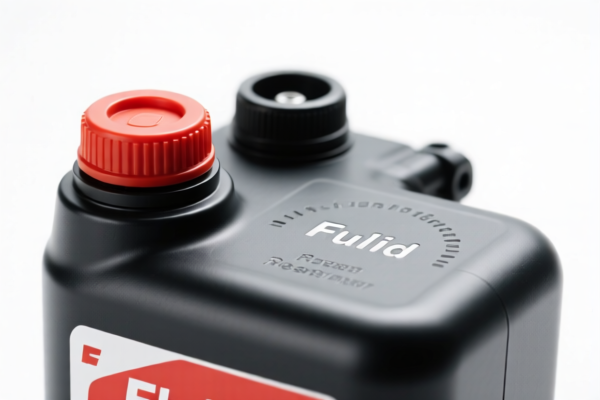
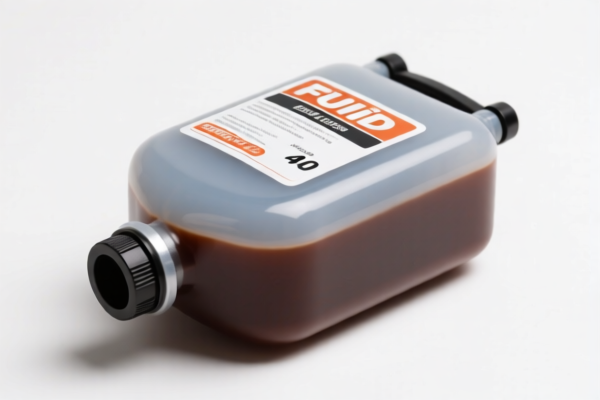
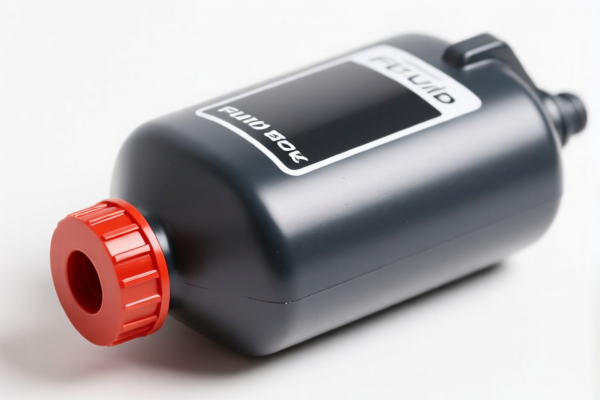

AI Analysis
🚗 Brake Fluid Vacuum Filling Liquid
🌐 HS Code Reference & Customs Clearance Guide | 2026 Latest Tariff Analysis | Professional Clearance Strategy
📌 I. Product Definition & Classification: What is "Brake Fluid Vacuum Filling Liquid"?
This product is explicitly defined as a chemical additive (or mixture) used in the maintenance and formulation of brake systems. It is not a standalone brake fluid itself, but a component used to modify, enhance, or fill brake fluid systems under vacuum conditions.
In international trade, the classification depends on its chemical nature and specific function: 1. As a Modifier/Additive: If it contains mineral oils or chemical compounds designed to alter the properties of liquid brake fluids, it falls under chemical preparations. 2. As a Lubricant/Treatment: If its primary purpose is lubrication or treating the fluid medium, it may fall under preparation for lubricating purposes.
⚠️ Key Distinction Point:
- Is it a pure mineral oil? → Unlikely, as it's specified as an "additive."
- Is it a complex chemical mixture? → Likely.
- Does it contain >70% petroleum oil? → This determines the base tax rate (0.2% vs 6.5%).
📦 II. HS Code Classification Details (Based on Provided Data)
| HS Code | Product Description | Match Logic & Tax Rate | Total Tax |
|---|---|---|---|
| 3811.90.00.00 | Anti-Knock Preparations, Complex Anti-Oxidants, etc. (Other Liquid Preparations) | Match: Fits "Liquid preparation additives." Brake fluid is a mineral oil category; this code covers additives for such liquids. Tax: Base 6.5% + 25% (Sec 301) + 10% (IEEPA) = 41.5% |
41.5% |
| 3403.19.10.00 | Preparations for Lubricating Purposes (Other, containing >70% petroleum oil) | Match: Classified as a "preparation/additive." Core ingredients inferred as petroleum/chemical制剂. Assumed to contain >70% petroleum oil, qualifying for the lower base tax. Tax: Base 0.2% + 25% (Sec 301) + 10% (IEEPA) = 35.2% |
35.2% |
| 3824.99.93.97 | Prepared Binders for Foundry Molds... Other Chemical Products (Other) | Match: Classified as a "chemical product/preparation." No specific conflict with material. Falls under "Other" chemical categories. Tax: Base 5.0% + 25% (Sec 301) + 10% (IEEPA) = 40.0% |
40.0% |
| 3811.19.00.00 | Anti-Knock Preparations, etc. (Other) | Match: Identified as a "liquid mixture additive." Its action on brake fluid (a mineral oil category) fits the material and use characteristics of anti-knock/modification additives. Tax: Base 6.5% + 25% (Sec 301) + 10% (IEEPA) = 41.5% |
41.5% |
| 3403.19.10.00 | Preparations for Lubricating Purposes (Repeat Entry) | Match: Re-confirmed as a "lubricant/chemical preparation." Since it doesn't clearly meet the exclusion (likely <70% pure oil or used as a specific chemical agent rather than bulk oil), it remains in this category. Tax: Base 0.2% + 25% (Sec 301) + 10% (IEEPA) = 35.2% |
35.2% |
🔍 Critical Analysis:
- The lowest possible tax rate is 35.2% (HS Code3403.19.10.00). This requires proving the product is a "lubricating preparation" and likely contains >70% petroleum oil. - The highest possible tax rate is 41.5% (HS Codes3811.90.00.00and3811.19.00.00). This applies if it is classified strictly as a "chemical additive" without the lubricating preparation benefit. - HS Code3824.99.93.97sits in the middle at 40.0%.
💰 III. 2026 Tariff Rate Breakdown (With Surcharges & Policy Add-ons)
✅ Applicable Country: United States (US)
✅ Origin: China (CN)
✅ Effective Date: From November 10, 2025 (for subsequent imports)
🎯 1. 3403.19.10.00 —— Preparations for Lubricating Purposes (Lowest Tax Option)
| Item | Content |
|---|---|
| Base Duty Rate | 0.2% (ad valorem) |
| USITC Surcharge (Section 301) | +25.0% |
| IEEPA Surcharge (China-specific) | +10.0% |
| Total Tax Rate | 35.2% |
| Tax Calculation | CIF Value × 35.2% |
| De Minimis Eligibility | ❌ No (deny_de_minimis) |
| Legal Basis Path | USITC:3403.19.10.00 → FOOTNOTE:9903.88.01 (301 Tariff) → IEEPA:9903.01.25 (China Surcharge) |
📌 Explanation:
- The 0.2% base rate is highly advantageous but only applies if the product is clearly defined as a "preparation for lubricating purposes" and meets the petroleum content threshold. - The 35.2% total is still significant, but 6.3 percentage points lower than the 41.5% bracket.
🎯 2. 3811.90.00.00 & 3811.19.00.00 —— Anti-Knock/Modification Preparations (Highest Tax Option)
| Item | Content |
|---|---|
| Base Duty Rate | 6.5% (ad valorem) |
| USITC Surcharge (Section 301) | +25.0% |
| IEEPA Surcharge (China-specific) | +10.0% |
| Total Tax Rate | 41.5% |
| Tax Calculation | CIF Value × 41.5% |
| De Minimis Eligibility | ❌ No (deny_de_minimis) |
| Legal Basis Path | USITC:3811.x9.00.00 → FOOTNOTE:9903.88.01 → IEEPA:9903.01.25 |
📌 Explanation:
- These codes treat the product strictly as a chemical additive for liquids. - The 6.5% base rate reflects the higher tariff for general chemical mixtures/additives. - Do not choose this if you can justify HS Code 3403.19.10.00.
🎯 3. 3824.99.93.97 —— Other Chemical Products (Middle Option)
| Item | Content |
|---|---|
| Base Duty Rate | 5.0% (ad valorem) |
| USITC Surcharge (Section 301) | +25.0% |
| IEEPA Surcharge (China-specific) | +10.0% |
| Total Tax Rate | 40.0% |
| Tax Calculation | CIF Value × 40.0% |
| De Minimis Eligibility | ❌ No (deny_de_minimis) |
| Legal Basis Path | USITC:3824.99.93.97 → FOOTNOTE:9903.88.01 → IEEPA:9903.01.25 |
📌 Explanation:
- This is a "catch-all" for chemical products that don't fit specific lubricant or additive categories. - It offers a 1.3% saving over the 41.5% bracket, but is higher than the 3403.19.10.00 bracket.
🛠️ IV. Customs Clearance Operational Advice (Practical Pitfall Guide)
✅ 1. Preparation Material Checklist (Mandatory)
| Material | Must Provide | Explanation |
|---|---|---|
| ✅ Product Specification Sheet | ✔️ | Detail composition, especially petroleum oil content %. Crucial for proving eligibility for HS 3403.19.10.00 (0.2% base). |
| ✅ MSDS (Material Safety Data Sheet) | ✔️ | Must clearly state it is a "chemical preparation" or "lubricant additive." |
| ✅ Product Photos (Label/Container) | ✔️ | Show branding, usage instructions ("for brake fluid systems"), and any chemical warnings. |
| ✅ Commercial Invoice | ✔️ | Must accurately describe the item as "Brake Fluid Additive" or "Lubricating Preparation," not just "Liquid." |
| ✅ Certificate of Origin (CO) | ✔️ | If not from China, may qualify for different rates (but US-China origin triggers these surcharges). |
✅ 2. Declaration Tips (Key Mantras)
🔥 "Prove Lubrication, Boost Petrol %, Avoid 'General Chemical'!"
| Scenario | Correct Declaration | Wrong Practice |
|---|---|---|
| High Petroleum Content | HS Code: 3403.19.10.00 |
Classifying as 3824 or 3811 → Lose 5.3-6.3% in tax. |
| Generic Chemical Mix | HS Code: 3824.99.93.97 |
Mislabeling as lubricant without proof → Audit risk. |
| Pure Brake Fluid (Not Additive) | HS Code: 3811 or 3403 |
Declare as "Additive" when it's "Fluid" → Misclassification. |
| OEM Custom Liquid | Provide Formula/Specs | Vague description "Cleaning Liquid" → Detention. |
✅ 3. Special Case Handling
| Situation | Handling Suggestion |
|---|---|
| OEM/Private Label | Provide the original manufacturer's technical data sheet to prove composition. |
| Mixed with Solvents | If solvent content is high, it might change classification. Calculate % of petroleum oil accurately. |
| Intended for Medical/Aerospace | If specifically certified for such use, highlight this in docs, but tax rates remain based on HS Code. |
🌍 V. Global Major Market Customs Comparison (2026 Latest)
| Country/Region | Recommended HS Code | Base Tax | Surcharge (China) | Total Est. Tax | Notes |
|---|---|---|---|---|---|
| 🇺🇸 USA | 3403.19.10.00 (Best Case) |
0.2% | +35% (301+IEEPA) | 35.2% | Most favorable if lubricant proven. |
| 🇺🇸 USA | 3811.19.00.00 (Worst Case) |
6.5% | +35% (301+IEEPA) | 41.5% | Default if lubricant status unproven. |
| 🇨🇳 China | 3403.19.10.00 |
~0-5% | 0% | Low | No US surcharges apply. |
| 🇪🇺 EU | 3811.10.00 |
~6% | 0% | ~6% | EU tariffs are generally lower but different codes apply. |
| 🇦🇺 Australia | 3811.10.00 |
~5% | 0% | ~5% | No US-style surcharges. |
📌 Conclusion:
- USA is the most costly market for this product due to the 35% combined surcharge.
- Optimizing for HS Code3403.19.10.00is critical for cost savings.
- Products not from China (e.g., USA, Europe) do not incur the +10% IEEPA tariff, significantly reducing costs.
📌 VI. Common Mistakes & Pitfall Guide (Lessons Learned)
❌ Mistake 1: Declaring as "Brake Fluid" instead of "Additive"
👉 Consequence: Might be classified under different codes (e.g., 3819.00.00.00), leading to incorrect tax calculation and potential fines.
❌ Mistake 2: Failing to prove >70% Petroleum Oil content
👉 Consequence: Cannot use HS 3403.19.10.00. Forced into 3811 or 3824 → Tax increases by 5.3-6.3%.
❌ Mistake 3: Vague Description "Chemical Liquid"
👉 Consequence: Customs will assign a higher default rate or request excessive documentation → Delays.
❌ Mistake 4: Ignoring IEEPA Surcharge
👉 Consequence: Budgeting only for base tariff → Unexpected costs at customs.
✅ Correct Approach:
"Brake Fluid Additive, Lubricating Preparation, Contains 80% Petroleum Oil, For Hydraulic Systems, Model XYZ, MSDS Attached"
🎯 VII. Conclusion: Precise Classification Saves Money!
🎯 Remember the Mantra:
🔹 "Lubricant Status? Check Petroleum %. If Yes, Go 3403! Save 6%! If No, Go 3811! Pay More!"
🔹 "USA Tariff is Brutal: 35.2% vs 41.5%, the difference is profit!"
📌 Pro Tip:
If your product is not manufactured in China (e.g., made in USA, Germany, Japan), you avoid the 10% IEEPA surcharge and potentially the 25% Section 301 tariff (depending on specific trade agreements).
Recommendation: Apply for an Advance Ruling (CBP) if the petroleum content or lubricating function is borderline.
📣 Immediate Action:
📞 Consult a licensed customs broker + Provide Formula Data + Apply for Advance Ruling
🚀 Let your Brake Fluid Additive clear smoothly, avoid penalties, and maximize margins!
✨ Professional clearance starts with accurate classification!
💼 Every percentage point saved is pure profit!
Customer Reviews
About HS Code Classification
The Harmonized System (HS) is an internationally standardized nomenclature developed by the World Customs Organization (WCO) to classify traded products. Over 200 countries use the HS system as the basis for customs tariffs, trade statistics, and import/export regulations.
Each HS code follows a hierarchical structure:
- Chapter (2 digits) — Broad category of goods (e.g., Chapter 84: Machinery and Mechanical Appliances)
- Heading (4 digits) — More specific grouping within the chapter
- Subheading (6 digits) — Internationally standardized breakdown, used by all WCO member countries
- National subdivisions (8-10 digits) — Country-specific extensions for further classification, such as US HTSUS 10-digit codes
Correct HS code classification is essential for smooth customs clearance, accurate duty payment, and compliance with trade regulations. Misclassification can lead to customs delays, overpayment of duties, or penalties.
When importing from CN to US, the applicable tariff rates may include:
- Most-Favored-Nation (MFN) rate — The standard duty rate applied to WTO members
- General rate — Applied to countries without trade agreements
- Trade remedy duties — Additional tariffs such as Section 301 (anti-dumping), Section 232 (national security), or countervailing duties
The information provided on this page is for reference purposes only. For official classification, please consult with your local customs authority or a licensed customs broker.