Brake Hose
CN → US| HS Code | Tariff Rate | Origin | Destination | Doc |
|---|---|---|---|---|
| 7307995045 | 89.3% | CN | US | Official Doc |
| 8708305090 | 0.0% | CN | US | Official Doc |
| 7307290090 | 90.0% | CN | US | Official Doc |
| 4009120020 | 20.0% | CN | US | Official Doc |
| 4009220020 | 37.5% | CN | US | Official Doc |
Product Images
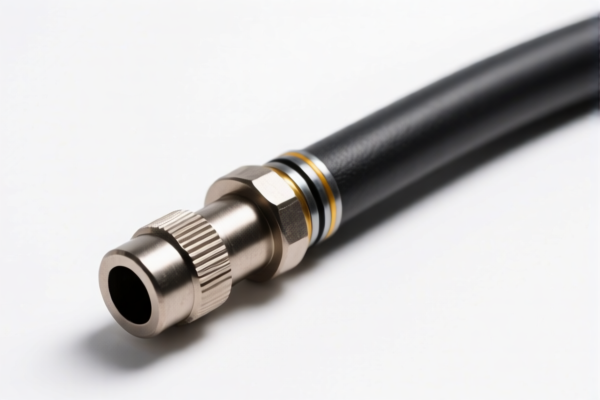
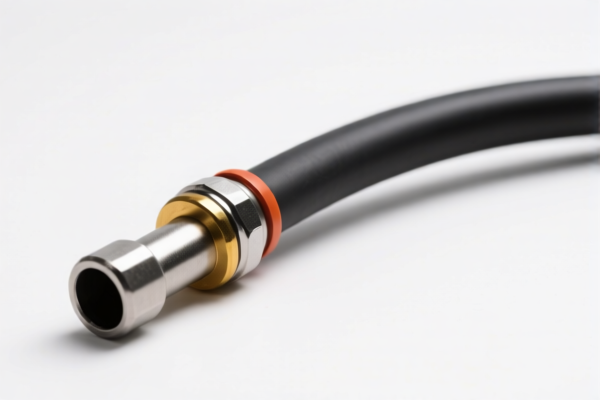
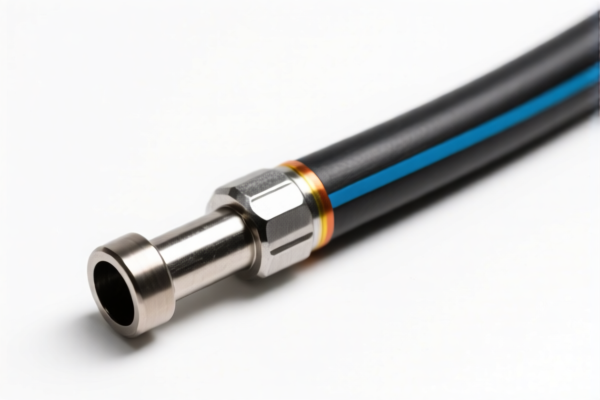
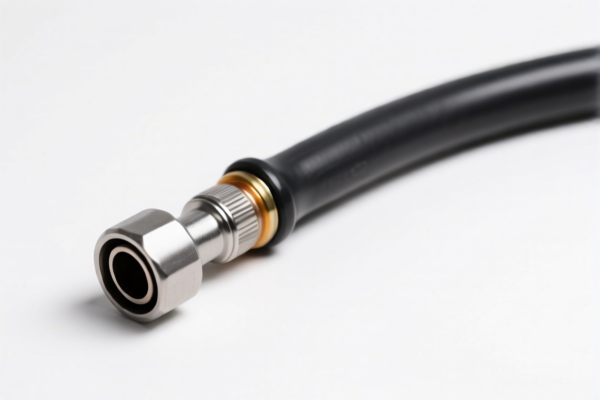
AI Analysis
🔧 Brake Hoses (Automotive Brake Tubing & Flexible Lines)
🌐 HS Code Reference & Customs Clearance Guide | 2026 Latest Tariff Analysis | Professional Clearance Strategy
📌 I. Product Definition & Classification: What Exactly is a "Brake Hose"?
In international trade, "Brake Hose" is not a single unified category. It is strictly divided based on material composition and structural form. Misclassification is the #1 cause of tariff shocks for this product.
There are two main scenarios: 1. Metal Brake Lines (Rigid/Flexible Metal Hoses): Made of steel, iron, or aluminum. Used for rigid piping or highly flexible metal bellows in heavy-duty applications. 2. Rubber Brake Hoses (Flexible Rubber Tubes): Made of vulcanized rubber, often reinforced with textile or wire. Used for standard passenger vehicle brake lines.
⚠️ Critical Distinction:
- If it is Metal + Steel/Iron → It falls under Chapter 73 (Articles of Iron or Steel).
- If it is Rubber + Reinforcement → It falls under Chapter 40 (Rubber and Articles Thereof).
- Do not confuse "Brake Hose" with "Brake Pad" or "Brake Disc" (which fall under Ch. 87).
📦 II. HS Code Classification Matrix (2026 Latest Data)
Based on the provided data, here are the four specific HS Codes and their precise definitions:
| HS Code | Product Description | Material/Structure | Summary Logic |
|---|---|---|---|
| 7307.99.50.45 | Fittings and Tubes of Iron/Steel (Non-Threaded) | Metal (Iron/Steel) | Based on metal material (iron/steel) and tube accessory form. |
| 7307.29.00.90 | Flanged Pipe Fittings (Steel) | Metal Hose | Based on metal hose form and steel pipe accessory attributes. |
| 4009.12.00.20 | Vulcanized Rubber Hoses | Pure Rubber | Based on vulcanized rubber material and brake hose usage. |
| 4009.22.00.20 | Rubber Hoses with Reinforcement | Rubber + Wire/Cord | Based on rubber material and brake pipeline form (typically reinforced). |
🔍 Key Insight:
- 7307 Codes apply to Metal brake lines. These attract the highest tariffs due to "Section 232" steel/aluminum duties.
- 4009 Codes apply to Rubber brake lines. These have lower base tariffs but still carry significant US surcharges.
💰 III. 2026 Tariff Rate Breakdown (Detailed & Complex)
✅ Applicable Country: USA
✅ Origin: China (CN)
✅ Effective Date: Ongoing (See details below)
🎯 1. 7307.99.50.45 —— Steel/Iron Metal Fittings & Tubes
| Item | Detail |
|---|---|
| Base Tariff | 4.3% |
| Additional Tariff (Section 301) | +25.0% |
| Additional Tariff (Section 122) | +10% (Steel/Aluminum/Copper Products) |
| Total Tax Rate | 89.3% |
| Tax Calculation | CIF Value × 89.3% |
| Legal Basis | Base Duty (4.3%) + Sec 301 (25%) + Sec 232/122 (10% Steel) |
📌 Explanation:
- This is a DEVASTATING rate.
- The 89.3% includes the base duty, the 25% Section 301 tariff on Chinese goods, AND an additional 10% specific tariff on steel/aluminum products.
- Warning: This applies to any brake line made of steel or iron.
🎯 2. 7307.29.00.90 —— Steel Flanged/Flanged Fittings
| Item | Detail |
|---|---|
| Base Tariff | 5.0% |
| Additional Tariff (Section 301) | +25.0% |
| Additional Tariff (Section 122) | +10% (Steel/Aluminum/Copper Products) |
| Total Tax Rate | 90.0% |
| Tax Calculation | CIF Value × 90.0% |
| Legal Basis | Base Duty (5.0%) + Sec 301 (25%) + Sec 232/122 (10% Steel) |
📌 Explanation:
- Similar to the previous code, but the base duty is slightly higher (5.0% vs 4.3%).
- Total rate is 90.0%.
- Applies to steel hose fittings and metal pipe accessories.
🎯 3. 4009.12.00.20 —— Vulcanized Rubber Brake Hoses
| Item | Detail |
|---|---|
| Base Tariff | 2.5% |
| Additional Tariff (Section 301) | +7.5% |
| Additional Tariff (Section 122) | +10% (Specific to this subheading) |
| Total Tax Rate | 20.0% |
| Tax Calculation | CIF Value × 20.0% |
| Legal Basis | Base Duty (2.5%) + Sec 301 (7.5%) + Sec 122 (10%) |
📌 Explanation:
- Significantly lower than metal counterparts.
- The Section 301 tariff is only 7.5% for this rubber category (unlike 25% for other rubber goods or metals).
- Includes a 10% specific tariff under Section 122.
🎯 4. 4009.22.00.20 —— Reinforced Rubber Brake Hoses
| Item | Detail |
|---|---|
| Base Tariff | 2.5% |
| Additional Tariff (Section 301) | +25.0% |
| Additional Tariff (Section 122) | +10% |
| Total Tax Rate | 37.5% |
| Tax Calculation | CIF Value × 37.5% |
| Legal Basis | Base Duty (2.5%) + Sec 301 (25%) + Sec 122 (10%) |
📌 Explanation:
- This code is for reinforced rubber hoses (e.g., wire-braided brake lines).
- The Section 301 tariff jumps to 25% for this specific reinforced rubber category.
- Total rate is 37.5%.
🚗 V. Special Note: Brake System Components (HS 8708)
⚠️ Important Distinction:
If the item is a complete brake assembly or a rigid brake disc/pad rather than a hose/line, it may fall under 8708.30.50.90.
| Item | Detail |
|---|---|
| HS Code | 8708.30.50.90 |
| Description | Brake systems and servo-brakes; Parts of motor vehicles |
| Total Tax Rate | 37.5% (2.5% Base + 25% Sec 301 + 10% Sec 122) |
| Logic | Based on brake system component use and vehicle part attribute. |
📌 Warning:
- Do not misdeclare a rubber hose as a brake pad to save taxes. Customs will inspect the material.
- Hose = Rubber/Metal = Ch 40/73.
- Pad/Disc = Metal/Ceramic = Ch 87.
🛠️ IV. Customs Clearance Practical Advice (Avoid Pitfalls!)
✅ 1. Preparation Checklist (Mandatory)
| Document | Required? | Purpose |
|---|---|---|
| Product Spec Sheet | ✅ Yes | Clearly state: "Vulcanized Rubber" OR "Stainless Steel". |
| Material Certificate | ✅ Yes | Proof of rubber composition (e.g., EPDM, NBR) or steel grade. |
| Technical Drawing | ✅ Yes | Show if reinforced with wire (affects 4009.22 vs 4009.12). |
| Commercial Invoice | ✅ Yes | Must specify "Brake Hose, Rubber" or "Brake Line, Steel". |
| Packaging Photos | ✅ Yes | Show product form (coiled, rigid, etc.). |
✅ 2. Declaration Strategy (Critical!)
| Scenario | Correct HS Code | Risk if Incorrect |
|---|---|---|
| Steel Brake Line | 7307.99.50.45 |
Misdeclaring as rubber (4009) → Fraud, Penalty, Seizure. |
| Rubber Hose (No Reinforcement) | 4009.12.00.20 |
Misdeclaring as reinforced (4009.22) → Overpay tax (20% vs 37.5%). |
| Rubber Hose (Wire Reinforced) | 4009.22.00.20 |
Misdeclaring as pure rubber → Underpay tax (20% vs 37.5%). |
| Complete Brake Assembly | 8708.30.50.90 |
Misdeclaring as hose → Misclassification Penalty. |
✅ 3. Cost-Saving Tips
- Material Choice: If possible, avoid Steel brake lines for light-duty applications. The 89-90% tariff is prohibitive.
- Reinforcement Level: For rubber hoses, if you can design the product to not use wire reinforcement (e.g., textile-only or plain rubber), you can use
4009.12.00.20(20% tax) instead of4009.22.00.20(37.5% tax). - Origin Verification: Ensure no US content is mixed in if claiming Chinese origin, as this affects the Section 301 applicability.
🌍 V. Global Market Comparison (2026)
| Region | Recommended HS | Est. Tax (China Origin) | Notes |
|---|---|---|---|
| 🇺🇸 USA | See Above | 20% - 90% | Highly segmented by material. Steel is penalized heavily. |
| 🇨🇳 China | 4009/7307 | 5-15% | Lower base duties, no US surcharges. |
| 🇪🇺 EU | 4009/7307 | 0-6.5% | Generally lower, no Section 301 equivalent. |
| 🇬🇧 UK | 4009/7307 | 0-6.5% | Post-Brexit tariffs similar to EU. |
📌 Conclusion:
- USA is the most difficult market for brake hoses due to the layered tariffs (Base + 301 + 122).
- Metal hoses are almost uncompetitive for US imports from China due to ~90% tax.
- Rubber hoses are viable if correctly classified (20-37.5%).
📌 VI. Common Errors & Lessons Learned (Blood & Tears)
❌ Error 1: Declaring Steel Brake Lines as "Plastic Fittings"
👉 Result: Seizure, 200% Penalty, Criminal Investigation for Fraud.
❌ Error 2: Declaring Reinforced Rubber Hoses as Pure Rubber (4009.12)
👉 Result: Underpayment of 17.5% tax. CBP will audit and demand back payments + interest.
❌ Error 3: Confusing Brake Hoses with Brake Pads (8708)
👉 Result: Incorrect HS Code leads to detention. Customs will force reclassification and apply correct (higher) rates.
✅ Correct Practice:
Product Name: "Automotive Brake Hose, Rubber, Wire-Reinforced, EPDM Material"
HS Code:4009.22.00.20
Reason: Clearly identifies material (Rubber), structure (Wire-Reinforced), and use (Brake).
🎯 VII. Conclusion: Precision is Profit
🎯 Key Takeaway:
🔹 Metal = 89-90% Tax (Avoid if possible)
🔹 Rubber (Plain) = 20% Tax (Best Option)
🔹 Rubber (Reinforced) = 37.5% Tax (Standard Option)
🔹 Brake Assembly = 37.5% Tax (Different Product)🔹 "Material defines the Code, Code defines the Cost."
📌 Pro Tip:
If you are importing large volumes, consider Advance Rulings from US CBP to lock in the classification. Also, explore supply chain diversification (e.g., sourcing rubber hoses from Vietnam or Mexico) to potentially avoid Section 301 tariffs.
📣 Immediate Action:
📞 Audit your current supplier's HS Codes.
📄 Request Material Safety Data Sheets (MSDS) to prove rubber vs. metal.
🚀 Optimize your product design to qualify for the 20% Rubber Bracket if possible!
✨ Smart Classification, Smarter Business!
💼 Every percentage point of tariff saved is pure profit added!
Customer Reviews
About HS Code Classification
The Harmonized System (HS) is an internationally standardized nomenclature developed by the World Customs Organization (WCO) to classify traded products. Over 200 countries use the HS system as the basis for customs tariffs, trade statistics, and import/export regulations.
Each HS code follows a hierarchical structure:
- Chapter (2 digits) — Broad category of goods (e.g., Chapter 84: Machinery and Mechanical Appliances)
- Heading (4 digits) — More specific grouping within the chapter
- Subheading (6 digits) — Internationally standardized breakdown, used by all WCO member countries
- National subdivisions (8-10 digits) — Country-specific extensions for further classification, such as US HTSUS 10-digit codes
Correct HS code classification is essential for smooth customs clearance, accurate duty payment, and compliance with trade regulations. Misclassification can lead to customs delays, overpayment of duties, or penalties.
When importing from CN to US, the applicable tariff rates may include:
- Most-Favored-Nation (MFN) rate — The standard duty rate applied to WTO members
- General rate — Applied to countries without trade agreements
- Trade remedy duties — Additional tariffs such as Section 301 (anti-dumping), Section 232 (national security), or countervailing duties
The information provided on this page is for reference purposes only. For official classification, please consult with your local customs authority or a licensed customs broker.