Brake Light Switch
CN → US| HS Code | Tariff Rate | Origin | Destination | Doc |
|---|---|---|---|---|
| 853650 | 0.0% | CN | US | Official Doc |
| 870829 | 0.0% | CN | US | Official Doc |
| 8708295110 | 0.0% | CN | US | Official Doc |
| 8708295160 | 0.0% | CN | US | Official Doc |
| 8536509055 | 35.0% | CN | US | Official Doc |
| 8536509031 | 35.0% | CN | US | Official Doc |
Product Images
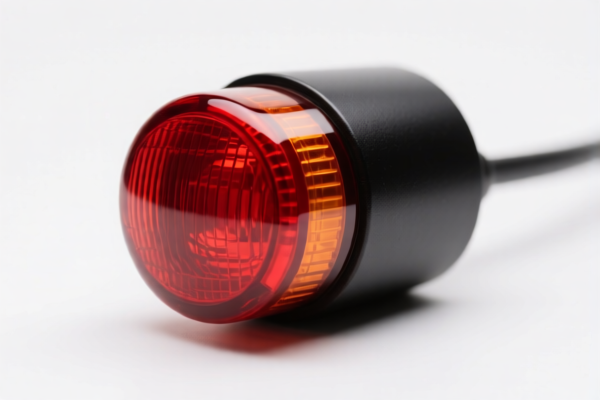


AI Analysis
🛑 Brake Light Switches (Automotive Electrical Control)
🌐 HS Code Reference & Customs Clearance Guide | 2026 Latest Tariff Analysis | Professional Compliance Strategy
📌 I. Product Definition & Classification: What Exactly Is a "Brake Light Switch"?
A Brake Light Switch is a critical safety component in motor vehicles. It is an electrical switch designed to operate electrical circuits in response to mechanical movement (typically the depression of the brake pedal). Its primary function is to signal the illumination of rear brake lights and, in modern vehicles, to communicate with the Electronic Control Unit (ECU) for anti-lock braking systems (ABS) and cruise control disengagement.
In international trade, these switches are classified based on whether they are viewed as electrical apparatus (general purpose) or automotive parts (specific to the vehicle body/chassis).
⚠️ Key Distinction Point:
- If the switch is described broadly as "electrical apparatus for switching circuits" → It often falls under Chapter 85 (8536).
- If the switch is described specifically as a "part of a motor vehicle" intended for integration into braking systems → It may fall under Chapter 87 (8708).
- Note: The specific subheading depends on the voltage rating, contact type (momentary/continuous), and material composition (e.g., stampings vs. finished units).
📦 II. HS Code Classification Details (2026 Latest Tariff Authority Comparison)
Based on the provided data, the Brake Light Switch can be classified under the following HS Codes. The correct choice depends on the precise description and technical specifications declared in the commercial invoice.
| HS Code | Product Description | Applicable Scenario | Tax Details |
|---|---|---|---|
8536.50 |
Electrical apparatus for switching or protecting electrical circuits; Other switches | General classification for electrical switches not specified elsewhere, including brake light switches. | Error: Tax info failed to retrieve for this broad heading. |
8708.29 |
Parts and accessories of motor vehicles; Other parts and accessories of bodies (including cabs) | Specifically for switches used for signaling/safety functions, designed for integration into vehicle braking systems. | Error: Tax info failed to retrieve for this broad heading. |
8536.50.90.55 |
Other switches: Other: Other Limit | For switches not further specified (e.g., non-push-button or non-limit switches in other subheads). | Base: 0.0% + Additional: 25.0% = 25.0% |
8536.50.90.31 |
Other switches: Other: Other Push-button: Rated at not over 5 A Momentary contact | For brake light switches that are push-button type, rated ≤ 5A, with momentary contact (common in pedal switches). | Base: 0.0% + Additional: 25.0% = 25.0% |
8708.29.51.10 |
Parts and accessories of bodies: Other: Other Stampings | If the switch component is declared as "Stampings" (metal parts) rather than a finished electrical switch. | Base: 2.5% + Additional: 25.0% = 27.5% |
8708.29.51.60 |
Parts and accessories of bodies: Other: Other Other | For other parts of bodies not specified elsewhere (e.g., complex assemblies). Note: High penalty for steel/aluminum/copper. | Base: 0.0% (or 2.5% for metals) + Additional: 50.0% = 50.0% |
🔍 Critical Reminder:
- Avoid8708.29.51.60if possible. The tax detail explicitly warns: "Steel, aluminum, copper products additional tariff: 50%". This is significantly higher than the 25% rate for electrical switches.
- Prefer8536.50subheadings (8536.50.90.31or8536.50.90.55) if the product is a complete electrical switch unit. These carry a lower total tax of 25% compared to the potential 50% for generic auto parts under 8708.29.51.60.
💰 III. 2026 Latest Tariff Rate Breakdown (Including Additional Taxes & Policy Surcharges)
✅ Applicable Country: United States (US)
✅ Country of Origin: China (CN)
✅ Effective Date: Rates reflect current USITC and IEEPA surcharges as per 2026 standards.
🎯 1. 8536.50.90.31 – Push-button Switch (≤ 5A, Momentary)
| Item | Detail |
|---|---|
| Base Tariff | 0.0% |
| USITC Additional Tariff | +25.0% (Section 301) |
| Total Tax Rate | 25.0% |
| Tax Calculation | CIF Value × 25.0% |
| De Minimis Exemption | ❌ Not Eligible |
| Legal Basis Path | USITC:8536.50.90.31 → FOOTNOTE:301 |
📌 Explanation:
- This is the most favorable rate for a standard automotive brake light switch.
- The product is classified as an "electrical apparatus" first, which often benefits from lower base rates, but is still subject to the 25% Section 301 surcharge due to its origin.
🎯 2. 8536.50.90.55 – Other Switch (Not specified elsewhere)
| Item | Detail |
|---|---|
| Base Tariff | 0.0% |
| USITC Additional Tariff | +25.0% (Section 301) |
| Total Tax Rate | 25.0% |
| Tax Calculation | CIF Value × 25.0% |
| De Minimis Exemption | ❌ Not Eligible |
| Legal Basis Path | USITC:8536.50.90.55 → FOOTNOTE:301 |
📌 Note:
- Same tax burden as the push-button switch. Use this code if the switch does not meet the "push-button" or "5A" criteria of the previous code.
🎯 3. 8708.29.51.10 – Parts (Stampings)
| Item | Detail |
|---|---|
| Base Tariff | 2.5% |
| USITC Additional Tariff | +25.0% (Section 301) |
| Total Tax Rate | 27.5% |
| Tax Calculation | CIF Value × 27.5% |
| De Minimis Exemption | ❌ Not Eligible |
📌 Warning:
- Only use this code if you are shipping metal stampings that are not yet assembled into a functional switch. If you ship a finished switch, misdeclaring it as "stampings" can lead to customs fraud penalties.
🎯 4. 8708.29.51.60 – Other Parts & Accessories (High Risk)
| Item | Detail |
|---|---|
| Base Tariff | 0.0% (or 2.5% for metals) |
| Additional Tariff | +50.0% (Penalty rate for steel/aluminum/copper) |
| Total Tax Rate | 50.0% (or 52.5% for metals) |
| Tax Calculation | CIF Value × 50.0% |
| De Minimis Exemption | ❌ Not Eligible |
📌 CRITICAL ALERT:
- The tax detail explicitly states: "Steel, aluminum, copper products additional tariff: 50%".
- If your brake light switch contains significant metal components and is classified under8708.29.51.60, you face a 50% tariff.
- Recommendation: Always argue for classification under Chapter 85 (Electrical Apparatus) to benefit from the lower 25% rate, unless the switch is strictly a non-functional metal part.
🛠️ IV. Customs Clearance Operational Advice (Practical Pitfall Avoidance)
✅ 1. Preparation Checklist (Mandatory Documents)
| Document | Required? | Description |
|---|---|---|
| ✅ Product Specification Sheet | ✔️ | Must clearly state: "Brake Light Switch", "Electrical Switch", "For Motor Vehicles", Voltage Rating (e.g., 12V), Current Rating (e.g., ≤ 5A). |
| ✅ Product Photographs | ✔️ | Show the entire switch, connector pins, and any labels/model numbers. |
| ✅ Circuit Diagram (if available) | ✔️ | Helps prove it is an "electrical apparatus" (Ch 85) rather than just a mechanical part (Ch 87). |
| ✅ Commercial Invoice | ✔️ | Description must match the HS Code selected. Avoid vague terms like "Auto Part". Use "Automotive Brake Light Electrical Switch". |
| ✅ Packing List | ✔️ | List quantity and weight per package. |
| ✅ Origin Certificate | ✔️ | To prove origin (China) and apply correct surcharges. |
✅ 2. Declaration Strategy (Key Mnemonics)
🔥 "Electrical First, Auto Second; Push-Button Saves Money!"
| Scenario | Recommended HS Code | Reason |
|---|---|---|
| Finished Brake Light Switch (Plastic/Metal housing, electrical contacts) | 8536.50.90.31 or 8536.50.90.55 |
Classified as "Electrical Apparatus". Lower total tax (25%). |
| Switch labeled as "Push-button, ≤ 5A, Momentary" | 8536.50.90.31 |
Specific description allows for this precise code. |
| Raw Metal Components (Stampings) | 8708.29.51.10 |
Only for unassembled metal parts. Tax 27.5%. |
| Generic "Auto Part" Declaration | 8708.29.51.60 |
AVOID! High risk of 50% tariff for metal-containing items. |
✅ 3. Special Situation Handling
| Situation | Handling Advice |
|---|---|
| OEM Custom Switch | Provide customer purchase order and design specs. Emphasize it is an "Electrical Switch" in the invoice description. |
| Mixed Shipment | If shipping switches with other auto parts, declare the switches separately under 8536 and other parts under 8708. Do not lump them into one generic "Auto Parts" line item. |
| Metal Content High | Even if classified under 8708, if it is 51.60, the 50% tariff applies. Try to reclassify under 8536 to mitigate this. |
| Voltage > 1000V | The provided codes are for ≤ 1000V. If voltage exceeds this, a different Chapter (likely 8536.60 or similar) would apply, requiring new tax research. |
🌍 V. Global Market Comparison (2026 Latest)
| Country/Region | Recommended HS Code | Tariff (China Origin) | Certification Requirements | Remarks |
|---|---|---|---|---|
| 🇺🇸 USA | 8536.50.90.31 |
25.0% | No special certification needed for customs, but FCC/SAE may apply for sale. | 50% tariff risk under 8708.29.51.60. |
| 🇨🇳 China | 8536.50 |
Varies (Import Duty ~5-10%) | CCC (if applicable for automotive safety) | Domestic market access. |
| 🇪🇺 EU | 8536.50 |
0% (if MFN) | CE, E-Mark (for automotive compliance) | Generally lower tariffs than US. |
| 🇬🇧 UK | 8536.50 |
0-5% | UKCA Mark | Post-Brexit regulations apply. |
📌 Conclusion:
- The USA is the most challenging market due to the Section 301 25% surcharge and the potential 50% penalty if misclassified under 8708.29.51.60.
- Classification under Chapter 85 (8536) is strongly recommended to cap the tariff at 25%.
📌 VI. Common Errors & Pitfall Guide (Lessons from Experience)
❌ Error 1: Declaring "Brake Light Switch" as "Auto Parts" under 8708.29.51.60
👉 Consequence: 50% Tariff applied due to metal content surcharge.
💡 Fix: Reclassify as "Electrical Switch" under 8536.50.90.31.
❌ Error 2: Not specifying "Push-button" or "Current Rating" in description
👉 Consequence: Customs may default to the least specific code (8536.50.90.55) or 8708, causing delays.
💡 Fix: Include full technical specs in the commercial invoice.
❌ Error 3: Ignoring the "Stampings" distinction
👉 Consequence: If you ship a finished switch but call it "Stampings", customs may reject it for fraud or apply the wrong tax.
💡 Fix: Be honest. If it's a functional switch, use 8536. If it's raw metal, use 8708.29.51.10.
✅ Correct Declaration Example:
"Automotive Brake Light Switch, Electrical Switch, Push-button Type, 12V DC, Rated 5A Momentary Contact, Model XYZ, Plastic and Metal Components"
📍 HS Code:8536.50.90.31
📍 Tax: 25.0%
🎯 VII. Conclusion: Professional Declaration Saves Costs!
🎯 Remember the Mantra:
🔹 "Electrical Switch (8536) = 25% Tax"
🔹 "Auto Part (8708.51.60) = 50% Tax (Metal Penalty!)"
🔹 "Describe Specs, Not Just 'Parts'!"
📌 Tips:
- If your brake light switch is not made in China (e.g., Vietnam, Malaysia), you may be exempt from the 25% Section 301 tariff.
- Apply for a Pre-Ruling with US Customs and Border Protection (CBP) if the classification is ambiguous. This provides legal certainty before shipment.
📣 Immediate Action:
📞 Consult a licensed customs broker.
📄 Provide full technical specs and product images.
🚀 Ensure your invoice clearly states "Electrical Switch" to avoid the 50% metal penalty!
✨ Professional Clearance Starts with Accurate Classification!
💼 Every percentage point counts in your supply chain cost!
Customer Reviews
About HS Code Classification
The Harmonized System (HS) is an internationally standardized nomenclature developed by the World Customs Organization (WCO) to classify traded products. Over 200 countries use the HS system as the basis for customs tariffs, trade statistics, and import/export regulations.
Each HS code follows a hierarchical structure:
- Chapter (2 digits) — Broad category of goods (e.g., Chapter 84: Machinery and Mechanical Appliances)
- Heading (4 digits) — More specific grouping within the chapter
- Subheading (6 digits) — Internationally standardized breakdown, used by all WCO member countries
- National subdivisions (8-10 digits) — Country-specific extensions for further classification, such as US HTSUS 10-digit codes
Correct HS code classification is essential for smooth customs clearance, accurate duty payment, and compliance with trade regulations. Misclassification can lead to customs delays, overpayment of duties, or penalties.
When importing from CN to US, the applicable tariff rates may include:
- Most-Favored-Nation (MFN) rate — The standard duty rate applied to WTO members
- General rate — Applied to countries without trade agreements
- Trade remedy duties — Additional tariffs such as Section 301 (anti-dumping), Section 232 (national security), or countervailing duties
The information provided on this page is for reference purposes only. For official classification, please consult with your local customs authority or a licensed customs broker.