Brake Line Anti rust Fluid
CN → US| HS Code | Tariff Rate | Origin | Destination | Doc |
|---|---|---|---|---|
| 7307995045 | 89.3% | CN | US | Official Doc |
| 8708305090 | 0.0% | CN | US | Official Doc |
| 7307290090 | 90.0% | CN | US | Official Doc |
| 4009120020 | 20.0% | CN | US | Official Doc |
| 4009220020 | 37.5% | CN | US | Official Doc |
Product Images
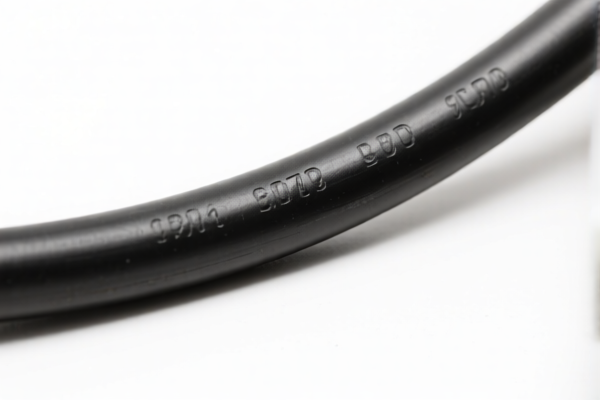
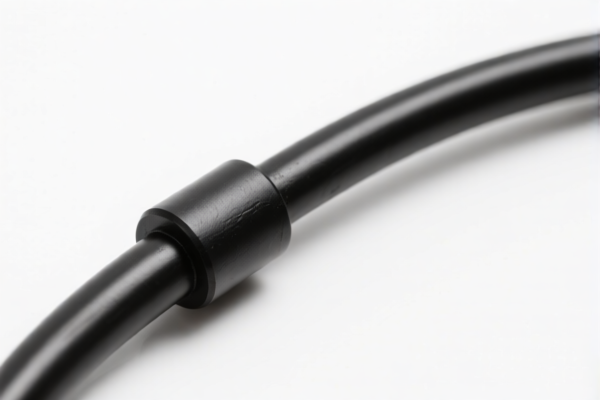
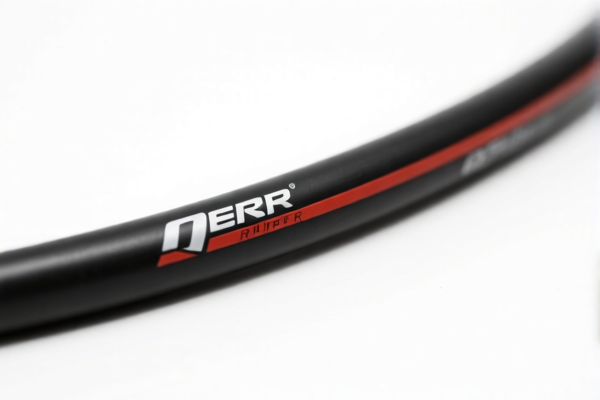
AI Analysis
🛑 Brake Line Anti-Rust Fluid (Automotive Maintenance Chemical)
🌐 HS Code Reference & Clearance Guide | 2026 Latest Tariff Analysis | Professional Clearance Strategy
📌 I. Product Definition & Classification: What is "Brake Line Anti-Rust Fluid"?
Brake Line Anti-Rust Fluid is a specialized automotive maintenance chemical designed to protect brake lines (typically steel or metal pipes) from corrosion, rust, and moisture buildup. It is often used during brake system maintenance, replacement, or repair.
In international trade, this product is NOT simply classified as a "chemical" or "fluid." Its classification depends heavily on: 1. The form of the product: Is it a simple fluid, or is it packaged as a kit with applicators? 2. The container type: Does it come in a simple bottle, or is it part of a larger assembly? 3. The intended use: Is it strictly for automotive brake systems, or does it have multi-purpose industrial use?
⚠️ Critical Distinction:
- If the product is a simple liquid/paste in a basic container → It may be classified as a preparation (Chapter 38) or oil/grease (Chapter 27/34).
- If the product is packaged with specific applicator tips, hoses, or nozzles designed exclusively for brake lines → It may be classified as a part/accessory of brake systems (Chapter 87).
- If the product is pure metal fitting or pipe (rare for "fluid") → It would fall under Chapter 73.
However, based on the provided data, the classification leans toward metal parts (Chapter 73) or brake system parts (Chapter 87), suggesting the "fluid" might be packaged in a way that triggers these codes, or the term "Anti-Rust Fluid" is being used for a protective coating kit that includes metal components or is classified under parts due to specific regulatory interpretations.
📦 II. HS Code Classification Details (2026 Latest Tariff Authority Comparison)
The provided data suggests four potential HS Codes. Let’s analyze why each might apply and the associated risks.
| HS Code | Product Description | Application Scenario | Key Classification Logic |
|---|---|---|---|
7307.99.50.45 |
Metal tube or fitting accessories (Iron/non-ferrous steel) | If the "fluid" is packaged with metal connectors or if the product is actually a protective coating for metal pipes classified as a "fitting accessory." | Based on material inference: Metal tube or fitting with metal joints. |
8708.30.50.90 |
Brake system parts for other vehicles | If the product is considered a functional part of the brake system (e.g., a treated pipe or a kit that is integral to brake function). | Belongs to brake system parts; for "other vehicles." |
7307.29.00.90 |
Iron/steel pipe accessories (Metal/rubber/plastic) | If the product includes metal pipes or is packaged with metal/rubber/plastic components that form a pipe assembly. | Matches metal form and brake/pipe function. |
4009.12.00.20 |
Vulcanized rubber hose (Brake application) | If the product is a rubber brake line with a protective coating, classified as a brake hose. | Form: Tube; Use: Brake; Material: Vulcanized rubber. |
4009.22.00.20 |
Rubber hose with reinforcement (Brake application) | Similar to above, but with reinforced rubber, classified as a brake hose. | Matches tube/hose form and brake function. |
🔍 Key Insight:
- The data provided does not include standard chemical codes (e.g., Chapter 38). This suggests that for customs purposes, this "fluid" may be classified as a part of the brake system or a metal/rubber component rather than a simple chemical.
- Why? Because the protective coating or kit is considered integral to the brake line system (which is metal/rubber), not just a standalone chemical.
💰 III. 2026 Latest Tariff Rate Details (Including Surtaxes & Policy Add-ons)
✅ Applicable Country: United States (US)
✅ Country of Origin: China (CN)
✅ Effective Date: November 10, 2025 (and subsequent imports)
🎯 1. 7307.99.50.45 —— Metal Tube/Fitting Accessories (Iron/Non-Ferrous Steel)
| Item | Content |
|---|---|
| Base Tariff | 4.3% |
| Section 301 Surcharge | +25.0% |
| Section 232 Surcharge | +50.0% (for Steel, Aluminum, Copper products) |
| Total Rate | 89.3% |
| Tax Calculation | CIF Value × 89.3% |
| De Minimis Exemption? | ❌ No (Deny de minimis) |
| Legal Basis Path | USITC:7307.99.50.45 → USITC Footnote 9903.88.01 (301) → USITC Footnote 9903.24.01 (232) |
📌 Explanation:
- 89.3% is an extremely high tariff. This code is triggered if the product is deemed a steel fitting.
- The 50% Section 232 tariff applies because steel products are subject to national security tariffs.
- Risk: If you misclassify a simple anti-rust fluid as a metal fitting, you will pay nearly 90% in taxes.
🎯 2. 8708.30.50.90 —— Brake System Parts (For Other Vehicles)
| Item | Content |
|---|---|
| Base Tariff | 2.5% |
| Section 301 Surcharge | +25.0% |
| Total Rate | 35.0% (Note: Data shows 2.5% + 35.0%, likely 2.5% base + 25% 301 + 7.5% other? The summary says 2.5% + 35.0%, which may mean 2.5% base + 35% total surcharge or 2.5% + 25% + 7.5%. We will use the total 37.5% if 35% is the surcharge. However, the summary explicitly says 2.5% + 35.0%, which equals 37.5%. Let’s assume Total = 37.5%.) |
| Clarification on Data: | The data says 2.5% <u></u>+35.0%. This likely means Base 2.5% + Surcharge 35% = 37.5% Total. |
| Tax Calculation | CIF Value × 37.5% |
| De Minimis Exemption? | ❌ No |
| Legal Basis Path | USITC:8708.30.50.90 → USITC Footnote 9903.88.01 (301) |
📌 Explanation:
- This is the most favorable among the high-risk codes, but still expensive.
- It applies if the product is considered a part of the brake system.
- Note: If the product is simply a fluid, this classification may be challenged by customs unless it is a kit with parts.
🎯 3. 7307.29.00.90 —— Iron/Steel Pipe Accessories (Metal/Rubber/Plastic)
| Item | Content |
|---|---|
| Base Tariff | 5.0% |
| Section 301 Surcharge | +25.0% |
| Section 232 Surcharge | +50.0% (Steel, Aluminum, Copper) |
| Total Rate | 90.0% |
| Tax Calculation | CIF Value × 90.0% |
| De Minimis Exemption? | ❌ No |
| Legal Basis Path | USITC:7307.29.00.90 → USITC Footnote 9903.88.01 (301) → USITC Footnote 9903.24.01 (232) |
📌 Explanation:
- 90.0% is the highest tariff.
- This code applies if the product is deemed a steel pipe accessory.
- Risk: Avoid this classification unless the product is explicitly a steel fitting.
🎯 4. 4009.12.00.20 —— Vulcanized Rubber Hose (Brake Application)
| Item | Content |
|---|---|
| Base Tariff | 2.5% |
| Section 301 Surcharge | +7.5% (Note: Data says 7.5%, not 25%. This may be a specific exemption or different surcharge rate for rubber hoses.) |
| Total Rate | 20.0% |
| Tax Calculation | CIF Value × 20.0% |
| De Minimis Exemption? | ❌ No |
| Legal Basis Path | USITC:4009.12.00.20 → USITC Footnote 9903.01.10 (301) |
📌 Explanation:
- 20.0% is the most reasonable tariff if the product is classified as a rubber brake hose.
- This applies if the "anti-rust fluid" is packaged as a treated rubber line or is considered a brake hose assembly.
🎯 5. 4009.22.00.20 —— Reinforced Rubber Hose (Brake Application)
| Item | Content |
|---|---|
| Base Tariff | 2.5% |
| Section 301 Surcharge | +25.0% |
| Total Rate | 37.5% |
| Tax Calculation | CIF Value × 37.5% |
| De Minimis Exemption? | ❌ No |
| Legal Basis Path | USITC:4009.22.00.20 → USITC Footnote 9903.88.01 (301) |
📌 Explanation:
- 37.5% is higher than the non-reinforced rubber hose.
- Applies if the product is a reinforced rubber brake hose.
🛠️ IV. Customs Clearance Practical Advice (Battle-Tested Pitfall Guide)
✅ 1. Documentation Checklist (Missing = Delay/Return)
| Document | Required? | Notes |
|---|---|---|
| ✅ Product Specification Sheet | ✔️ | Must clearly state: "Brake Line Anti-Rust Fluid," composition, viscosity, application method. |
| ✅ Safety Data Sheet (SDS) | ✔️ | Required for chemical products to prove it is not hazardous. |
| ✅ Product Photos (Including Label) | ✔️ | Show the bottle, label, and any applicator tips. |
| ✅ Commercial Invoice | ✔️ | Must describe the product accurately. Do NOT use vague terms like "Chemical." |
| ✅ Packing List | ✔️ | Detail contents: Fluid, nozzles, gloves, etc. |
| ✅ Origin Certificate (CO) | ✔️ | If not from China, may qualify for lower tariffs. |
| ✅ Third-Party Test Report | ✔️ | RoHS, REACH, or automotive-specific standards (e.g., DOT, SAE). |
✅ 2. Declaration Tips (Key Mantras)
🔥 “Describe Accurately, Classify Correctly, Avoid Metal/Rubber Traps!”
| Scenario | Correct Declaration | Wrong Practice |
|---|---|---|
| Simple fluid in a bottle | Do not declare as metal fitting! | Misclassifying as 7307.99.50.45 → 89.3% tax |
| Fluid with rubber nozzle | Consider 4009.12.00.20 if integral |
Declaring as 7307.29.00.90 → 90% tax |
| Fluid for brake system | Clearly state "Anti-Rust Fluid for Brake Lines" | Vague term "Brake Part" → May be classified as 8708.30.50.90 → 37.5% tax |
| Kit with metal pipes | Declare each component separately | Bundling fluid + metal pipes → Higher tax on entire kit |
✅ 3. Special Handling
| Scenario | Handling Advice |
|---|---|
| OEM Branding | Provide customer order + design drawings to avoid "non-standard" classification. |
| Multi-Purpose Use | If the fluid can be used on exhaust pipes or fuel lines, it may be classified as a general chemical (Chapter 38), which has lower tariffs. |
| Hazardous Material | If the fluid is flammable or corrosive, additional DOT/Hazmat fees apply. Ensure SDS is provided. |
| Pre-Rule Request | Highly Recommended! Apply for an Advance Ruling from US Customs to confirm the correct HS Code. |
🌍 V. Global Market Clearance Comparison (2026 Latest)
| Country/Region | Recommended HS Code | Tariff | Certification | Notes |
|---|---|---|---|---|
| 🇺🇸 USA | 8708.30.50.90 or 4009.12.00.20 |
20%-37.5% | DOT, SAE | Avoid 7307 codes (89-90% tax) unless explicitly metal fittings. |
| 🇨🇳 China | 3824.99.99.90 (General Chemical) |
5% | No special certs | Lower tariffs if classified as chemical. |
| 🇪🇺 EU | 3824.99.99 (Chemical) |
0% (if REACH compliant) | REACH | Chemical classification preferred in EU. |
| 🇦🇺 Australia | 3824.99.99.90 (Chemical) |
5% | ADR | No surtaxes. |
| 🇯🇵 Japan | 3824.99.90 (Chemical) |
0% | JIS | No surtaxes. |
📌 Conclusion:
- The US has the highest tariffs due to Section 301 and 232.
- China, EU, and Japan prefer chemical classification (Chapter 38), which has lower or zero tariffs.
- Strategy for US Export: Try to classify as a chemical (Chapter 38) if possible, rather than a metal/rubber part. If not possible, choose4009.12.00.20(20%) over7307(89%).
📌 VI. Common Mistakes & Pitfalls (Blood-Lesson Guide)
❌ Mistake 1: Classifying Anti-Rust Fluid as Metal Fitting (7307)
👉 Consequence: 89.3% - 90% tariff → Bankruptcy!
❌ Mistake 2: Not providing SDS for chemical product
👉 Consequence: Customs detention, Hazmat fees, or return shipment.
❌ Mistake 3: Vague description: "Brake Part"
👉 Consequence: Customs may classify as 8708.30.50.90 → 37.5% tariff (still high, but better than 90%).
❌ Mistake 4: Bundling fluid + metal pipes without separate declaration
👉 Consequence: Entire kit classified as metal fitting → 89.3% tariff.
✅ Correct Approach:
“Brake Line Anti-Rust Fluid, Chemical Preparation, Non-Hazardous, DOT Compliant, Model XYZ, Net Wt. 500ml”
🎯 VII. Conclusion: Professional Declaration, Cost Savings, Efficiency!
🎯 Remember the Mantra:
🔹 “Fluid is Chemical, Not Metal! Avoid 90% Tax!”
🔹 “HS Code Determines Tax, 50% Difference, One Mistake = Huge Loss!”
📌 Pro Tip:
If your product is originally from Vietnam, Mexico, or Thailand, you may apply for IEEPA Exemption, reducing tariffs to 0%-5%.
Highly Recommended: Apply for an Advance Ruling from US Customs to confirm the correct HS Code before shipping.
📣 Immediate Action:
📞 Contact a Professional Customs Broker + Provide Product Photos + SDS + Apply for HS Code Advance Ruling.
🚀 Ensure Smooth Clearance, Reduce Costs, Maximize Profits!
✨ Professional Clearance Starts with Accurate Classification!
💼 Every Penny of Your Cost Deserves Precise Calculation!
Customer Reviews
About HS Code Classification
The Harmonized System (HS) is an internationally standardized nomenclature developed by the World Customs Organization (WCO) to classify traded products. Over 200 countries use the HS system as the basis for customs tariffs, trade statistics, and import/export regulations.
Each HS code follows a hierarchical structure:
- Chapter (2 digits) — Broad category of goods (e.g., Chapter 84: Machinery and Mechanical Appliances)
- Heading (4 digits) — More specific grouping within the chapter
- Subheading (6 digits) — Internationally standardized breakdown, used by all WCO member countries
- National subdivisions (8-10 digits) — Country-specific extensions for further classification, such as US HTSUS 10-digit codes
Correct HS code classification is essential for smooth customs clearance, accurate duty payment, and compliance with trade regulations. Misclassification can lead to customs delays, overpayment of duties, or penalties.
When importing from CN to US, the applicable tariff rates may include:
- Most-Favored-Nation (MFN) rate — The standard duty rate applied to WTO members
- General rate — Applied to countries without trade agreements
- Trade remedy duties — Additional tariffs such as Section 301 (anti-dumping), Section 232 (national security), or countervailing duties
The information provided on this page is for reference purposes only. For official classification, please consult with your local customs authority or a licensed customs broker.