Brake Material
CN → US| HS Code | Tariff Rate | Origin | Destination | Doc |
|---|---|---|---|---|
| 8708305030 | 0.0% | CN | US | Official Doc |
| 8708305040 | 0.0% | CN | US | Official Doc |
| 4016996010 | 37.5% | CN | US | Official Doc |
| 4016993000 | 35.0% | CN | US | Official Doc |
Product Images
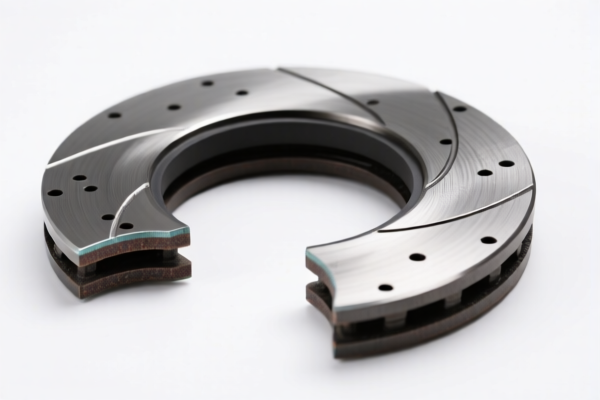
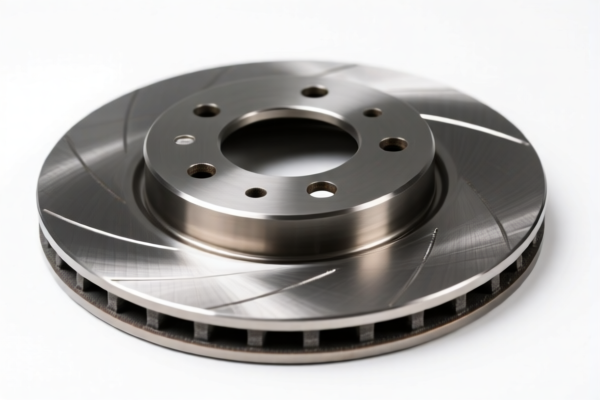
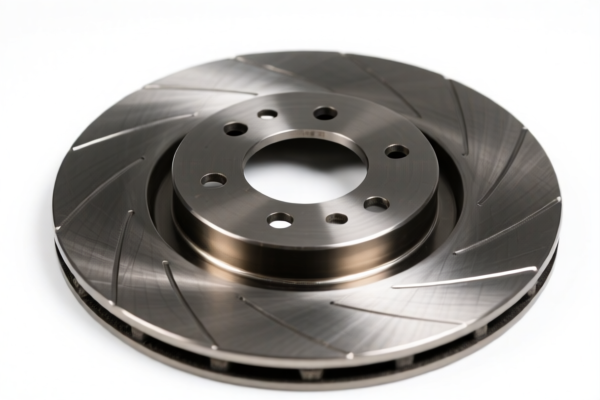
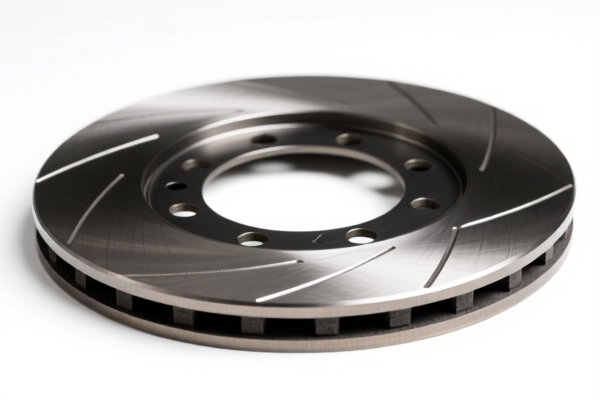
AI Analysis
🚗 Brake Pads (Brake Materials)
🌐 HS Code Reference & Customs Clearance Guide | 2026 Latest Tariff Analysis | Professional Clearance Strategy
📌 I. Product Definition & Classification: What Exactly Are "Brake Pads"?
Brake pads are critical safety components in the automotive braking system. In international trade, they are primarily classified based on their function (as vehicle parts) or their material composition (as rubber/摩擦 materials). This creates a classification dilemma that significantly impacts duty rates.
⚠️ Key Distinction:
- If classified as Vehicle Parts (Chapter 87): Based on function as "Braking System Components."
- If classified as Rubber/Composite Parts (Chapter 40): Based on inferred material as "Sulfurized Rubber/Friction Materials."
📦 II. HS Code Classification Details (2026 Latest Tariff Authority Comparison)
| HS Code | Product Description | Application Scenario | Material/Logic Basis |
|---|---|---|---|
8708.30.50.30 |
Parts of brakes and servo-brakes (Other) | Standard brake pads for vehicles (8701-8705) | Function-based: Defined as braking system components. No material conflict assumed. |
8708.30.50.40 |
Parts of brakes and servo-brakes (Other) | Brake linings/Asbestos-free organic pads | Function-based: Matches "Brake linings" function. Friction consumable component. |
4016.99.60.10 |
Other articles of sulfurized rubber (Other) | Brake pads inferred as Rubber/Friction Material | Material-based: Inferred as sulfurized rubber or rubber-composite friction material. |
4016.99.30.00 |
Other articles of vulcanized rubber (Other) | Brake pads as Rubber/Metal Composite | Material-based: Non-hard rubber, vehicle accessory fallback logic (8701-8705 parts). |
🔍 Key Reminder:
- Ch 87 Codes (8708.30.50.30/40): Prioritize functional use. If the pad is recognized as a standard vehicle braking part, this is often the primary classification path.
- Ch 40 Codes (4016.99.60.10/30): Prioritize material composition. If customs requires material proof or if the pad is a specialized rubber composite not explicitly listed in Ch 87, these codes may apply.
- No Conflict: The provided data indicates no obvious material or form conflicts for either classification path.
💰 III. 2026 Latest Tariff Rate Details (Including Surcharges & Policy Add-ons)
✅ Applicable Country: United States (US)
✅ Origin: China (CN)
✅ Effective Date: Ongoing (Includes subsequent imports)
🎯 1. 8708.30.50.30 & 8708.30.50.40 —— Vehicle Brake Parts (Function-Based)
| Item | Content |
|---|---|
| Base Duty | 2.5% (Ad Valorem) |
| Section 301 Surcharge | +25.0% (Against China) |
| Section 122 Duty | +10.0% (Additional surcharge for specific categories) |
| Total Duty Rate | 37.5% |
| Tax Calculation | CIF Value × 37.5% |
| De Minimis Eligibility | ❌ Not Eligible (High duty rate excludes low-value exemption) |
| Legal Basis Path | Base Tariff: 8708 → Section 301: Footnote 9903.01.25 → Section 122: Specific Add-on |
📌 Explanation:
- 2.5% Base: Standard Most Favored Nation (MFN) rate for vehicle parts.
- 25% Section 301: The primary trade war surcharge on Chinese goods.
- 10% Section 122: An additional specific duty layer often applied to certain auto parts.
- Total 37.5%: A significant cost factor. Must be factored into pricing strategies.
🎯 2. 4016.99.60.10 —— Rubber Articles (Material-Based: Sulfurized)
| Item | Content |
|---|---|
| Base Duty | 2.5% |
| Section 301 Surcharge | +25.0% |
| Section 122 Duty | +10.0% |
| Total Duty Rate | 37.5% |
| Tax Calculation | CIF Value × 37.5% |
| De Minimis Eligibility | ❌ Not Eligible |
| Legal Basis Path | Base Tariff: 4016 → Section 301 → Section 122 |
📌 Note:
- Despite being classified under Chapter 40 (Rubber), the total duty remains 37.5% due to the same Section 301 and Section 122 add-ons.
- The base rate is similar to Ch 87, but the classification logic differs.
🎯 3. 4016.99.30.00 —— Rubber Articles (Material-Based: Non-Hard Rubber)
| Item | Content |
|---|---|
| Base Duty | 0.0% |
| Section 301 Surcharge | +25.0% |
| Section 122 Duty | +10.0% |
| Total Duty Rate | 35.0% |
| Tax Calculation | CIF Value × 35.0% |
| De Minimis Eligibility | ❌ Not Eligible |
| Legal Basis Path | Base Tariff: 4016 (0% base) → Section 301 → Section 122 |
📌 Important:
- This code offers a slightly lower total rate (35.0%) compared to the Ch 87 codes (37.5%) because its base duty is 0%.
- However, this classification relies on the inference that the pad is a "non-hard rubber" composite part. Ensure documentation supports this material claim.
🛠️ IV. Customs Clearance Practical Advice (Real-World Pitfall Avoidance Guide)
✅ 1. Required Documentation Checklist (None Missing)
| Document | Mandatory | Description |
|---|---|---|
| ✅ Product Specification Sheet | ✔️ | Must detail dimensions, weight, material composition (e.g., "Semi-metallic," "Organic," "Ceramic"). |
| ✅ Material Composition Statement | ✔️ | Crucial for Ch 40 vs. Ch 87 classification. Prove if it's primarily rubber/composite. |
| ✅ Product Photos (Including Label) | ✔️ | Clear view of part number, brand, and any "Made in China" markings. |
| ✅ Commercial Invoice | ✔️ | Must state "Brake Pads for Automotive Use" or "Friction Material Parts." Avoid vague terms like "Auto Parts." |
| ✅ Packing List | ✔️ | Itemize quantity and net/gross weight. |
| ✅ Origin Certificate (CO) | ✔️ | Required for duty calculation and compliance. |
✅ 2. Declaration Tips (Key Mnemonics)
🔥 “Function First, Material Second, Name Specific, Cost Minimized!”
| Scenario | Correct Declaration | Error to Avoid |
|---|---|---|
| Standard Vehicle Brake Pads | 8708.30.50.30 or 8708.30.50.40 |
Misclassifying as general rubber parts → Potential audit risk. |
| Rubber-Composite Pads | 4016.99.30.00 (if base 0% applies) |
Using Ch 87 if Ch 40 offers 2.5% savings (35% vs 37.5%). |
| OEM Custom Pads | Provide client PO + Spec Sheet | Using generic "Brake Parts" → Delays in clearance. |
| Mixed Shipments (Brakes + Other) | Declare separately | Bundling into one line item → Incorrect duty assessment. |
✅ 3. Special Situations Handling
| Situation | Handling Advice |
|---|---|
| High-End Ceramic Pads | If primarily ceramic fibers, not rubber, ensure documentation supports Ch 87 (Function) or other material chapters if not rubber. |
| Aftermarket vs. OEM | Both are subject to the same duties. Labeling as "Aftermarket" does not reduce tax. |
| Kit Packaging (Pad + Hardware) | Declare as complete set. The principal component (Brake Pad) determines classification. |
| Disputed Material | If customs questions "Rubber" content, provide third-party lab test reports confirming sulfurized rubber content. |
🌍 V. Global Market Comparison (2026 Latest)
| Country/Region | Recommended HS Code | Duty (China Origin) | Certification | Notes |
|---|---|---|---|---|
| 🇺🇸 USA | 8708.30.50.30/40 or 4016.99.60.10/30 |
35.0% - 37.5% | None Specific | High surcharges (301+122). |
| 🇨🇳 China | 8708.30.50 |
5% - 8% | CCC (if applicable) | Lower base duty. |
| 🇪🇺 EU | 8708.30 |
4.5% | ECE R90 | No Section 301/122. |
| 🇲🇽 Mexico | 8708.30 |
0% (USMCA if origin) | NOM | Free if Mexican/North American origin. |
| 🇻🇳 Vietnam | 8708.30 |
0% (if local origin) | TCK | Avoids US tariffs if processed locally. |
📌 Conclusion:
- The US market imposes the highest barrier due to Section 301 and Section 122 duties.
- Duty Rate Difference: Choosing4016.99.30.00(35%) over8708.30.50.30(37.5%) saves 2.5% on duty, but requires strong material justification.
📌 VI. Common Errors & Pitfalls (Lessons Learned)
❌ Error 1: Declaring as "Auto Parts" without specifying "Brake"
👉 Consequence: Customs may reject or audit, leading to delays.
👉 Solution: Use precise description: "Brake Pads, Vehicle Parts, Ch 87/40".
❌ Error 2: Claiming "Rubber" classification without proof of sulfurization
👉 Consequence: Customs may reclassify to Ch 87, resulting in back-pay of duties.
👉 Solution: Provide material safety data sheets (MSDS) or composition reports.
❌ Error 3: Ignoring Section 122 Duty
👉 Consequence: Underpayment of 10% leading to penalties.
👉 Solution: Always verify if Section 122 applies to the specific HS Code subheading.
✅ Correct Practice:
“Automotive Brake Pads, Semi-Metallic, 8708.30.50.30, Origin: China, Duty: 37.5% (incl. 301 & 122)”
🎯 VII. Conclusion: Precision in Classification, Profit in Clearance!
🎯 Key Takeaways:
🔹 "Function vs. Material: Choose Wisely" – Ch 87 is safer for standard parts; Ch 40 may offer slight savings (35% vs 37.5%) if material is proven.
🔹 "Total Duty is High" – 35-37.5% is the reality for China-origin brake pads in the US. Factor this into cost models.
🔹 "Documentation is Key" – Material specs and clear descriptions prevent audits.
📌 Pro Tip:
If you are sourcing from Vietnam or Mexico, ensure proper origin documentation to potentially avoid US tariffs entirely under USMCA or other FTAs.
For US imports, consider Advance Ruling (CBP) to lock in the HS Code and duty rate, avoiding post-import audits.
📣 Take Action Now:
📞 Consult a Customs Broker + Provide Material Specs + Apply for Pre-Ruling
🚀 Ensure Smooth Clearance, Minimize Costs, Maximize Profit!
✨ Professional Clearance Starts with Accurate Classification!
💼 Every Percent of Duty Saved is Pure Profit!
Customer Reviews
About HS Code Classification
The Harmonized System (HS) is an internationally standardized nomenclature developed by the World Customs Organization (WCO) to classify traded products. Over 200 countries use the HS system as the basis for customs tariffs, trade statistics, and import/export regulations.
Each HS code follows a hierarchical structure:
- Chapter (2 digits) — Broad category of goods (e.g., Chapter 84: Machinery and Mechanical Appliances)
- Heading (4 digits) — More specific grouping within the chapter
- Subheading (6 digits) — Internationally standardized breakdown, used by all WCO member countries
- National subdivisions (8-10 digits) — Country-specific extensions for further classification, such as US HTSUS 10-digit codes
Correct HS code classification is essential for smooth customs clearance, accurate duty payment, and compliance with trade regulations. Misclassification can lead to customs delays, overpayment of duties, or penalties.
When importing from CN to US, the applicable tariff rates may include:
- Most-Favored-Nation (MFN) rate — The standard duty rate applied to WTO members
- General rate — Applied to countries without trade agreements
- Trade remedy duties — Additional tariffs such as Section 301 (anti-dumping), Section 232 (national security), or countervailing duties
The information provided on this page is for reference purposes only. For official classification, please consult with your local customs authority or a licensed customs broker.