Brake Pipe
CN → US| HS Code | Tariff Rate | Origin | Destination | Doc |
|---|---|---|---|---|
| 7307290090 | 90.0% | CN | US | Official Doc |
| 7307995045 | 89.3% | CN | US | Official Doc |
| 7412200015 | 88.0% | CN | US | Official Doc |
| 7412200085 | 88.0% | CN | US | Official Doc |
| 8708998180 | 12.5% | CN | US | Official Doc |
Product Images
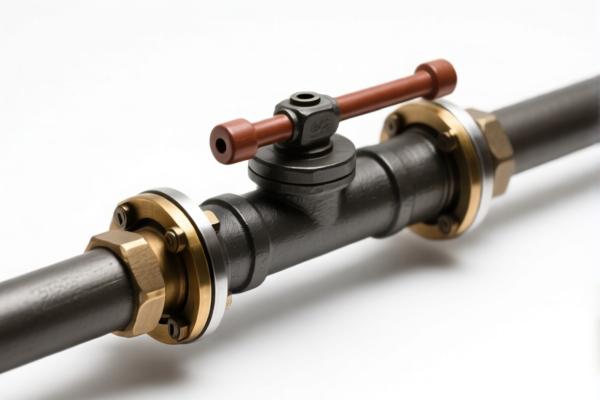
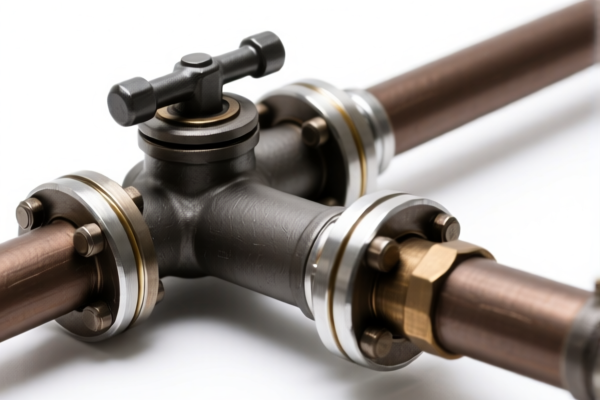
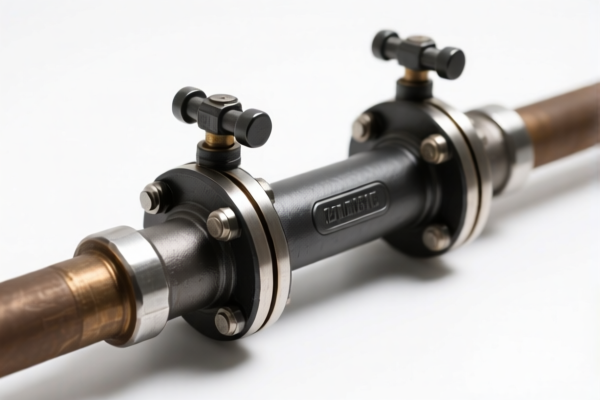
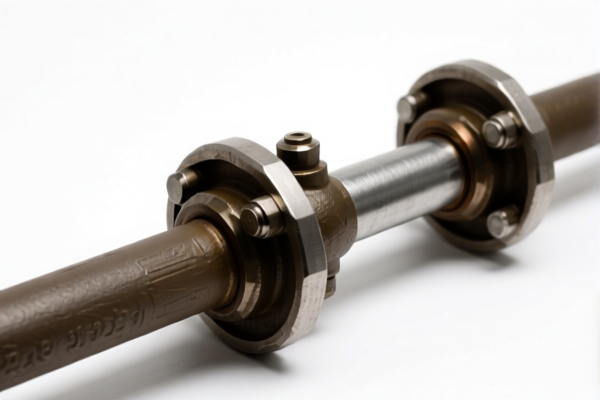
AI Analysis
🚗 Brake Pipe (Automotive Brake Pipe Fittings/Connectors)
🌐 HS Code Reference & Customs Clearance Guide | 2024-2026 Tariff Analysis | Professional Compliance Strategy
📌 I. Product Definition & Classification: What Exactly is a "Brake Pipe"?
In international trade, "Brake Pipe" usually refers to Brake Pipe Fittings, Connectors, or Tube Assemblies used in automotive braking systems. The classification depends heavily on the material (Steel, Copper, etc.) and the intended use (as a general pipe fitting vs. a specific auto part).
There are two main classification logic paths: 1. By Material (Tube Fittings): Classified under Chapter 73 (Iron/Steel) or Chapter 74 (Copper) as "Tube Fittings." 2. By Function (Auto Part): Classified under Chapter 87 as "Parts and Accessories of Motor Vehicles."
⚠️ Critical Distinction:
- If the item is described as a "Metal Tube Fitting" made of steel/copper → It falls under 73xx/74xx.
- If the item is explicitly described as an "Automotive Part" (e.g., "Brake Line Assembly for Vehicle XYZ") → It may fall under 8708.99.
- Risk: Misclassification can lead to massive tariff differences (e.g., 88% vs 12.5%).
📦 II. HS Code Classification Details (Based on Provided Data)
| HS Code | Product Description | Material/Logic | Key Characteristic |
|---|---|---|---|
| 7307.29.00.90 | Brake Pipe Fittings | Metal (Steel/Stainless Steel) | General tube fitting, not specifically for auto? Or auto part but classified as fitting. |
| 7307.99.50.45 | Brake Pipe Fittings | Iron/Non-Alloy Steel | Standard steel brake lines/fittings. |
| 7412.20.00.15 | Brake Pipe Fittings | Copper Alloy | Copper-based brake lines (common in older or high-performance systems). |
| 7412.20.00.85 | Brake Pipe Fittings | Copper Alloy/Metal | Other copper alloy tube fittings. |
| 8708.99.81.80 | Automotive Brake Parts | Auto Parts | Explicitly classified as a motor vehicle part/accessory. |
🔍 Key Insight:
- Chapters 73 & 74 treat the item as a generic industrial component (Tube Fitting).
- Chapter 87 treats the item as a specific automotive component.
- Why it matters: The tariff rate drops dramatically if classified as an Auto Part (8708) rather than a Steel/Copper Fitting (73xx/74xx).
💰 III. 2024-2026 Tariff Rate Breakdown (Including Additional Duties)
✅ Applicable Country: United States (US)
✅ Country of Origin: China (CN)
✅ Effective Time: Current US Trade Policy (Section 301, 122 Clause, IEEPA)
🎯 1. Steel-Based Fittings (7307.29.00.90 / 7307.99.50.45)
| Item | Details |
|---|---|
| Base Tariff | 4.3% - 5.0% |
| Section 301 (25%) | +25% (USITC Footnote regarding China-origin steel/iron products) |
| 122 Clause (Steel/Aluminum) | +50% (Specific surcharge on certain steel/aluminum/copper products under recent executive orders) |
| Total Effective Rate | ~89.3% - 90.0% |
| Tax Calculation | CIF Value × ~89.5% |
| De Minimis Exemption | ❌ NOT APPLICABLE (High duty rates disqualify from Section 321 de minimis) |
| Legal Basis | USITC:7307 + FOOTNOTE:301 + 122 Clause |
📌 Explanation:
- Steel products from China face heavy penalties.
- The 50% "122 Clause" is a critical additional surcharge for steel/aluminum/copper goods.
- Total burden is nearly 90%, making this classification extremely expensive.
🎯 2. Copper-Based Fittings (7412.20.00.15 / 7412.20.00.85)
| Item | Details |
|---|---|
| Base Tariff | 3.0% |
| Section 301 (25%) | +25% |
| 122 Clause (Copper) | +50% (Copper is also subject to the 122 Clause surcharge) |
| Total Effective Rate | 88.0% |
| Tax Calculation | CIF Value × 88.0% |
| De Minimis Exemption | ❌ NOT APPLICABLE |
| Legal Basis | USITC:7412 + FOOTNOTE:301 + 122 Clause |
📌 Note:
- Copper is also heavily targeted by the 122 Clause.
- Despite a lower base rate (3%), the 50% surcharge pushes the total to 88%.
🎯 3. Automotive Parts (8708.99.81.80) — THE LOWEST TARIFF OPTION
| Item | Details |
|---|---|
| Base Tariff | 2.5% |
| Section 301 | 0% (Auto parts are generally excluded from the 25% Section 301 list in this specific code range, subject to verification) |
| 122 Clause | 0% (Applies to steel/aluminum/copper products; if classified as a finished auto part, it may escape the 50% surcharge) |
| Total Effective Rate | 12.5% |
| Tax Calculation | CIF Value × 12.5% |
| De Minimis Exemption | ❌ NOT APPLICABLE (Still subject to standard duties) |
| Legal Basis | USITC:8708 |
📌 Critical Advantage:
- By classifying as an Automotive Part (8708), you avoid the 25% Section 301 and the 50% 122 Clause.
- Savings: From ~89% down to 12.5% → Massive Cost Reduction!
🛠️ IV. Customs Clearance Practical Advice (Avoiding Pitfalls)
✅ 1. Documentation Checklist
| Document | Requirement | Purpose |
|---|---|---|
| Product Specification Sheet | ✔️ Required | Must clearly state: "For use in Automotive Brake Systems" |
| Technical Drawing/Blueprint | ✔️ Required | Shows the part is designed for vehicle integration (supports 8708) |
| Material Test Report | ✔️ Required | Proves material composition (Steel vs. Copper) to avoid misclassification |
| Commercial Invoice | ✔️ Required | Description must include "Automotive Brake Pipe/Fitting" and "Part of Motor Vehicle" |
| HS Code Ruling (Pre-Ruling) | ✔️ Recommended | Apply for an Advance Ruling from USCBP to confirm 8708.99.81.80 eligibility |
✅ 2. Classification Strategy (The "How-To")
| Scenario | Recommended HS Code | Duty Rate | Risk Level |
|---|---|---|---|
| Raw Steel/Copper Tube Fittings (Generic) | 7307.xx / 7412.xx |
~89% | ✅ Low Risk (Correct per material), but High Cost |
| Finished Automotive Brake Line Assembly | 8708.99.81.80 |
12.5% | ⚠️ Medium Risk (Needs strong proof of "Auto Part" status) |
| Brake Pipe with Fittings Already Assembled | 8708.99.81.80 |
12.5% | ✅ High Success Rate (Finished product) |
🔥 Key Tip:
- Do NOT describe the product simply as "Steel Pipe Fitting."
- DO describe it as "Automotive Brake Pipe Assembly, for Passenger Car, Steel/Copper."
- Emphasize that it is not a generic industrial fitting but a specialized auto part.
✅ 3. Special Handling
| Situation | Advice |
|---|---|
| Mixed Shipments | Separate "Industrial Fittings" from "Auto Parts." Do not mix codes to avoid audit flags. |
| Copper Content | If the part is copper, ensure it is not just "copper tube" but a "brake component" to argue for 8708. |
| Section 301 Exclusions | Check if the specific 8708 sub-code has any exclusions. Generally, auto parts are favored. |
🌍 V. Global Market Comparison (2024-2026)
| Country | HS Code | Duty Rate | Notes |
|---|---|---|---|
| 🇺🇸 USA | 8708.99.81.80 |
12.5% | Best option. Avoids 75% surcharges. |
| 🇺🇸 USA | 7307.29.00.90 |
90.0% | Avoid! Massive 122 Clause penalty. |
| 🇨🇳 China | 7307.29.00.90 |
~5% | Low duty, but US market is the concern. |
| 🇪🇺 EU | 7307.29.00.90 |
~5% | No Section 301/122. Standard MFN rates. |
| 🇯🇵 Japan | 7307.29.00.90 |
~5% | Standard rates, no punitive tariffs. |
📌 Conclusion:
- The USA market is unique due to Section 301 and the 122 Clause.
- For US imports, Classifying as Auto Part (8708) is the only viable cost-saving strategy.
- For EU/Asia, material-based classification (73xx/74xx) is fine as rates are low.
📌 VI. Common Errors & Pitfalls (Lessons Learned)
❌ Error 1: Declaring as "Steel Pipe Fitting" for US imports
👉 Result: 90% duty. Loss of competitiveness.
❌ Error 2: Using vague descriptions like "Metal Connector"
👉 Result: Customs may misclassify as generic fitting (73xx) or demand extensive documentation.
❌ Error 3: Mixing industrial and automotive fittings in one shipment
👉 Result: Audit flag. All goods may be re-evaluated at higher rates.
❌ Error 4: Ignoring the "122 Clause"
👉 Result: Unexpected 50% surcharge on steel/copper goods.
✅ Best Practice:
Use precise language: "Automotive Brake Line Assembly, Model XYZ, for Toyota/Camry, Steel/Copper."
Provide OEM part numbers to prove automotive intent.
🎯 VII. Conclusion: Smart Classification Saves Money
🎯 Key Takeaway:
🔹 "Brake Pipe" is not just a pipe; it's an auto part.
🔹 For US Import: Fight for 8708.99.81.80 (12.5%) instead of 7307/7412 (~90%).
🔹 Documentation is Key: Prove it’s for vehicles, not general industry.
📌 Pro Tip:
If you are importing to the USA, consider applying for an Advance Ruling from US Customs (CBP) to lock in the 8708 classification. This provides legal certainty and prevents surprise duties at the border.
📣 Action Required:
📞 Consult your customs broker with the 8708 classification strategy.
📝 Update your product descriptions to emphasize Automotive Use.
🚀 Save ~75% in tariffs by choosing the right HS Code!
✨ Precision in Classification = Profit in Your Pocket!
💼 Don’t let 90% tariffs eat your margins. Classify Smart.
Customer Reviews
About HS Code Classification
The Harmonized System (HS) is an internationally standardized nomenclature developed by the World Customs Organization (WCO) to classify traded products. Over 200 countries use the HS system as the basis for customs tariffs, trade statistics, and import/export regulations.
Each HS code follows a hierarchical structure:
- Chapter (2 digits) — Broad category of goods (e.g., Chapter 84: Machinery and Mechanical Appliances)
- Heading (4 digits) — More specific grouping within the chapter
- Subheading (6 digits) — Internationally standardized breakdown, used by all WCO member countries
- National subdivisions (8-10 digits) — Country-specific extensions for further classification, such as US HTSUS 10-digit codes
Correct HS code classification is essential for smooth customs clearance, accurate duty payment, and compliance with trade regulations. Misclassification can lead to customs delays, overpayment of duties, or penalties.
When importing from CN to US, the applicable tariff rates may include:
- Most-Favored-Nation (MFN) rate — The standard duty rate applied to WTO members
- General rate — Applied to countries without trade agreements
- Trade remedy duties — Additional tariffs such as Section 301 (anti-dumping), Section 232 (national security), or countervailing duties
The information provided on this page is for reference purposes only. For official classification, please consult with your local customs authority or a licensed customs broker.