Brake Pipe Anti rust Fluid
CN → US| HS Code | Tariff Rate | Origin | Destination | Doc |
|---|---|---|---|---|
| 3819000010 | 41.5% | CN | US | Official Doc |
| 3819000090 | 41.5% | CN | US | Official Doc |
| 3403191000 | 35.2% | CN | US | Official Doc |
| 3820000000 | 24.0% | CN | US | Official Doc |
| 3819000090 | 41.5% | CN | US | Official Doc |
Product Images
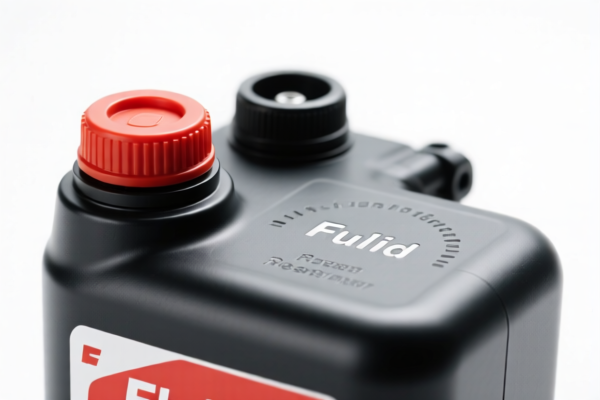
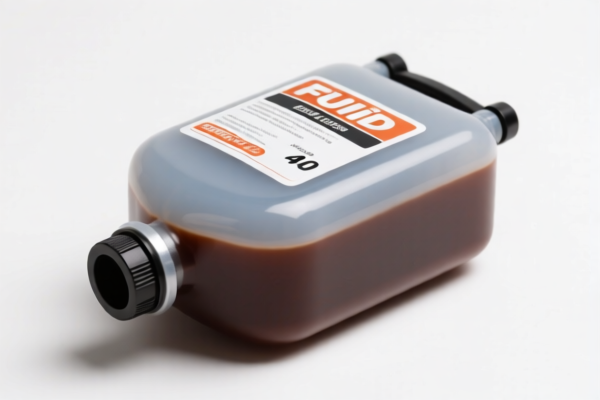
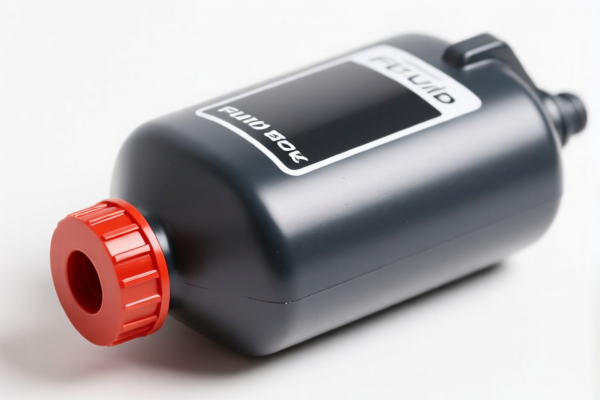

AI Analysis
🚿 Brake Pipe Anti-rust Fluid (Brake System Lubricants & Protectants)
🌐 HS Code Reference & Customs Clearance Guide | 2026 Latest Tariff Analysis | Professional Logistics Strategy
📌 I. Product Definition & Classification: Do You Really Know "Brake Fluid"?
Brake Pipe Anti-rust Fluid refers to specialized chemical fluids used in automotive, industrial, or railway hydraulic systems. Its primary functions include: 1. Lubrication: Reducing friction in brake cylinders, calipers, and linkage pins. 2. Corrosion Protection: Preventing rust on steel brake lines and components. 3. Hydraulic Transmission: Transmitting force in hydraulic brake systems (if it is a brake fluid).
In international trade, this product is often confused. It is NOT a simple oil, nor is it always a "chemical preparation" in the general sense. Its classification depends heavily on its primary function (hydraulic vs. protective/lubricating) and composition.
⚠️ Key Distinction Point:
- If the fluid is designed to transmit hydraulic pressure for braking (i.e., it is a "Brake Fluid") → It falls under 3819.00 (Hydraulic brake fluids and other hydraulic transmission fluids).
- If the fluid is primarily a liquid lubricant, grease remover, or anti-corrosion agent based on petroleum oils/mineral oils → It may fall under 3403.19 (Lubricating preparations containing petroleum oils).
- If the fluid is specifically an anti-freeze/defroster (often grouped with brake fluids in broader "automotive chemicals") → It may fall under 3820.00.
📦 II. HS Code Classification Details (2026 Latest Tariff Authority Comparison)
Based on the provided data, here are the four most likely HS Codes and their logic:
| HS Code | Product Description | Application Scenario | Primary Function |
|---|---|---|---|
3819.00.00.10 |
Hydraulic Brake Fluids | Primary brake lines, master cylinders, ABS systems | Hydraulic Transmission (Direct match: "Brake Fluid" = "Hydraulic Brake Fluid") |
3819.00.00.90 |
Other Hydraulic Transmission Fluids | General hydraulic systems, brake fluids not specified as "Type DOT..." | Hydraulic Transmission (Fallback/Other hydraulic fluids) |
3403.19.10.00 |
Lubricating Preparations (Petroleum-based) | Brake caliper slides, linkage pins, general rust prevention | Lubrication & Protection (Contains petroleum/mineral oil, used as a lubricant/prep) |
3820.00.00.00 |
Anti-freeze Fluids / Defrosters | Windshield washer fluid, radiator coolant, defrost sprays | Anti-freeze/Defrosting (Mentioned in data as "Anti-freeze/Defroster" match) |
🔍 Critical Reminder:
- "Brake Pipe Anti-rust Fluid" is a marketing name. Customs will look at the Safety Data Sheet (SDS) and Technical Specification.
- If it performs hydraulic pressure transmission, it MUST be classified under 3819. Misclassifying a hydraulic brake fluid as a lubricant (3403) to save tax is a high-risk violation.
- If it is merely a spray for lubricating sliding parts (not in the hydraulic circuit), 3403 is more appropriate.
- The mention of3820.00.00.00in the data seems to refer to a product containing "Anti-freeze" (防冻液), which is typically Coolant, not Brake Fluid. Ensure you are not confusing Coolant with Brake Fluid.
💰 III. 2026 Latest Tariff Rate Breakdown (Including Surtaxes & Policy Add-ons)
✅ Applicable Country: United States (US)
✅ Origin: China (CN)
✅ Effective Date: From November 10, 2025 (for subsequent imports)
🎯 1. 3819.00.00.10 & 3819.00.00.90 —— Hydraulic Brake Fluids
These codes share the same tariff structure according to the data.
| Item | Content |
|---|---|
| Base Tariff | 6.5% (ad valorem) |
| Section 301 Surcharge | +25.0% (USITC Footnote) |
| Section 122 Tariff | +10.0% (Specific policy tariff) |
| Total Tariff | 41.5% |
| Tax Calculation | CIF Value × 41.5% |
| De Minimis Exemption | ❌ No (Deny de minimis) |
| Legal Basis Path | Base: 6.5% → 301: 25.0% → 122: 10.0% → Total: 41.5% |
📌 Explanation:
- Base (6.5%): Standard MFN rate for hydraulic fluids.
- Section 301 (25%): Additional tariff on Chinese goods under Trade Act Section 301.
- Section 122 (10%): Specific surcharge applied to certain chemical products or as per current policy adjustments.
- Total 41.5% is a very high tariff. It applies to both specific brake fluids and other hydraulic transmission fluids.
- Warning: Do not attempt to split this into lubricants (3403) if it is functionally a brake fluid; customs audits will reclassify it and impose penalties.
🎯 2. 3403.19.10.00 —— Lubricating Preparations (Petroleum-based)
| Item | Content |
|---|---|
| Base Tariff | 0.2% (ad valorem) |
| Section 301 Surcharge | +25.0% |
| Section 122 Tariff | +10.0% |
| Total Tariff | 35.2% |
| Tax Calculation | CIF Value × 35.2% |
| De Minimis Exemption | ❌ No |
| Legal Basis Path | Base: 0.2% → 301: 25.0% → 122: 10.0% → Total: 35.2% |
📌 Explanation:
- Base (0.2%): Extremely low base rate for certain lubricating preparations.
- Surcharges: Same 301 (25%) and 122 (10%) surcharges apply.
- Total 35.2% is slightly lower than 41.5%, but only applicable if the product is NOT a hydraulic brake fluid.
- Use Case: This code is suitable for "Brake Caliper Grease Sprays," "Slide Pin Lubricants," or "General Rust Preventive Oils" that do not transmit hydraulic pressure in the braking system.
🎯 3. 3820.00.00.00 —— Anti-freeze Fluids / Defrosters
| Item | Content |
|---|---|
| Base Tariff | 6.5% |
| Section 301 Surcharge | +7.5% |
| Section 122 Tariff | +10.0% |
| Total Tariff | 24.0% |
| Tax Calculation | CIF Value × 24.0% |
| De Minimis Exemption | ❌ No |
| Legal Basis Path | Base: 6.5% → 301: 7.5% → 122: 10.0% → Total: 24.0% |
📌 Explanation:
- Total 24.0% is the lowest among the options.
- CRITICAL WARNING: This code is for Anti-freeze/Defrosters (e.g., Windshield Washer Fluid, Radiator Coolant).
- DO NOT use this code for Brake Fluids or Lubricants. Using3820for a brake-related product will likely lead to customs seizure or reclassification if the product’s function (anti-rust/lubrication) does not match "Anti-freeze."
🛠️ IV. Customs Clearance Practical Advice (Real-World Pitfall Avoidance Guide)
✅ 1. Document Checklist (Non-negotiable)
| Document | Must Provide | Description |
|---|---|---|
| ✅ Safety Data Sheet (SDS) | ✔️ | Must clearly state: Function (Hydraulic/Lubricant/Anti-freeze), Composition (Glycol/Petroleum/Silicone), Hazards. |
| ✅ Technical Specification Sheet | ✔️ | Must define if it meets DOT 3/4/5.1 standards (if it is brake fluid). |
| ✅ Product Photos | ✔️ | Clear labels showing "Brake Fluid," "Lubricant," or "Coolant." |
| ✅ Commercial Invoice | ✔️ | Accurate description: e.g., "Synthetic Brake Fluid, DOT 3, 500ml Bottle" (NOT just "Fluid"). |
| ✅ Packing List | ✔️ | Itemize quantities and weights. |
| ✅ Certificate of Origin | ✔️ | To determine if Section 301/122 applies. |
✅ 2. Declaration Tips (Key Mantras)
🔥 "Function Defines Code, Not Name!"
| Scenario | Correct Declaration | Wrong Action | Consequence |
|---|---|---|---|
| Fluid is used in brake master cylinder | 3819.00.00.10 or .90 |
Declaring as "Lubricant" (3403) |
Reclassification + Penalty + 41.5% vs 35.2% difference + Delay |
| Fluid is a spray for slide pins | 3403.19.10.00 |
Declaring as "Brake Fluid" (3819) |
Overpaying Tax (35.2% vs 41.5%) |
| Fluid is Windshield Washer | 3820.00.00.00 |
Declaring as "Brake Fluid" | High Risk of Seizure (Wrong HS Code) |
| Product is Unlabeled/No SDS | STOP | Guessing the HS Code | Customs Detention for Inspection |
✅ 3. Special Cases Handling
| Situation | Recommendation |
|---|---|
| OEM Custom Fluids | Provide client’s specification sheet proving function. |
| "Anti-Rust" Sprays | If it contains petroleum oil and is for surface protection, 3403 is safer. Ensure it is NOT in the hydraulic circuit. |
| Mixtures | If it is a mix of brake fluid and anti-freeze, declare based on principal function. Usually, brake function dominates. |
| High-Volume Imports | Consider applying for an Advance Ruling (Pre-classification) from US Customs and Border Protection (CBP) to lock in the HS Code and avoid retroactive audits. |
🌍 V. Global Market Clearance Comparison (2026 Latest)
| Country/Region | Recommended HS Code | Tariff (China Origin) | Certification | Notes |
|---|---|---|---|---|
| 🇺🇸 USA | 3819.00.00.10 |
41.5% (if Brake Fluid) | DOT Compliance | Highest tariff; strict on hydraulic fluids. |
| 🇺🇸 USA | 3403.19.10.00 |
35.2% (if Lubricant) | None specific | Lower rate, but function must be proven. |
| 🇨🇳 China | 3819.00 |
~6.5% | CCC (if applicable) | No 301/122 surcharges. |
| 🇪🇺 EU | 3819.00 |
0-6.5% | ECE R66/Brake Standards | No major surcharges, but strict safety regs. |
| 🇦🇺 Australia | 3819.00 |
5% | ADR Compliance | Moderate tariff. |
📌 Conclusion:
- The USA imposes the highest costs due to Section 301 (25%) and Section 122 (10%).
- Accurate Classification is Critical: Misclassifying a 41.5% product as a 35.2% product can lead to audits. Misclassifying a 41.5% product as a 24.0% product (Anti-freeze) is fraud.
- Best Strategy: If the product is truly a lubricant/spray (not hydraulic), declare under3403.19.10.00. If it is a brake fluid, accept the3819rate and optimize other costs.
📌 VI. Common Mistakes & Pitfalls (Blood Lessons)
❌ Mistake 1: Calling all "Brake Care" products "Brake Fluid" and using 3819
👉 Result: Overpaying tax. A lubricant spray should be 3403 (35.2%), not 3819 (41.5%).
❌ Mistake 2: Calling "Brake Fluid" a "Lubricant" to get 3403
👉 Result: Customs reclassification, back taxes, penalties, and potential seizure.
❌ Mistake 3: Using 3820 (Anti-freeze) for Brake Fluid
👉 Result: High risk of refusal. The function (hydraulic transmission) does not match "Anti-freeze."
❌ Mistake 4: Ignoring the SDS
👉 Result: Customs cannot verify the composition. Delayed release, additional inspection fees, and delays in supply chain.
✅ Correct Approach:
"Read the Function, Check the SDS, Match the HS Code Precisely."
- Hydraulic Pressure →3819(41.5%)
- Lubrication/Protection →3403(35.2%)
- Anti-freeze →3820(24.0%)
🎯 VII. Conclusion: Precision in Classification, Savings in Cost!
🎯 Remember the Mantra:
🔹 "Hydraulic is 3819 (41.5%), Lubricant is 3403 (35.2%), Anti-freeze is 3820 (24.0%). Choose wisely!"
🔹 "One word difference in function can save 6.3% in tax, but lies cost you everything!"
📌 Pro Tip:
If your Anti-rust Fluid is a spray lubricant (not for hydraulic systems), INSIST on the 3403.19.10.00 classification. Provide clear documentation that it is NOT for hydraulic transmission. This can save you 6.3% on tariffs (41.5% - 35.2%). However, if it is used in the brake lines, you must use 3819.
📣 Immediate Action:
📞 Contact your customs broker with the SDS and Product Specs.
🚀 Apply for a CBP Advance Ruling if you are importing large volumes to ensure classification certainty.
💼 Your bottom line depends on accurate HS Code classification!
✨ Professional Clearance Starts with Accurate Classification!
💼 Every Percentage Point Counts in International Trade!
Customer Reviews
About HS Code Classification
The Harmonized System (HS) is an internationally standardized nomenclature developed by the World Customs Organization (WCO) to classify traded products. Over 200 countries use the HS system as the basis for customs tariffs, trade statistics, and import/export regulations.
Each HS code follows a hierarchical structure:
- Chapter (2 digits) — Broad category of goods (e.g., Chapter 84: Machinery and Mechanical Appliances)
- Heading (4 digits) — More specific grouping within the chapter
- Subheading (6 digits) — Internationally standardized breakdown, used by all WCO member countries
- National subdivisions (8-10 digits) — Country-specific extensions for further classification, such as US HTSUS 10-digit codes
Correct HS code classification is essential for smooth customs clearance, accurate duty payment, and compliance with trade regulations. Misclassification can lead to customs delays, overpayment of duties, or penalties.
When importing from CN to US, the applicable tariff rates may include:
- Most-Favored-Nation (MFN) rate — The standard duty rate applied to WTO members
- General rate — Applied to countries without trade agreements
- Trade remedy duties — Additional tariffs such as Section 301 (anti-dumping), Section 232 (national security), or countervailing duties
The information provided on this page is for reference purposes only. For official classification, please consult with your local customs authority or a licensed customs broker.