Branch Fabric Patch
CN → US| HS Code | Tariff Rate | Origin | Destination | Doc |
|---|---|---|---|---|
| 3919905060 | 40.8% | CN | US | Official Doc |
| 3919102055 | 40.8% | CN | US | Official Doc |
| 4811904090 | 35.0% | CN | US | Official Doc |
Product Images


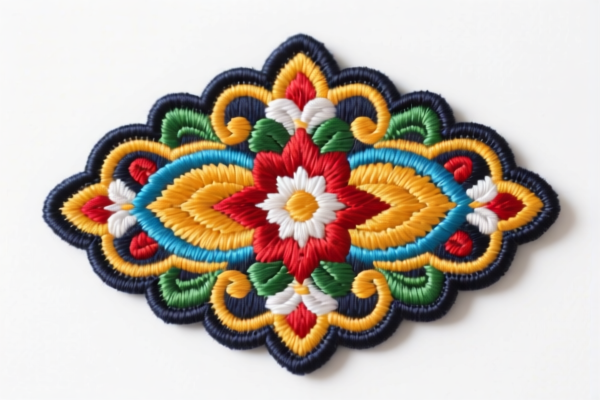
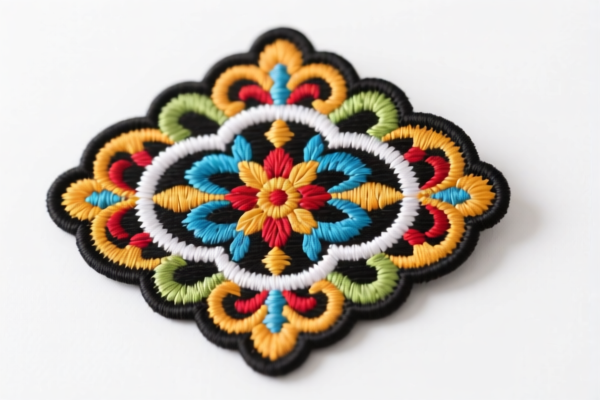
AI Analysis
🏷️ Branch Fabric Patch (Tree Strip Fabric Sticker)
🌐 HS Code Reference & Customs Clearance Guide | 2026 Latest Tariff Analysis | Professional Clearance Strategy
📌 I. Product Definition: What Exactly is a "Branch Fabric Patch"?
A "Branch Fabric Patch" (often referred to in trade as Tree Strip Fabric, Decorative Sticker, or Adhesive Label) is a flat, strip-shaped adhesive product. In international trade, its classification depends heavily on its material composition and structural form. It generally falls into two main categories:
- Plastic-Based Self-Adhesive Films: Made of PVC, PET, or other plastic substrates with an adhesive backing.
- Paper-Based Printed Labels: Made of paper, cellulose, or coated paper, often used for branding or decoration.
⚠️ Critical Distinction Point:
- If the material is primarily plastic/polymer → It is classified under Chapter 39 (Plastics).
- If the material is primarily paper/cellulose → It is classified under Chapter 48 (Paper).
- Do not mix these materials in a single HS Code declaration if they differ significantly, as this leads to misclassification penalties.
📦 II. HS Code Classification Details (2026 Latest Tariff Authority Comparison)
Based on the product data provided, here are the three most likely HS Code classifications:
| HS Code | Product Description | Material Inference | Form/Type |
|---|---|---|---|
3919.90.50.60 |
Self-adhesive plates, sheets, film, foil, tape, strip, and other flat shapes of plastics | Plastic substrate or composite material with self-adhesive properties | Flat/Strip-shaped |
3919.10.20.55 |
Self-adhesive plates, sheets, film, foil, tape, strip, and other flat shapes of plastics (in rolls < 20cm) | Plastic | Flat strip, self-adhesive |
4811.90.40.90 |
Other paper, paperboard, cellulose wadding and webs of cellulose fibers, coated, impregnated, covered, surface-colored, surface-decorated or printed | Paper or Cellulose-based | Coated/Printed sheet product |
🔍 Key Reminder:
- Plastic Patches (3919...): Must have a self-adhesive property. If it is non-adhesive plastic film, it belongs elsewhere (e.g., Ch. 39 other headings).
- Paper Patches (4811...): Must be paper-based. If it contains significant plastic lamination that changes its essential character, it may still be classified under Ch. 39.
- Material Declaration: You MUST specify the exact material (e.g., "PVC Self-Adhesive" vs. "Kraft Paper Label") in your commercial invoice. Ambiguity leads to customs valuation delays.
💰 III. 2026 Latest Tariff Rate Breakdown (Including Surcharges & Policy Add-ons)
✅ Applicable Country: United States (US)
✅ Origin: China (CN)
✅ Effective Date: November 10, 2025 (and subsequent imports)
🎯 1. 3919.90.50.60 —— Self-adhesive Plastic Products (Other)
| Item | Content |
|---|---|
| Base Tariff Rate | 5.8% (ad valorem) |
| Section 301 Surcharge | +25.0% |
| Section 122 Tariff (IEEPA) | +10.0% |
| Total Tax Rate | 40.8% |
| Tax Calculation | CIF Value × 40.8% |
| De Minimis Exemption | ❌ Not Eligible (deny_de_minimis) |
| Legal Basis Path | Base: 5.8% + Section 301: 25% + Section 122: 10% |
📌 Explanation:
- "Base 5.8%": Standard MFN (Most Favored Nation) tariff for plastic self-adhesive products.
- "Section 301 25%": Additional tariff imposed under US Trade Act Section 301 against Chinese goods.
- "Section 122 10%": Additional tariff under the International Emergency Economic Powers Act (IEEPA), specifically targeting certain Chinese imports.
- Total Cost: This is a high-cost category. The 40.8% rate significantly impacts profit margins.
🎯 2. 3919.10.20.55 —— Self-adhesive Plastic Rolls/Strips (< 20cm Width)
| Item | Content |
|---|---|
| Base Tariff Rate | 5.8% (ad valorem) |
| Section 301 Surcharge | +25.0% |
| Section 122 Tariff (IEEPA) | +10.0% |
| Total Tax Rate | 40.8% |
| Tax Calculation | CIF Value × 40.8% |
| De Minimis Exemption | ❌ Not Eligible (deny_de_minimis) |
| Legal Basis Path | Base: 5.8% + Section 301: 25% + Section 122: 10% |
📌 Note:
- This code is for narrower strips (typically < 20 cm).
- The tariff burden is identical to3919.90.50.60.
- Ensure the width measurement is accurate. Misdeclaring width to fit a lower-tariff code (if any existed, which it doesn't here) is fraud.
🎯 3. 4811.90.40.90 —— Paper/Cellophane Based Self-Adhesive Labels
| Item | Content |
|---|---|
| Base Tariff Rate | 0.0% (ad valorem) |
| Section 301 Surcharge | +25.0% |
| Section 122 Tariff (IEEPA) | +10.0% |
| Total Tax Rate | 35.0% |
| Tax Calculation | CIF Value × 35.0% |
| De Minimis Exemption | ❌ Not Eligible (deny_de_minimis) |
| Legal Basis Path | Base: 0.0% + Section 301: 25% + Section 122: 10% |
📌 Strategic Insight:
- Savings Alert: If your product is 100% paper-based (e.g., kraft paper stickers, printed paper labels with water-activated gum or pressure-sensitive adhesive on paper), you save 5.8% compared to plastic.
- Total Rate: 35.0% vs. 40.8%.
- Verification: Customs may challenge paper classification if the backing contains plastic fibers or if the adhesive layer is thick plastic. Ensure the substance is paper.
🛠️ IV. Customs Clearance Practical Advice (Pitfall Avoidance Guide)
✅ 1. Required Documentation Checklist (Non-Negotiable)
| Document | Must Provide | Description |
|---|---|---|
| ✅ Product Specification Sheet | ✔️ | Must state Material Composition (e.g., "95% Paper, 5% Adhesive" vs. "100% PVC"). |
| ✅ Product Photos | ✔️ | Clear images showing the texture (grain for paper, smooth/shiny for plastic). |
| ✅ Commercial Invoice | ✔️ | Description must match HS Code. E.g., "Paper Decorative Sticker" vs. "Plastic Adhesive Tape." |
| ✅ Certificate of Origin | ✔️ | Required to prove Chinese origin (subject to tariffs). |
| ✅ Label Structure Diagram | ✔️ | If claimed as paper, show layers. If plastic, confirm no fabric backing exceeds thresholds. |
✅ 2. Declaration Tips (Key Mantra)
🔥 "Material Dictates Code, Plastic Pays More, Paper Saves 5.8%, Declare Precisely!"
| Scenario | Correct Declaration | Wrong Practice |
|---|---|---|
| Plastic Patch | 3919.90.50.60 or 3919.10.20.55 |
Declaring as Paper → Risk of Re-classification + Penalty |
| Paper Patch | 4811.90.40.90 |
Declaring as Plastic → Overpaying 5.8% unnecessarily |
| Mixed Material | Analyze essential character | Vague description "Fabric Patch" → Customs Detention |
| Roll Width | Specify exact width | Ignoring width for 3919.10 → Wrong subheading |
✅ 3. Special Considerations
| Situation | Handling Advice |
|---|---|
| "Fabric" Claim | If the product contains textile fabric (not just paper/plastic), it may fall under Chapter 59 (Impregnated Textiles) or 6307 (Other Made-up Articles). However, the provided data suggests Plastic or Paper. If it is truly fabric, consult a specialist for 5911 or 6307.90 codes, which may have different tariff rates. |
| Adhesive Type | Pressure-sensitive vs. Gummed. Both can be plastic or paper. The base material determines the Chapter. |
| De Minimis | ❌ No Loophole: These codes are explicitly flagged for Section 301 and Section 122, meaning even small shipments (< $800) may not qualify for de minimis exemption if strictly enforced or if thresholds change. Assume full taxation. |
🌍 V. Global Market Comparison (2026 Update)
| Country/Region | Recommended HS Code | Tariff (China Origin) | Remarks |
|---|---|---|---|
| 🇺🇸 USA | 3919.90.50.60 / 4811.90.40.90 |
40.8% (Plastic) / 35.0% (Paper) | High tariffs due to Section 301 & 122. |
| 🇨🇳 China | 3919.90.50 / 4811.90.40 |
5.8% / 0% | No Section 301/122 for imports into China. |
| 🇪🇺 EU | 3919.90 / 4811.90 |
~5% - 6.5% | No Section 301/122 equivalent. Standard MFN. |
| 🇬🇧 UK | 3919.90 / 4811.90 |
~5% - 6.5% | Post-Brexit tariffs similar to EU. |
📌 Conclusion:
- The US market is uniquely expensive for these products due to bilateral trade policies.
- Cost Optimization: If feasible, switch to Paper-based (4811...) patches to save 5.8% on every shipment.
- Avoid Plastic if margins are thin; the 40.8% rate is a significant barrier.
📌 VI. Common Mistakes & Pitfall Guide (Lessons from Blood & Tears)
❌ Mistake 1: Calling it "Fabric Patch" without specifying material.
👉 Consequence: Customs cannot determine if it’s Textile (Ch. 59/60), Plastic (Ch. 39), or Paper (Ch. 48). Result: Hold for Inspection.
❌ Mistake 2: Using Paper HS Code for Plastic-backed labels.
👉 Consequence: Under-declaration of value/tariff. Result: Back Taxes + Fines.
❌ Mistake 3: Assuming "Small Value" = No Tax.
👉 Consequence: Section 122 and 301 tariffs often apply even to low-value shipments if not exempted. Result: Unexpected Bill at Border.
✅ Correct Approach:
"Self-Adhesive Decorative Strip, Material: PVC Plastic, Width: 5cm, Origin: China"
OR
"Self-Adhesive Paper Label, Material: Kraft Paper, Printed, Origin: China"
🎯 VII. Conclusion: Professional Declaration, Save Money, Smooth Clearance!
🎯 Remember the Mantra:
🔹 "Plastic Stickers Pay 40.8%, Paper Stickers Pay 35.0%. Material is Key!"
🔹 "Don't Guess 'Fabric', Specify 'Paper' or 'Plastic'!"
🔹 "US Tariffs are High, Plan Your Supply Chain Early!"
📌 Pro Tip:
If your product is textile-based (true fabric), it is NOT in the provided data. You must classify it under Chapter 59 or 6307, which may have different tariff rates. Do not force it into Plastic/Paper codes if it is truly woven material.
📣 Immediate Action:
📞 Verify Material: Check your supplier’s spec sheet. Is it Plastic or Paper?
🚀 Calculate Cost: Apply 40.8% or 35.0% to your CIF value.
📋 Declare Precisely: Use the exact HS Code and material description in your Commercial Invoice.
✨ Professional Clearance Starts with Accurate Classification!
💼 Every 1% of Tariff Saved is Pure Profit!
Customer Reviews
About HS Code Classification
The Harmonized System (HS) is an internationally standardized nomenclature developed by the World Customs Organization (WCO) to classify traded products. Over 200 countries use the HS system as the basis for customs tariffs, trade statistics, and import/export regulations.
Each HS code follows a hierarchical structure:
- Chapter (2 digits) — Broad category of goods (e.g., Chapter 84: Machinery and Mechanical Appliances)
- Heading (4 digits) — More specific grouping within the chapter
- Subheading (6 digits) — Internationally standardized breakdown, used by all WCO member countries
- National subdivisions (8-10 digits) — Country-specific extensions for further classification, such as US HTSUS 10-digit codes
Correct HS code classification is essential for smooth customs clearance, accurate duty payment, and compliance with trade regulations. Misclassification can lead to customs delays, overpayment of duties, or penalties.
When importing from CN to US, the applicable tariff rates may include:
- Most-Favored-Nation (MFN) rate — The standard duty rate applied to WTO members
- General rate — Applied to countries without trade agreements
- Trade remedy duties — Additional tariffs such as Section 301 (anti-dumping), Section 232 (national security), or countervailing duties
The information provided on this page is for reference purposes only. For official classification, please consult with your local customs authority or a licensed customs broker.