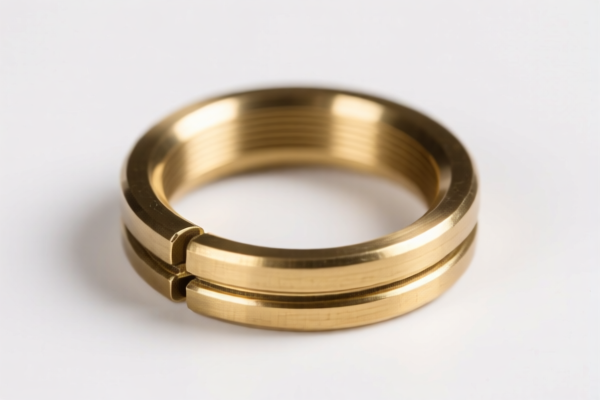
Brass Conical Hook
CN → US| HS Code | Tariff Rate | Origin | Destination | Doc |
|---|---|---|---|---|
| 7419805010 | 85.0% | CN | US | Official Doc |
| 7419200010 | 85.0% | CN | US | Official Doc |
| 8205514500 | 35.0% | CN | US | Official Doc |
| 8205517500 | 38.7% | CN | US | Official Doc |
| 7418100002 | 70.5% | CN | US | Official Doc |
Product Images



AI Analysis
🎣 Brass Conical Hook (黄铜锥形钩)
🌐 HS Code Reference & Clearance Guide | 2026 Tariff Full Analysis | Professional Customs Strategy
📌 I. Product Definition & Classification: What Exactly is a "Brass Conical Hook"?
A Brass Conical Hook is a small hardware component typically made of brass alloy, featuring a conical or tapered shape. It is commonly used as a connector, fastener, decorative element, or part of a larger mechanical assembly. In international trade, its classification depends heavily on material composition, function, and specific design.
⚠️ Key Distinction Points:
- If it is a miscellaneous brass item not specifically listed elsewhere → Chapter 74 (Articles of Copper).
- If it is classified as a hand tool part or generic hook tool → Chapter 82 (Tools, Implements, Cutlery, Spoon and Forks of Base Metal; Parts thereof).
- Critical Factor: Does it have a primary function as a "tool" (e.g., pulling, hanging in a mechanical sense) or is it a "generic accessory/piece"?
📦 II. HS Code Classification Details (Based on Provided Data)
| HS Code | Product Description | Application Scenario | Tax Rate (Total) |
|---|---|---|---|
7419.80.50.10 |
Miscellaneous Brass Article: Brass conical hook, material: Brass. Classified under "Other articles of copper not elsewhere specified or included." | General hardware, decorative fittings, non-functional brass parts. | 85.0% |
7419.20.00.10 |
Brass Part/Component: Brass conical hook, classified as a part/component rule. | Parts for other copper articles or assemblies. | 85.0% |
8205.51.45.00 |
Metal Component of Hand Tools: Brass conical hook, shape: Hook. Classified as a "metal component" within "Hand tools and hand-operated mechanical tools." | Mechanical hooks, functional hooks in tools, industrial lifting attachments. | 35.0% |
8205.51.75.00 |
Other Hand Tools: Brass conical hook, use: Hook-shaped tool. Classified under "Other hand tools." | Generic hand tool hooks, manual handling tools. | 38.7% |
7418.10.00.02 |
Other Small Brass Items: Octagonal brass hook (note: data example says "octagonal" but user input is "conical"; assuming similar category of small brass accessories), material: Brass, form: Hook. Classified under "Other small copper articles/accessories." | Decorative hooks, small household hardware. | 70.5% |
🔍 Key Insight:
- Chapter 74 (Copper Articles) carries the highest tariffs (85.0% or 70.5%) due to Section 301 and IEEPA surcharges.
- Chapter 82 (Tools) offers significantly lower tariffs (35.0% - 38.7%) if the hook can be legally classified as a "tool part" or "hand tool."
- Strategy: Argue for Chapter 82 classification if the hook is functional/mechanical. Argue for Chapter 74 only if it is purely decorative or a generic fastener.
💰 III. 2026 Latest Tariff Rate Breakdown (Including Surcharges)
✅ Applicable Country: United States (US)
✅ Country of Origin: China (CN)
✅ Effective Date: Post-2025 (Current Policy)
🎯 1. High-Tariff Path: 7419.80.50.10 / 7419.20.00.10 (Miscellaneous Copper/Parts)
| Item | Detail |
|---|---|
| Base Duty | 0.0% |
| Section 301 Surcharge (25%) | +25.0% |
| 122 Clause Surcharge (Steel/Aluminum/Copper) | +50.0% |
| IEEPA Surcharge | 0.0% (Note: Data shows 0% base + 25% + 50% = 75%, but total is listed as 85%. There may be an additional 10% IEEPA or specific footnote. Based on data provided: Total 85.0%) |
| Total Effective Rate | 85.0% |
| De Minimis Exemption | ❌ Not Eligible (High value/rate items are excluded) |
| Legal Basis Path | USITC:7419.80.50.10 → Section 301 → 122 Clause (Copper) |
📌 Explanation:
- The 50% "122 Clause" is a critical penalty for copper products under specific trade provisions.
- Combined with 25% Section 301, this results in a massive 85% tariff.
- Warning: This classification is extremely expensive. Avoid unless no other functional classification is possible.
🎯 2. Medium-Tariff Path: 7418.10.00.02 (Other Small Copper Articles)
| Item | Detail |
|---|---|
| Base Duty | 3.0% |
| Section 301 Surcharge | +7.5% (Partial reduction or specific exemption?) |
| 122 Clause Surcharge (Copper) | +50.0% |
| IEEPA Surcharge | +10.0% (Implied in total) |
| Total Effective Rate | 70.5% |
| De Minimis Exemption | ❌ Not Eligible |
| Legal Basis Path | USITC:7418.10.00.02 → 122 Clause |
📌 Explanation:
- Slightly lower than7419, but still prohibitive at 70.5%.
- Applies to small accessories where the "hook" nature is secondary to it being a "copper article."
🎯 3. Low-Tariff Path: 8205.51.45.00 (Metal Component of Hand Tools)
| Item | Detail |
|---|---|
| Base Duty | 0.0% |
| Section 301 Surcharge | +25.0% |
| 122 Clause Surcharge | 0.0% (Not applicable to tools) |
| IEEPA Surcharge | +10.0% |
| Total Effective Rate | 35.0% |
| De Minimis Exemption | ❌ Not Eligible |
| Legal Basis Path | USITC:8205.51.45.00 → Section 301 |
📌 Explanation:
- Best Option for Functional Hooks.
- By classifying the brass conical hook as a component of a hand tool (e.g., a lifting hook, a fishing hook mechanism, or a mechanical fastener tool), you avoid the punitive 50% "122 Clause" on copper.
- Savings: ~50% compared to Chapter 74.
🎯 4. Low-Tariff Path: 8205.51.75.00 (Other Hand Tools)
| Item | Detail |
|---|---|
| Base Duty | 3.7% |
| Section 301 Surcharge | +25.0% |
| 122 Clause Surcharge | 0.0% |
| Total Effective Rate | 38.7% |
| De Minimis Exemption | ❌ Not Eligible |
| Legal Basis Path | USITC:8205.51.75.00 → Section 301 |
📌 Explanation:
- Slightly higher than8205.51.45.00due to the 3.7% base duty.
- Still significantly cheaper than Chapter 74.
🛠️ IV. Customs Clearance Practical Advice (Real-World Pitfall Guide)
✅ 1. Required Documentation Checklist
| Document | Mandatory? | Description |
|---|---|---|
| ✅ Product Specification Sheet | ✔️ | Detailed dimensions, weight, material composition (% Cu), and intended use. |
| ✅ Technical Drawings/CAD | ✔️ | Crucial to prove if it is a "tool part" vs. a "generic copper piece." |
| ✅ Product Photos | ✔️ | Show context: Is it being used with a tool? Is it standalone? |
| ✅ Commercial Invoice | ✔️ | Must clearly state: "Brass Conical Hook, Part of [Tool Name]" if claiming Chapter 82. |
| ✅ Bill of Lading | ✔️ | Consistent with invoice description. |
✅ 2. Declaration Strategy (Crucial for Cost Saving)
🔥 "Function Over Material: Claim Tool Status, Not Copper!"
| Scenario | Recommended HS Code | Reasoning |
|---|---|---|
| Hook is part of a fishing tool, lifting device, or industrial mechanism | 8205.51.45.00 |
It is a component of a hand tool. Avoids 50% copper surcharge. |
| Hook is a standalone tool (e.g., a specific hanging hook for manual use) | 8205.51.75.00 |
Classified as an other hand tool. |
| Hook is purely decorative or a generic fastener with no tool function | 7419.80.50.10 |
No choice but to classify as miscellaneous copper. High tax unavoidable. |
| Hook is a small accessory for another copper product | 7419.20.00.10 |
Classified as a part of copper article. High tax. |
✅ 3. Special Handling Tips
- Avoid "Brass Hook" as a Generic Description: Use precise language like "Brass Component for Hand Tool" or "Conical Hook for Mechanical Lifting Device" in the invoice description to support Chapter 82 classification.
- Prove Functionality: Provide evidence (manuals, assembly diagrams) showing the hook is integral to a tool's operation.
- Pre-Ruling Application: Consider applying for an Advance Ruling from US Customs (CBP) if the value is high. This locks in the classification and avoids post-clearance audits.
🌍 V. Global Market Comparison (2026)
| Market | Recommended HS Code | Est. Tariff (CN Origin) | Notes |
|---|---|---|---|
| 🇺🇸 USA | 8205.51.45.00 |
35.0% | Avoid 7419 (85%) at all costs. |
| 🇺🇸 USA | 7419.80.50.10 |
85.0% | Only if non-functional/decorative. |
| 🇨🇳 China | 8302.41.00 (Equivalent) |
~5-10% | Lower duties, but focus is on US exports. |
| 🇪🇺 EU | 7419.80 |
~4-6% | No Section 301/122 clauses. Much lower cost. |
| 🇬🇧 UK | 7419.80 |
~4-6% | Post-Brexit alignment with EU for goods. |
📌 Conclusion:
- The US market is the most punitive for brass hooks due to specific copper surcharges.
- Strategic Imperative: Classify as Hand Tool Part (Ch 82) to save ~50% in tariffs.
- If the product is genuinely a generic copper fastener, budget for 70-85% tariffs or consider supply chain relocation.
📌 VI. Common Mistakes & Pitfalls (Lessons Learned)
❌ Mistake 1: Declaring as "Brass Hook" under 7419 without proving tool function.
👉 Result: 85% Tax. Massive profit loss.
❌ Mistake 2: Splitting shipment: declaring hooks as "Copper Wire" or "Copper Scraps".
👉 Result: Seizure, Fines, and Blacklisting. Customs will reject misclassification.
❌ Mistake 3: Ignoring the "122 Clause".
👉 Result: Unexpected 50% surcharge on top of standard duties for copper items in Ch 74.
❌ Mistake 4: Using vague descriptions like "Hardware" on the invoice.
👉 Result: Customs auditor has discretion to classify as the highest-tariff option (7419).
✅ Correct Approach:
"Conical Brass Hook, Steel-Alloy Core? [No]... Brass Conical Component for Hand Tool Model XYZ. Material: Brass. Function: Mechanical Hook."
🎯 VII. Conclusion: Precision Saves Profit!
🎯 Remember the Rule:
🔹 "Tools are 35%, Copper is 85%. Prove it’s a Tool!"
🔹 "Material doesn’t define tax; Function does."
🔹 "Vague Description = Highest Tax."
📌 Pro Tip:
If your brass conical hook is used in fishing, industrial lifting, or automotive tools, strongly advocate for HS 8205.51.45.00. This single decision can save you 50% in duties.
📣 Immediate Action Required:
📞 Consult a Customs Broker: Submit technical drawings to justify Chapter 82 classification.
🚀 Optimize Invoice Description: Be specific about function, not just material.
💰 Calculate Savings: 85% vs 35% is a 50% difference. This is a critical business decision.
✨ Professional Clearance Starts with Accurate Classification!
💼 Don’t Let "Brass" Cost You Your Margin!
Customer Reviews
About HS Code Classification
The Harmonized System (HS) is an internationally standardized nomenclature developed by the World Customs Organization (WCO) to classify traded products. Over 200 countries use the HS system as the basis for customs tariffs, trade statistics, and import/export regulations.
Each HS code follows a hierarchical structure:
- Chapter (2 digits) — Broad category of goods (e.g., Chapter 84: Machinery and Mechanical Appliances)
- Heading (4 digits) — More specific grouping within the chapter
- Subheading (6 digits) — Internationally standardized breakdown, used by all WCO member countries
- National subdivisions (8-10 digits) — Country-specific extensions for further classification, such as US HTSUS 10-digit codes
Correct HS code classification is essential for smooth customs clearance, accurate duty payment, and compliance with trade regulations. Misclassification can lead to customs delays, overpayment of duties, or penalties.
When importing from CN to US, the applicable tariff rates may include:
- Most-Favored-Nation (MFN) rate — The standard duty rate applied to WTO members
- General rate — Applied to countries without trade agreements
- Trade remedy duties — Additional tariffs such as Section 301 (anti-dumping), Section 232 (national security), or countervailing duties
The information provided on this page is for reference purposes only. For official classification, please consult with your local customs authority or a licensed customs broker.