Brass Hook
CN → US| HS Code | Tariff Rate | Origin | Destination | Doc |
|---|---|---|---|---|
| 7418100025 | 70.5% | CN | US | Official Doc |
| 7418100002 | 70.5% | CN | US | Official Doc |
| 7419200050 | 85.0% | CN | US | Official Doc |
| 7419805050 | 85.0% | CN | US | Official Doc |
| 8308100000 | 0.0% | CN | US | Official Doc |
Product Images
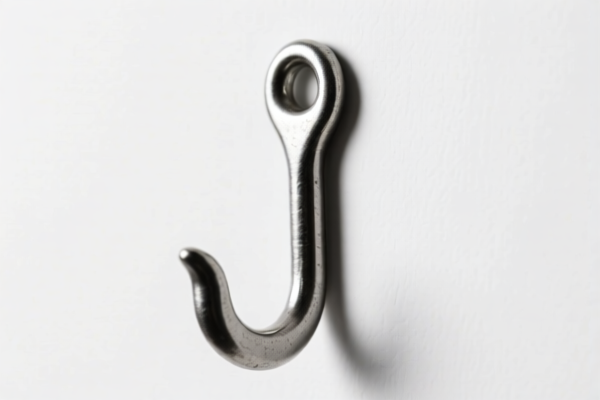
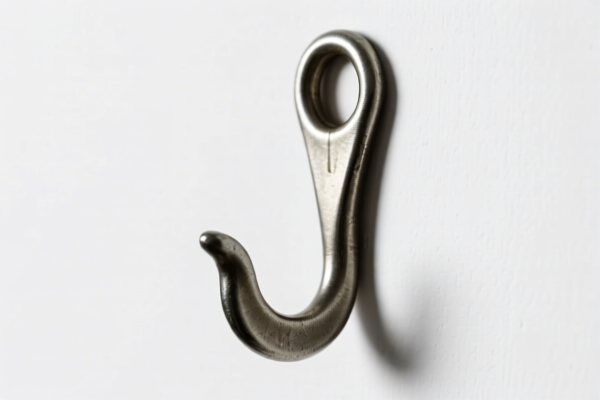
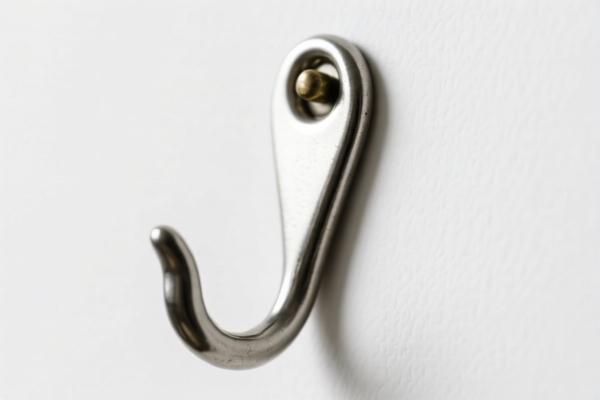
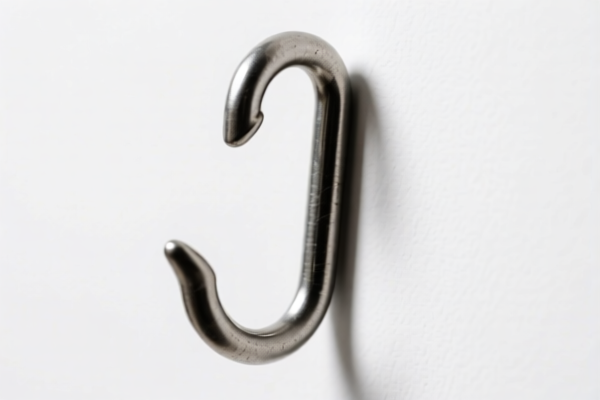
AI Analysis
🏗️ Brass Hook (Huang Tong Gou) – The "Heavy-Tariff" Trap!
🌐 HS Code Reference & Customs Clearance Guide | 2026 Tariff Analysis | High-Severity Warning
📌 I. Product Definition & Classification: What Exactly is a "Brass Hook" in Trade?
A "Brass Hook" is a generic term that can lead to vastly different tariff liabilities depending on its specific form, intended use, and degree of processing. In international trade (specifically US imports from China), this simple item is a minefield of classification errors.
There are 5 distinct classification paths in the provided data, ranging from ~70.5% to 85% in total tariffs. The difference lies in whether it is considered a "domestic utility," a "raw copper product," or a "metal fitting."
⚠️ Critical Distinction:
- Home/Living Use vs. Industrial Raw Material: Is it a finished accessory (like a towel hook) or a raw component?
- S-Shape vs. Generic Hook: The shape "S-hook" often dictates home-use classification, while generic "hooks" may fall under general copper articles.
- Plumbing/Fittings vs. General Hardware: Is it a pipe fitting? No. These are general hardware hooks.
📦 II. HS Code Classification Matrix (2026 Data Source)
| HS Code | Product Summary (From Data) | Category Context | Total Tax Rate | Key Characteristic |
|---|---|---|---|---|
| 7418.10.00.25 | Brass S-Hook | Non-cooking household items | 70.5% | Specific shape (S-hook), domestic use. |
| 7418.10.00.02 | Brass S-Hook | Sanitary/living supplies accessory | 70.5% | Specific shape, accessory for hygiene/living. |
| 7419.20.00.50 | Brass Hook | Other unworked copper articles | 85.0% | Generic hook, less specific than 7418. |
| 7419.80.50.50 | Brass Hook | Non-pipe-specific copper articles | 85.0% | Generic hook, not a pipe fitting. |
| 8308.10.00.00 | Brass Hook | Base metal hooks (General) | 1.1¢/kg + 37.9% | Classified as general "base metal" hardware, not copper-specific. |
🔍 Observation:
- 7418 codes (S-hooks) generally attract 70.5% total tax.
- 7419 codes (Generic hooks) attract a higher 85.0% total tax.
- 8308 (General Base Metal) has a complex structure: Specific Duty + Ad Valorem + Additional Tariffs.
💰 III. 2026 Latest Tariff Rate Breakdown (Detailed Analysis)
✅ Applicable Jurisdiction: United States (US)
✅ Origin: China (CN)
✅ Key Policy Drivers: Section 301 Tariffs (25%), Section 232 (Steel/Aluminum/Copper - 50%), IEEPA (10%)
🎯 1. The "S-Hook" Path: HS 7418.10.00.25 & .02
Best for: Clearly identifiable S-shaped hooks for home, gym, or kitchen (non-cooking) use.
| Item | Detail | Value |
|---|---|---|
| Base Tariff | 3.0% | Low base rate for copper articles. |
| Section 301 Tariff | 7.5% | Additional tariff on Chinese goods. |
| IEEPA 122 Clause | 10.0% | Specific surcharge for certain Chinese imports. |
| Section 232 / Cu. Surcharge | 50.0% | "Steel, Aluminum, Copper Articles" Surcharge. |
| TOTAL EFFECTIVE RATE | 70.5% | HIGH |
📌 Explanation:
Despite a low base tariff (3%), the 50% surcharge on copper products from China dominates the cost. Even if the product is a small hook, if classified under Chapter 74 (Copper), this hit is unavoidable.
🎯 2. The "Generic Hook" Path: HS 7419.20.00.50 & .80
Risk: Higher total burden.
| Item | Detail | Value |
|---|---|---|
| Base Tariff | 0.0% | Lower base for "other copper articles." |
| Section 301 Tariff | 25.0% | HIGHER Section 301 rate for general copper. |
| IEEPA 122 Clause | 10.0% | Same surcharge. |
| Section 232 / Cu. Surcharge | 50.0% | Same copper surcharge. |
| TOTAL EFFECTIVE RATE | 85.0% | VERY HIGH |
📌 Warning:
Misclassifying an S-hook as a generic "other copper article" (7419) increases the total tax from 70.5% to 85%. Always prefer 7418 if the shape is distinctly an S-hook.
🎯 3. The "General Hardware" Path: HS 8308.10.00.00
Potential Strategy: If the hook is considered a general "base metal fitting" rather than a specific copper article, the calculation changes.
| Item | Detail | Value |
|---|---|---|
| Specific Duty | 1.1¢ / kg | Fixed cost per kilogram. |
| Base Ad Valorem | 2.9% | Low percentage. |
| Section 301 Tariff | 25.0% | Standard 301 rate. |
| IEEPA 122 Clause | 10.0% | Standard surcharge. |
| TOTAL EFFECTIVE RATE | ~37.9% + 1.1¢/kg | MEDIUM |
📌 Strategic Note:
- This rate (~37.9%) is significantly lower than 70.5% or 85%.
- However, this classification assumes the hook is NOT primarily defined by its copper content but by its function as a "base metal hook."
- Risk: Customs may argue it IS a copper article (Chapter 74) due to material composition. You must prove it is a generic hardware item first.
- Weight Sensitivity: For very light hooks, 1.1¢/kg is negligible. For heavy brass fittings, it adds up.
🛠️ IV. Customs Clearance Practical Advice (Avoid the Pitfalls)
✅ 1. Preparation Checklist
| Document | Required? | Note |
|---|---|---|
| Product Photos | ✅ Mandatory | Must clearly show S-shape vs. generic shape. |
| Material Spec Sheet | ✅ Mandatory | Confirm "Brass" composition (Cu-Zn alloy). |
| Intended Use Description | ✅ Mandatory | "Non-cooking household accessory" helps justify 7418. |
| Commercial Invoice | ✅ Mandatory | Clearly state "Brass S-Hook" not just "Hook." |
| Certificate of Origin | ✅ Mandatory | For US-China trade, origin is critical for 301/IEEPA. |
✅ 2. Classification Strategy (The "Golden Rule")
🔥 "Shape Defines Category, Material Defines Surcharge!"
| Scenario | Recommended HS Code | Why? |
|---|---|---|
| Clearly S-Shaped | 7418.10.00.25 |
Specific description avoids "Generic" 85% trap. |
| Custom/Complex Hook | 7419.20.00.50 |
If not S-shaped, must accept 85% rate under copper rules. |
| Generic Brass Hardware | 8308.10.00.00 |
Only if you can argue it's general base metal hardware, not a "copper article." High risk of challenge. |
✅ 3. Critical Red Flags & Mitigation
| Risk | Impact | Mitigation |
|---|---|---|
| Misclassification as "S-Hook" when it's generic | Tax jumps from 70.5% → 85% | Ensure photos show distinct S-curve. |
| Misclassification as "Copper Article" when it's "Hardware" | Tax jumps from ~38% → 70.5%+ | Provide engineering drawings showing it as a fastener/fitting, not a raw material. |
| Section 232 Copper Surcharge (50%) | Massive cost increase | This applies to all Chapter 74 items. Cannot be avoided unless reclassified to Ch. 83. |
| IEEPA 10% Surcharge | Cost increase | Applies to Chinese origin. No mitigation unless origin changes. |
🌍 V. Global Market Comparison (2026 Snapshot)
| Region | Likely HS Code | Est. Tariff (China Origin) | Notes |
|---|---|---|---|
| 🇺🇸 USA | 7418.10.00.25 / 8308.10.00.00 |
38% - 85% | Highest Risk. Heavy Section 232/301/IEEPA叠加. |
| 🇪🇺 EU | 7418.10 / 8308.10 |
~0% - 5% | No Section 232/IEEPA equivalent. Standard MFN rates apply. |
| 🇨🇳 China (Import) | 7418.10 / 8308.10 |
~0% - 5% | Low duty. No punitive tariffs. |
| 🇬🇧 UK | 7418.10 / 8308.10 |
~0% - 5% | Post-Brexit, generally low tariffs for China. |
📌 Conclusion:
- The US is NOT a friendly market for Chinese brass hooks due to multiple layers of punitive tariffs.
- If targeting the US, consider reclassification to 8308 (General Hardware) to save ~30-40% in duty, but ensure you have strong documentation to defend this against CBP audits.
- If targeting EU/Asia, tariffs are minimal; focus on quality and logistics.
📌 VI. Common Errors & Blood-Teaching Lessons
❌ Error 1: Calling it "Copper Hook" and classifying under 7419.
👉 Result: 85% Tax.
✅ Fix: If it's an S-hook, use 7418 (70.5%). If it's generic hardware, try 8308 (~38%).
❌ Error 2: Assuming "Brass" means "Copper Article" automatically.
👉 Result: Incurring the 50% Section 232 Surcharge.
✅ Fix: Argue for 8308 (Base Metal Hardware) if the hook is standard industrial hardware, not a specialty copper item.
❌ Error 3: Ignoring the 1.1¢/kg in 8308.
👉 Result: Unexpected costs for heavy brass items.
✅ Fix: Calculate total landed cost: (Value × 37.9%) + (Weight × $0.011).
🎯 VII. Final Recommendation: Professional Clearance Strategy
🎯 Action Plan for US Imports:
- Photograph Everything: Show the S-curve clearly.
- Draft a "Use Statement": "Brass S-Hook used for hanging non-food items in domestic settings."
- Apply for Ruling (Optional but Recommended): Before large shipments, file an Advance Ruling with US CBP for
7418.10.00.25vs.8308.10.00.00. - Cost-Benefit Analysis:
- If Weight is Low & Value is High →
8308(Save on ad valorem). - If Shape is Distinct S-Hook →
7418(Safe, moderate cost). - Avoid
7419unless necessary (Highest cost).
- If Weight is Low & Value is High →
📣 Pro Tip:
"In the US, 'Brass' is a liability. 'S-Shape' is a shield. 'Hardware' is a loophole. Use them wisely!"
✨ Smart Classification, Smarter Profits!
💼 Don't let a 15% misclassification error wipe out your margin!
Customer Reviews
About HS Code Classification
The Harmonized System (HS) is an internationally standardized nomenclature developed by the World Customs Organization (WCO) to classify traded products. Over 200 countries use the HS system as the basis for customs tariffs, trade statistics, and import/export regulations.
Each HS code follows a hierarchical structure:
- Chapter (2 digits) — Broad category of goods (e.g., Chapter 84: Machinery and Mechanical Appliances)
- Heading (4 digits) — More specific grouping within the chapter
- Subheading (6 digits) — Internationally standardized breakdown, used by all WCO member countries
- National subdivisions (8-10 digits) — Country-specific extensions for further classification, such as US HTSUS 10-digit codes
Correct HS code classification is essential for smooth customs clearance, accurate duty payment, and compliance with trade regulations. Misclassification can lead to customs delays, overpayment of duties, or penalties.
When importing from CN to US, the applicable tariff rates may include:
- Most-Favored-Nation (MFN) rate — The standard duty rate applied to WTO members
- General rate — Applied to countries without trade agreements
- Trade remedy duties — Additional tariffs such as Section 301 (anti-dumping), Section 232 (national security), or countervailing duties
The information provided on this page is for reference purposes only. For official classification, please consult with your local customs authority or a licensed customs broker.