Brass LED Recessed Light
CN → US| HS Code | Tariff Rate | Origin | Destination | Doc |
|---|---|---|---|---|
| 7418100023 | 70.5% | CN | US | Official Doc |
| 8539520091 | 12.0% | CN | US | Official Doc |
| 8539520020 | 12.0% | CN | US | Official Doc |
| 9405424000 | 39.7% | CN | US | Official Doc |
| 9405114010 | 38.9% | CN | US | Official Doc |
Product Images
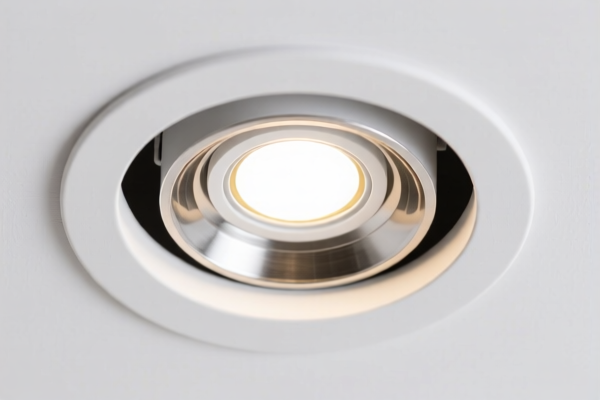
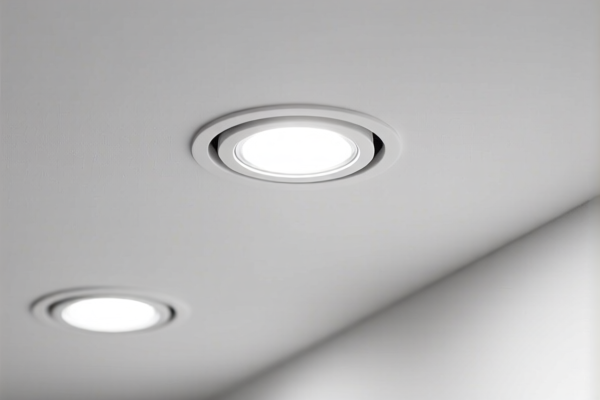
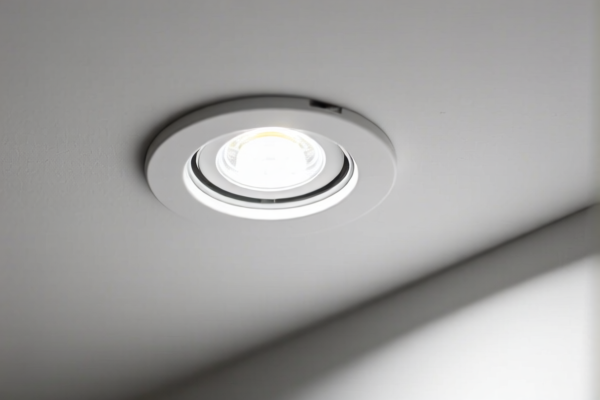
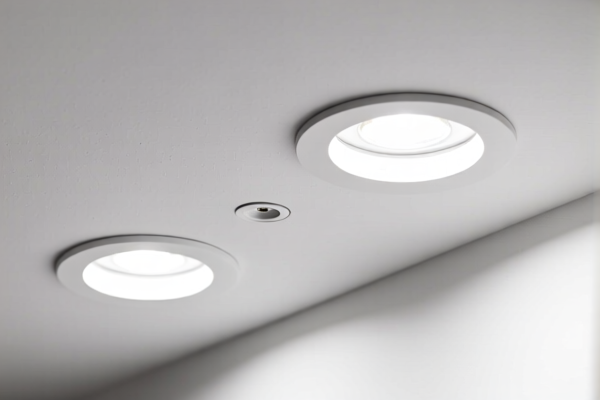
AI Analysis
💡 Brass LED Recessed Light (黄铜材质LED嵌入式灯具)
🌐 HS Code Reference & Customs Clearance Guide | 2026 Latest Tariff Analysis | Professional-Level Strategy
📌 I. Product Definition & Classification: What Exactly Is a "Brass LED Recessed Light"?
A Brass LED Recessed Light is a specialized lighting fixture characterized by three key attributes: 1. Material: Housing/body made of Brass (implies specific metal classification conflicts). 2. Light Source: LED (Light Emitting Diode) technology. 3. Installation Form: Recessed/Embedded (designed to be installed into ceilings/walls, often classified under "Built-in" or "Embedded" fixtures).
In international trade, the classification depends heavily on whether customs authorities view the item primarily as a general lighting fixture (Chapter 94) or as an electrical lamp part/source (Chapter 85). The presence of brass triggers specific "Section Notes" that can increase duties significantly if not classified correctly.
⚠️ Key Distinction:
- If classified under Chapter 85 (Electrical machinery/lamps): Generally lower base duty, but subject to specific LED tariffs.
- If classified under Chapter 94 (Furniture/Luminaires): Generally higher base duty, especially if considered "Household" or "Built-in," plus additional Section 232/122 penalties.
📦 II. HS Code Classification Details (2026 Latest Tariff Alignment)
Based on the provided data, here are the five potential HS Codes, their logic, and tax implications.
| HS Code | Summary/Logic | Total Tax Rate | Tax Breakdown |
|---|---|---|---|
7418.10.00.23 |
Brass Material Priority. Treated as a household article made of brass. | 70.5% | Base: 3.0% Additional: 7.5% Sec 301 (122 Clause): 10% Steel/Aluminum/Copper/Brass Penalty: 50% |
8539.52.00.91 |
LED Source Priority. Classified as other LED lamps. Brass material is deemed non-conflicting. | 12.0% | Base: 2.0% Additional: 0.0% Sec 301 (122 Clause): 10% |
8539.52.00.20 |
LED Form Factor. Classified as LED lighting fixtures. Brass material is non-conflicting. | 12.0% | Base: 2.0% Additional: 0.0% Sec 301 (122 Clause): 10% |
9405.42.40.00 |
Integrated Luminaires. Combines Brass, LED, and Luminaire form. Fits general luminaire criteria. | 39.7% | Base: 4.7% Additional: 25.0% Sec 301 (122 Clause): 10% |
9405.11.40.10 |
Household Built-in. Specific to LED sources, Brass material, and Recessed/Embedded household use. | 38.9% | Base: 3.9% Additional: 25.0% Sec 301 (122 Clause): 10% |
🔍 Critical Insight:
- Codes8539.52.x0offer the lowest tax burden (12%) by leveraging the "LED" classification and ignoring the brass material conflict. - Code7418.10.00.23is the most expensive (70.5%) due to a specific 50% penalty on "Steel, Aluminum, Copper Products" (Brass is a copper alloy). - Codes9405.x0represent the middle ground, treating it as a furniture/luminaire item with standard additional duties.
💰 III. 2026 Latest Tariff Rate Breakdown (Including Surcharges & Policies)
✅ Applicable Country: United States (US)
✅ Origin: China (CN)
✅ Effective Time: Post-2025/2026 Regulatory Period
🎯 1. The "Low-Risk" Path: 8539.52.00.91 & 8539.52.00.20
Strategy: Classify as LED Lamps/Fixtures under Chapter 85. This avoids the "Household Article" and "Brass Metal" penalties.
| Item | Content |
|---|---|
| Base Duty | 2.0% |
| Additional Duty | 0.0% |
| Section 301 (122 Clause) | +10% |
| Total Tax Rate | 12.0% |
| Calculation | CIF Value × 12.0% |
| De Minimis Eligibility | ❌ No (Subject to strict enforcement for LEDs/Lighting) |
| Legal Basis | Chapter 85 (Electrical Machinery), HTSUS 8539.52 |
📌 Why this works:
- By arguing the product is primarily an LED light source or LED fixture, you bypass the stricter "Brass/Copper" category.
- The 0% additional duty is a significant advantage over the 25% or 50% penalties in other codes.
🎯 2. The "Medium-Risk" Path: 9405.11.40.10 & 9405.42.40.00
Strategy: Classify as Household/Commercial Luminaires under Chapter 94. This is the traditional classification for "lights," but incurs higher duties.
| Item | Content |
|---|---|
| Base Duty | 3.9% - 4.7% |
| Additional Duty | 25.0% |
| Section 301 (122 Clause) | +10% |
| Total Tax Rate | 38.9% - 39.7% |
| Calculation | CIF Value × ~39.3% |
| De Minimis Eligibility | ❌ No |
| Legal Basis | Chapter 94 (Furniture/Luminaires), HTSUS 9405 |
📌 Why this is costly:
- The 25% additional duty is a standard penalty for many Chinese-made goods under Section 301.
- Even though it avoids the 50% copper penalty, the base rate + 25% still far exceeds the 12% LED classification.
🎯 3. The "High-Risk" Path: 7418.10.00.23
Strategy: Classify as Household Articles of Brass. AVOID THIS UNLESS NECESSARY.
| Item | Content |
|---|---|
| Base Duty | 3.0% |
| Additional Duty | 7.5% |
| Section 301 (122 Clause) | +10% |
| Metal/Copper Penalty | +50% |
| Total Tax Rate | 70.5% |
| Calculation | CIF Value × 70.5% |
| De Minimis Eligibility | ❌ No |
| Legal Basis | Chapter 74 (Copper/Brass), HTSUS 7418 |
📌 Why this is dangerous:
- The 50% penalty applies specifically to "Steel, Aluminum, Copper Products." Since Brass is a copper alloy, customs may aggressively apply this penalty.
- A 70.5% tax rate is prohibitive for most retail products.
🛠️ IV. Customs Clearance Practical Advice (Avoiding Pitfalls)
✅ 1. Preparation Checklist (Non-Negotiable)
| Document | Mandatory? | Explanation |
|---|---|---|
| ✅ Product Specifications | ✔️ | Must explicitly state: "LED Light Source," "Recessed Installation," "Brass Housing." |
| ✅ Material Declaration | ✔️ | Clearly define the % of Brass vs. other materials (e.g., glass lens, plastic drivers). |
| ✅ Photographs | ✔️ | Show the product installed (recessed) and a close-up of the LED chip. |
| ✅ Invoice & Packing List | ✔️ | HS Code must match the declared value. Do not split shipments to evade de minimis. |
| ✅ Certifications | ✔️ | UL/ETL (Safety), FCC (EMC for drivers), RoHS (Environmental). |
✅ 2. Classification Strategy: How to Justify the 12% Rate
To achieve the 12.0% tax rate under 8539.52.00.91 or 8539.52.00.20, you must provide evidence that the LED component is the primary value and function.
| Argument | Evidence Required |
|---|---|
| "Primary Function is Illumination" | Technical datasheet showing lumens, wattage, and LED lifespan. |
| "Brass is Secondary/Housing" | Bill of Materials (BOM) showing the cost of the brass housing vs. the LED module/driver. |
| "Not a 'Household Article' of Metal" | Argue that the product is an electrical apparatus (Chapter 85), not a mere metal craft item (Chapter 74). |
⚠️ Warning: If customs disputes the classification and moves you to
9405(39%) or7418(70.5%), you will face back taxes, penalties, and interest.
✅ 3. Special Considerations for Recessed Lights
- Driver/Transformer: Ensure the LED driver is included in the same HS Code classification. Sometimes drivers are classified separately (
8504.40), which can complicate the entry. Recommendation: Declare as an assembled unit. - Trim/Frame: If the brass part is merely a decorative "trim" around a standard LED downlight, emphasize that the core product is the LED module.
- Voltage: Specify if it is Line Voltage (120V/240V) or Low Voltage (12V/24V). This affects the driver classification but generally keeps the light under Chapter 85 or 94.
🌍 V. Global Market Comparison (2026 Overview)
| Market | Recommended HS Code | Est. Tax Rate | Key Requirement |
|---|---|---|---|
| 🇺🇸 USA | 8539.52.00.91 |
12.0% | Strong justification for LED classification. |
| 🇪🇺 EU | 9405.42 |
~6% - 10% | CE Marking, ErP Directive compliance. |
| 🇨🇳 China | 9405.42 |
~5% - 10% | CCC Certification (if applicable). |
| 🇬🇧 UK | 9405.42 |
~6% | UKCA Marking post-Brexit. |
📌 Conclusion for US Importers:
The 12.0% rate under Chapter 85 is significantly cheaper than the ~39% or 70.5% rates in Chapter 94/74. Aggressively pursue the Chapter 85 classification with proper technical documentation.
📌 VI. Common Errors & Pitfalls (Blood Lessons)
❌ Error 1: Declaring as "Brass Decorative Light" under 7418.
👉 Consequence: 70.5% tax. Avoid at all costs.
👉 Fix: Emphasize the LED technology and electrical function.
❌ Error 2: Splitting the shipment into "Brass Housing" and "LED Module."
👉 Consequence: Customs may assess higher duties on the housing (7418) or require complex assembly rules.
👉 Fix: Declare as a complete assembled unit.
❌ Error 3: Mislabeling as "General Lighting" without specifying LED.
👉 Consequence: May be pushed to older incandescent categories with different duties.
👉 Fix: Explicitly state "LED" in the product name and description.
✅ Correct Declaration Example:
"LED Recessed Downlight, 12W, 3000K, Warm White, Brass Finish Housing, Integrated Driver, For Ceiling Installation. Model: BR-LED-12W-BR."
🎯 VII. Conclusion: Professional Classification Saves Money!
🎯 Key Takeaway:
🔹 For Brass LED Recessed Lights: Aim for
8539.52.00.91or8539.52.00.20(12% Tax).
🔹 Avoid7418.10.00.23(70.5% Tax) and9405(39% Tax) if possible.
🔹 Your strongest argument: The product is an electrical lighting apparatus (Chapter 85), not a metal household article (Chapter 74).
📌 Pro Tip:
If you are unsure, file for an Advance Ruling (Pre-Decision) from US Customs and Border Protection (CBP). This provides legal certainty and protects you from future audits.
📣 Immediate Action:
📞 Consult your customs broker with the Technical Data Sheet highlighting the LED component.
🚀 Save up to 58.5% in taxes by choosing the correct HS Code!
✨ Precision Classification, Maximum Profit!
💼 Don't let a 58% tax difference erase your margin!
Customer Reviews
About HS Code Classification
The Harmonized System (HS) is an internationally standardized nomenclature developed by the World Customs Organization (WCO) to classify traded products. Over 200 countries use the HS system as the basis for customs tariffs, trade statistics, and import/export regulations.
Each HS code follows a hierarchical structure:
- Chapter (2 digits) — Broad category of goods (e.g., Chapter 84: Machinery and Mechanical Appliances)
- Heading (4 digits) — More specific grouping within the chapter
- Subheading (6 digits) — Internationally standardized breakdown, used by all WCO member countries
- National subdivisions (8-10 digits) — Country-specific extensions for further classification, such as US HTSUS 10-digit codes
Correct HS code classification is essential for smooth customs clearance, accurate duty payment, and compliance with trade regulations. Misclassification can lead to customs delays, overpayment of duties, or penalties.
When importing from CN to US, the applicable tariff rates may include:
- Most-Favored-Nation (MFN) rate — The standard duty rate applied to WTO members
- General rate — Applied to countries without trade agreements
- Trade remedy duties — Additional tariffs such as Section 301 (anti-dumping), Section 232 (national security), or countervailing duties
The information provided on this page is for reference purposes only. For official classification, please consult with your local customs authority or a licensed customs broker.