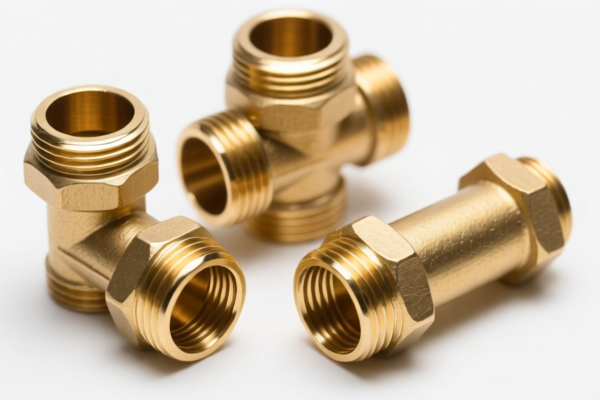
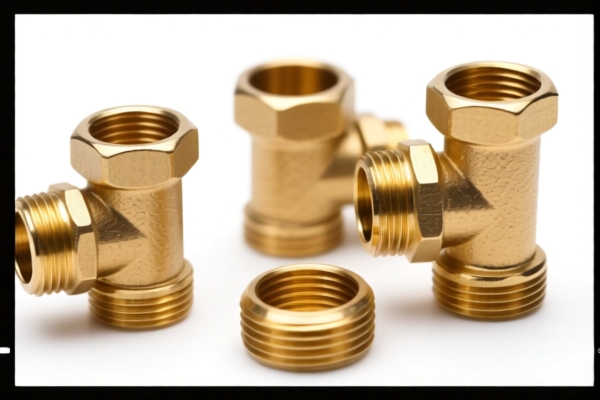
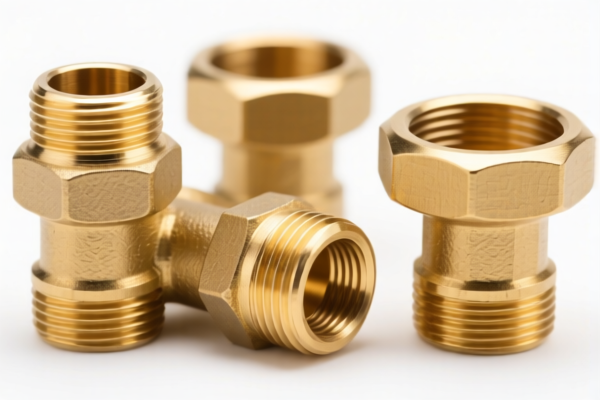
Brass Pipe Fitting
CN → US| HS Code | Tariff Rate | Origin | Destination | Doc |
|---|---|---|---|---|
| 7412200045 | 88.0% | CN | US | Official Doc |
| 7412200035 | 88.0% | CN | US | Official Doc |
| 7407213000 | 87.2% | CN | US | Official Doc |
| 7419200010 | 85.0% | CN | US | Official Doc |
| 7419805010 | 85.0% | CN | US | Official Doc |
| 7407211500 | 87.2% | CN | US | Official Doc |
Product Images
AI Analysis
🔧 Brass Pipe Fittings (Huangtong Guan Dao Jie Tou/Pei Jian)
🌐 HS Code Reference & Customs Clearance Guide | 2026 Latest Tariff Analysis | Professional Strategy for US Importers
📌 I. Product Definition & Classification: Do You Know Your "Brass Fitting"?
Brass pipe fittings are essential components in plumbing, HVAC, and industrial fluid systems. They connect, control, or terminate piping systems. In international trade, classification hinges on two critical factors: 1. Material Composition: Specifically, whether it is classified as "Copper Base Alloy" (Brass) or specifically under "Tube/Pipe" categories. 2. Form/Shape: Is it a specific "Joint/Fitting" (HS 7412), a "Tube/Pipe" profile (HS 7407), or a "General Article" (HS 7419)?
⚠️ Key Distinction:
- If it is a specific joint, connector, or elbow → Likely HS 7412
- If it is considered a tube, pipe, or hollow profile → Likely HS 7407
- If it is a general fitting/accessory not specifically named → Likely HS 7419
📦 II. HS Code Classification Matrix (2026 Latest Tariff Authority)
| HS Code | Product Description | Application Scenario | Key Identifier |
|---|---|---|---|
7412.20.00.45 |
Brass Pipe Fittings, Copper-Zinc Base Alloy, Tube Accessory | Specific branded/specified brass joints | "Joint/Connector" + "Copper-Zinc" |
7412.20.00.35 |
Brass Pipe Fittings, Brass Material, Joint Form | General brass joints, plumbing connectors | "Joint" + "Brass" |
7407.21.30.00 |
Brass Pipe Accessories, Copper-Zinc Alloy, Accessory Form | Tube-like accessories or hollow profile extensions | "Accessory" + "Hollow/Tube-like" |
7419.20.00.10 |
Brass Pipe Accessories, Brass Material, For Pipe Use | General-purpose brass fittings, no specific shape | "General Accessory" + "Pipe Use" |
7419.80.50.10 |
Brass Pipe Accessories, Brass Material, Tube Accessory Form | Fittings meeting "Brass Pipe Article" requirements | "Tube Accessory" + "Brass Article" |
7407.21.15.00 |
Brass Pipe Accessories, Copper-Zinc Alloy, Hollow Profile | Extended applications of hollow tube profiles | "Hollow Profile" + "Copper-Zinc" |
🔍 Critical Reminder:
- HS 7412 is the most common for specific fittings (elbows, tees, couplings).
- HS 7407 is often misused; it applies to tubes and pipes, but some "accessories" that are essentially hollow profiles may be classified here.
- HS 7419 is a "catch-all" for other articles of copper. Use this only if the item doesn't fit 7412 or 7407 precisely.
💰 III. 2026 Latest Tariff Rate Breakdown (Including Surcharges & Policy Add-ons)
✅ Applicable Country: United States (US)
✅ Country of Origin: China (CN)
✅ Effective Time: Current trade tensions apply (Section 301 + 122 Clause)
🎯 1. 7412.20.00.45 & 7412.20.00.35 —— Specific Brass Pipe Joints
| Item | Content |
|---|---|
| Base Tariff | 3.0% (ad valorem) |
| Section 301 Surcharge | +25.0% (USITC Footnote 9903.88.01 equivalent for copper) |
| 122 Clause Surcharge | +10.0% (Specific to Steel, Aluminum, and Copper products) |
| Additional Section 301 | +50.0% (Special surcharge for Steel, Aluminum, Copper products) |
| Total Tariff Rate | 88.0% |
| Tax Calculation | CIF Value × 88.0% |
| De Minimis Exemption | ❌ Not Eligible (Deny de minimis for copper products under these clauses) |
| Legal Basis Path | USITC:7412.20.00.45 → Footnote: 25% → 122 Clause: 10% → Add-on: 50% |
📌 Explanation:
- "Base 3%": Standard Most Favored Nation (MFN) rate for brass fittings.
- "+25%": Standard Section 301 tariff on many Chinese industrial goods.
- "+10%": The "122 Clause" specifically targets copper products imported from China.
- "+50%": An additional punitive tariff applied specifically to "Steel, Aluminum, Copper" products.
- Total 88%: This is an extremely high tariff. Profit margins are likely erased unless the product is high-value or sourced outside China.
🎯 2. 7407.21.30.00 & 7407.21.15.00 —— Tube-like Accessories / Hollow Profiles
| Item | Content |
|---|---|
| Base Tariff | 2.2% (ad valorem) |
| Section 301 Surcharge | +25.0% |
| 122 Clause Surcharge | +10.0% |
| Additional Section 301 | +50.0% |
| Total Tariff Rate | 87.2% |
| Tax Calculation | CIF Value × 87.2% |
| De Minimis Exemption | ❌ Not Eligible |
| Legal Basis Path | USITC:7407.21.30.00 → Footnote: 25% → 122 Clause: 10% → Add-on: 50% |
📌 Note:
- Slightly lower base tariff (2.2% vs 3.0%), but the surcharges are identical.
- Applies if the fitting is considered a "hollow profile" or "tube extension" rather than a distinct "joint."
🎯 3. 7419.20.00.10 & 7419.80.50.10 —— General Brass Pipe Accessories
| Item | Content |
|---|---|
| Base Tariff | 0.0% (ad valorem) |
| Section 301 Surcharge | +25.0% |
| 122 Clause Surcharge | +10.0% |
| Additional Section 301 | +50.0% |
| Total Tariff Rate | 85.0% |
| Tax Calculation | CIF Value × 85.0% |
| De Minimis Exemption | ❌ Not Eligible |
| Legal Basis Path | USITC:7419.20.00.10 → Footnote: 25% → 122 Clause: 10% → Add-on: 50% |
📌 Note:
- This is the lowest tariff among the options (85.0%), but still prohibitive.
- Applies to general brass fittings that don't fit the strict "joint" or "tube" definitions.
🛠️ IV. Customs Clearance Practical Advice (Avoiding Pitfalls)
✅ 1. Required Documentation Checklist (Mandatory)
| Document | Must Provide | Explanation |
|---|---|---|
| ✅ Product Specification Sheet | ✔️ | Material composition (Cu/Zn ratio), dimensions, thread type |
| ✅ Product Photos | ✔️ | Clear images of the fitting, marking, and packaging |
| ✅ Commercial Invoice | ✔️ | Must state "Brass Pipe Fitting" accurately |
| ✅ Packing List | ✔️ | Weight, dimensions, quantity |
| ✅ Certificate of Origin (CO) | ✔️ | If from China, confirms origin; may not help with tariffs |
| ✅ Third-Party Test Report | ✔️ | Lead-free certification (NSF/ANSI 61) is often required for plumbing |
✅ 2. Declaration Strategy (Key Mantra)
🔥 "Material First, Form Second, Description Precise!"
| Scenario | Correct Declaration | Wrong Practice |
|---|---|---|
| Specific Joint (Elbow/Tee) | 7412.20.00.35 or .45 |
Declaring as "Metal Part" → 85-88% |
| General Accessory | 7419.20.00.10 |
Declaring as "Joint" → 88% |
| Hollow Profile/Tube | 7407.21.30.00 |
Declaring as "Fitting" → 88% |
| Mixed Shipment | Separate HS Codes | Combining all under one code → Audit Risk |
📌 Tip:
- Use the term "Brass Pipe Fitting" but specify the type (e.g., "Compression Fitting," "Threaded Elbow").
- If the product is lead-free, explicitly state "Lead-Free Brass Fitting" to meet plumbing codes (though it doesn't change HS code, it helps customs clearance).
✅ 3. Special Considerations
| Situation | Handling Advice |
|---|---|
| OEM/Private Label | Provide brand authorization if applicable; otherwise, use generic description |
| Lead-Free Requirement | Ensure NSF/ANSI 61 certification is available; otherwise, US customs may detain |
| Mixed Materials | If fitting has plastic/rubber parts, ensure brass is the principal material (by weight/value) to stay in Chapter 74 |
| Small Parcels (De Minimis) | ❌ Do NOT use De Minimis. Copper products from China are explicitly excluded from $800 exemption under current rules |
🌍 V. Global Market Comparison (2026 Latest)
| Country/Region | Recommended HS Code | Tariff (China Origin) | Certification | Notes |
|---|---|---|---|---|
| 🇺🇸 USA | 7412.20.00.35 |
88.0% | NSF/ANSI 61, Lead-Free | Extremely High Tariff |
| 🇨🇳 China | 7412.20.00.35 |
5.0% - 8.0% | CCC (if applicable) | No surcharges |
| 🇪🇺 EU | 7412.20.00 |
2.7% - 3.2% | CE, RoHS | No major surcharges |
| 🇬🇧 UK | 7412.20.00 |
3.0% - 4.0% | UKCA | Post-Brexit rates |
| 🇦🇺 Australia | 7412.20.00 |
5.0% | RCM | Moderate tariff |
📌 Conclusion:
- USA is the most challenging market for Chinese brass fittings due to the 85-88% effective tariff.
- EU and Australia are much more favorable (~3-5% tariff).
- Consider supply chain diversification (e.g., sourcing from Vietnam, Thailand) if targeting the US market to avoid surcharges.
📌 VI. Common Errors & Pitfalls (Blood Lessons)
❌ Error 1: Declaring Brass Fittings as "Other Metal Articles" (HS 7419) when they are clearly Joints (HS 7412)
👉 Consequence: Customs may reclassify, leading to back-taxes and penalties, even if the rate is similar.
❌ Error 2: Ignoring the "Lead-Free" requirement
👉 Consequence: Shipment detained by CBP for violating environmental/plumbing standards.
❌ Error 3: Using De Minimis for shipments under $800
👉 Consequence: Seizure of goods. Copper products from China are explicitly excluded from the $800 exemption.
❌ Error 4: Vague Description "Brass Part"
👉 Consequence: Customs delay for inspection. Provide detailed "Form" and "Use."
✅ Correct Declaration Example:
"Brass Pipe Fitting, Threaded, Lead-Free, for Plumbing Use, Model XYZ, NSF 61 Certified"
🎯 VII. Conclusion: Professional Declaration, Cost Optimization
🎯 Key Takeaway:
🔹 "Brass Fitting = 88% Tariff in US"
🔹 "No De Minimis for Copper"
🔹 "Lead-Free is Mandatory"
📌 Action Items:
1. Verify HS Code: Confirm with your supplier if the item is a "Joint" (7412) or "Accessory" (7419).
2. Calculate Landed Cost: Include 85-88% tariff in your pricing model.
3. Certifications: Ensure NSF/ANSI 61 compliance for plumbing applications.
4. Consider Alternatives: Evaluate sourcing from non-China origins for the US market.
📣 Immediate Action:
📞 Contact a Licensed Customs Broker
📄 Request HS Code Pre-Ruling from CBP
🚀 Optimize Supply Chain to Mitigate Tariff Risk
✨ Precision in Classification Saves Money in Customs!
💼 Your Profit Margin Depends on Accurate Tariff Calculation!
Customer Reviews
About HS Code Classification
The Harmonized System (HS) is an internationally standardized nomenclature developed by the World Customs Organization (WCO) to classify traded products. Over 200 countries use the HS system as the basis for customs tariffs, trade statistics, and import/export regulations.
Each HS code follows a hierarchical structure:
- Chapter (2 digits) — Broad category of goods (e.g., Chapter 84: Machinery and Mechanical Appliances)
- Heading (4 digits) — More specific grouping within the chapter
- Subheading (6 digits) — Internationally standardized breakdown, used by all WCO member countries
- National subdivisions (8-10 digits) — Country-specific extensions for further classification, such as US HTSUS 10-digit codes
Correct HS code classification is essential for smooth customs clearance, accurate duty payment, and compliance with trade regulations. Misclassification can lead to customs delays, overpayment of duties, or penalties.
When importing from CN to US, the applicable tariff rates may include:
- Most-Favored-Nation (MFN) rate — The standard duty rate applied to WTO members
- General rate — Applied to countries without trade agreements
- Trade remedy duties — Additional tariffs such as Section 301 (anti-dumping), Section 232 (national security), or countervailing duties
The information provided on this page is for reference purposes only. For official classification, please consult with your local customs authority or a licensed customs broker.