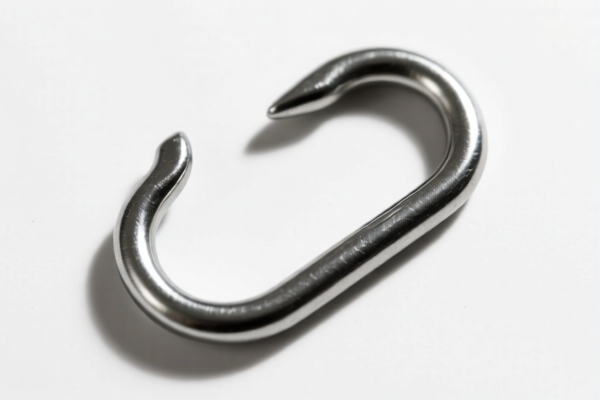
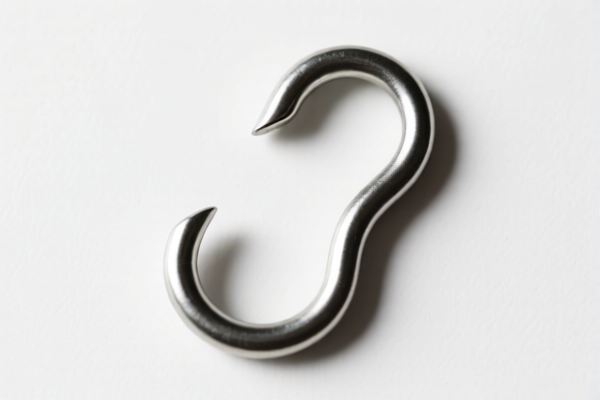
Brass S shaped Hook
CN → US| HS Code | Tariff Rate | Origin | Destination | Doc |
|---|---|---|---|---|
| 7419200010 | 85.0% | CN | US | Official Doc |
| 7419805050 | 85.0% | CN | US | Official Doc |
Product Images


AI Analysis
🔩 Brass S-Shaped Hook (Decorative & Functional Hardware)
🌐 HS Code Reference & Customs Clearance Guide | 2026 Latest Tariff Analysis | Professional Level Strategy
📌 I. Product Definition & Classification: Do You Really Know "Brass Hooks"?
The "Brass S-Shaped Hook" is a versatile hardware item used for hanging coats, keys, garden tools, or decorative items. In international trade, classification depends heavily on its manufacturing process and specific end-use. Since brass is primarily an alloy of copper and zinc, these products fall under the Copper Articles (Chapter 74) section of the Harmonized System (HS).
There are two primary classification paths based on how the hook is made:
- Plumbing/Industrial Brass Goods: If the hook is part of a plumbing fixture assembly or falls under "other plumbing goods not elsewhere specified," it may be classified under
7419.20.00.10. - General Metal Articles: If it is a simple stamped, forged, or molded decorative hook (not for plumbing), it is classified as "Other articles of copper" under
7419.80.50.50.
⚠️ Key Distinction Point:
- If the hook is plumbing-specific (e.g., part of a valve assembly or specialized industrial fitting) → Go with7419.20.00.10
- If it is a general-purpose decorative or utility hook (stamped/molded/forged) → Go with7419.80.50.50
📦 II. HS Code Classification Details (2026 Latest Tariff Authority)
| HS Code | Product Description | Applicable Scenario | Manufacturing Process |
|---|---|---|---|
7419.20.00.10 |
Brass plumbing goods, not elsewhere specified or included | Plumbing fixtures, specialized industrial brass hooks, valve components | Cast, molded, stamped, or forged |
7419.80.50.50 |
Other articles of copper: Other: Other: Other | Decorative S-hooks, closet hooks, garden tool hooks, general hardware | Cast, molded, stamped, or forged |
🔍 Important Reminder:
- Brass is considered "Copper" for HS classification purposes. Do not classify under Chapter 83 (Base Metal Articles) unless it is explicitly plated or composite in a way that changes its essential character. - If the hook is electrical (e.g., a grounding clamp), it might fall under Chapter 85, but a standard "S-hook" for hanging is a copper article. - Do not split shipments: If you send plumbing parts and decorative hooks together, customs may require separate declarations for each HS code.
💰 III. 2026 Latest Tariff Rate Detailed Breakdown (Including Surtaxes & Policy Add-ons)
✅ Applicable Country: United States (US)
✅ Country of Origin: China (CN)
✅ Effective Date: From November 10, 2025 (Including subsequent imports)
🎯 1. 7419.20.00.10 —— Brass Plumbing Goods
| Item | Content |
|---|---|
| Base Tariff | 0.0% |
| Section 301 Surtax | +25.0% |
| Steel, Aluminum, Copper Surtax | +50.0% |
| Total Tariff Rate | 75.0% |
| Tax Calculation | CIF Value × 75% |
| De Minimis Exemption? | ❌ NO (deny_de_minimis) |
| Legal Basis Path | Section 301: 7419.20.00.10 → Copper Surtax: 50% → Total: 75% |
📌 Explanation:
- The 0% base tariff applies to most copper articles. - However, Section 301 adds 25% for Chinese goods. - Crucially, there is a specific 50% surtax on Steel, Aluminum, and Copper products (including brass, which is copper-based). - Total: 75%. This is an extremely high tariff burden.
🎯 2. 7419.80.50.50 —— Other Copper Articles (General Hooks)
| Item | Content |
|---|---|
| Base Tariff | 0.0% |
| Section 301 Surtax | +25.0% |
| Steel, Aluminum, Copper Surtax | +50.0% |
| Total Tariff Rate | 75.0% |
| Tax Calculation | CIF Value × 75% |
| De Minimis Exemption? | ❌ NO (deny_de_minimis) |
| Legal Basis Path | Section 301: 7419.80.50.50 → Copper Surtax: 50% → Total: 75% |
📌 Note:
- Even though this is "other copper articles," it is still subject to the same 75% total tariff. - Brass is treated as Copper. Therefore, regardless of whether it is a plumbing good or a general hook, the copper surtax applies. - No de minimis exemption: Small packages (under $800) are not exempt from these surtaxes for Chinese copper products.
🛠️ IV. Customs Clearance Practical Advice (Real-World Pitfall Avoidance)
✅ 1. Documentation Checklist (All Required)
| Document | Required | Description |
|---|---|---|
| ✅ Product Specifications | ✔️ | Material composition (e.g., 60% Cu, 40% Zn), dimensions, weight |
| ✅ Product Photos | ✔️ | Clear images showing the "S" shape, branding, and packaging |
| ✅ Commercial Invoice | ✔️ | Must clearly state "Brass S-Hook" and HS Code |
| ✅ Packing List | ✔️ | Net/Gross weight, number of pieces per carton |
| ✅ Certificate of Origin (CO) | ✔️ | Mandatory for proving origin (China) |
| ✅ Material Test Report | ✔️ | Optional but recommended to prove brass composition (copper content) |
✅ 2. Declaration Tips (Key Mantras)
🔥 “Declare Material, Not Just Shape! Brass = Copper = 75% Tax!”
| Scenario | Correct Declaration | Wrong Practice |
|---|---|---|
| General Decorative Hook | 7419.80.50.50 |
Misdeclare as "Plastic Hook" or "Steel Hook" → Fraud/Seizure |
| Plumbing-Related Hook | 7419.20.00.10 |
Misdeclare as "General Hardware" → Still 75%, but risks inspection |
| Small Batch Sample | Declare Full Value | Claim "De Minimis" ($800 exemption) → Denied, penalty applied |
| Mixed Materials | Separate by Material | Mix brass hooks with steel screws → Complex classification, higher risk |
✅ 3. Special Handling Cases
| Situation | Handling Advice |
|---|---|
| Brass Plated on Steel | If >50% by weight is copper, it’s Chapter 74. If <50%, it might be Chapter 83. Proving composition is key. |
| Gift Sets with Hooks | Declare the hook separately if possible. If bundled, the entire set may be taxed at the highest component rate. |
| Custom Logo Hooks | No change in HS code. Ensure the invoice mentions "Customized Brass Hooks." |
| Samples for Evaluation | Still subject to 75% tariff. Use this in cost planning. |
🌍 V. Global Market Comparison (2026 Latest)
| Country/Region | Recommended HS Code | Tariff (China Origin) | Certification | Notes |
|---|---|---|---|---|
| 🇺🇸 USA | 7419.20.00.10 / 7419.80.50.50 |
75% | None specific | Highest tariff due to copper surtax |
| 🇨🇳 China | 7419.20.00.10 / 7419.80.50.50 |
0-5% | CCC (if applicable) | No surtax for domestic trade |
| 🇪🇺 EU | 7419.20 / 7419.80 |
0-2.7% | CE (if electrical) | Low tariffs, but high VAT |
| 🇬🇧 UK | 7419.20 / 7419.80 |
0-2.7% | UKCA | Post-Brexit rules apply |
| 🇨🇦 Canada | 7419.20 / 7419.80 |
0-6.5% | None | USMCA benefits may apply if originating |
📌 Conclusion:
- The US is the most expensive market for brass/copper hooks due to the 75% total tariff. - EU and Canada are much more favorable, with low to moderate tariffs. - Cost Optimization: Consider sourcing brass components from non-Chinese countries (e.g., Vietnam, India) if shipping to the US, though raw material sourcing may still be global.
📌 VI. Common Mistakes & Pitfalls (Blood & Tears Lessons)
❌ Mistake 1: Declaring "Brass Hook" as "Steel Hook"
👉 Consequence: Customs detects copper content via X-ray or inspection → Seizure + Fine + Back Taxes
❌ Mistake 2: Claiming De Minimis Exemption for Small Shipments
👉 Consequence: Copper products from China are explicitly excluded from de minimis → Package held, tax demanded + storage fees
❌ Mistake 3: Mixing Plumbing and General Hooks in One Box
👉 Consequence: Customs may classify the entire box under the most specific/highest scrutiny code, leading to delays and potential audits.
❌ Mistake 4: Ignoring the "Copper Surtax"
👉 Consequence: Many importers only see the 25% Section 301 tax and forget the additional 50% copper surtax, leading to massive underpayment.
✅ Correct Approach:
"Brass S-Hook, Decorative, 5cm Length, 60% Copper Content, Model XYZ, Origin: China"
🎯 VII. Conclusion: Precise Classification Saves Money!
🎯 Remember the Mantra:
🔹 "Brass is Copper, Copper is 75%, De Minimis is Dead, Declare Clearly!"
🔹 "HS Code is Life, Tax Rate is Money, Mistake is Ruin!"
📌 Pro Tip:
If you are importing large volumes to the US, consider:
1. Product Redesign: Use zinc-plated steel instead of solid brass (check if it changes HS code to Chapter 73 or 83).
2. Supply Chain Shift: Source brass blanks from India or Vietnam to avoid the "China Origin" surtax.
3. Advance Ruling: Apply for a Customs Ruling to confirm the classification and tariff rate before shipment.
📣 Immediate Action:
📞 Consult with a licensed customs broker
📄 Prepare accurate material composition reports
🚀 Avoid the 75% Tax Trap by Planning Ahead!
✨ Professional Clearance Starts with Accurate Classification!
💼 Every Penny of Tax Savings Counts!
Customer Reviews
About HS Code Classification
The Harmonized System (HS) is an internationally standardized nomenclature developed by the World Customs Organization (WCO) to classify traded products. Over 200 countries use the HS system as the basis for customs tariffs, trade statistics, and import/export regulations.
Each HS code follows a hierarchical structure:
- Chapter (2 digits) — Broad category of goods (e.g., Chapter 84: Machinery and Mechanical Appliances)
- Heading (4 digits) — More specific grouping within the chapter
- Subheading (6 digits) — Internationally standardized breakdown, used by all WCO member countries
- National subdivisions (8-10 digits) — Country-specific extensions for further classification, such as US HTSUS 10-digit codes
Correct HS code classification is essential for smooth customs clearance, accurate duty payment, and compliance with trade regulations. Misclassification can lead to customs delays, overpayment of duties, or penalties.
When importing from CN to US, the applicable tariff rates may include:
- Most-Favored-Nation (MFN) rate — The standard duty rate applied to WTO members
- General rate — Applied to countries without trade agreements
- Trade remedy duties — Additional tariffs such as Section 301 (anti-dumping), Section 232 (national security), or countervailing duties
The information provided on this page is for reference purposes only. For official classification, please consult with your local customs authority or a licensed customs broker.