Breast Pump Accessories
CN → US| HS Code | Tariff Rate | Origin | Destination | Doc |
|---|---|---|---|---|
| 9018907560 | 35.0% | CN | US | Official Doc |
| 9018908000 | 10.0% | CN | US | Official Doc |
| 8509805045 | 14.2% | CN | US | Official Doc |
| 8509805095 | 14.2% | CN | US | Official Doc |
| 9018907560 | 35.0% | CN | US | Official Doc |
Product Images
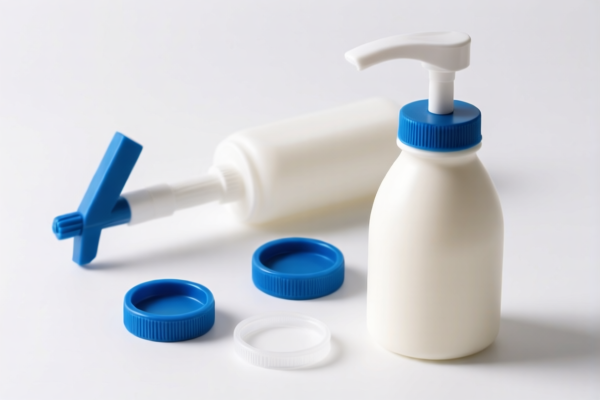
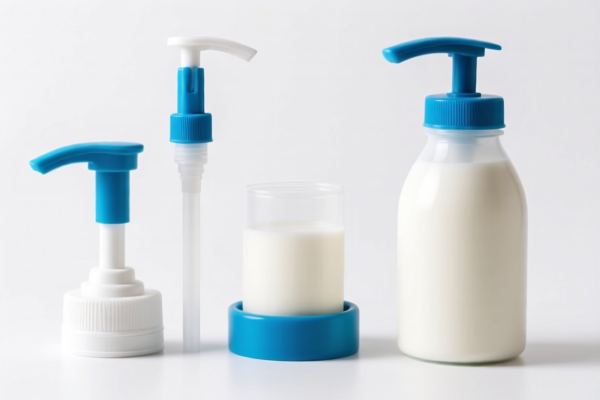
AI Analysis
🍼 Breast Pump Accessories
🌐 HS Code Reference & Customs Clearance Guide | 2026 Latest Tariff Analysis | Professional Clearance Strategy
📌 I. Product Definition & Classification: What Exactly Are "Breast Pump Accessories"?
Breast pump accessories are components used to maintain, replace, or enhance the functionality of breast pumps. In international trade, their classification is critical because the same physical part can be classified differently depending on whether it is perceived as a medical device component or a general household appliance part.
The core ambiguity lies in the nature of the accessory: * Medical Nature: If the accessory is strictly for therapeutic/nursing purposes (e.g., flanges, valves, bottles) and directly associated with medical/nursing devices, it may fall under Chapter 90. * Appliance Nature: If the accessory is viewed as a part of an electric household appliance (e.g., motors, casings, electrical components), it may fall under Chapter 85.
⚠️ Key Distinction Point:
- If the accessory is a consumable or functional part (like valves, membranes, flanges) used for nursing/medical therapy → Often classified under 9018.
- If the accessory is a structural or electrical part of the pump unit itself (like the motor assembly, casing, or battery housing) → Often classified under 8509.
📦 II. HS Code Classification Details (2026 Latest Tariff Authority Comparison)
| HS Code | Product Description | Application Scenario | Classification Logic |
|---|---|---|---|
9018.90.75.60 |
Other instruments and appliances used in medical, surgical, dental, or veterinary sciences; Accessories to breast pumps classified as medical/nursing equipment | Flanges, valves, membranes, bottles designed for milk expression | ✅ Medical/Nursing Category: Treated as "Other therapeutic/nursing appliances" |
9018.90.80.00 |
Other medical/surgical instruments and apparatus; Accessories falling under "Other instruments for medical/nursing purposes" | General medical-grade accessories, non-electric parts | ✅ Medical Category: Broad "Other" category for medical/surgical instruments |
8509.80.50.45 |
Electromechestic domestic appliances with self-contained electric motor; Accessories consistent with personal care appliances (e.g., electric toothbrushes) | Electric motor assemblies, control boards, or parts similar to personal care devices | ✅ Appliance Category: Treated as parts of electric personal care/home appliances |
8509.80.50.95 |
Other self-contained electric motor domestic appliances; "Catch-all" for household appliances | Plastic housings, generic electrical components, non-specific parts | ✅ Appliance Category: General household appliance parts |
🔍 Critical Note:
- 9018 Codes imply a medical/nursing purpose. This classification is often preferred for consumables (valves, flanges) because they are integral to the therapeutic function of milk expression. - 8509 Codes imply a household electric appliance. This classification is often used for hardware/electrical components (motors, casings) where the accessory is viewed as a part of the pump machine itself, similar to a part of a vacuum cleaner or toaster. - Risk: Misclassifying a medical accessory as a general appliance (or vice versa) can lead to significant duty differences and customs delays.
💰 III. 2026 Latest Tariff Rate Breakdown (Including Additional Taxes & Policy Surcharges)
✅ Applicable Country: United States (US)
✅ Origin: China (CN)
✅ Effective Date: As of current trade policies (2025-2026)
🎯 1. 9018.90.75.60 — Medical/Nursing Accessories (High Risk/High Duty)
| Item | Content |
|---|---|
| Base Tariff | 0% |
| Section 301 Additional Tariff | +25% (USITC Footnote 9903.88.01) |
| Section 122 Tariff | +10% (Specific to certain Chinese goods) |
| Total Tariff Rate | 35.0% |
| Calculation Basis | CIF Value × 35% |
| De Minimis Exemption? | ❌ NO (Deny de minimis for Section 301/122 goods) |
| Legal Basis Path | USITC:9018.90.75.60 → SECTION301:9903.88.01 → SECTION122 |
📌 Explanation:
- This classification carries the highest duty burden among the options. - It is subject to both the 25% Section 301 tariff (trade war tariffs) and the 10% Section 122 tariff. - Strategy: Only use this if no other suitable classification applies. High duty impact on margin.
🎯 2. 9018.90.80.00 — Other Medical/Surgical Accessories (Lower Risk)
| Item | Content |
|---|---|
| Base Tariff | 0% |
| Section 301 Additional Tariff | 0% (Often excluded or lower risk in this specific subheading) |
| Section 122 Tariff | +10% |
| Total Tariff Rate | 10.0% |
| Calculation Basis | CIF Value × 10% |
| De Minimis Exemption? | ❌ NO (Section 122 applies) |
| Legal Basis Path | USITC:9018.90.80.00 → SECTION122 |
📌 Explanation:
- This is the most favorable medical classification. - While it avoids the 25% Section 301 tariff, it still incurs the 10% Section 122 tariff. - Strategy: If the accessory is clearly a medical consumable (e.g., silicone flanges, milk collection bottles), push for this classification. It saves 25% compared to9018.90.75.60.
🎯 3. 8509.80.50.45 — Electric Appliance Parts (Personal Care Category)
| Item | Content |
|---|---|
| Base Tariff | 4.2% |
| Section 301 Additional Tariff | 0% |
| Section 122 Tariff | +10% |
| Total Tariff Rate | 14.2% |
| Calculation Basis | CIF Value × 14.2% |
| De Minimis Exemption? | ❌ NO (Section 122 applies) |
| Legal Basis Path | USITC:8509.80.50.45 → SECTION122 |
📌 Explanation:
- This classification treats the accessory as part of a personal care appliance (like an electric toothbrush). - It incurs the 4.2% base tariff + 10% Section 122. - Strategy: Viable if the accessory is an electrical component (e.g., motor, battery pack) and not a direct medical consumable. Lower than9018.90.75.60but higher than9018.90.80.00.
🎯 4. 8509.80.50.95 — Other Domestic Appliances (Catch-All)
| Item | Content |
|---|---|
| Base Tariff | 4.2% |
| Section 301 Additional Tariff | 0% |
| Section 122 Tariff | +10% |
| Total Tariff Rate | 14.2% |
| Calculation Basis | CIF Value × 14.2% |
| De Minimis Exemption? | ❌ NO (Section 122 applies) |
| Legal Basis Path | USITC:8509.80.50.95 → SECTION122 |
📌 Explanation:
- Similar to8509.80.50.45, this is a "catch-all" for household appliances. - Strategy: Use this for generic plastic parts or housings that don’t fit neatly into personal care. Same duty as50.45.
🛠️ IV. Customs Clearance Practical Advice (Battle-Tested Pitfall Avoidance)
✅ 1. Documentation Checklist (Non-Negotiable)
| Document | Must Provide? | Details |
|---|---|---|
| ✅ Product Specification Sheet | ✔️ | Must clearly state if it’s a medical consumable (valve/flange) or appliance part (motor/casing). |
| ✅ Product Photos | ✔️ | Clear shots of the item, including any markings, material composition, and packaging. |
| ✅ Commercial Invoice | ✔️ | Describe item accurately: e.g., "Silicone Breast Pump Flange" vs. "Plastic Housing for Pump". Avoid generic terms like "Parts". |
| ✅ Certificate of Origin (CO) | ✔️ | Critical for verifying Chinese origin and applying correct Section 122/301 status. |
| ✅ FDA Registration Evidence | ✔️ | If claiming medical/nursing purpose (9018), provide FDA registration documents to support medical classification. |
✅ 2. Declaration Tips (Key Mantras)
🔥 "Material Defines Purpose, Purpose Defines Code!"
| Scenario | Recommended HS Code | Reasoning |
|---|---|---|
| Silicone Flanges, Valves, Membranes | 9018.90.80.00 |
These are medical/nursing consumables. Push for 10% duty. Avoid 9018.90.75.60 (35%) unless forced. |
| Milk Storage Bottles (Sterile/Medical Grade) | 9018.90.80.00 |
Integrated with nursing function. |
| Electric Motors, Batteries, Control Boards | 8509.80.50.45 or 50.95 |
These are electrical parts of an appliance, not medical consumables. Duty ~14.2%. |
| Plastic Housings/Casings | 8509.80.50.95 |
Generic appliance parts. Duty ~14.2%. |
⚠️ Critical Warning:
- Do NOT declare medical consumables (e.g., valves) as "General Appliance Parts" (8509) without strong justification. Customs may reject it due to lack of medical evidence. - Do NOT declare appliance parts as "Medical Devices" (9018) if they are purely structural/electrical. This may trigger FDA scrutiny for unregistered medical devices.
✅ 3. Special Situations
| Situation | Handling Advice |
|---|---|
| Sets (Pump + Accessories) | Declare as a set. The principal function (pumping) determines the HS code. Usually, the pump itself dictates the classification, and accessories are bundled. |
| OEM Custom Parts | Provide the customer’s design specification showing medical intent. Helps support 9018 classification. |
| Mixed Shipments | Separate shipments by HS Code if possible. Mixing medical and appliance parts in one bill can trigger audits. |
🌍 V. Global Market Comparison (2026 Latest)
| Country/Region | Recommended HS Code (For Consumables) | Tariff Rate (China Origin) | Key Certifications | Notes |
|---|---|---|---|---|
| 🇺🇸 USA | 9018.90.80.00 |
10% (Section 122) | FDA 510(k) / General Control | Avoid 9018.90.75.60 (35%) if possible. |
| 🇺🇸 USA | 8509.80.50.95 |
14.2% (Base 4.2% + 10%) | FCC / UL | For non-consumable parts. |
| 🇪🇺 EU | 9018.90.80 |
~0-3% | CE MDR | No Section 301/122 tariffs. |
| 🇨🇦 Canada | 9018.90.80 |
0% | Health Canada | MFN rate usually 0%. |
| 🇦🇺 Australia | 9018.90.80 |
~0-5% | TGA | Low duty for medical goods. |
📌 Conclusion for US Imports:
-9018.90.80.00(10%) is the sweet spot for breast pump accessories (consumables).
-9018.90.75.60(35%) is a trap to avoid.
-8509codes (14.2%) are a fallback for electrical/mechanical parts.
📌 VI. Common Errors & Pitfalls (Lessons Learned)
❌ Error 1: Declaring silicone valves as "Plastic Parts" (8509)
👉 Consequence: Customs may audit for FDA compliance. If no FDA registration, goods may be detained or destroyed.
👉 Solution: Clearly label as "Medical Silicone Valve" and provide FDA docs.
❌ Error 2: Using Generic Description "Breast Pump Parts"
👉 Consequence: Customs officer discretion. Could be assigned to 9018.90.75.60 (35%) by mistake.
👉 Solution: Be specific: "Silicone Flange for Breast Pump" or "Electric Motor for Breast Pump".
❌ Error 3: Ignoring Section 122 Tariff
👉 Consequence: Underpaying duties by 10% on all 9018 and 8509 codes.
👉 Solution: Factor 10% into cost calculations for all these HS codes.
❌ Error 4: Assuming De Minimis ($800) exemption applies
👉 Consequence: Section 122 tariffs are NOT exempt from de minimis. Goods under $800 can still be taxed.
👉 Solution: Budget for taxes even on small shipments.
🎯 VII. Conclusion: Strategic Classification for Cost Efficiency
🎯 Remember the Mantra:
🔹 "Consumables = Medical (9018.80) = 10% Duty."
🔹 "Electrical Parts = Appliance (8509) = 14.2% Duty."
🔹 "Avoid 9018.75 (35%) unless absolutely necessary."
📌 Pro Tip:
- If you are importing silicone flanges, valves, or bottles, insist on 9018.90.80.00. Provide FDA registration to prove medical/nursing purpose. This saves you 25% compared to the high-risk code.
- If you are importing motors or casings, use 8509.80.50.95. This is standard for appliance parts.
📣 Immediate Action:
📞 Consult a Customs Broker: Submit your product specs (material, function) for a Pre-Ruling.
📝 Document Everything: Keep FDA registrations, material safety data sheets (MSDS), and product photos ready.
🚀 Optimize Costs: Correct classification can save 25% in duties. Don’t leave money on the table!
✨ Professional Clearance Starts with Accurate Classification!
💼 Your Profit Margin Depends on Your HS Code!
Customer Reviews
About HS Code Classification
The Harmonized System (HS) is an internationally standardized nomenclature developed by the World Customs Organization (WCO) to classify traded products. Over 200 countries use the HS system as the basis for customs tariffs, trade statistics, and import/export regulations.
Each HS code follows a hierarchical structure:
- Chapter (2 digits) — Broad category of goods (e.g., Chapter 84: Machinery and Mechanical Appliances)
- Heading (4 digits) — More specific grouping within the chapter
- Subheading (6 digits) — Internationally standardized breakdown, used by all WCO member countries
- National subdivisions (8-10 digits) — Country-specific extensions for further classification, such as US HTSUS 10-digit codes
Correct HS code classification is essential for smooth customs clearance, accurate duty payment, and compliance with trade regulations. Misclassification can lead to customs delays, overpayment of duties, or penalties.
When importing from CN to US, the applicable tariff rates may include:
- Most-Favored-Nation (MFN) rate — The standard duty rate applied to WTO members
- General rate — Applied to countries without trade agreements
- Trade remedy duties — Additional tariffs such as Section 301 (anti-dumping), Section 232 (national security), or countervailing duties
The information provided on this page is for reference purposes only. For official classification, please consult with your local customs authority or a licensed customs broker.