Breathable Industrial Shoe Covers
CN → US| HS Code | Tariff Rate | Origin | Destination | Doc |
|---|---|---|---|---|
| 6406104500 | 23.5% | CN | US | Official Doc |
| 6406903060 | 15.3% | CN | US | Official Doc |
| 3926206000 | 35.0% | CN | US | Official Doc |
| 6307909891 | 24.5% | CN | US | Official Doc |
| 6406104500 | 23.5% | CN | US | Official Doc |
Product Images
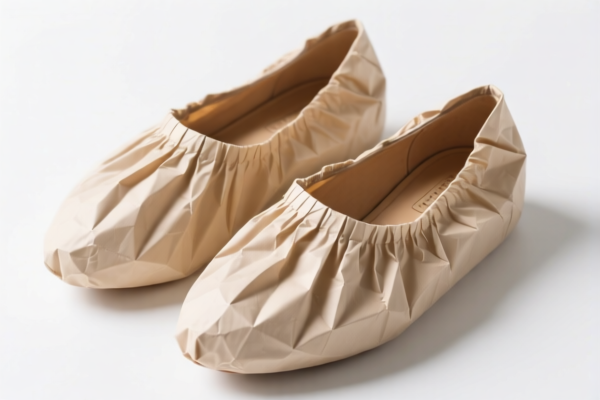
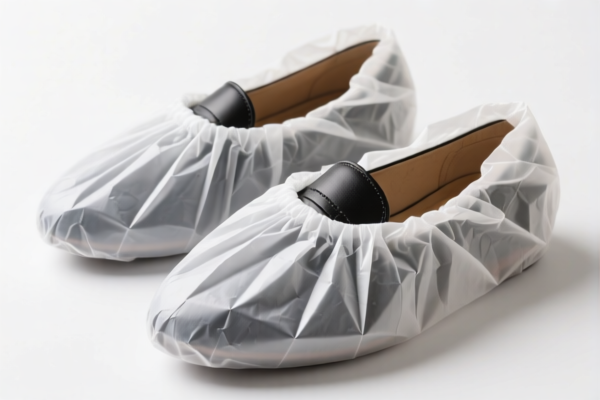
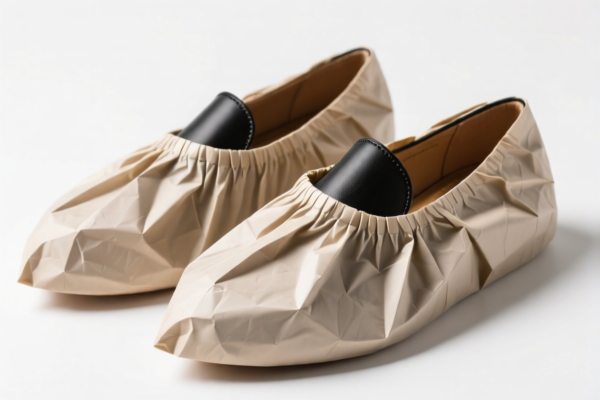

AI Analysis
👟 Breathable Industrial Shoe Covers (Industrial Foot Protection)
🌐 HS Code Reference & Customs Clearance Guide | 2026 Latest Tariff Analysis | Professional Level Strategy
📌 I. Product Definition & Classification: Do You Really Understand "Breathable Shoe Covers"?
Breathable Industrial Shoe Covers are critical Personal Protective Equipment (PPE) designed to protect footwear from contamination, moisture, and wear while maintaining user comfort through ventilation. In international trade, their classification is complex because they sit at the intersection of footwear accessories, plastic articles, and textile/non-textile made-up articles.
Key Variations: * Waterproof Rubber/Plastic Types: Often classified under footwear parts (HS 6406). * PVC/Plastic Film Types: Sometimes classified as general plastic articles (HS 3926) if considered apparel accessories. * Non-Woven/Textile Composite Types: Classified as other made-up articles (HS 6307) if primarily fabric-based with plastic coating.
⚠️ Critical Distinction Point:
- If the product is primarily rubber/plastic and designed to fit over shoes like a sock/gaiter → HS 6406.10 (Parts of Footwear).
- If it is a PVC sleeve without sole attachment → Can fall under HS 6406.90 or HS 3926 (Plastic Articles).
- If it is a non-woven fabric with plastic backing → HS 6307.90 (Other Made-up Articles).
📦 II. HS Code Classification Details (2026 Latest Tariff Authority Comparison)
Based on the provided data, here are the four distinct classifications found in the dataset:
| HS Code | Product Description | Material/Feature | Typical Application |
|---|---|---|---|
6406.10.45.00 |
Waterproof Shoe Covers, Rubber or Plastic | Rubber/Plastic, Waterproof | High-durability industrial sites, wet environments |
6406.90.30.60 |
Footwear-Related Articles, Other Materials | Rubber/Plastic, Generic | General use, non-specific protective covers |
3926.20.60.00 |
Plastic Articles, PVC Clothing Accessories | PVC, Apparel Accessory | Disposable plastic sleeves, light-duty protection |
6307.90.98.91 |
Made-Up Articles, Plastic or Rubber, Other | Plastic/Rubber Composite | Mixed-material covers, non-woven with plastic layer |
🔍 Key Reminder:
- HS 6406.10 is the most specific for "shoe covers" made of rubber/plastic. It is often preferred for durable industrial goods.
- HS 3926.20 may apply if the item is deemed a "plastic article" rather than a "footwear part," but this carries a higher tariff burden.
- HS 6307.90 applies to more textile-like or composite covers.
- Duplicate Entry: Note that6406.10.45.00appears twice in the source data with identical details; it represents the primary classification for rubber/plastic waterproof covers.
💰 III. 2026 Latest Tariff Rate Breakdown (Including Additional Taxes & Policy Surcharges)
✅ Applicable Country: United States (US)
✅ Origin: China (CN)
✅ Effective Time: 2025/2026 (Current Trade Policy Era)
🎯 1. 6406.10.45.00 —— Waterproof Shoe Covers (Rubber/Plastic)
| Item | Content |
|---|---|
| Base Duty Rate | 6.0% (ad valorem) |
| Section 301 Additional Duty | +7.5% |
| Section 122 Duty | +10% |
| Total Effective Tax Rate | 23.5% |
| Tax Calculation | CIF Value × 23.5% |
| De Minimis Eligibility | ❌ No (Denied for Chinese origin under these sections) |
| Legal Authority Path | HTSUS:6406.10.45.00 → USITC:301 (7.5%) → USITC:122 (10%) |
📌 Explanation:
- This is the standard classification for durable rubber/plastic shoe covers.
- The 7.5% Section 301 duty reflects the current trade war status for footwear parts.
- The 10% Section 122 duty applies to specific imported goods impacting national security/economy (often applied to footwear components).
- Total 23.5% is moderate compared to plastic articles.
🎯 2. 6406.90.30.60 —— Footwear-Related Articles (Other Materials)
| Item | Content |
|---|---|
| Base Duty Rate | 5.3% |
| Section 301 Additional Duty | 0.0% |
| Section 122 Duty | +10% |
| Total Effective Tax Rate | 15.3% |
| Tax Calculation | CIF Value × 15.3% |
| De Minimis Eligibility | ❌ No |
| Legal Authority Path | HTSUS:6406.90.30.60 → USITC:122 (10%) |
📌 Note:
- This category has no Section 301 duty, making it significantly cheaper (15.3% vs 23.5%).
- However, it is classified as "Other Materials," which may require stricter proof that it is a "footwear accessory" and not a general plastic good.
- Optimization Opportunity: If the product can be legally argued as falling under "Other" rather than "Waterproof Rubber," this rate is lower.
🎯 3. 3926.20.60.00 —— Plastic Articles (PVC Clothing Accessories)
| Item | Content |
|---|---|
| Base Duty Rate | 0.0% |
| Section 301 Additional Duty | +25.0% |
| Section 122 Duty | +10% |
| Total Effective Tax Rate | 35.0% |
| Tax Calculation | CIF Value × 35.0% |
| De Minimis Eligibility | ❌ No |
| Legal Authority Path | HTSUS:3926.20.60.00 → USITC:301 (25%) → USITC:122 (10%) |
📌 Warning:
- Although the base duty is 0%, the 25% Section 301 duty is the highest in the dataset.
- This classification is risky for PVC shoe covers unless you have strong evidence that it is purely a "plastic article" and not a "footwear part."
- Avoid this HS Code if possible, as the total tax burden is 35%.
🎯 4. 6307.90.98.91 —— Other Made-Up Articles (Plastic/Rubber Composite)
| Item | Content |
|---|---|
| Base Duty Rate | 7.0% |
| Section 301 Additional Duty | +7.5% |
| Section 122 Duty | +10% |
| Total Effective Tax Rate | 24.5% |
| Tax Calculation | CIF Value × 24.5% |
| De Minimis Eligibility | ❌ No |
| Legal Authority Path | HTSUS:6307.90.98.91 → USITC:301 (7.5%) → USITC:122 (10%) |
📌 Note:
- This rate (24.5%) is slightly higher than the primary footwear classification (23.5%).
- Applies to covers made of non-woven fabric with plastic backing or other composite materials.
- Use only if the product does not fit the "rubber/plastic footwear part" definition.
🛠️ IV. Customs Clearance Practical Advice (Battle-Tested Pitfall Avoidance)
✅ 1. Essential Documentation Checklist (Non-Negotiable)
| Document | Required? | Description |
|---|---|---|
| ✅ Product Specifications | ✔️ | Material composition (e.g., "90% PVC, 10% Elastic"), thickness, breathability features. |
| ✅ Technical Drawings | ✔️ | Show how it fits over shoes (e.g., ankle height, elastic band). |
| ✅ Product Photos | ✔️ | Clear images showing the item on a foot (if possible) and close-up of material. |
| ✅ Commercial Invoice | ✔️ | Must explicitly state: "Industrial Shoe Covers, For Foot Protection." Avoid vague terms like "Plastic Bags." |
| ✅ HS Code Pre-Ruling | ✔️ | Highly recommended to confirm between 6406.10 (23.5%) and 6406.90 (15.3%). |
| ✅ Packing List | ✔️ | Quantity, weight, dimensions. |
✅ 2. Declaration Strategy (Key Mantra)
🔥 “Material Defines Code, Footwear Defines Purpose, Avoid PVC Trap!”
| Scenario | Correct Declaration | Wrong Practice |
|---|---|---|
| Durable Rubber/Plastic Covers | 6406.10.45.00 (23.5%) |
Declare as "Plastic Sheets" → 35% |
| Generic Rubber Covers | 6406.90.30.60 (15.3%) |
Declare as "Footwear" → Higher duty |
| PVC Disposable Sleeves | 3926.20.60.00 (35%) |
Declare as "Shoe Parts" → Risk of audit |
| Non-Woven Breathable Covers | 6307.90.98.91 (24.5%) |
Declare as "Textiles" → Incorrect classification |
✅ 3. Special Handling Cases
| Case | Handling Advice |
|---|---|
| Breathable vs. Waterproof | If "breathable" implies microporous membranes, ensure it’s still classified under HS 6406 (footwear parts) and not HS 3926 (plastic films). |
| One-Piece vs. Two-Piece | One-piece covers (over the whole shoe) are strongly HS 6406. Two-piece (booties) may be debated. |
| OEM Customization | Provide customer design specs to prove intended use as protective footwear accessories. |
| Mixed Shipments | Do not mix HS 6406 and HS 3926 in one BL without clear separation; it triggers customs scrutiny. |
🌍 V. Global Market Customs Comparison (2026 Latest)
| Country/Region | Recommended HS Code | Tariff (China Origin) | Certification | Notes |
|---|---|---|---|---|
| 🇺🇸 USA | 6406.10.45.00 |
23.5% | None typically | Highest risk zone due to Section 122 & 301. |
| 🇨🇳 China | 6406.10.45.00 |
~6-10% | CCC (if applicable) | Lower base duties, no US-style surcharges. |
| 🇪🇺 EU | 6406.10.45.00 |
4.5% + VAT | CE (if PPE regulated) | No Section 301 equivalent, but CE marking crucial. |
| 🇬🇧 UK | 6406.10.45.00 |
4.5% + VAT | UKCA | Post-Brexit rules apply, but tariffs remain moderate. |
| 🇦🇺 Australia | 6406.10.45.00 |
5.0% + GST | AS/NZS Standards | No extra surcharges. |
📌 Conclusion:
- The USA is the most expensive market due to Section 301 (7.5%) and Section 122 (10%).
- EU/UK have lower base duties (4.5-5%) and no punitive surcharges, making them more cost-effective.
- Optimization Strategy: For US imports, try to justify6406.90.30.60(15.3%) if the product fits the "other materials" criteria, but be prepared for customs audit.
📌 VI. Common Mistakes & Pitfall Avoidance (Blood-Tested Lessons)
❌ Mistake 1: Classifying PVC shoe covers as 3926.20.60.00
👉 Consequence: 35% Tax Rate (vs 23.5% or 15.3%). Huge cost increase!
👉 Fix: Argue that it is a "part of footwear" (HS 6406), not a "general plastic article."
❌ Mistake 2: Declaring "Shoe Covers" as "Footwear" (HS 6403/6404)
👉 Consequence: Incorrect classification, potential penalties, or audit. Shoe covers are accessories, not footwear.
👉 Fix: Use HS 6406 (Parts).
❌ Mistake 3: Ignoring Section 122 Duty
👉 Consequence: Underpaying duties by 10%.
👉 Fix: Always include 10% Section 122 in cost calculations for Chinese-origin shoe covers.
❌ Mistake 4: Vague Description "Plastic Bag for Shoes"
👉 Consequence: Customs may reclassify as 3926 (35%) or 6307 (24.5%).
👉 Fix: Use precise terms: "Industrial Waterproof Shoe Covers, Rubber/Plastic, for PPE."
✅ Correct Declaration Example:
"Industrial Waterproof Shoe Covers, Made of Rubber/Plastic, for Foot Protection, Size M/L, Model XYZ, Not for Retail Sale"
🎯 VII. Conclusion: Professional Declaration, Save Money, Ensure Compliance!
🎯 Remember the Mantra:
🔹 "HS 6406 is King (23.5%), HS 6406.90 is Queen (15.3%), HS 3926 is the Trap (35%)."
🔹 "Never Declare as Plastic Bags – Always Declare as Footwear Parts!"
🔹 "Section 122 is Always +10% for China – Don’t Forget It!"
📌 Pro Tip:
- If your shoe covers are made of non-woven fabric with a thin plastic layer, consider 6307.90.98.91 (24.5%) to avoid the higher Section 301 on PVC.
- Apply for an Advance Ruling from US Customs (CBP) to lock in the HS Code and duty rate. This provides legal certainty and prevents post-clearance audits.
📣 Immediate Action Required:
📞 Contact your customs broker today.
📤 Provide product photos and material specs.
🚀 Secure the lowest valid HS Code (preferably6406.90.30.60or6406.10.45.00) to maximize profit margins!
✨ Professional Customs Clearance Starts with Precise Classification!
💼 Every Percent of Duty Saved is Pure Profit!
Customer Reviews
About HS Code Classification
The Harmonized System (HS) is an internationally standardized nomenclature developed by the World Customs Organization (WCO) to classify traded products. Over 200 countries use the HS system as the basis for customs tariffs, trade statistics, and import/export regulations.
Each HS code follows a hierarchical structure:
- Chapter (2 digits) — Broad category of goods (e.g., Chapter 84: Machinery and Mechanical Appliances)
- Heading (4 digits) — More specific grouping within the chapter
- Subheading (6 digits) — Internationally standardized breakdown, used by all WCO member countries
- National subdivisions (8-10 digits) — Country-specific extensions for further classification, such as US HTSUS 10-digit codes
Correct HS code classification is essential for smooth customs clearance, accurate duty payment, and compliance with trade regulations. Misclassification can lead to customs delays, overpayment of duties, or penalties.
When importing from CN to US, the applicable tariff rates may include:
- Most-Favored-Nation (MFN) rate — The standard duty rate applied to WTO members
- General rate — Applied to countries without trade agreements
- Trade remedy duties — Additional tariffs such as Section 301 (anti-dumping), Section 232 (national security), or countervailing duties
The information provided on this page is for reference purposes only. For official classification, please consult with your local customs authority or a licensed customs broker.