Breathing Light
CN → US| HS Code | Tariff Rate | Origin | Destination | Doc |
|---|---|---|---|---|
| 9405616000 | 40.3% | CN | US | Official Doc |
| 8543709860 | 37.6% | CN | US | Official Doc |
| 9405490000 | 38.9% | CN | US | Official Doc |
| 8513104000 | 13.5% | CN | US | Official Doc |
| 8513102000 | 22.5% | CN | US | Official Doc |
Product Images


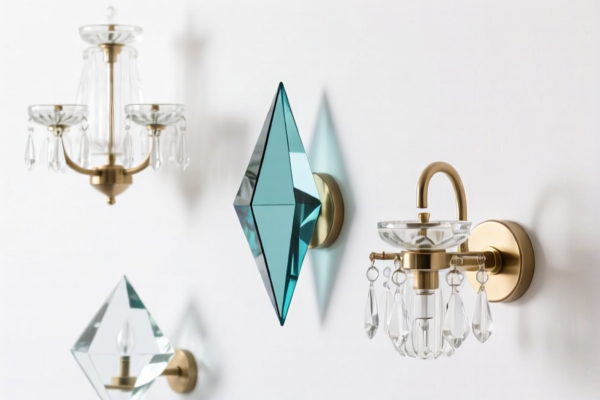
AI Analysis
💡 Breathing Light (Breathing LED / Pulse Light)
🌐 HS Code Reference & Customs Clearance Guide | 2026 Tariff Regime Analysis | Professional Clearance Strategy
📌 I. Product Definition & Classification: Do You Really Understand "Breathing Lights"?
A Breathing Light is an intelligent lighting component that mimics the rhythm of human respiration (pulsing intensity) for status indication, decoration, or signaling. In international trade, its classification is highly controversial because it straddles the boundaries between "Portable Lamps," "Lighting Devices," and "Electronic Appliances."
Core Conflict Points: * Is it a Lamp? (Portable, self-powered) → Chapter 85 (8513) or Chapter 94 (9405) * Is it an Electrical Device? (Has a specific function other than just lighting) → Chapter 85 (8543) * Is it a Signage Module? (Used as an indicator) → Chapter 94 (9405)
⚠️ Critical Distinction: * If the product is a standalone portable light (flashlight style) → 8513.10.x.x (Low Tax). * If it is a component/module for a larger device (industrial/vehicle indicator) → 8543.70.x.x (High Tax due to 25% Anti-Dumping/Section 301). * If it is a decorative sign/fixture (LED module with housing) → 9405.61/49 (High Tax due to 25% Section 301).
📦 II. HS Code Classification Details (2026 Official Tariff Reference)
Based on the provided data, here are the 6 possible classifications for "Breathing Lights" and the logic behind them:
| HS Code | Product Description Logic | Summary & Key Attributes |
|---|---|---|
| 8513.10.40.00 | Portable Electric Lamp (Flashlight Style) | Lowest Tax. Treated as a self-contained, battery-powered portable light. Summary: Belongs to electric lighting; function matches portable lamps; inferred to have self-contained power. |
| 8513.10.20.00 | Portable Electric Lamp (Specific Function) | Low Tax. Matches "Portable Lamp" attributes specifically for lighting functions; no material conflict. Summary: Specific lighting component; functional match to portable lamps. |
| 8543.70.71.00 | Electric Light Tube / Discharge Device | High Tax. Treated as an "electric light tube" or specific electrical discharge device. Summary: Matches "electric light tube" characteristics; no material/shape conflict. |
| 8543.70.98.60 | Independent Electronic Device | High Tax. Treated as a machine/apparatus with independent function, not just a lamp. Summary: Independent electronic function; matches "Other Machines & Apparatus"; electronic component nature. |
| 9405.49.00.00 | Other Electric Lamps/Fixtures | High Tax. Treated as "Other Electric Lamps and Lighting Fixtures." Summary: Functional match to "Other electric lamps"; inferred materials: electronics/plastic/metal. |
| 9405.61.60.00 | LED Lighting Sign/Device | Highest Tax. Treated as a "Lighting Sign/Device" with LED core. Summary: Belongs to "Illuminated Signage/Devices"; core source inferred as LED; matches LED lighting purpose. |
💰 III. 2026 Tariff Rate Breakdown (USA Import from China)
✅ Applicable Country: United States (US)
✅ Country of Origin: China (CN)
✅ Effective Date: Current (Section 301 / Section 122 Regulations)
🚨 1. The "Low Tax" Scenario (Portable Lamps)
HS Codes: 8513.10.40.00 | 8513.10.20.00
| Tax Component | Rate | Legal Basis |
|---|---|---|
| Base Duty (MFN) | 3.5% / 12.5% | Standard Most-Favored-Nation rate |
| Section 122 Duty | +10% | Specific 122 Tariff (China-specific) |
| Additional Duty | 0.0% | No 25% Section 301 Anti-Dumping (Crucial!) |
| 🔴 TOTAL RATE | 13.5% | For 8513.10.40.00 |
| 🔴 TOTAL RATE | 22.5% | For 8513.10.20.00 |
📌 Why is this better? * If the breathing light is marketed and sold as a standalone "Flashlight" or "Portable Light", it avoids the heavy 25% Section 301 tariffs. * Risk: Customs may reject this if the product is clearly an industrial indicator or signage component rather than a "handheld light."
⚠️ 2. The "High Tax" Scenario (Devices, Signs, & Components)
HS Codes: 8543.70.71.00, 8543.70.98.60, 9405.49.00.00, 9405.61.60.00
| Tax Component | Rate | Legal Basis |
|---|---|---|
| Base Duty (MFN) | 2.0% - 5.3% | Low base rate |
| Section 301 Duty | +25.0% | Anti-Dumping/Trade Barrier (Critical) |
| Section 122 Duty | +10% | China-specific Tariff |
| 🔴 TOTAL RATE | 37.0% | For 8543.70.71.00 |
| 🔴 TOTAL RATE | 37.6% | For 8543.70.98.60 |
| 🔴 TOTAL RATE | 38.9% | For 9405.49.00.00 |
| 🔴 TOTAL RATE | 40.3% | For 9405.61.60.00 (Highest) |
📌 Why is this expensive? * These codes classify the item as a machine, device, or signage module. * The 25% Section 301 tariff is mandatory for these categories. * Total tax burden increases by 15% to 27% compared to the "Portable Lamp" classification. * Example: A $100 unit costs $13.50 in tax (Portable) vs $40.30 in tax (Device).
🛠️ IV. Customs Clearance Recommendations (Strategic Action Plan)
✅ 1. Strategic HS Code Selection (The "Golden Rule")
Do not blindly choose the code with the lowest tax rate without justification. Customs will audit based on Product Function and End-Use.
| Scenario | Recommended Code | Strategy |
|---|---|---|
| Scenario A: Standalone Flashlight (Battery powered, handheld, used for illumination) |
8513.10.40.00 | Best Option. Argue it is a "Portable Electric Lamp." Action: Ensure it has a battery, switch, and no external control interface. |
| Scenario B: Component/Indicator (Part of a machine, car, or electronics) |
8543.70.98.60 or 8543.70.71.00 | Inevitable. It is a "machine part" or "electronic device." Action: Prepare for 37%+ tax. Do not try to misdeclare as a lamp to save cost (high audit risk). |
| Scenario C: Decorative Sign (Large display, LED module, wall mount) |
9405.61.60.00 | Inevitable. Classified as a "Lighting Sign." Action: Accept the 40.3% tariff. |
✅ 2. Documentation & Declaration Tips
To maximize the chance of the lower tax bracket (8513) IF APPLICABLE, or to justify the higher bracket, prepare:
| Document | Critical Content |
|---|---|
| Product Spec Sheet | Must clearly state: "Portable," "Battery Operated," "Self-Contained Power Source." Avoid words like "Control Unit," "Industrial Indicator," or "Module." |
| Photos | Show the product alone (not inside a machine). Show the battery compartment and ON/OFF switch. |
| Instruction Manual | Should read: "Press button to turn on light." Do not write: "Connect to PLC/Controller for signal indication." |
| Commercial Invoice | Description: "Portable Breathing LED Flashlight" (not "Breathing Light Module" or "Signal Device"). |
⚠️ Warning: If the product has USB ports, GPIO pins, or requires external power to function as a "breathing" controller, it CANNOT be 8513. It will be classified as 8543 or 9405, and you will face 37% - 40.3% taxes. Attempting to classify it as 8513 will lead to seizure and fines.
✅ 3. Clearance Pitfalls (Avoid These!)
❌ Pitfall 1: Misdeclaring a Module as a Lamp * Action: Shipping an LED control board with a breathing light function as a "Flashlight." * Consequence: Customs audit reveals it's a component. Tax penalty + Back taxes (37% - 40%) + Fines.
❌ Pitfall 2: Ignoring the "25% Section 301" Trigger * Action: Assuming all lights are 13.5%. * Consequence: If the product is used for industrial signaling or signage, it is subject to the 25% add-on. You lose ~27% margin immediately.
❌ Pitfall 3: Confusing "Light" vs "Device" * Action: Calling it a "Light" in the invoice when it's a "Controller." * Consequence: 9405.61.60.00 (40.3%) is the correct code for "Illuminated Signs." Misclassification leads to severe penalties.
🌍 V. Final Verdict & Cost Optimization
Summary of Tax Impact: * If truly Portable (Standalone): 13.5% (Safe & Legal). * If Component/Signage/Device: 37% - 40.3% (Inevitable).
🚀 Professional Advice: 1. Re-evaluate Product Design: If your "Breathing Light" is currently a module with external power/controls, can it be redesigned to include a battery and switch to function as a standalone portable light? If yes, target 8513.10.40.00. 2. Pre-Ruling (Binding Ruling): If the product is a hybrid (e.g., portable but complex electronics), file a Harmonized Tariff Schedule (HTS) Pre-Ruling with US Customs (CBP) before shipping. This protects you from future audits. 3. Don't Cheat: The 25% Section 301 tariff on Chapter 85 (Machines) and Chapter 94 (Furniture/Fixtures) is strictly enforced for Chinese goods. Do not attempt to hide the true function of the product.
✨ Pro Tip:
"If it breathes on its own with a battery, call it a Flashlight. If it breathes because you told it to via a wire, call it a Device."
Know your product. Pay the right tax. Sleep well.
Customer Reviews
About HS Code Classification
The Harmonized System (HS) is an internationally standardized nomenclature developed by the World Customs Organization (WCO) to classify traded products. Over 200 countries use the HS system as the basis for customs tariffs, trade statistics, and import/export regulations.
Each HS code follows a hierarchical structure:
- Chapter (2 digits) — Broad category of goods (e.g., Chapter 84: Machinery and Mechanical Appliances)
- Heading (4 digits) — More specific grouping within the chapter
- Subheading (6 digits) — Internationally standardized breakdown, used by all WCO member countries
- National subdivisions (8-10 digits) — Country-specific extensions for further classification, such as US HTSUS 10-digit codes
Correct HS code classification is essential for smooth customs clearance, accurate duty payment, and compliance with trade regulations. Misclassification can lead to customs delays, overpayment of duties, or penalties.
When importing from CN to US, the applicable tariff rates may include:
- Most-Favored-Nation (MFN) rate — The standard duty rate applied to WTO members
- General rate — Applied to countries without trade agreements
- Trade remedy duties — Additional tariffs such as Section 301 (anti-dumping), Section 232 (national security), or countervailing duties
The information provided on this page is for reference purposes only. For official classification, please consult with your local customs authority or a licensed customs broker.