Bridge (Musical Instrument)
CN → US| HS Code | Tariff Rate | Origin | Destination | Doc |
|---|---|---|---|---|
| 9202904000 | 26.2% | CN | US | Official Doc |
| 9201100011 | 22.2% | CN | US | Official Doc |
| 9201900000 | 21.0% | CN | US | Official Doc |
| 9202906000 | 14.6% | CN | US | Official Doc |
Product Images
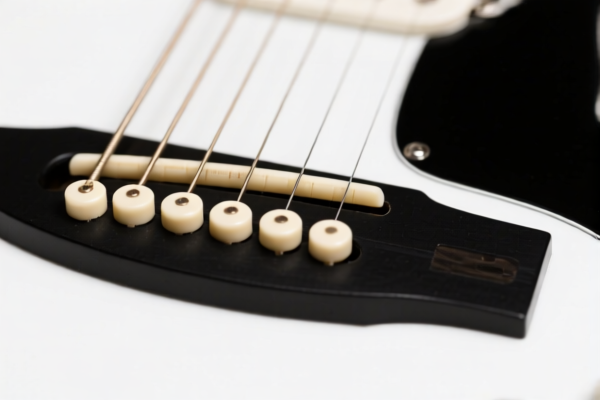
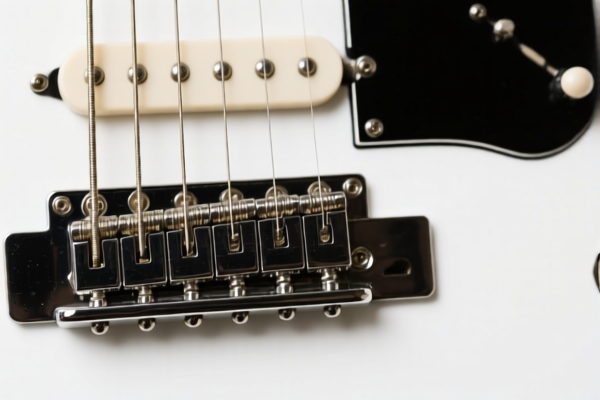
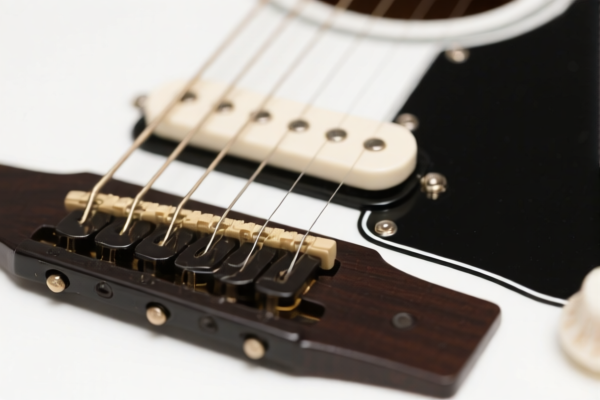
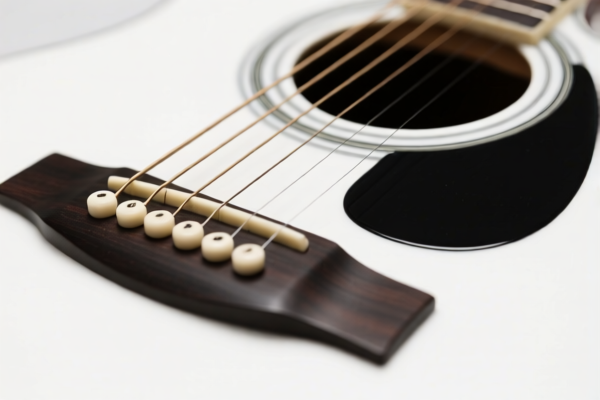
AI Analysis
🎵 Bridge (Musical Instrument)
🌐 HS Code Reference & Customs Clearance Guide | 2026 Latest Tariff Analysis | Professional Import Strategy
📌 One, Product Definition & Classification: Do You Really Know What a "Bridge" Is in Musical Instruments?
In the world of musical instruments, especially stringed instruments like guitars, violins, and harps, the bridge is a critical structural and functional component. It transfers string vibrations to the instrument’s body, significantly affecting tone, sustain, and playability.
⚠️ Key Clarification:
- The bridge itself (a standalone part, not attached to the instrument) is not a complete musical instrument.
- It is classified as a part or accessory, not a full instrument.
- It cannot be classified under the same HS codes as full instruments like guitars or violins.
📦 Two, HS Code Classification Details (2026 Latest Tariff Authority Match)
| HS Code | Product Description | Applicable Use Case | Is It a Complete Instrument? |
|---|---|---|---|
9202.90.60.00 |
Other string musical instruments (e.g., guitars, violins, harps): Other: Other | Bridges, tailpieces, nuts, tuning pegs — standalone parts | ❌ No |
9202.90.40.00 |
Other string musical instruments: Guitars: Other | Full guitars, electric/acoustic, with body, neck, strings | ✅ Yes |
9201.90.00.00 |
Pianos, including player pianos; harpsichords and other keyboard stringed instruments: Other | Full pianos, keyboards, harpsichords | ✅ Yes |
9201.10.00.11 |
Upright pianos: Other: Containing a case measuring less than 111.76 cm in height | Small upright pianos, compact models | ✅ Yes |
🔍 Critical Insight:
- Only complete instruments (e.g., full guitars, pianos) are classified under9202.90.40.00,9201.10.00.11, etc.
- Individual parts like bridges must be classified under9202.90.60.00— not under guitar or violin codes.
💰 Three, 2026 Latest Tariff Rate Breakdown (Including附加 Taxes, Policy Add-ons)
✅ Applicable Country: United States (US)
✅ Origin: China (CN)
✅ Effective Date: November 10, 2025 (including subsequent imports)
🎯 1. 9202.90.60.00 — Other String Instruments: Other: Other (Includes Bridges, Nuts, Tailpieces, etc.)
| Item | Details |
|---|---|
| Base Tariff | 4.6% (ad valorem) |
| Additional Tariff (USITC) | 0% (no 301 action on this subheading) |
| IEEPA Additional Tax | 0% (not subject to IEEPA for this item) |
| Total Tax Rate | 4.6% |
| Tax Calculation | CIF Value × 4.6% |
| De Minimis Exemption | ✅ Yes (if value ≤ $800, duty-free entry under US de minimis rule) |
| Legal Basis Path | USITC:9202.90.60.00 → FOOTNOTE:9903.88.01 (no additional duty) |
📌 Explanation:
- This is a low-risk, low-tariff category.
- The 4.6% base rate applies only to non-completed instruments (i.e., parts).
- No additional 7.5% or 25% tariffs apply here — unlike full guitars (9202.90.40.00).
- De minimis applies — ideal for small shipments, samples, or retail parts.
🎯 2. 9202.90.40.00 — Guitars: Other (Full Instruments)
| Item | Details |
|---|---|
| Base Tariff | 8.7% |
| Additional Tariff (USITC - 301) | +7.5% |
| IEEPA Additional Tax | 0% (not triggered for this item under current rules) |
| Total Tax Rate | 16.2% |
| Tax Calculation | CIF Value × 16.2% |
| De Minimis Exemption | ❌ No (exceeds $800 threshold) |
| Legal Basis Path | USITC:9202.90.40.00 → FOOTNOTE:9903.88.01 → 301 Tariff:9903.01.25 |
📌 Important Note:
- This is the high-risk category — applies only to complete guitars, not bridges.
- The 7.5% USITC tariff is from the Section 301 action on Chinese goods.
- No de minimis — even small guitar shipments face full 16.2% duty.
🛠️ Four, Customs Clearance Best Practices (Real-World Pro Tips)
✅ 1. Required Documentation (Must-Have Checklist)
| Document | Required? | Notes |
|---|---|---|
| ✅ Product Specification Sheet | ✔️ | Include material (ebony, rosewood, plastic), dimensions, compatibility (e.g., "Fender Stratocaster") |
| ✅ Part Diagram / CAD Drawing | ✔️ | Show bridge shape, mounting holes, string slots |
| ✅ Product Photos (with label) | ✔️ | Clear view of model number, brand, and installation |
| ✅ Certificate of Origin (CO) | ✔️ | If from Vietnam, Mexico, or Thailand, may qualify for lower tariffs |
| ✅ Commercial Invoice | ✔️ | Clearly state: "Bridge for Electric Guitar – Part Only" |
| ✅ Packing List | ✔️ | Show quantity, weight, and part-only nature |
| ✅ Third-Party Test Report | ✔️ | RoHS, REACH (if applicable) |
✅ 2.申报技巧 (Key Rules to Avoid Mistakes)
🔥 "Part Only, Not Full – Declare Right, Pay Less!"
| Scenario | Correct HS Code | Wrong Practice | Risk |
|---|---|---|---|
| Standalone bridge (no guitar) | 9202.90.60.00 |
9202.90.40.00 |
16.2% tax instead of 4.6% → huge overpayment |
| Bridge + screw kit | 9202.90.60.00 |
Split into "bridge" + "screws" → 8536.90.00 |
Risk of 89.5% tax on screws |
| Bridge sold with guitar | One shipment, one HS Code | Declare separately | Audit risk, penalties |
✅ 3. Special Cases & Solutions
| Situation | Recommended Action |
|---|---|
| Bridge for custom guitar (OEM) | Provide design specs + invoice showing “part only” |
| Bridge for violin or cello | Still 9202.90.60.00 — not under violin code |
| Bridge with built-in pickup (e.g., Floyd Rose) | Still 9202.90.60.00 — not a complete guitar |
| Bridge imported with full instrument | Do not split — declare as one item under 9202.90.40.00 |
| Low-value sample (under $800) | Use 9202.90.60.00 → 0% duty under de minimis |
🌍 Five, Global Customs Comparison (2026 Latest)
| Country/Region | Recommended HS Code | Tariff | Certification | Notes |
|---|---|---|---|---|
| 🇺🇸 United States | 9202.90.60.00 |
4.6% | None (de minimis applies) | No 301/IEEPA on parts |
| 🇨🇳 China | 9202.90.60.00 |
5% | CCC, RoHS | No extra tariffs |
| 🇪🇺 European Union | 9202.90.60.00 |
0% (if CE) | CE, RoHS | No additional duties |
| 🇦🇺 Australia | 9202.90.60.00 |
5% | RCM | No extra tariffs |
| 🇯🇵 Japan | 9202.90.60.00 |
0% | PSE | No extra tariffs |
📌 Takeaway:
- Only the US applies a meaningful tariff on bridges (4.6%) — and only if not under de minimis.
- All other major markets are low or zero tariff — ideal for global distribution.
📌 Six, Common Mistakes & How to Avoid Them (Learn from Others’ Errors)
❌ Mistake 1: Declaring a bridge as 9202.90.40.00 (guitar code)
👉 Result: Pay 16.2% instead of 4.6% → overpay by 252%
✅ Fix: Use 9202.90.60.00 — always for standalone parts.
❌ Mistake 2: Splitting bridge + screws into two shipments
👉 Result: Screws may be taxed at 89.5% under 8536.90.00
✅ Fix: Ship as one part-only item under 9202.90.60.00.
❌ Mistake 3: Not including “part only” in invoice description
👉 Result: Customs may suspect it’s a complete instrument → delay, audit, or seizure
✅ Fix: Use clear language:
“Bridge for Electric Guitar – Standalone Part, Not a Complete Instrument”
🎯 Seven, Conclusion: Accurate Classification = Cost Savings & Smooth Clearance!
🎯 Remember the Golden Rule:
🔹 “If it’s not a full instrument, don’t use the instrument code.”
🔹 “Bridge? Use9202.90.60.00— not9202.90.40.00!”
📌 Pro Tip:
If your bridge is produced in Vietnam, Mexico, or Thailand, you may qualify for lower or zero tariffs under trade agreements (e.g., USMCA, RCEP).
👉 Apply for Certificate of Origin (CO) and request an Advance Ruling for high-value shipments.
📣 Take Action Now:
📞 Contact a licensed customs broker + provide product photos + request HS Code pre-ruling
🚀 Ship your bridges smart, fast, and tariff-optimized — save thousands per shipment!
✨ Professional Customs Starts with Accurate Classification!
💼 Your cost savings begin with the right HS Code.
Customer Reviews
About HS Code Classification
The Harmonized System (HS) is an internationally standardized nomenclature developed by the World Customs Organization (WCO) to classify traded products. Over 200 countries use the HS system as the basis for customs tariffs, trade statistics, and import/export regulations.
Each HS code follows a hierarchical structure:
- Chapter (2 digits) — Broad category of goods (e.g., Chapter 84: Machinery and Mechanical Appliances)
- Heading (4 digits) — More specific grouping within the chapter
- Subheading (6 digits) — Internationally standardized breakdown, used by all WCO member countries
- National subdivisions (8-10 digits) — Country-specific extensions for further classification, such as US HTSUS 10-digit codes
Correct HS code classification is essential for smooth customs clearance, accurate duty payment, and compliance with trade regulations. Misclassification can lead to customs delays, overpayment of duties, or penalties.
When importing from CN to US, the applicable tariff rates may include:
- Most-Favored-Nation (MFN) rate — The standard duty rate applied to WTO members
- General rate — Applied to countries without trade agreements
- Trade remedy duties — Additional tariffs such as Section 301 (anti-dumping), Section 232 (national security), or countervailing duties
The information provided on this page is for reference purposes only. For official classification, please consult with your local customs authority or a licensed customs broker.