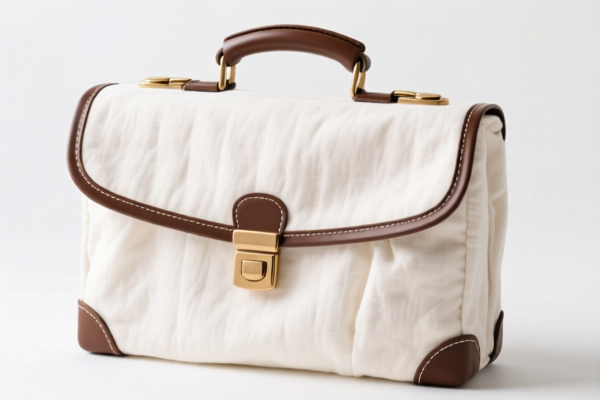
Briefcase
CN → USProduct Images


AI Analysis
Here is the detailed customs classification guide for Briefcases, styled as a professional Wiki entry with clear formatting, tax analysis, and clearance advice.
🧳 Briefcases: HS Code Classification, Taxation & Clearance Guide (2026)
🌐 Global Trade & Customs Strategy | 2026 Tariff Analysis | Professional Clearance Protocol
📌 I. Product Definition: What Exactly is a "Briefcase"?
In international trade, a Briefcase is defined as a portable container designed primarily to carry documents, laptops, and business essentials. Unlike general handbags or suitcases, briefcases are characterized by: * Rigid or Semi-Rigid Structure: Often with a handle and a shoulder strap. * Function: Specifically for business use (holding papers, tablets, small electronics). * Materials: Can be made of leather, plastics, textiles, metal, or composites.
⚠️ Critical Distinction:
- If the item is designed primarily for luggage/storage (e.g., large capacity, wheels, suitcase shape) → Chapter 42 (Suitcases).
- If the item is designed primarily for business/document carrying (handle-centric, flat profile) → Chapter 42 (Briefcases).
- Note: In most major customs codes (US/EU), briefcases often fall under the same tariff heading as handbags unless specified as "luggage" (e.g., rolling briefcases).
📦 II. HS Code Classification Details (2026 Reference)
Below is the breakdown based on Harmonized System (HS) and specific national adaptations (US HTS).
| HS Code | Product Description | Material Type | Application Scenario |
|---|---|---|---|
| 4202.12 | Travel goods, suitcases, tote bags and similar containers | Plastic or Textile | Lightweight, synthetic briefcases, laptop bags, canvas cases. |
| 4202.22 | Handbags (including those with shoulder straps) | Plastic or Textile | Often overlaps with "briefcase" if made of synthetic materials but shaped like a handbag. |
| 4202.11 | Travel goods, suitcases, etc. | Leather or Composition Leather | High-end leather business cases, executive briefcases. |
| 4202.92 | Other containers | Plastic or Textile | Specialized briefcases with unique shapes not covered above. |
🔍 Key Customs Note:
- Material is King: The tariff rate often depends heavily on whether the outer surface is Leather vs. Plastic/Textile. - Laptop Bags: If the item is a sleeve or bag specifically for a laptop without a rigid briefcase structure, it might fall under 4202.92 or specific "laptop cases" (often 4202.12 or 4202.22). - US Specifics: The US HTS often groups Leather Briefcases under 4202.11 and Synthetic under 4202.12.
💰 III. 2026 Tariff Rates & Duty Analysis (US Market Focus)
✅ Destination: United States (US)
✅ Origin: China (CN)
✅ Reference Year: 2026 (Post-2025 Trade Policy Adjustments)
✅ Base Tariff: Varies by material (0%–10%)
✅ Additional Duties: 301 List (Section 301) & IEEPA (Section 232)
🎯 1. Leather Briefcases (4202.11.00.00)
| Item | Details |
|---|---|
| Base Tariff | 6.0% (General) |
| Section 301 (China) | +25% (List 1A/1B/C/D depending on specific product) |
| IEEPA (2026 Rule) | +10% (If applicable for Chinese origin) |
| Total Effective Rate | 41.0% - 42.5% |
| Exemption Status | ❌ NO (Most leather goods are excluded from de minimis exemptions) |
| Legal Path | HTS:4202.11 → USITC:Footnote 9903.88.01 → IEEPA:9903.01.24 |
📌 Analysis:
High-end leather briefcases face a ~42% total duty. This significantly impacts profit margins for luxury brands. If the case is not made of leather (e.g., vegan leather), the rate might drop slightly but still faces high Section 301 duties.
🎯 2. Synthetic/Textile/Plastic Briefcases (4202.12.00.00)
| Item | Details |
|---|---|
| Base Tariff | 4.0% - 5.0% (General) |
| Section 301 (China) | +25% (Most common for consumer goods) |
| IEEPA (2026 Rule) | +10% |
| Total Effective Rate | 39.0% - 40.0% |
| Exemption Status | ❌ NO (Section 301 applies) |
| Legal Path | HTS:4202.12 → USITC:Footnote 9903.88.01 → IEEPA:9903.01.24 |
📌 Analysis:
Even though the base rate is lower, the 25% Section 301 duty dominates, making the total rate nearly identical to leather briefcases. De Minimis (Section 321) exemptions for personal effects DO NOT APPLY to commercial briefcase imports.
🛠️ IV. Clearance Best Practices (Step-by-Step)
✅ 1. Documentation Checklist
| Document | Requirement | Why It Matters |
|---|---|---|
| Commercial Invoice | Must state "Briefcase", Material % (e.g., "60% Polyester, 40% PU Leather") | Prevents classification errors (Leather vs. Synthetic). |
| Packing List | Must show dimensions and weight | Ensures correct volumetric weight calculation. |
| Certificate of Origin (CO) | Original China CO (Form A or B) | Required to verify country of origin for 301 duties. |
| Material Declaration | Detailed breakdown of all materials | Customs officers check if "Leather" is real or synthetic to avoid duty evasion. |
| Brand Authorization | Proof of trademark ownership | Prevents seizure for counterfeit goods (common in fashion accessories). |
✅ 2. Declaration Tips (The "Golden Rules")
🔥 Rule: "Material Matters, Function Defines"
| Scenario | Correct Declaration | Wrong Declaration | Consequence |
|---|---|---|---|
| Real Leather Case | 4202.11 + "Genuine Leather" |
"Synthetic Leather" | Seizure + Fraud Penalty |
| Laptop Bag (Textile) | 4202.12 + "Textile Outer" |
"Leather Briefcase" | Incorrect Duty (Overpaid) |
| Rolling Case | 4202.92 (Suitcase) |
4202.12 (Briefcase) |
Potential Audit |
| Sample Case | "Commercial Sample, No Value" (if <$800) | "Commercial Sample, $1000" | Duty Liability |
✅ 3. Special Cases & Workarounds
- The "Vegan Leather" Trap: If your briefcase is made of PVC or PU (Plastic), do not describe it as "Leather". Even if it looks like leather, if the outer surface is plastic, it falls under
4202.12(40% duty) vs4202.11(42% duty). The difference is small, but accuracy is vital. - Laptop Sleeves: If the item is a soft sleeve with no handle or rigid structure, it might be classified under
4202.92(Other), which sometimes has different duty rates. Check the specific HTS description for "cases for portable computers." - Origin Shift: If your briefcases are manufactured in Vietnam or Mexico, you may qualify for Section 301 exemptions (check the current 2026 exclusions list). This can save you 25%.
🌍 V. Global Market Comparison (2026)
| Region | Typical HS Code | Base Tariff | 301/Trade War Duty | Total Estimated Duty | Notes |
|---|---|---|---|---|---|
| 🇺🇸 USA | 4202.11 / 4202.12 | 6% / 4% | +25% | ~39-42% | Strict material classification. |
| 🇨🇳 China | 4202.11 / 4202.12 | 8% / 6% | 0% | ~6-8% | Export duties apply. |
| 🇪🇺 EU | 4202.11 / 4202.12 | 10% / 10% | 0% (unless anti-dumping) | ~10% | No Section 301. CE Mark required. |
| 🇦🇺 Australia | 4202.11 / 4202.12 | 5% | 0% | ~5% | Low duty, strict origin rules. |
| 🇯🇵 Japan | 4202.11 / 4202.12 | 6% | 0% | ~6% | Requires JIS standards check. |
📌 Strategy:
If importing to the US, consider sourcing from Vietnam or Mexico to bypass the 25% Section 301 tariff, provided the "substantial transformation" rules are met.
📌 VI. Common Pitfalls & Red Flags
❌ Mistake 1: "Leather" Confusion
Describing a PU-synthetic case as "Genuine Leather" to avoid the 301 list for plastic goods.
Result: Customs audit, seizure, and fines.
❌ Mistake 2: Ignoring the "Handle"
If the case has wheels, it is a Suitcase (4202.92), not a Briefcase. Misclassification leads to duty discrepancies.
❌ Mistake 3: De Minimis Abuse
Shipping briefcases via USPS/FedEx to individual customers (Section 321) to avoid duty.
Result: Customs blocks packages >$800 or flags repeated shipments as commercial trade.
❌ Mistake 4: Missing Trademark Documentation
"Louis Vuitton" or "Tumi" without proof of authorization.
Result: Immediate seizure and potential criminal charges.
🎯 VII. Conclusion: Strategic Clearance for Briefcases
🚀 Final Verdict:
Briefcases are high-risk, high-duty items when originating from China to the US. The 40%+ effective duty rate requires precise classification (Leather vs. Synthetic) and careful origin management.✅ Pro Tip:
Always declare the exact material composition (e.g., "60% Nylon, 40% PVC") on the commercial invoice. If your product is Vegan Leather (PVC), classify under 4202.12, not 4202.11, to ensure compliance, even if the duty is similar.📞 Action Required:
1. Verify your HS Code with a Binding Ruling (CBP) before shipping.
2. Ensure your supplier provides a Detailed Material Declaration.
3. Consider Supply Chain Diversification to Vietnam/Mexico to reduce 301 duties.
✨ Clearance is an art of precision. One wrong material word can cost you 25% of your profit!
💼 Let your briefcase travel smooth, taxed correctly, and on time!
Customer Reviews
About HS Code Classification
The Harmonized System (HS) is an internationally standardized nomenclature developed by the World Customs Organization (WCO) to classify traded products. Over 200 countries use the HS system as the basis for customs tariffs, trade statistics, and import/export regulations.
Each HS code follows a hierarchical structure:
- Chapter (2 digits) — Broad category of goods (e.g., Chapter 84: Machinery and Mechanical Appliances)
- Heading (4 digits) — More specific grouping within the chapter
- Subheading (6 digits) — Internationally standardized breakdown, used by all WCO member countries
- National subdivisions (8-10 digits) — Country-specific extensions for further classification, such as US HTSUS 10-digit codes
Correct HS code classification is essential for smooth customs clearance, accurate duty payment, and compliance with trade regulations. Misclassification can lead to customs delays, overpayment of duties, or penalties.
When importing from CN to US, the applicable tariff rates may include:
- Most-Favored-Nation (MFN) rate — The standard duty rate applied to WTO members
- General rate — Applied to countries without trade agreements
- Trade remedy duties — Additional tariffs such as Section 301 (anti-dumping), Section 232 (national security), or countervailing duties
The information provided on this page is for reference purposes only. For official classification, please consult with your local customs authority or a licensed customs broker.