Broom and Brush
CN → US| HS Code | Tariff Rate | Origin | Destination | Doc |
|---|---|---|---|---|
| 9603101500 | 0.0% | CN | US | Official Doc |
| 9603103500 | 31.5% | CN | US | Official Doc |
Product Images


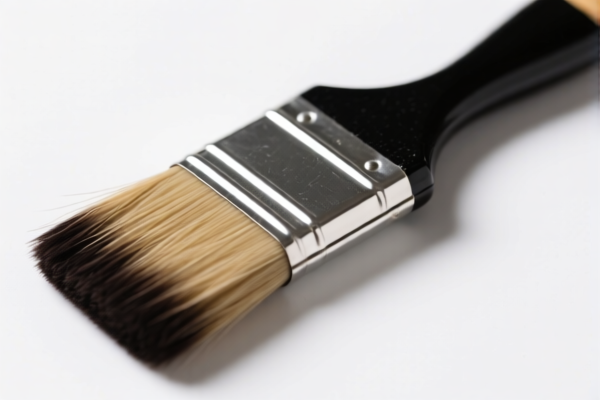
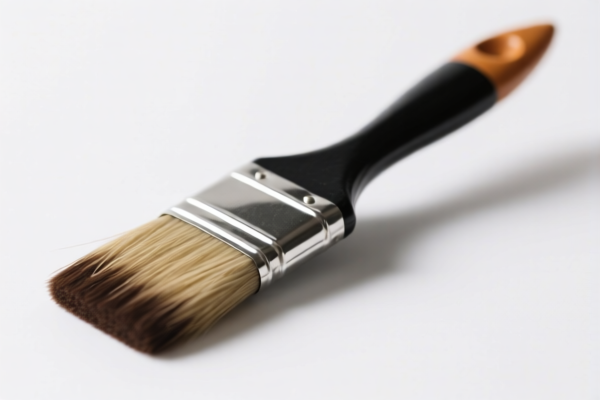
AI Analysis
🧹 Brooms & Brushes: The Ultimate Clearance Guide for "Vegetable Material" Brushes
🌐 HS Code Reference & Customs Clearance Guide | 2026 Latest Tariff Analysis | Professional Strategy for Whiskbrooms
📌 I. Product Definition & Classification: Are You Sure It’s Just a "Brush"?
In international trade, "Brooms and Brushes" (Chapter 96) is a broad category. However, for Whiskbrooms (small hand-held brushes for cleaning face/hair/clothing), the classification hinges on two critical factors: 1. Material Composition: Must consist of twigs or vegetable materials bound together. 2. Valuation (Unit Price): This is the primary differentiator for tariff purposes in the US market.
⚠️ Critical Distinction:
- If the whiskbroom is valued ≤ $0.96 per unit → It falls under the low-duty category.
- If the whiskbroom is valued > $0.96 per unit → It falls under the high-duty category.
- Note: Brushes made of plastic, wire, or animal hair do NOT fall under these specific codes unless specified as "vegetable materials."
📦 II. HS Code Classification Details (2026 Latest Tariff Schedule)
| HS Code | Product Description | Applicable Scenario | Unit Value Threshold |
|---|---|---|---|
9603.10.15.00 |
Whiskbrooms, wholly or in part of broom corn; Valued not over 96¢ each | Cheap, mass-market, basic cleaning brushes | ≤ $0.96/unit |
9603.10.35.00 |
Whiskbrooms, wholly or in part of broom corn; Valued over 96¢ each | Premium, branded, or bulk-packaged whiskbrooms | > $0.96/unit |
🔍 Key Note:
- Both codes specifically target "Whiskbrooms" made of broom corn (Sorghum bicolor) or similar vegetable materials.
- If your product is a floor broom or a hairbrush, do NOT use these codes. You must refer to other subheadings (e.g.,9603.21,9603.29).
- The "Valued not over 96¢" refers to the transaction value per unit declared on the commercial invoice.
💰 III. 2026 Tariff Rate Breakdown (Including Additional Duties)
✅ Applicable Country: United States (US)
✅ Origin: China (CN) (Assumed based on typical tariff structures for these codes)
✅ Effective Time: Current rates (including Section 301/Add-on tariffs)
🎯 1. 9603.10.15.00 —— Whiskbrooms (Valued ≤ $0.96/unit)
| Item | Content |
|---|---|
| Base Tariff | 5¢ each (Specific Duty) |
| Section 301 Add-on Tariff | 7.5% (Ad Valorem) |
| Total Tax Structure | 5¢ + 7.5% |
| Calculation Method | (5¢ × Quantity) + (7.5% × CIF Value) |
| De Minimis Eligibility | ❌ Not Eligible (Section 301 goods generally excluded from $800 de minimis) |
| Legal Basis | Section 301 Tariff List for HS 9603.10.15 |
📌 Explanation:
- This is a mixed duty: A fixed fee per piece plus a percentage of value.
- For low-value items (e.g., $0.50/unit), the 5¢ fixed fee dominates.
- For higher-value items just under $0.96, the 7.5% ad valorem component adds up.
🎯 2. 9603.10.35.00 —— Whiskbrooms (Valued > $0.96/unit)
| Item | Content |
|---|---|
| Base Tariff | 14.0% (Ad Valorem) |
| Section 301 Add-on Tariff | 7.5% (Ad Valorem) |
| Total Tax Structure | 21.5% |
| Calculation Method | 21.5% × CIF Value |
| De Minimis Eligibility | ❌ Not Eligible |
| Legal Basis | Section 301 Tariff List for HS 9603.10.35 |
📌 Explanation:
- This is a pure ad valorem duty. No fixed fee per piece.
- The total tax burden is significantly higher (21.5% vs. effectively lower for very cheap items in the other bracket).
- Tip: If your unit price is close to $0.96, carefully analyze whether reducing the declared value (legitimately) to under $0.96 could shift the classification, but do not under-invoice fraudulently.
🛠️ IV. Customs Clearance Practical Advice (Real-World Pitfall Avoidance)
✅ 1. Documentation Checklist (Essential)
| Document | Required | Purpose |
|---|---|---|
| ✅ Commercial Invoice | ✔️ | Must clearly state Unit Price and Quantity. Crucial for determining which HS subcode applies. |
| ✅ Product Description | ✔️ | Must specify "Whiskbroom," "Material: Broom Corn," and "For Personal/Household Use." |
| ✅ Material Composition Certificate | ✔️ | Proves the brush is made of vegetable materials (broom corn), not plastic or wire. |
| ✅ Photos | ✔️ | Clear images showing the bristle material and handle. |
| ✅ Packing List | ✔️ | Details box dimensions and weight. |
✅ 2. Declaration Strategy (Key Tips)
🔥 “Price is King, Material is Queen!”
| Scenario | Correct Action | Mistake to Avoid |
|---|---|---|
| Unit Price = $0.90 | Declare as 9603.10.15.00 |
Accidentally declaring > $0.96 due to rounding errors → Higher tax! |
| Unit Price = $1.10 | Declare as 9603.10.35.00 |
Trying to split invoices to lower unit price → Customs may reject and penalize. |
| Mixed Materials | Verify "Wholly or in Part" | If >50% is plastic, it may NOT qualify for these vegetable-based codes. |
| Not a Whiskbroom | Use different HS Code | Declaring a floor broom as a whiskbroom → Severe penalties + delays. |
✅ 3. Special Cases
| Case | Handling Advice |
|---|---|
| Gift Sets | If whiskbrooms are sold as part of a set with other items, the value must be allocated proportionally to determine if the whiskbroom’s share is > or < $0.96. |
| Bulk vs. Retail | Wholesale bulk shipments often have lower unit prices. Retail-ready packages might have higher unit values due to packaging. Clarify with your supplier. |
| Material Change | If the manufacturer switches from broom corn to plastic bristles, this HS code NO LONGER APPLIES. You must find a new code (e.g., 9603.21). |
🌍 V. Global Market Comparison (2026)
| Market | Recommended HS Code | Estimated Duty | Notes |
|---|---|---|---|
| 🇺🇸 USA | 9603.10.15.00 / 9603.10.35.00 |
5¢+7.5% OR 21.5% | Highly sensitive to unit price. |
| 🇨🇳 China | 9603.10 |
~10-14% | Import duty may differ; check specific CN tariff schedule. |
| 🇪🇺 EU | 9603.10 |
5-6% | No Section 301 equivalent; generally lower burden. |
| 🇬🇧 UK | 9603.10 |
5% | Post-Brexit tariffs may vary slightly. |
📌 Conclusion:
- The US market is the most complex for this product due to the price-based classification and Section 301 add-ons.
- Other markets generally apply a flat ad valorem rate without the $0.96 threshold split.
📌 VI. Common Mistakes & Pitfalls (Lessons Learned)
❌ Mistake 1: Using the same HS code for all whiskbrooms regardless of price.
👉 Consequence: Incorrect duty calculation → Audit risk or unexpected bills.
❌ Mistake 2: Declaring "Brushes" generally instead of "Whiskbrooms."
👉 Consequence: Customs may assign a default higher rate or require reclassification → Delays.
❌ Mistake 3: Ignoring the material composition.
👉 Consequence: If the brush contains significant plastic, it may not fit 9603.10 → Misclassification penalty.
❌ Mistake 4: Rounding up unit price in declaration.
👉 Consequence: A $0.99 unit price pushes you into the 21.5% bracket. A $0.95 unit price keeps you in the lower bracket. Accuracy is critical.
✅ Best Practice:
"Whiskbroom, 100% Broom Corn, Unit Value $0.85, For Household Use, Model WB-001"
🎯 VII. Conclusion: Precision in Price, Profit in Clearance
🎯 Remember the Golden Rule:
🔹 "Under 96¢? Low Duty. Over 96¢? High Duty. Material Must Be Vegetable."
🔹 "Check your invoice line item price carefully. A 1-cent difference changes your tax rate!"
📌 Pro Tip:
If you are exporting to the US, work closely with your freight forwarder to ensure the unit price on the commercial invoice is consistent with the declared value for customs. Discrepancies can lead to seizures or audits.
For large volumes, consider Advance Rulings from CBP (Customs and Border Protection) to confirm your classification and duty structure.
📣 Take Action Now:
📞 Review your Unit Prices.
📄 Verify Material Composition.
🚀 Choose the correct HS Code.
Clearance should be smooth, not stressful!
✨ Expert Customs Compliance Starts with Accurate Data!
💼 Every cent counts in global trade!
Customer Reviews
About HS Code Classification
The Harmonized System (HS) is an internationally standardized nomenclature developed by the World Customs Organization (WCO) to classify traded products. Over 200 countries use the HS system as the basis for customs tariffs, trade statistics, and import/export regulations.
Each HS code follows a hierarchical structure:
- Chapter (2 digits) — Broad category of goods (e.g., Chapter 84: Machinery and Mechanical Appliances)
- Heading (4 digits) — More specific grouping within the chapter
- Subheading (6 digits) — Internationally standardized breakdown, used by all WCO member countries
- National subdivisions (8-10 digits) — Country-specific extensions for further classification, such as US HTSUS 10-digit codes
Correct HS code classification is essential for smooth customs clearance, accurate duty payment, and compliance with trade regulations. Misclassification can lead to customs delays, overpayment of duties, or penalties.
When importing from CN to US, the applicable tariff rates may include:
- Most-Favored-Nation (MFN) rate — The standard duty rate applied to WTO members
- General rate — Applied to countries without trade agreements
- Trade remedy duties — Additional tariffs such as Section 301 (anti-dumping), Section 232 (national security), or countervailing duties
The information provided on this page is for reference purposes only. For official classification, please consult with your local customs authority or a licensed customs broker.