Brooms and brushes (HS 9603103500)
CN → US| HS Code | Tariff Rate | Origin | Destination | Doc |
|---|---|---|---|---|
| 6701006000 | 39.7% | CN | US | Official Doc |
| 6701003000 | 39.7% | CN | US | Official Doc |
| 9603103500 | 31.5% | CN | US | Official Doc |
Product Images
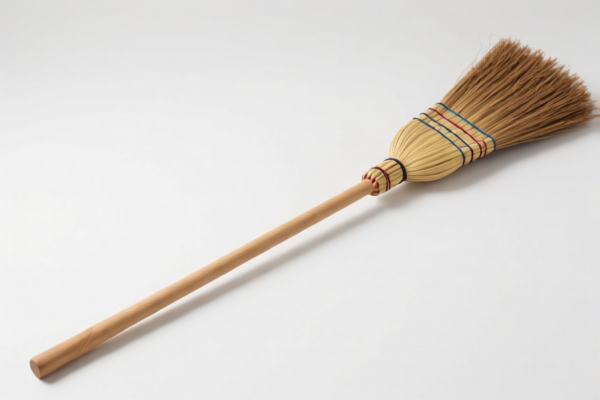
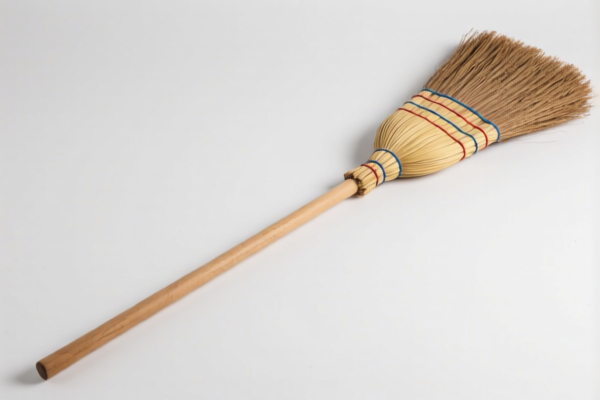
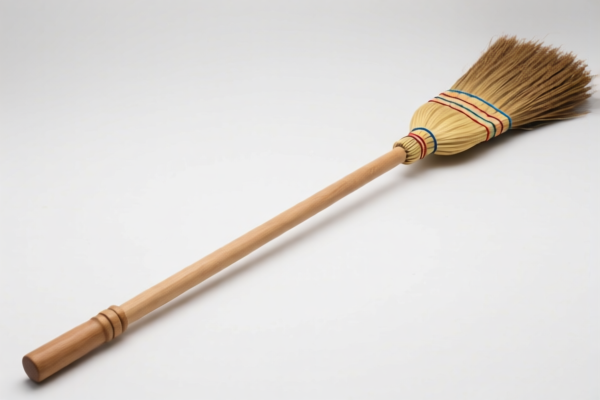
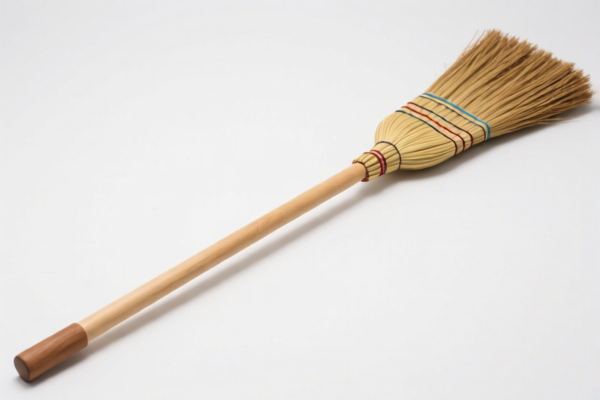
AI Analysis
🧹 Brooms and Brushes (HS 9603.10.35.00)
🌐 HS Code Reference & Customs Clearance Guide | 2026 Updated Tariff Analysis | Pro-Level Import Strategy
📌 One: Product Definition & Classification – What Exactly Is a Broom?
Brooms and brushes are hand-held cleaning tools made from natural or synthetic materials, widely used in households, agriculture, industrial settings, and public infrastructure. In international trade, whiskbrooms made entirely or partially from broom corn (a type of sorghum) are specifically classified under HS 9603.10.35.00, but only when valued over 96¢ each.
⚠️ Key Distinction:
- Broom corn whiskbrooms (natural fiber, stiff bristles) → HS 9603.10.35.00
- Plastic or synthetic bristle brushes → May fall under other subheadings (e.g., 9603.10.90.00)
- Brooms valued ≤ 96¢ → Not eligible for this code → May be classified under 9603.10.10.00 or 9603.10.20.00
- Handles made of wood, plastic, or metal → Allowed; does not change classification
📦 Two: HS Code Classification Details (2026 Updated Tariff Authority)
| HS Code | Product Description | Applicable Use Case | Valuation Threshold |
|---|---|---|---|
9603.10.35.00 |
Whiskbrooms, wholly or in part of broom corn, valued over 96¢ each | Premium household, commercial, or agricultural cleaning tools | ✅ Over $0.96 per unit |
9603.10.10.00 |
Whiskbrooms, wholly or in part of broom corn, valued ≤ 96¢ each | Low-cost, mass-market, disposable brooms | ❌ Not eligible for 9603.10.35.00 |
9603.10.20.00 |
Other brooms and brushes made from vegetable materials (e.g., twigs, reeds), not broom corn | Natural fiber brooms (non-broom corn), eco-friendly alternatives | ❌ Not applicable |
9603.10.90.00 |
Other brooms and brushes (synthetic, plastic, nylon bristles) | Industrial brushes, cleaning tools, automotive use | ❌ Not applicable |
🔍 Critical Insight:
- Value threshold is legally binding — if the average unit value is ≤ $0.96, the item must not be declared under9603.10.35.00.
- Misclassification risk: Declaring a $0.80 broom under this code = Customs penalty, fines, or seizure.
💰 Three: 2026 Updated Tariff Breakdown (Including Additional Duties & Policy Triggers)
✅ Applicable Country: United States (US)
✅ Origin Country: China (CN)
✅ Effective Date: November 10, 2025 (inclusive)
✅ Applicable to All Imports Under This HS Code
🎯 1. 9603.10.35.00 — Whiskbrooms, Partly or Wholly of Broom Corn, Valued Over 96¢ Each
| Item | Detail |
|---|---|
| Base Duty Rate | 14.0% (ad valorem) |
| Additional Duty (USITC 301) | +7.5% (from Section 301 of U.S. Trade Act) |
| Total Effective Tariff | 21.5% |
| Tax Calculation Basis | CIF Value × 21.5% |
| De Minimis Threshold | ❌ Not applicable (no de minimis relief for this item) |
| Legal Authority Path | USITC:9603.10.35.00 → FOOTNOTE:9903.88.01 → SECTION 301:9903.01.24 |
📌 Explanation:
- 14.0% base tariff is standard for this category under the Harmonized Tariff Schedule (HTSUS).
- +7.5% USITC 301 duty is imposed on goods from China under the Section 301 Investigation targeting unfair trade practices.
- Total: 21.5% — moderate but significant, especially for high-volume or low-margin products.⚠️ Warning:
- Even if the broom is made in Vietnam or Mexico, if originated from China (e.g., raw broom corn imported from China), the 21.5% tariff still applies unless a valid Certificate of Origin is provided.
- No duty exemption for small shipments — de minimis does not apply.
🛠️ Four: Customs Clearance Best Practices (Pro Tips to Avoid Delays & Fines)
✅ 1. Required Documentation (Must-Have Checklist)
| Document | Required? | Notes |
|---|---|---|
| ✅ Commercial Invoice | ✔️ | Must clearly state: "Whiskbroom, 100% broom corn, $1.20/unit, valued over 96¢" |
| ✅ Packing List | ✔️ | Include unit price, total value, and quantity per carton |
| ✅ Bill of Lading / Air Waybill | ✔️ | Must match invoice |
| ✅ Certificate of Origin (CO) | ✔️ | If claiming preferential treatment (e.g., from Vietnam, Mexico) |
| ✅ Product Photos (with label) | ✔️ | Show broom corn fibers, handle, and branding |
| ✅ Test Report (if applicable) | ✔️ | For safety or flammability (e.g., if used in industrial settings) |
✅ 2.申报技巧 (申报口诀)
🔥 “Broom corn, over 96¢, no split, no mix — or you’ll pay double!”
| Scenario | Correct HS Code | Wrong Code | Risk |
|---|---|---|---|
| Broom corn broom, $1.50/unit | 9603.10.35.00 |
9603.10.10.00 |
Underpaid duty → Audit & penalty |
| Broom corn broom, $0.75/unit | 9603.10.10.00 |
9603.10.35.00 |
Overpaid duty → Reclaimable, but costly |
| Synthetic bristle broom | 9603.10.90.00 |
9603.10.35.00 |
Misclassification → Delay or seizure |
| Broom with wooden handle + broom corn | 9603.10.35.00 |
9603.10.20.00 |
Incorrect classification → Rejection |
✅ 3. Special Cases & Solutions
| Situation | Recommended Action |
|---|---|
| Brooms made in Vietnam but using Chinese broom corn | Provide detailed sourcing proof; apply for origin certification to avoid 301 tariffs |
| Brooms with mixed materials (broom corn + synthetic) | If broom corn > 50% by weight, still eligible for 9603.10.35.00 |
| Custom-designed brooms with branding | Include branding details on invoice; no impact on classification |
| Bulk shipment with mixed values | Must calculate average unit value — if average ≤ $0.96, cannot use 9603.10.35.00 for entire shipment |
🌍 Five: Global Market Comparison (2026)
| Country/Region | Recommended HS Code | Tariff | Certification | Notes |
|---|---|---|---|---|
| 🇺🇸 United States | 9603.10.35.00 |
21.5% (China-origin) | None (unless safety-related) | No de minimis |
| 🇨🇳 China | 9603.10.35.00 |
5% | CCC | No additional tariffs |
| 🇪🇺 European Union | 9603.10.35.00 |
0% (if CE certified) | CE, REACH | No 301-style duties |
| 🇦🇺 Australia | 9603.10.35.00 |
5% | RCM | No additional duties |
| 🇯🇵 Japan | 9603.10.35.00 |
0% | PSE | No extra tariffs |
📌 Takeaway:
- The U.S. is the only market imposing a 21.5% tariff on this product from China.
- China-origin goods face the highest cost — consider reshoring or regional sourcing.
📌 Six: Common Mistakes & How to Avoid Them (Real-World Pitfalls)
❌ Mistake 1: Declaring a $0.90 broom under 9603.10.35.00
👉 Result: Customs may reject, impose fines, or require reclassification → delay + cost
❌ Mistake 2: Not providing proof of value per unit
👉 Result: Customs may apply average value → higher duty risk
❌ Mistake 3: Using "broom" as the only product description
👉 Result: Lack of specificity → audit risk
❌ Mistake 4: Failing to declare broom corn content
👉 Result: Misclassification → potential seizure
✅ Best Practice:
"Whiskbroom, 100% broom corn, 12-inch, $1.35/unit, valued over 96¢, for household use, no synthetic fibers"
🎯 Seven: Conclusion – Precision Pays Off!
🎯 Remember the Golden Rule:
🔹 "Broom corn, over 96¢, only one code — don’t split, don’t fake, don’t guess!"
🔹 "HS Code is not a suggestion — it’s a legal requirement!"
📌 Pro Tip:
✅ Apply for an Advance Ruling (Pre-Approval) from U.S. Customs if you’re importing large volumes.
✅ Use a licensed customs broker with experience in agricultural and textile goods.
✅ Audit your product value per unit before shipment — it’s the key to avoiding 21.5% tariff traps.
📣 Act Now:
📞 Contact a certified customs broker + submit product specs + request HS Code pre-ruling
🚀 Avoid delays, fines, and revenue loss — get your brooms across the border smoothly!
✨ Smart Importing Starts with Smart Classification!
💼 Your next shipment could save thousands — if you get the code right!
Customer Reviews
About HS Code Classification
The Harmonized System (HS) is an internationally standardized nomenclature developed by the World Customs Organization (WCO) to classify traded products. Over 200 countries use the HS system as the basis for customs tariffs, trade statistics, and import/export regulations.
Each HS code follows a hierarchical structure:
- Chapter (2 digits) — Broad category of goods (e.g., Chapter 84: Machinery and Mechanical Appliances)
- Heading (4 digits) — More specific grouping within the chapter
- Subheading (6 digits) — Internationally standardized breakdown, used by all WCO member countries
- National subdivisions (8-10 digits) — Country-specific extensions for further classification, such as US HTSUS 10-digit codes
Correct HS code classification is essential for smooth customs clearance, accurate duty payment, and compliance with trade regulations. Misclassification can lead to customs delays, overpayment of duties, or penalties.
When importing from CN to US, the applicable tariff rates may include:
- Most-Favored-Nation (MFN) rate — The standard duty rate applied to WTO members
- General rate — Applied to countries without trade agreements
- Trade remedy duties — Additional tariffs such as Section 301 (anti-dumping), Section 232 (national security), or countervailing duties
The information provided on this page is for reference purposes only. For official classification, please consult with your local customs authority or a licensed customs broker.