Brown Ceramic Steak Plate with Lid
CN → US| HS Code | Tariff Rate | Origin | Destination | Doc |
|---|---|---|---|---|
| 6911103710 | 25.5% | CN | US | Official Doc |
| 6911103810 | 23.0% | CN | US | Official Doc |
Product Images
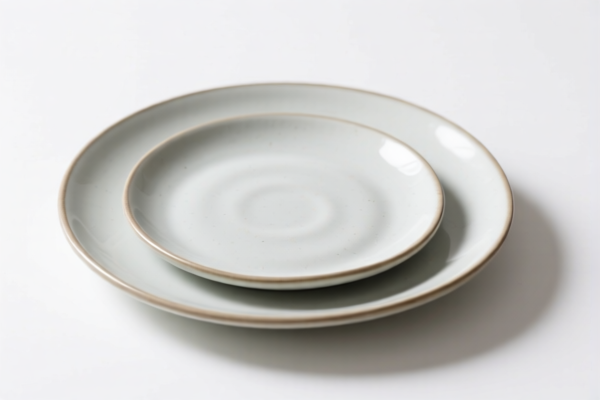
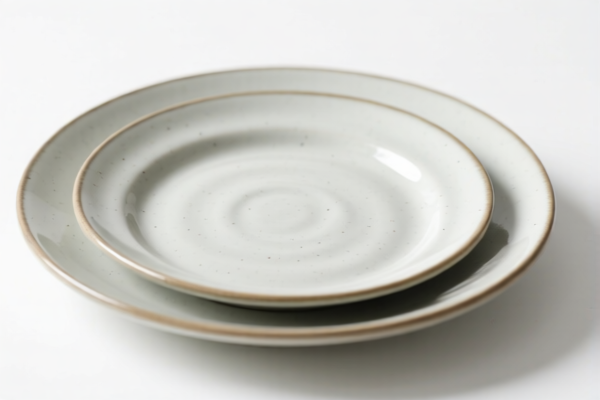

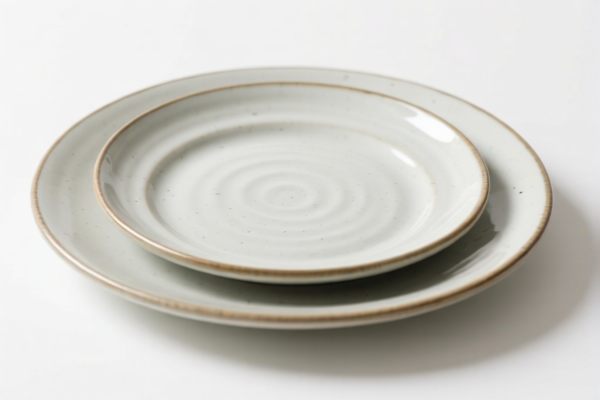
AI Analysis
🍽️ Brown Ceramic Steak Plate with Lid
🌐 HS Code Reference & Customs Clearance Guide | 2026 Latest Tariff Analysis | Professional Clearance Strategy
📌 I. Product Definition & Classification: Do You Really Understand "Porcelain Tableware Sets"?
The Brown Ceramic Steak Plate with Lid falls under the category of Tableware and Kitchenware of Porcelain or China. In international trade, the classification of such items is not just about the material (ceramic/porcelain) but heavily depends on set configuration, aggregate value, and size dimensions.
Key Distinction Criteria: 1. Material: Must be porcelain or china (fine ceramic). If it is earthenware, stoneware, or ordinary ceramic, it may fall under different headings (e.g., 6911.10.10/19). 2. Set Nature: Is it sold as a "specified set"? The data indicates a focus on "Available in specified sets." 3. Value Tiers: The tariff rate changes drastically based on the aggregate value of the articles in the set. 4. Size Constraints: Specific dimensions trigger specific sub-headings (e.g., plates ≤ 27.9 cm, cups/sauces ≤ 22.9 cm).
⚠️ Critical Warning:
- If your "Steak Plate with Lid" is part of a set where the total value exceeds $56, you must look at the "Over $56" category.
- The specific HS codes provided below are for Porcelain/China tableware sets with an aggregate value over $56.
📦 II. HS Code Classification Details (2026 Latest Tariff Authority Comparison)
Based on the provided data, here are the two possible HS codes depending on the Aggregate Value of the set:
| HS Code | Product Description | Value Threshold | Max Dimension Limits |
|---|---|---|---|
6911.10.37.10 |
Porcelain Tableware: Other: Specified Sets: Pattern Value > $56 | Aggregate Value ≤ $200 | Plates ≤ 27.9 cm; Cups/Sauces/Mugs/Soup Bowls ≤ 22.9 cm |
6911.10.38.10 |
Porcelain Tableware: Other: Specified Sets: Pattern Value > $56 | Aggregate Value > $200 | Plates ≤ 27.9 cm; Cups/Sauces/Mugs/Soup Bowls ≤ 22.9 cm |
🔍 Analysis of the "Steak Plate with Lid":
- Plates: A standard steak plate is typically around 20-25 cm in diameter, which fits the "not over 27.9 cm" limit for both codes.
- Lid: If the lid is part of the ceramic set, it is considered an article of the set.
- Value Dependency: You must calculate the aggregate value of all items in the pattern/set.
- If the set’s total value is $200 or less → Use6911.10.37.10.
- If the set’s total value is over $200 → Use6911.10.38.10.
💰 III. 2026 Latest Tariff Rate Details (Detailed Breakdown)
✅ Applicable Country: United States (US)
✅ Origin: China (CN) (Assumed based on "Additional U.S. Note 6(b)" context)
✅ Effective Time: Current 2025/2026 Trade Policies
🎯 1. 6911.10.37.10 — Porcelain Tableware (Set Value ≤ $200)
| Item | Content |
|---|---|
| Base Tariff | 8.0% (Ad Valorem) |
| Additional Tariff (Section 301) | 7.5% (Ad Valorem) |
| Total Tariff Rate | 15.5% |
| Tax Calculation | CIF Value × 15.5% |
| Legal Basis | HTSUS 6911.10.37.10 + Additional U.S. Note 6(b) |
📌 Explanation:
- The 8.0% is the standard MFN (Most Favored Nation) rate for porcelain tableware.
- The 7.5% is the "Additional U.S. Note 6(b)" tariff, often applied to specific consumer goods from China.
- Total: 15.5%. This is a moderate tariff, but still significant for low-margin goods.
🎯 2. 6911.10.38.10 — Porcelain Tableware (Set Value > $200)
| Item | Content |
|---|---|
| Base Tariff | 6.0% (Ad Valorem) |
| Additional Tariff (Section 301) | 7.5% (Ad Valorem) |
| Total Tariff Rate | 13.5% |
| Tax Calculation | CIF Value × 13.5% |
| Legal Basis | HTSUS 6911.10.38.10 + Additional U.S. Note 6(b) |
📌 Explanation:
- Interestingly, the base tariff drops to 6.0% for higher-value sets, likely due to different classification nuances for premium goods.
- However, the 7.5% additional tariff remains constant.
- Total: 13.5%.
- Cost Comparison: While the rate is lower (13.5% vs 15.5%), the base value is higher. Always calculate the absolute tax amount.
🛠️ IV. Customs Clearance Practical Advice (Avoid Pitfalls)
✅ 1. Documentation Checklist (Mandatory)
| Document | Must Provide | Description |
|---|---|---|
| ✅ Product Specification Sheet | ✔️ | Must state: Material (Porcelain/China), Set Contents (Plate + Lid), Dimensions. |
| ✅ Set Composition List | ✔️ | Detailed list of all items in the "specified set" to calculate Aggregate Value. |
| ✅ Commercial Invoice | ✔️ | Clearly state "Porcelain Tableware Set" and declare the Aggregate Value of the set. |
| ✅ Product Photos | ✔️ | Show the plate, lid, and any packaging indicating it is a "Set." |
| ✅ Dimensions Certificate | ✔️ | Proof that plates are ≤ 27.9 cm and cups/sauces are ≤ 22.9 cm (if applicable). |
| ✅ Country of Origin Certificate | ✔️ | Proof of China origin to apply additional tariffs correctly. |
✅ 2. Declaration Tips (Key Mnemonics)
🔥 "Value Tiers Matter, Dimensions Define, Porcelain is Key!"
| Scenario | Correct Declaration | Wrong Practice |
|---|---|---|
| Set Value ≤ $200 | HS 6911.10.37.10 |
Misdeclare as "Over $200" → Incorrect rate |
| Set Value > $200 | HS 6911.10.38.10 |
Misdeclare as "Under $200" → Overpayment or audit risk |
| Non-Set Items | Check other 6911 subheadings | Force into "Specified Set" codes → Rejection |
| Earthenware/Stoneware | 6911.10.10/19 | Declare as "Porcelain" → Misclassification |
✅ 3. Special Handling for "Steak Plate with Lid"
| Situation | Handling Advice |
|---|---|
| Lid is Ceramic | Ensure the lid is included in the "Aggregate Value" of the set. |
| Lid is Non-Ceramic (e.g., Glass/Plastic) | If the lid is not porcelain/china, the entire set may not qualify for "Porcelain" classification. Check if it falls under "Mixed Material" or "Other Household Articles." |
| Single Item Sales | If sold individually (not as a set), it may fall under "Other" (e.g., 6911.10.10.00 or similar), not the "Specified Sets" codes. Check with customs! |
| Custom Designs | If the "Brown" color is a glaze, ensure it is still classified as "Porcelain" and not "Earthenware." |
🌍 V. Global Market Customs Comparison (2026 Latest)
| Country/Region | Recommended HS Code | Tariff | Certification | Notes |
|---|---|---|---|---|
| 🇺🇸 USA | 6911.10.37.10 / 38.10 |
13.5% - 15.5% | FDA (if food-contact) | Additional tariffs apply. |
| 🇨🇳 China | 6911.10.10 / 19 |
8% - 15% | GB Standards | Export duty may apply. |
| 🇪🇺 EU | 6911.10 |
6.5% | LFGB (Germany) / EC 1935/2004 | No additional tariffs. |
| 🇯🇵 Japan | 6911.10 |
10.4% | JAS (if labeled) | Strict food safety checks. |
📌 Conclusion:
- USA has high tariffs due to trade policies.
- EU and Japan have moderate standard tariffs but strict food safety standards (heavy metal leaching tests).
- Ensure your "Brown" glaze complies with FDA/EFSA standards for lead/cadmium release.
📌 VI. Common Mistakes & Pitfalls (Lessons Learned)
❌ Mistake 1: Ignoring the "Aggregate Value" Threshold
👉 Consequence: Using 6911.10.38.10 for a $150 set → Wrong Rate (13.5% vs 15.5%). While 13.5% is lower, using the wrong code can lead to audits and penalties if values are misreported. Always declare the correct value tier.
❌ Mistake 2: Misclassifying Non-Porcelain Items
👉 Consequence: If the "Brown Ceramic" is actually Stoneware or Earthenware, it should be 6911.10.10.00 or 6911.10.19.00. Misclassification can lead to higher duties or rejection.
❌ Mistake 3: Not Including the Lid in Set Value
👉 Consequence: If the lid is expensive and excluded from the aggregate value, the customs officer may re-calculate the set value, leading to delays.
❌ Mistake 4: Assuming "Set" Means Any Combination
👉 Consequence: "Specified Sets" have strict definitions. If the items are not marketed and sold together as a set, they may be classified individually.
✅ Correct Practice:
"Porcelain Tableware Set, Brown Glaze, Includes Steak Plate (22cm) and Lid, Set Value: $180, Origin: China, FDA Compliant"
🎯 VII. Conclusion: Professional Declaration, Save Costs, Ensure Compliance!
🎯 Remember the Mnemonic:
🔹 "Value Tiers: Under $200 is 15.5%, Over $200 is 13.5%!"
🔹 "Porcelain is Key, Lid Must Match, Dimensions Matter!"
📌 Tips:
- If your product is not porcelain (e.g., stoneware), do not use these codes.
- If the lid is not ceramic, re-evaluate the classification.
- Pre-ruling: For large shipments, consider applying for an Advance Ruling from US Customs to confirm the HS code and value threshold application.
📣 Immediate Action:
📞 Contact a licensed customs broker + Provide Set Composition + Verify Material (Porcelain vs. Earthenware)
🚀 Ensure smooth clearance, avoid penalties, and optimize your landed cost!
✨ Professional Clearance Starts with Accurate Classification!
💼 Every Percent of Tax Matters!
Customer Reviews
About HS Code Classification
The Harmonized System (HS) is an internationally standardized nomenclature developed by the World Customs Organization (WCO) to classify traded products. Over 200 countries use the HS system as the basis for customs tariffs, trade statistics, and import/export regulations.
Each HS code follows a hierarchical structure:
- Chapter (2 digits) — Broad category of goods (e.g., Chapter 84: Machinery and Mechanical Appliances)
- Heading (4 digits) — More specific grouping within the chapter
- Subheading (6 digits) — Internationally standardized breakdown, used by all WCO member countries
- National subdivisions (8-10 digits) — Country-specific extensions for further classification, such as US HTSUS 10-digit codes
Correct HS code classification is essential for smooth customs clearance, accurate duty payment, and compliance with trade regulations. Misclassification can lead to customs delays, overpayment of duties, or penalties.
When importing from CN to US, the applicable tariff rates may include:
- Most-Favored-Nation (MFN) rate — The standard duty rate applied to WTO members
- General rate — Applied to countries without trade agreements
- Trade remedy duties — Additional tariffs such as Section 301 (anti-dumping), Section 232 (national security), or countervailing duties
The information provided on this page is for reference purposes only. For official classification, please consult with your local customs authority or a licensed customs broker.